

- Stock: In Stock
- Product code:
- Weight Brutto: 5.50kg
- SKU: RS-RPS-BMWH-01

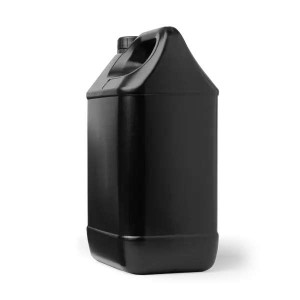
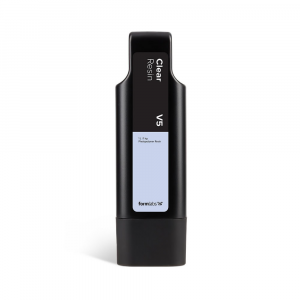
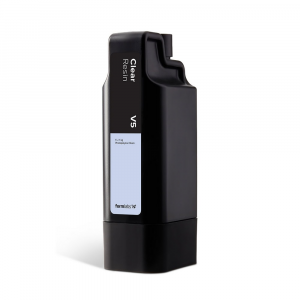
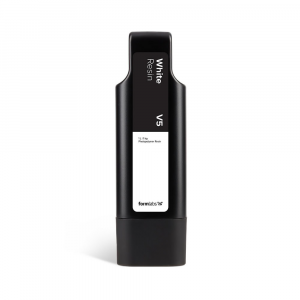
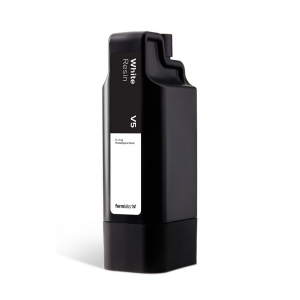
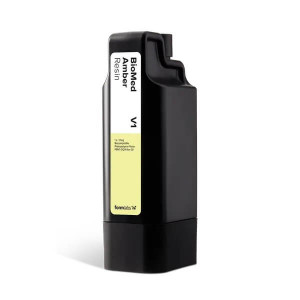
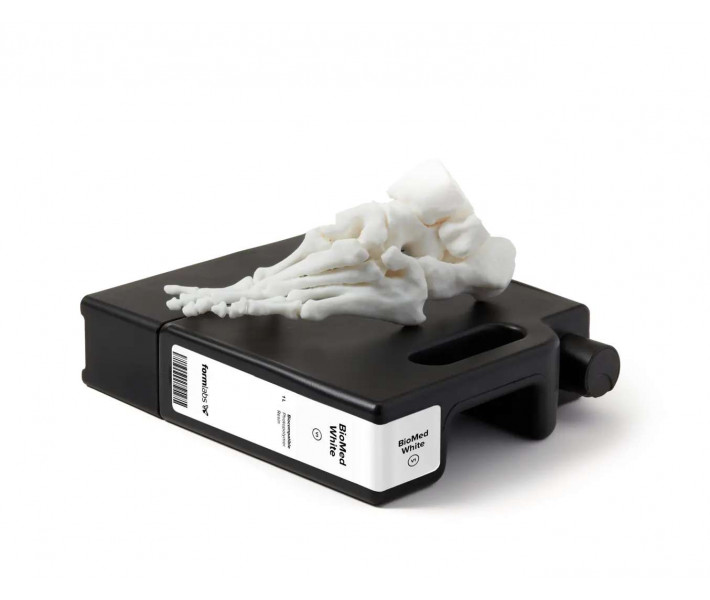
Formlabs BioMed White Resin is a rigid SLA photopolymer for medical-grade biocompatible applications. It carries USP Class VI certification and ISO 10993 third-party test clearance. Every 5 L cartridge is made at an FDA-registered Ohio facility. The ISO 13485:2016-governed facility operates an ISO Class 8 clean room.
| Specification | Why it matters |
|---|---|
| Biocompatibility standard: USP Class VI, ISO 10993-5/10/11, Non-pyrogenic (USP <151>) | Enables clinical regulatory submissions with pre-existing documentation — no independent biocompatibility study required. |
| Ultimate tensile strength: 46 MPa | Delivers structural integrity sufficient for surgical instruments through every validated sterilization cycle. |
| Young's modulus: 2,000 MPa | Maintains dimensional fidelity from print bed to operating table, preventing tolerance drift in precision surgical guides. |
| Sterilization compatibility: E-beam (35 kGy), EtO, Gamma (29.0–31.1 kGy), Steam autoclave | Covers all four hospital sterilization protocols validated for medical device components. |
- ISO 13485 production traceability: Every batch is manufactured in a dedicated ISO Class 8 clean room, with documentation ready to support clinical procurement and regulatory submissions.
- Full ISO 10993 biocompatibility clearance: NAMSA third-party testing returns no evidence of cytotoxicity, irritation, sensitization, acute systemic toxicity, or pyrogenicity under USP <151>.
- Structural rigidity for surgical instruments: The 46 MPa tensile strength and 2,000 MPa Young's Modulus keep geometry stable across print, sterilization, and intraoperative use.
- Low water absorption: At 0.40 wt%, moisture uptake is minimal, keeping printed parts dimensionally accurate in clinical environments.
- Pharmaceutical-grade compliance: USP Class VI certification qualifies the material for drug delivery device components and container-closure elements, extending its scope beyond surgical tooling.
Formlabs BioMed White Resin — Medical-Grade Credentials
Manufacturing Facility and Quality System
Consumer photopolymers are formulated for form and fit, not for contact with living tissue. BioMed White Resin inverts that priority. Every batch is manufactured inside a dedicated ISO Class 8 clean room at Formlabs's FDA-registered Ohio facility. The Quality Management System is certified to EN ISO 13485:2016 and the EU Medical Device Regulation (EU MDR). ISO 14971 risk management compliance is also in scope. Third-party biocompatibility testing was conducted by NAMSA World Headquarters in Ohio against the full ISO 10993 panel — these are not self-declared claims.
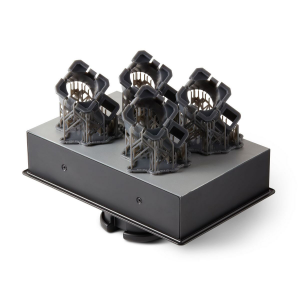
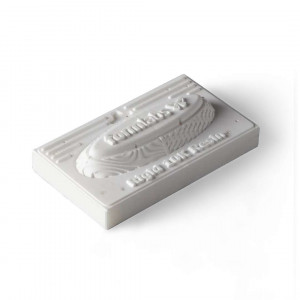
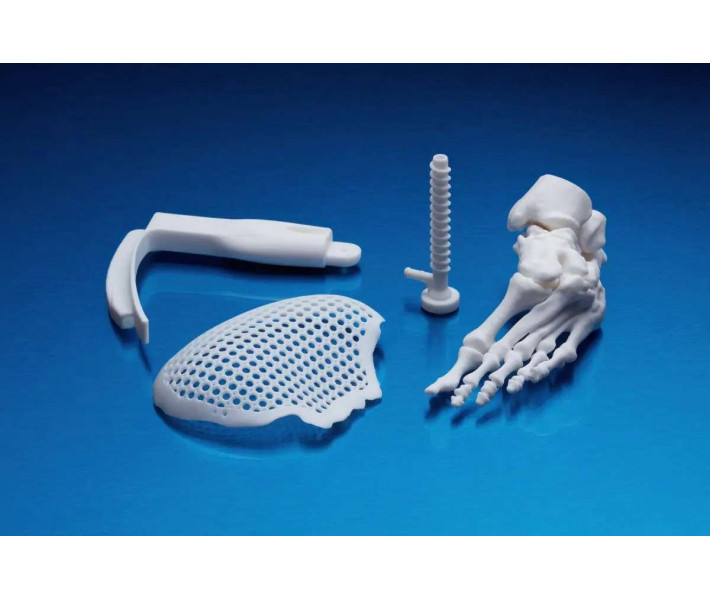
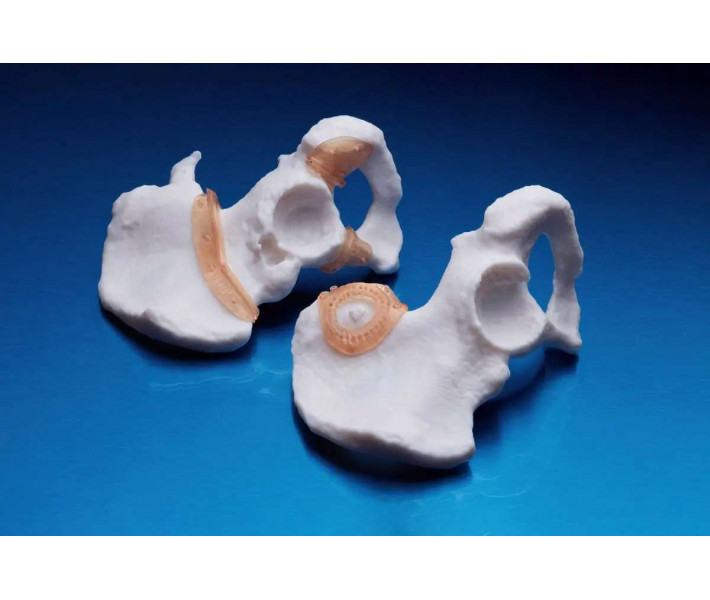
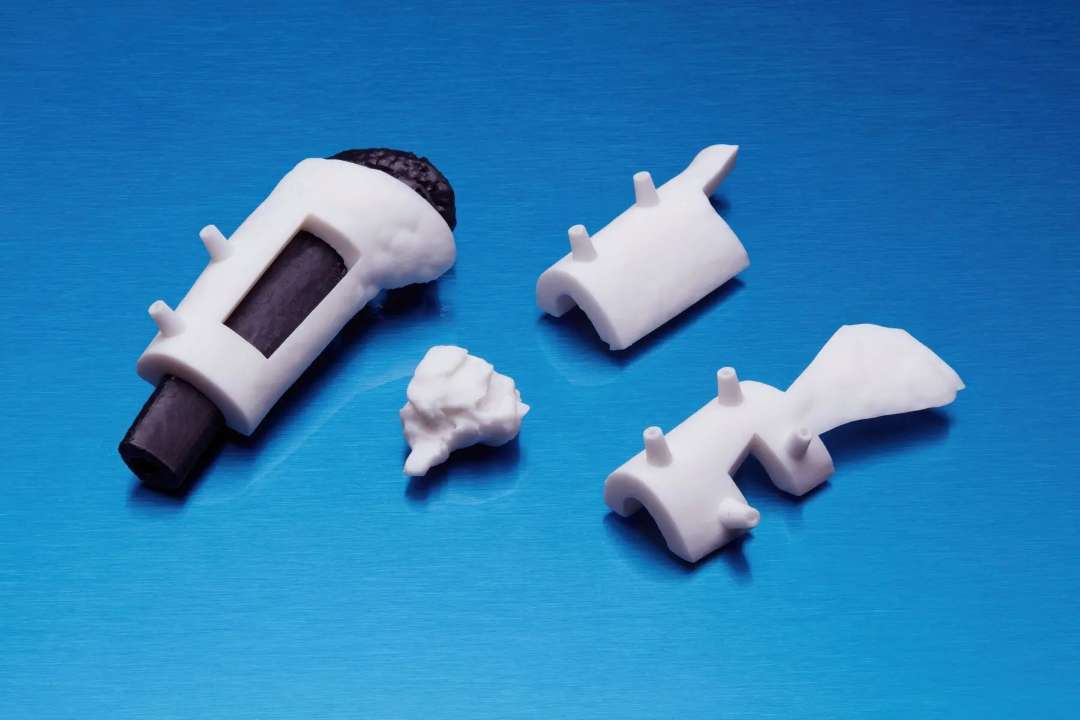
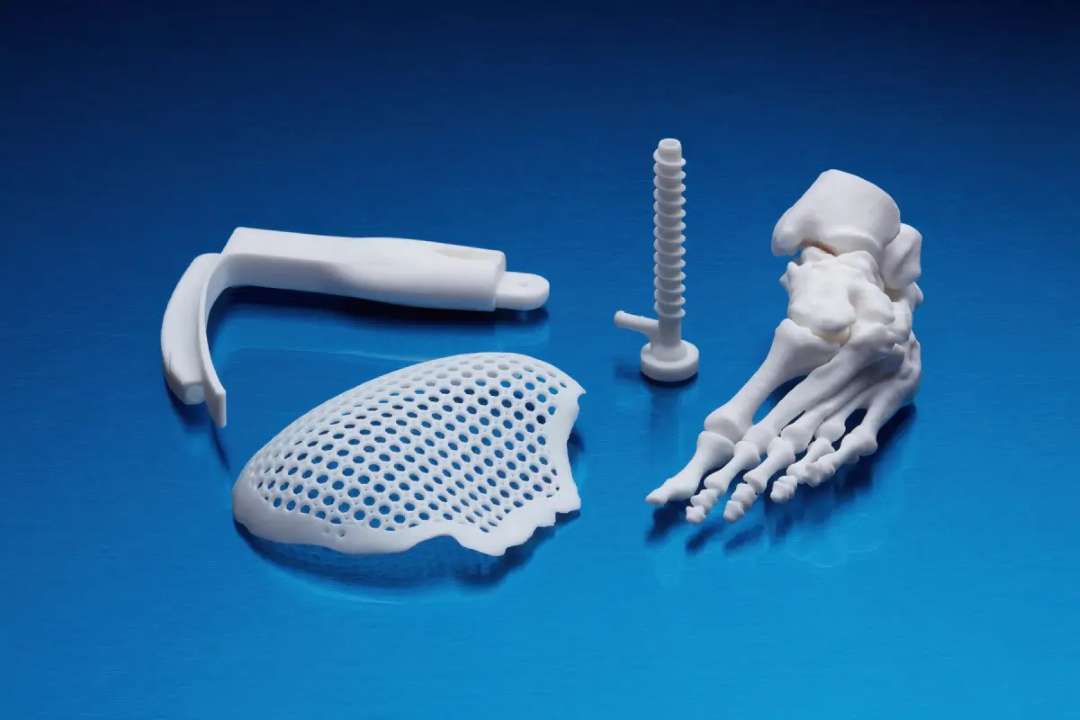
The surgical guide and fixture components here demonstrate BioMed White Resin's crisp surface resolution and structural rigidity in a clinical manufacturing context.
Biocompatibility Test Panel
Parts printed and post-cured per the validated protocol have been evaluated against five independent biocompatibility standards. Testing under ISO 10993-5 confirms the material is not cytotoxic. ISO 10993-10 results confirm it is neither an irritant nor a sensitizer. ISO 10993-11 and the USP <151> Pyrogen Test confirm no acute systemic toxicity and non-pyrogenicity — the standard required for parenteral drug delivery devices and many implant-adjacent instruments.
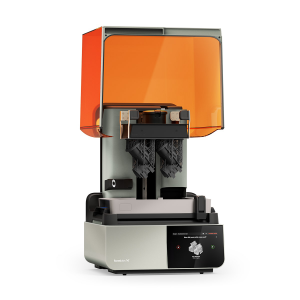
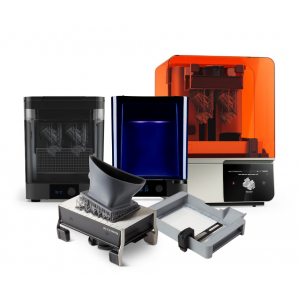
ISO 10993 third-party testing and USP Class VI certification together supply the documentation a clinical submission requires. Four validated sterilization pathways and ISO 13485 traceability complete the regulatory picture. Procurement teams can file submissions without commissioning independent biocompatibility testing. For compliance to remain valid, the resin tank and build platform must be dedicated exclusively to BioMed White Resin. The wash unit and cure unit must also be dedicated to this material. Even trace contamination from a non-biocompatible resin can void certification regardless of the resin itself being correct.
The Intertek certification mark shown here confirms ISO 13485:2016 compliance — verified by independent third-party audit of the Formlabs quality management system.
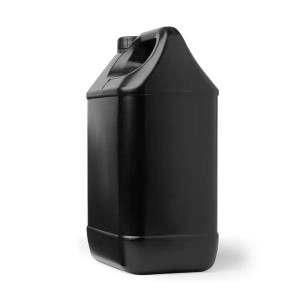
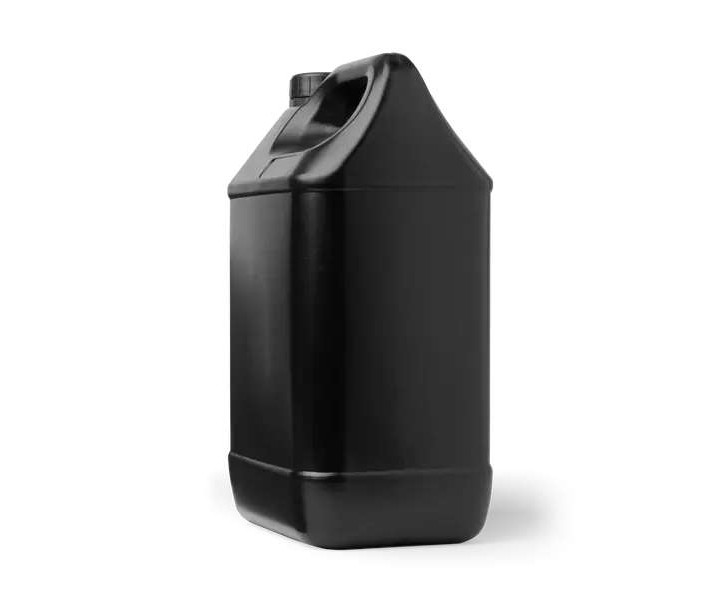
5 L Cartridge: Production-Scale Output
The 5 L format is engineered for higher-volume manufacturing environments. Hospital additive manufacturing labs and dental device producers require consistent material performance across multi-week production runs. Medical device manufacturers similarly benefit from reduced material changeover frequency. USP Class VI certification additionally opens the material to pharmaceutical and drug delivery applications, broadening its scope well beyond conventional surgical tooling.
Four Validated Sterilization Methods
Reusable surgical instruments and multi-patient-contact components must survive the sterilization cycle without dimensional change or surface degradation. BioMed White Resin has been validated against all four sterilization modalities used in hospital environments.
E-beam radiation is validated at 35 kGy. Ethylene oxide (EtO) sterilization runs at 100% EtO, 55 °C for 60 minutes. Gamma radiation is validated across 29.0–31.1 kGy. Steam autoclave uses the US protocol: 132 °C for 4 minutes over 5 cycles. The EU protocol specifies 134 °C for 4 minutes over 5 cycles. For routine disinfection between uses, 70% isopropyl alcohol for 5 minutes is the validated chemical method.
Steam autoclave temperatures exceed the material's Heat Deflection Temperature at both load levels: 52.4 °C at 1.8 MPa and 67.0 °C at 0.45 MPa. Parts with thin walls (under 1.5 mm) or long unsupported spans may exhibit minor warping under autoclave conditions. For dimensionally critical surgical guides requiring sub-0.1 mm tolerance fidelity, E-beam or ethylene oxide sterilization is the safer choice. Always inspect parts for cracks after every cycle and discard any component showing damage.
Handling, Storage, and Safety
Uncured BioMed White Resin is classified as a skin irritant (H315) and eye irritant (H319) under EU CLP Regulation (EC) 1272/2008. It is additionally a skin sensitizer (H317) and respiratory irritant (H335). The material also carries an aquatic hazard classification (H411). Always handle uncured resin with chemical-resistant gloves and safety glasses. Work only in well-ventilated areas. Store cartridges below 38 °C and away from direct sunlight. Keep them away from heat sources and open flames. The flash point of the liquid resin exceeds 93.5 °C. Once fully post-cured, parts are non-hazardous and may be disposed of as regular solid waste. The 5 L cartridge is classified for transport as UN 3082, Hazard Class 9, Packing Group III (Marine Pollutant).
Applications
- Surgical drilling guides and templates: A Young's Modulus of 2,000 MPa and water absorption of only 0.40 wt% keep part geometry within clinical tolerances from print to intraoperative use. Geometry does not drift through sterilization.
- Biocompatible molds and production jigs: High stiffness and opaque white colour aid visual inspection of contact surfaces. Four validated sterilization methods support reusable multi-cycle tooling.
- Drug delivery device components: USP Class VI certification satisfies contact requirements for pharmaceutical assemblies and container-closure system elements where documented biocompatibility is mandatory.
- Hospital additive manufacturing labs: The 5 L cartridge sustains multi-week production runs across all compatible printers without frequent material changeovers.
- Dental device production: Crisp surface resolution at 50 µm or 100 µm layer thickness meets the accuracy requirements of custom implant-adjacent fixtures and surgical dental templates.
- Pre-operative planning models: High-fidelity anatomical geometry supports surgical rehearsal and pre-operative review at accuracy adequate for procedure planning.
- Point-of-care assemblies: ISO 13485 traceability and complete regulatory documentation support clinical procurement in regulated hospital environments.
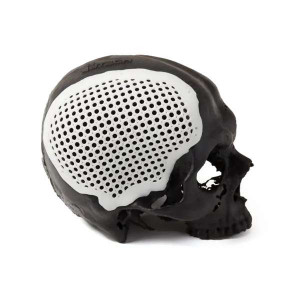
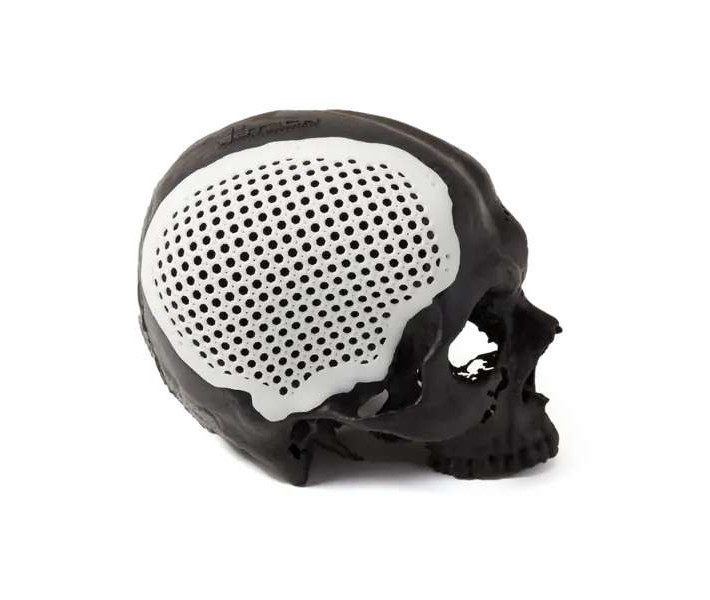
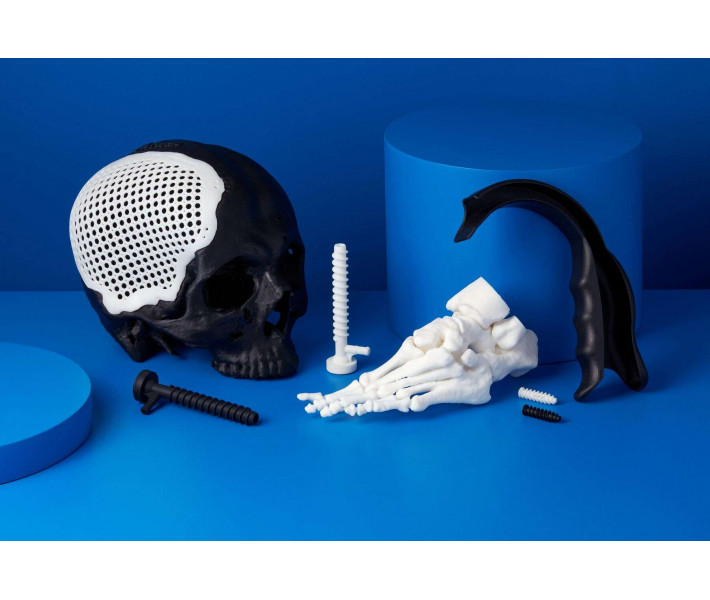
A precision drilling guide and lattice-mesh implant shield demonstrate the geometric complexity achievable from a single 5 L cartridge.
Compatibility and accessories
- Compatible printers: Form 4B, Form 4BL, Form 3B, Form 3B+, Form 3BL, Form 2
- Compatible build platforms: Form 4 Build Platform, Form 4 Flex Build Platform, Form 3 Build Platform, Form 3 Build Platform 2, Form 3 Stainless Steel Build Platform, Form 3L Build Platform, Form 3L Build Platform 2L, Form 4L Build Platform, Form 4L Flex Build Platform
- Compatible resin tanks: Form 4 Resin Tank, Form 2 Resin Tank (PDMS), Form 2 LT Tank, Form 3 Resin Tank V2.1, Form 3L Resin Tank V3
- Validated wash units: Form Wash, Form Wash V2, Form Wash L, Form Wash L V2, Ultrasonic Wash Unit
- Validated cure units: Form Cure, Form Cure L, Fast Cure, Form Cure V2, Form Cure L V2
Technical specifications
Physical Properties (Liquid Resin)
| Parameter | Value |
| Physical State | Liquid |
| Color | White opaque |
| Density | 1.15 g/cm³ |
| Dynamic Viscosity | 1,100 cps @ 30 °C |
| Flash Point (closed cup) | > 93.5 °C |
| Flammability | Not flammable |
| Volume | 5 L |
| Product Code | FLBMWH01 |
Mechanical Properties (Post-Cured)
| Parameter | Value |
| Ultimate Tensile Strength | 46 MPa (ASTM D638-14, Type IV) |
| Young's Modulus | 2,000 MPa (ASTM D638-14, Type IV) |
| Elongation at Break | 10% (ASTM D638-14, Type IV) |
| Flexural Stress at 5% Strain | 74 MPa (ASTM D790-15, Procedure B) |
| Flexural Modulus | 2,020.16 MPa (ASTM D790-15, Procedure B) |
| Hardness Shore D | 80 D (ASTM D2240-15, Type D) |
| Notched Izod Impact | 15 J/m (ASTM D256-10, Method A) |
| Unnotched Izod Impact | 269 J/mm (ASTM D4812-11) |
Thermal and Physical Properties (Post-Cured)
| Parameter | Value |
| Heat Deflection Temp. @ 1.8 MPa | 52.4 °C (ASTM D648-18, Method B) |
| Heat Deflection Temp. @ 0.45 MPa | 67.0 °C (ASTM D648-18, Method B) |
| Coefficient of Thermal Expansion | 90.1 μm/m/°C (ASTM E831-13) |
| Water Absorption | 0.40 wt% (ASTM D570-98) |
Biocompatibility Endpoints
| Parameter | Value |
| ISO 10993-5:2009 | Not cytotoxic |
| ISO 10993-10:2010/(R)2014 — Irritation | Not an irritant |
| ISO 10993-10:2010/(R)2014 — Sensitization | Not a sensitizer |
| ISO 10993-11:2017 — Systemic Toxicity | No evidence of acute systemic toxicity |
| ISO 10993-11:2017 / USP <151> Pyrogen Test | Non-pyrogenic |
| USP Class VI | Certified |
| Long-term skin contact (> 30 days) | Supported |
| Short-term bone / tissue / dentin / mucosal contact (< 24 h) | Supported |
Regulatory Compliance
| Parameter | Value |
| EN ISO 13485:2016 | Medical Devices Quality Management Systems — manufactured in compliance |
| EN ISO 14971:2012 | Medical Devices Risk Management — manufactured in compliance |
| Manufacturing Facility | FDA-registered, ISO 13485 and EU MDR certified, ISO Class 8 clean room (Ohio, USA) |
Sterilization and Disinfection Compatibility
| Parameter | Value |
| E-beam Radiation | 35 kGy |
| Ethylene Oxide (EtO) | 100% EtO at 55 °C for 60 min |
| Gamma Radiation | 29.0–31.1 kGy |
| Steam Sterilization (US) | Autoclave at 132 °C for 4 min, 5 cycles |
| Steam Sterilization (EU) | Autoclave at 134 °C for 4 min, 5 cycles |
| Chemical Disinfection | 70% Isopropyl Alcohol for 5 minutes |
Solvent Compatibility — 24 h Weight Gain (%)
| Parameter | Value |
| Acetic Acid 5% | 0.4% |
| Acetone | 2.9% |
| Bleach ~5% NaOCl | 0.3% |
| Butyl Acetate | 0.4% |
| Diesel Fuel | < 0.1% |
| Diethyl glycol monomethyl ether | 1.0% |
| Hydraulic Oil | < 0.1% |
| Hydrogen Peroxide (3%) | 0.3% |
| Isooctane | < 0.1% |
| Isopropyl Alcohol | 0.2% |
| Mineral Oil, heavy | < 0.1% |
| Mineral Oil, light | < 0.1% |
| Salt Water (3.5% NaCl) | 0.4% |
| Skydrol 5 | 0.5% |
| Sodium Hydroxide Solution (0.025%, pH = 10) | 0.3% |
| Strong Acid (HCl Conc.) | 0.2% |
| TPM | 0.6% |
| Water | 0.3% |
| Xylene | 0.3% |
Compatible Hardware
| Parameter | Value |
| Compatible Printers | Form 4B, Form 4BL, Form 3B, Form 3B+, Form 3BL, Form 2 |
| Compatible Build Platforms | Form 4 Build Platform, Form 4 Flex Build Platform, Form 3 Build Platform, Form 3 Build Platform 2, Form 3 Stainless Steel Build Platform, Form 3L Build Platform, Form 3L Build Platform 2L, Form 4L Build Platform, Form 4L Flex Build Platform |
| Compatible Resin Tanks | Form 4 Resin Tank, Form 2 Resin Tank (PDMS), Form 2 LT Tank, Form 3 Resin Tank V2.1, Form 3L Resin Tank V3 |
| Validated Wash Units | Form Wash, Form Wash V2, Form Wash L, Form Wash L V2, Ultrasonic Wash Unit |
| Validated Cure Units | Form Cure, Form Cure L, Fast Cure, Form Cure V2, Form Cure L V2 |
Printing and Post-Processing Parameters
| Parameter | Value |
| Layer Thickness — Form 2, Form 3B/3B+, Form 3BL | 50 μm, 100 μm |
| Layer Thickness — Form 4B, Form 4BL | 100 μm |
| Wash Solvent | 99% Isopropyl Alcohol (IPA) |
| Wash Duration | 5 min (Form Wash) / 2 min (Ultrasonic, ≥ 36 W/L) |
| Air Dry After Washing | ≥ 30 min at room temperature |
| Post-Cure — Form Cure / Form Cure L | 60 min at 60 °C |
| Post-Cure — Form Cure V2 / Form Cure L V2 | 10 min at 60 °C |
| Post-Cure — Fast Cure | 6 min at Light Intensity 5 |
Why Choose Formlabs BioMed White Resin?
Formlabs BioMed White Resin is the reference SLA material for applications demanding documented biocompatibility rather than a data sheet alone. USP Class VI certification and full ISO 10993 third-party test results are documented and ready to attach to regulatory submissions. ISO 13485 production traceability from the FDA-registered Ohio facility covers the complete batch provenance chain. Procurement and quality teams can complete clinical filings without commissioning independent biocompatibility studies. Four validated sterilization pathways cover every standard hospital protocol. Dedicated hardware — exclusive tanks, platforms, and processing units — maintains certification validity across extended production runs. As an official Formlabs consumable, every 5 L cartridge carries guaranteed authenticity and full production traceability.