

- Stock: In Stock
- Product code: 920372000002727645
- Weight Brutto: 165.00kg

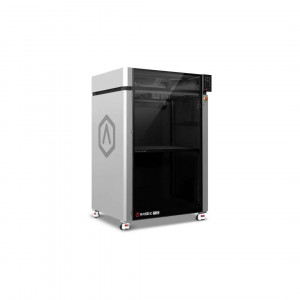
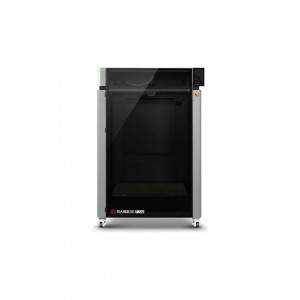
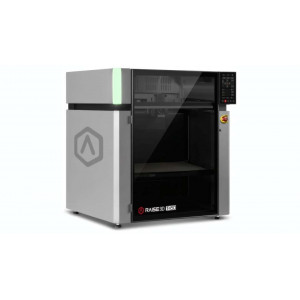
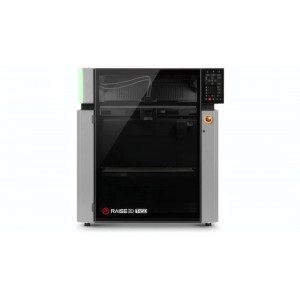
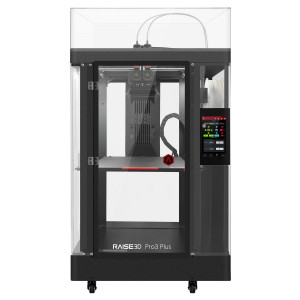
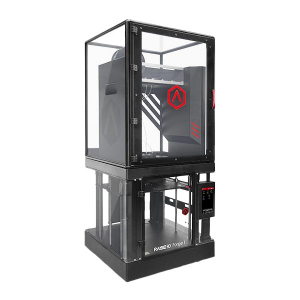
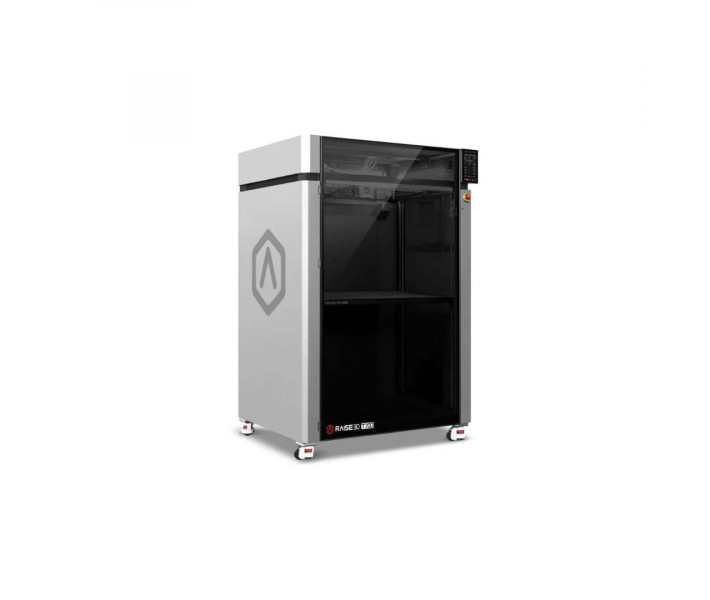
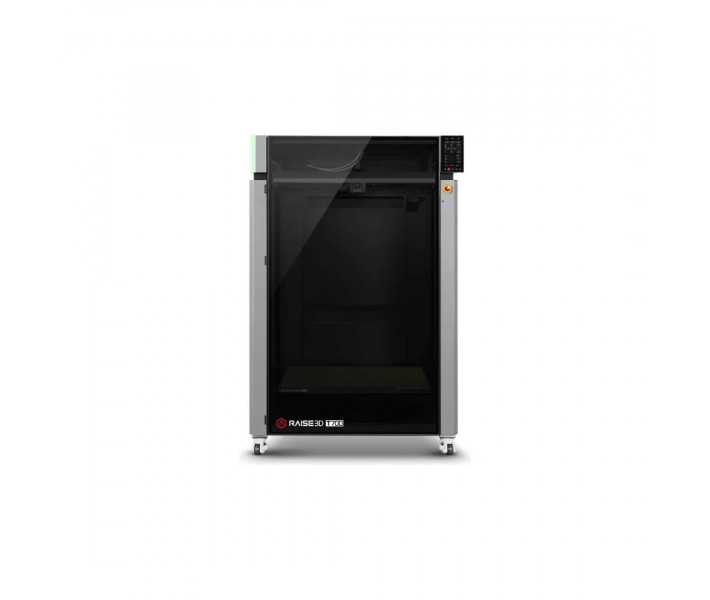
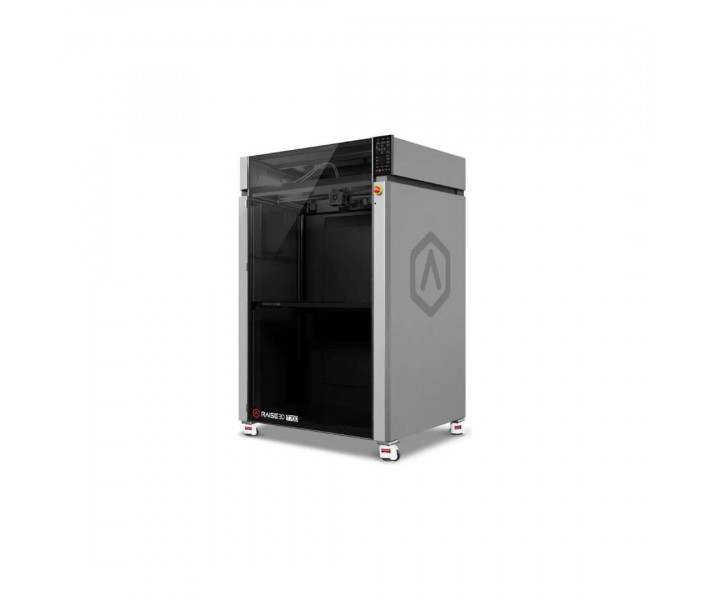
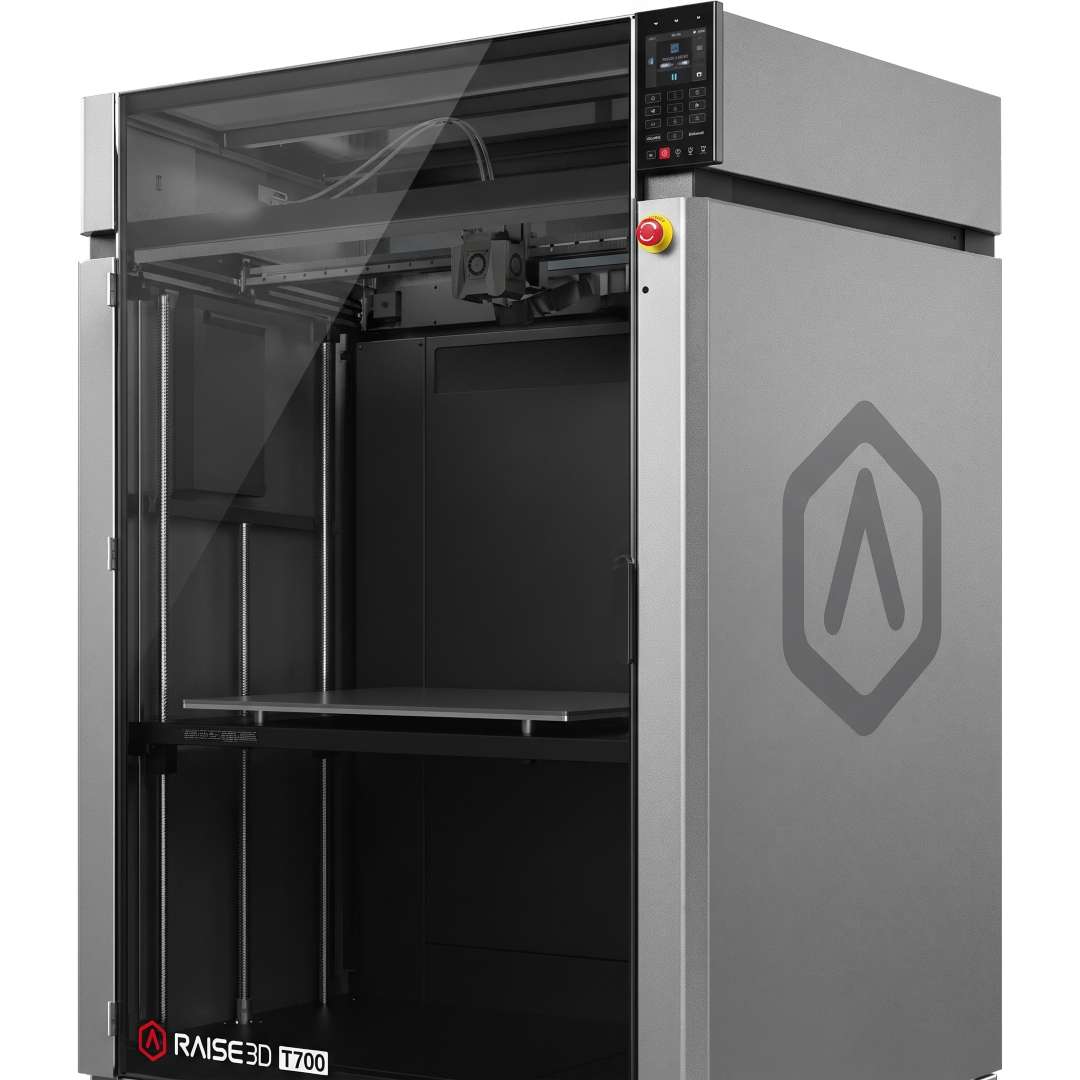
Raise3D T700 — an FFF printer for printing casting patterns and drone bodies as a single part. There is no need to glue and align seams between sections if the part fits within the build area. Dual extrusion through a single nozzle delivers enough melt for large-format printing. The actively heated chamber stabilises the temperature during long jobs.
Key features and benefits
- Build area: 700 × 500 × 1000 mm — A full-scale part is printed in one piece if it fits in terms of dimensions and orientation.
- Max. print speed: 600 mm/s — Full speed can only be used by a hotend that is able to melt and feed the material in time.
- Max. TwinFlow™ flow rate: 80 mm³/s — This is a test value for Hyper Speed ABS V2 at 250 °C with a 0.4 mm nozzle, so check the flow rate for your own profile separately.
- Two 2.5 kg spools: up to 5 kg of material per job reduces the need for manual spool changes, provided you account for supports and purging in advance.
- CuCrZr nozzle with SiC tip: the thermally conductive base and wear-resistant tip work up to 420 °C, which opens up compatible engineering and reinforced materials.
- Active chamber heating up to 60 °C: a smaller temperature difference while a large ABS part cools reduces the risk of warping and delamination.
Raise3D T700: printing large parts as a single piece
Large parts often have to be cut into sections. The Raise3D T700 has a build area of 700 × 500 × 1000 mm, so a suitable part can be printed in one piece. Such printing eliminates glued joints, which can weaken under load. This is useful for functional prototypes and testing. It can be used as an end-use part after validating the design and the process with the chosen material. For this purpose, four-motor kinematics and a high-temperature hotend are combined. Feeding is provided by two spools and a single nozzle.
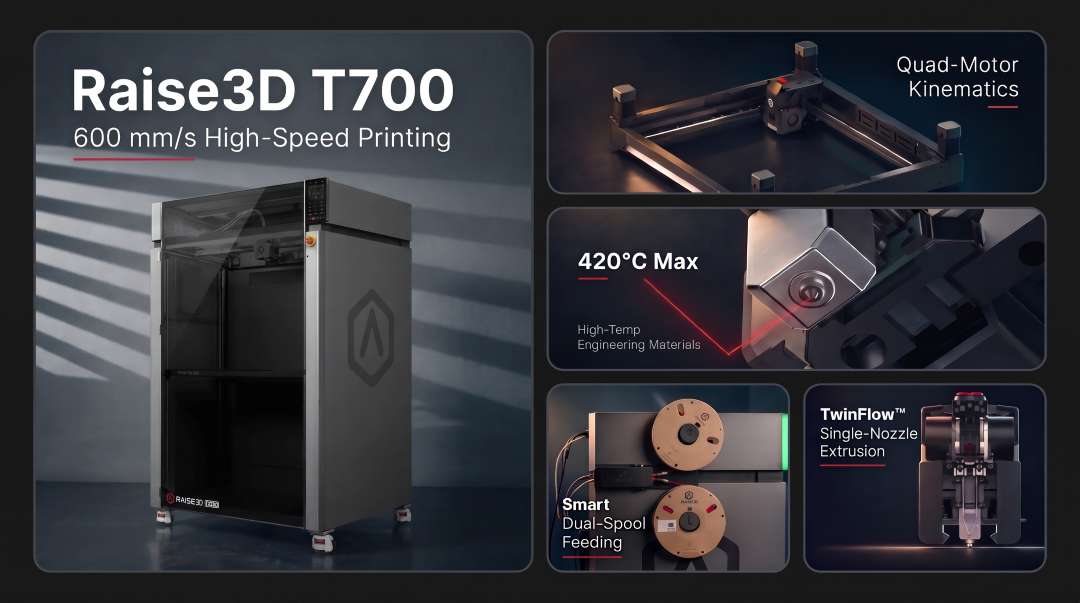
Whether a particular part will fit depends on its dimensions and orientation. The material and process requirements also determine whether it can be printed whole.
TwinFlow™: two filament paths, one nozzle
A fast printhead alone does not shorten print time. Time is affected by the length of the toolpaths and by cooling. The hotend's ability to melt and feed material is just as important.
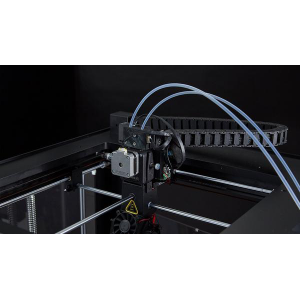
TwinFlow™ addresses the feeding issue. Two independent filament paths converge in a Y-shaped manifold. The material then exits through a single nozzle.
The combined cross-sectional area of two 1.75 mm filaments is theoretically equal to the area of a single filament with a diameter of approximately 2.47 mm. This is only an area comparison: the printer actually uses two 1.75 mm filaments.
High-flow mode
Two filaments of the same material are fed simultaneously through a shared nozzle. A greater melt inflow can shorten print time in areas where speed is limited by flow rate. The result depends on the material, the nozzle and the print profile. The maximum of 80 mm³/s was obtained with Hyper Speed ABS V2 at 250 °C. The test was carried out with a 0.4 mm nozzle and a smooth single-layer thin-walled structure. This is a test maximum, not a constant or universal flow rate. The standard T700 nozzle is 0.6 mm.
Dual-material mode
In this mode, the two paths feed different materials in sequence through a single nozzle. Depending on the verified material pairs and settings, this enables dual-material or dual-colour printing. Supports made of a compatible material, including soluble or easily removable ones, are also possible. The shared nozzle eliminates XY offset calibration between separate heads. Material compatibility and temperature windows must be checked for each job. Purging and switching also increase material consumption.
Stable operation on long jobs
Long prints of large parts are sensitive to motion and feeding faults. Motion and material feeding are designed for such loads. The frame is made of aerospace-grade aluminium alloy.
CoreXY kinematics
The four-motor CoreXY drive is designed for stable motion over long distances. It is intended to reduce corner bulging and uneven extrusion. The maximum printhead acceleration is 30 000 mm/s². Printhead speed reaches 1500 mm/s at an acceleration of 10 000 mm/s². The actual result depends on the material and process settings.
Material feeding
Two 2.5 kg spools provide up to 5 kg of material per job. Allow in advance for the consumption by supports and purging. A larger reserve reduces the need for manual spool changes and waiting. The effect depends on the job and the feed configuration. A filament runout sensor is available.
Print monitoring
Sensors and cameras help you monitor the progress of the print and the state of the machine. The live camera has a resolution of 1920 × 1080, and the nozzle camera 2592 × 1944. The system detects certain faults, including "spaghetti" and filament runout. It alerts the operator or pauses the print. The feature set depends on the model. Power-loss recovery, flow rate detection and nozzle clog detection are also available.
Temperature modes for different materials
Different materials need different conditions. The chamber with airflow control and the high-temperature hotend support work ranging from large PLA prototypes to parts made of engineering materials.
Chamber cooling
The electric top lid and the auxiliary heat-dissipation module remove excess heat when printing PLA. The Air Flow Manager 2 system helps maintain suitable conditions in the chamber, especially during long jobs.
Chamber heating
Active chamber heating reaches 60 °C. It reduces the temperature difference as a large ABS part cools. This lowers the risk of warping and delamination. The result depends on the material and the geometry of the part. The printer has a HEPA filter with activated carbon.
Build plate
The flexible double-sided PEI plate heats up to 120 °C. The heated bed has a silicone heating mat. Mesh levelling works with a flatness check.
High-temperature hotend
The nozzle has a base made of highly thermally conductive CuCrZr and a solid wear-resistant SiC tip. This design supports heat transfer and wear resistance. It is designed for compatible engineering and fibre-reinforced materials. The maximum nozzle temperature is 420 °C. However, nozzle temperature is only one of the factors in material compatibility. Large-format PEEK printing is not supported. The standard nozzle is 0.6 mm, with 0.4 mm available as an option. The layer height of 0.3 mm is specified for the 0.6 mm nozzle.
From slicing the model to printing
The file should get from the computer to the printer without unnecessary steps. The process has three stages. The ideaMaker slicer slices the model and generates GCODE machine code. The finished job is sent to the printer, where it is started and monitored.
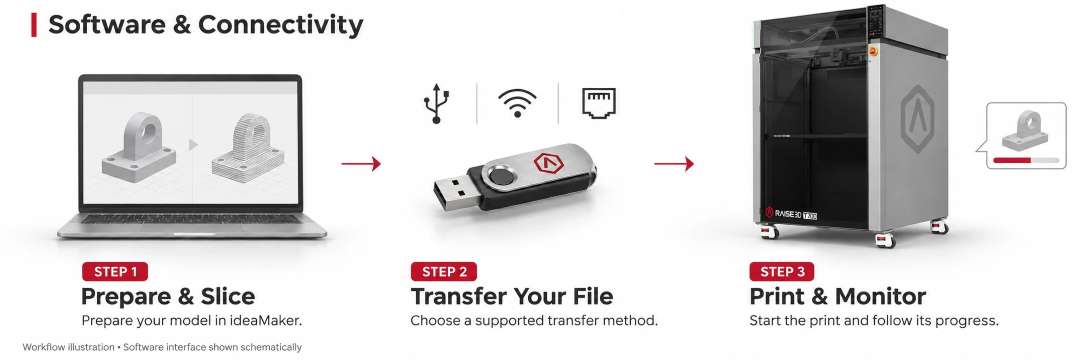
- File formats: STL, OBJ, 3MF, OLTP, STEP, STP, IGES, IGS
- Operating systems: Windows, macOS, Linux
- Connectivity: Wi-Fi, LAN, USB port, live camera
- Ports: USB 3.0 × 1, Ethernet × 1
- Wi-Fi security: WPA / WPA2 / WPA3-PSK
A 7-inch touchscreen with a resolution of 1024 × 600 controls the printer on site. The RK ARM Cortex-A55 Quad 2 GHz logic controller runs on Debian. An electric door lock is available. The neural processing unit delivers up to 1 TOPS (INT8).
Applications
The Raise3D T700 is designed for parts that would otherwise have to be divided into sections. Whether a particular part can be printed whole depends on its dimensions and orientation, as well as on the material.
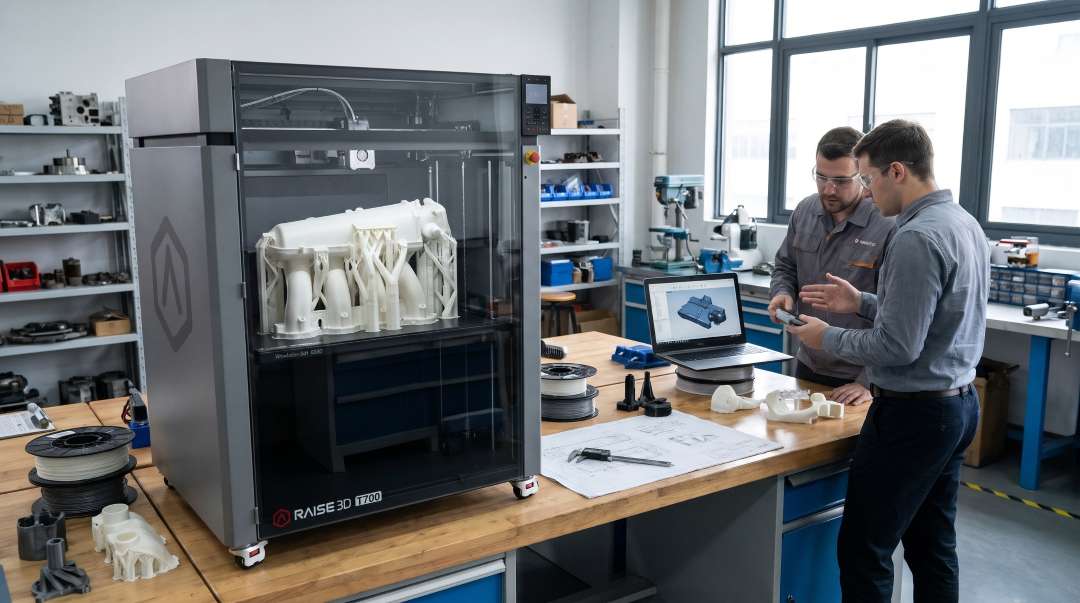
- Drones and RC aircraft: shells and aircraft components that fit within a volume of 700 × 500 × 1000 mm are printed without seams between sections.
- Casting patterns: a one-piece pattern requires no section alignment or seam finishing. In high-flow mode, flow-limited areas may print faster.
- Tooling and moulds: the CuCrZr nozzle with SiC tip is rated for 420 °C, which makes it possible to print tooling from compatible engineering and reinforced materials.
- Sculptures: objects up to 1000 mm tall are printed whole. Dual-colour printing is performed through a single nozzle without offset calibration between heads.
- Orthopaedic and medical models: large fit-check models and custom orthopaedic moulds make it possible to assess dimensions before the final product is made. Accuracy is IT11 grade (tested with Raise3D Premium PLA); for a specific part it depends on the geometry and the material.
- Functional prototypes: one-piece parts without glued joints are suitable for load testing. Active chamber heating up to 60 °C reduces the temperature difference while an ABS part cools.
Compatible materials and nozzles
- Hyper Speed: PLA, PLA Pro, ABS, PETG CF, PET CF
- Industrial: PPA CF, PET Support, PPS CF
- Premium: PLA, ABS, ASA, PETG, TPU-95A
- Coming soon (Industrial): PPA GF, PET CF, PET GF, PETG ESD, PPA Support
- Coming soon (Premium): PVA+
- Nozzles: 0.6 mm as standard, 0.4 mm available as an option
Technical specifications
General information
| Parameter | Value |
| Power supply | T700 (220 V): 200–240 VAC, 50/60 Hz, 230 V@16 A; T700 (110 V): 100–120 VAC, 50/60 Hz, 110 V@20 A |
| Raise3D material compatibility | Hyper Speed: PLA, PLA Pro, ABS, PETG CF, PET CF; Industrial: PPA CF, PET Support, PPS CF; Premium: PLA, ABS, ASA, PETG, TPU-95A; Coming soon (Industrial): PPA GF, PET CF, PET GF, PETG ESD, PPA Support; Coming soon (Premium): PVA+ |
Housing
| Parameter | Value |
| Build volume (W × D × H) | 700 × 500 × 1000 mm (27.6 × 19.7 × 39.4 inches) |
| Printer dimensions (W × D × H) | 964 × 792 × 1478 mm (37.9 × 31.1 × 58.2 inches) |
| Maximum external packaging dimensions (W × D × H) | 1150 × 1060 × 1685 mm (45.28 × 41.73 × 66.34 inches) |
| Weight | Net weight: 150 kg (approximately 330.7 lbs) |
| Frame material | Aerospace-grade aluminium alloy |
Extrusion
| Parameter | Value |
| Printing technology | Fused filament fabrication (FFF) |
| Printhead system | TwinFlow™ (dual extrusion with a single nozzle and Y-shaped manifold) |
| Print mode | Single extrusion, dual extrusion, high-flow dual extrusion |
| Nozzle diameter | 0.6 mm (default), 0.4 mm (available) |
| Nozzle type | Nozzle with a highly thermally conductive CuCrZr base and a solid wear-resistant SiC tip |
| Max. nozzle temperature | 420 °C |
| Filament diameter | 1.75 mm |
| Layer height | 0.3 mm (0.6 mm nozzle) |
| Print accuracy | IT11 grade (test filament: Raise3D Premium PLA) |
Speed
| Parameter | Value |
| Max. print speed | 600 mm/s |
| Max. toolhead speed | 1500 mm/s (achieved at a max. toolhead acceleration of 10 000 mm/s²) |
| Max. toolhead acceleration | 30 000 mm/s² |
| Max. hotend flow rate | TwinFlow™ (dual extrusion): 80 mm³/s (Raise3D Hyper Speed ABS V2, 250 °C, 0.4 mm nozzle, smooth structure with a single outer wall) |
Build plate and heated bed
| Parameter | Value |
| Build plate | Flexible double-sided PEI plate |
| Build plate levelling | Mesh levelling with flatness check |
| Heated bed material | Silicone heating mat |
| Max. build plate temperature | 120 °C |
Chamber temperature control
| Parameter | Value |
| Active chamber heating | Available |
| Max. chamber heating temperature | 60 °C |
| Electric top lid | Available |
| Auxiliary heat-dissipation module | Available |
Printing environment
| Parameter | Value |
| Filter | HEPA filter with activated carbon |
| Operating ambient temperature | 15–30 °C, 10–90 % RH, non-condensing |
| Storage temperature | -25 °C to +55 °C, 10–90 % RH, non-condensing |
Software
| Parameter | Value |
| Slicing software | ideaMaker |
| Supported file types | STL, OBJ, 3MF, OLTP, STEP, STP, IGES, IGS |
| Supported OS | Windows, macOS, Linux |
| Machine code type | GCODE |
Sensors and camera
| Parameter | Value |
| Live camera resolution | 1920 × 1080 |
| Nozzle camera resolution | 2592 × 1944 |
| Filament runout sensor | Available |
| Power-loss recovery | Available |
| Flow rate detection | Available |
| "Spaghetti" detection | Available |
| Nozzle clog detection | Available |
Connectivity and network
| Parameter | Value |
| Connectivity | Wi-Fi, LAN, USB port, live camera |
| Ports | USB 3.0 × 1, Ethernet × 1 |
| Network | Wi-Fi, Ethernet |
| Wi-Fi protocol | WPA / WPA2 / WPA3-PSK |
Printer controller
| Parameter | Value |
| User interface | 7-inch touchscreen |
| Screen resolution | 1024 × 600 |
| Motion controller | STM ARM Cortex-M7 550 MHz DP-FPU |
| Logic controller | RK ARM Cortex-A55 Quad 2 GHz |
| Memory | 2 GB |
| Onboard flash memory | 32 GB |
| OS | Debian |
| Electric door lock | Available |
| Neural processing unit (NPU) | Computing power up to 1 TOPS (INT8), support for mixed-precision computing INT8 / INT16 / FP16 / BFP16 |
Why buy the Raise3D T700 from EXPERT3D?
EXPERT3D has been supplying professional 3D equipment since 2012. As an official Raise3D representative, we guarantee 100 % authenticity, a fair price, authorised service and an official warranty. Before you buy the Raise3D T700, our specialists will help with consultation and configuration. We provide delivery throughout Spain and the EU countries. After purchase, we offer service support. Order original spare parts and consumables on the website: we will promptly deliver everything so that your equipment does not stand idle.