- Stock: In Stock
- Product code: 920372000001719165
- Weight Brutto: 8.20kg
- SKU: PF002-M-EU

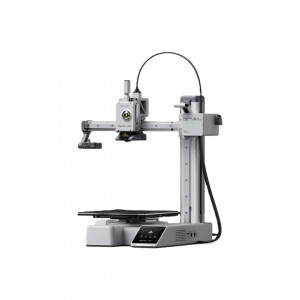
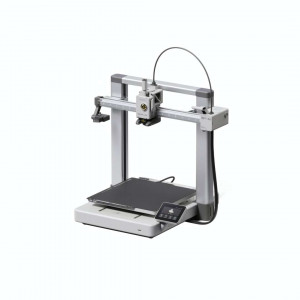
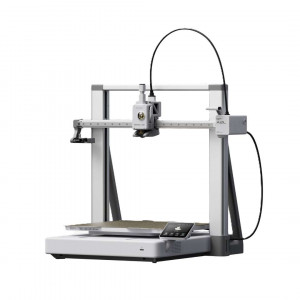
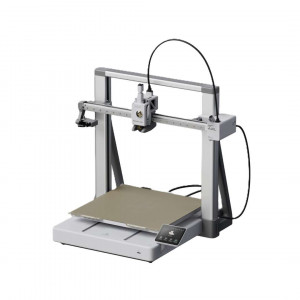
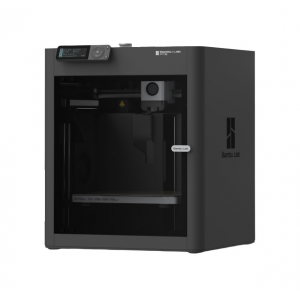
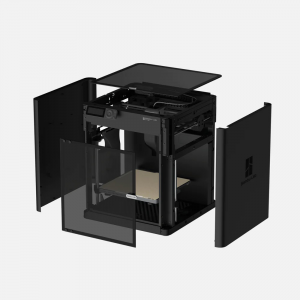
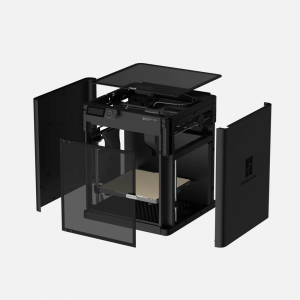
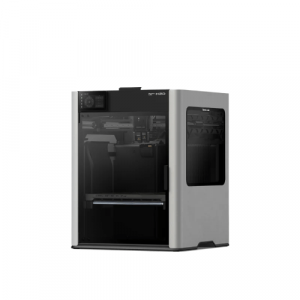
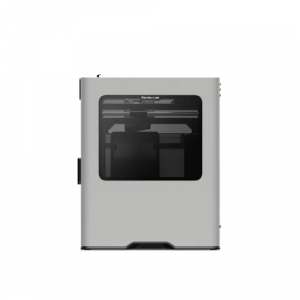
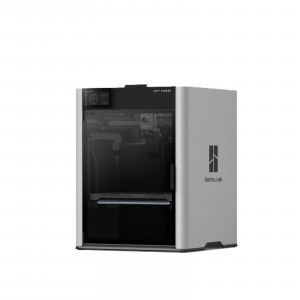
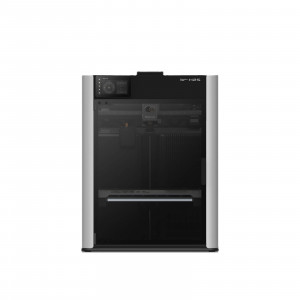
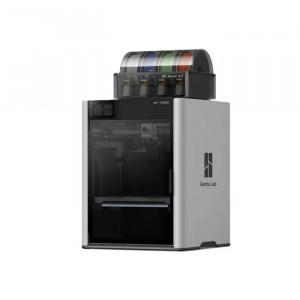
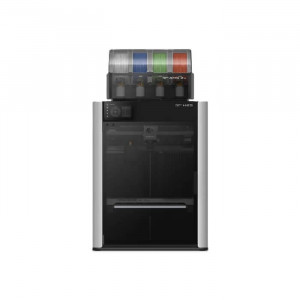
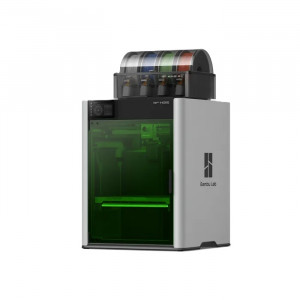
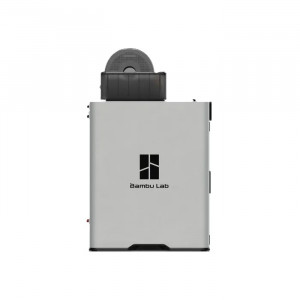
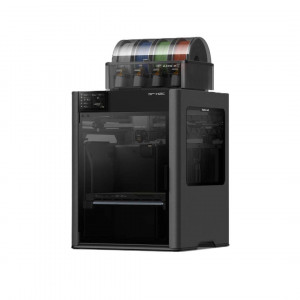
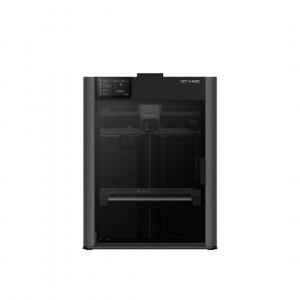
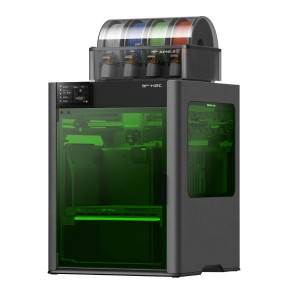
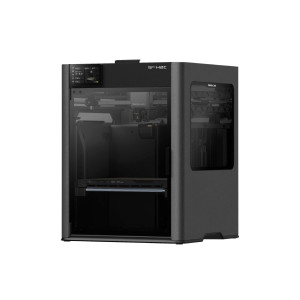
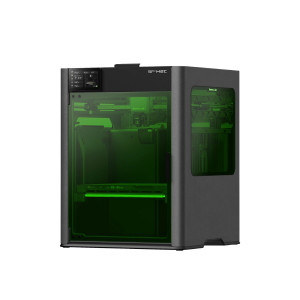
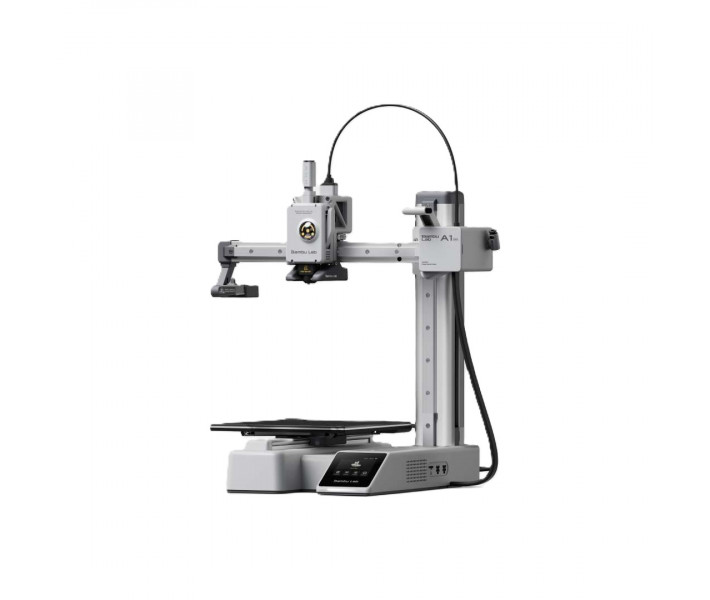
Bambu Lab A1 MIni is a desktop 3D printer for rapid prototyping that features active flow compensation. This model automatically calibrates the bed and vibrations before operation. This approach eliminates the need for manual bed adjustment. The device saves the operator's time before every task.
Key features and benefits
- Build volume: 180 × 180 × 180 mm³ — Provides ample space for producing compact functional parts.
- Print speed: 500 mm/s — Reduces the production cycle time thanks to a kinematic acceleration of up to 10 m/s².
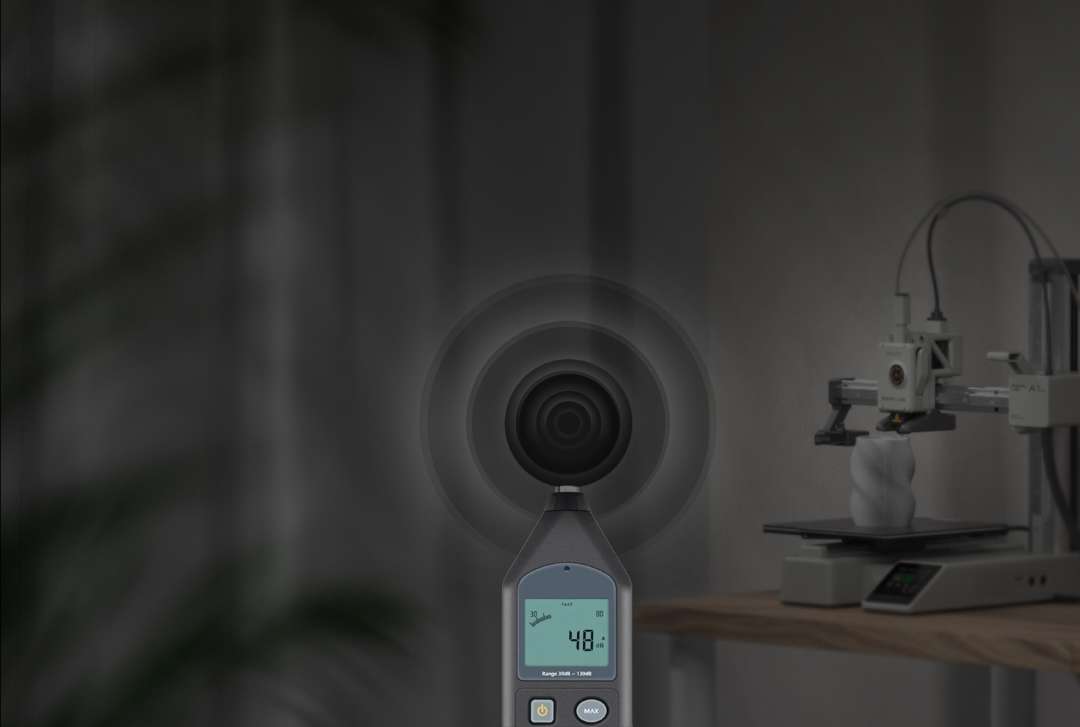
- Noise level: 48 dB — Allows the equipment to be installed in office spaces without causing discomfort.
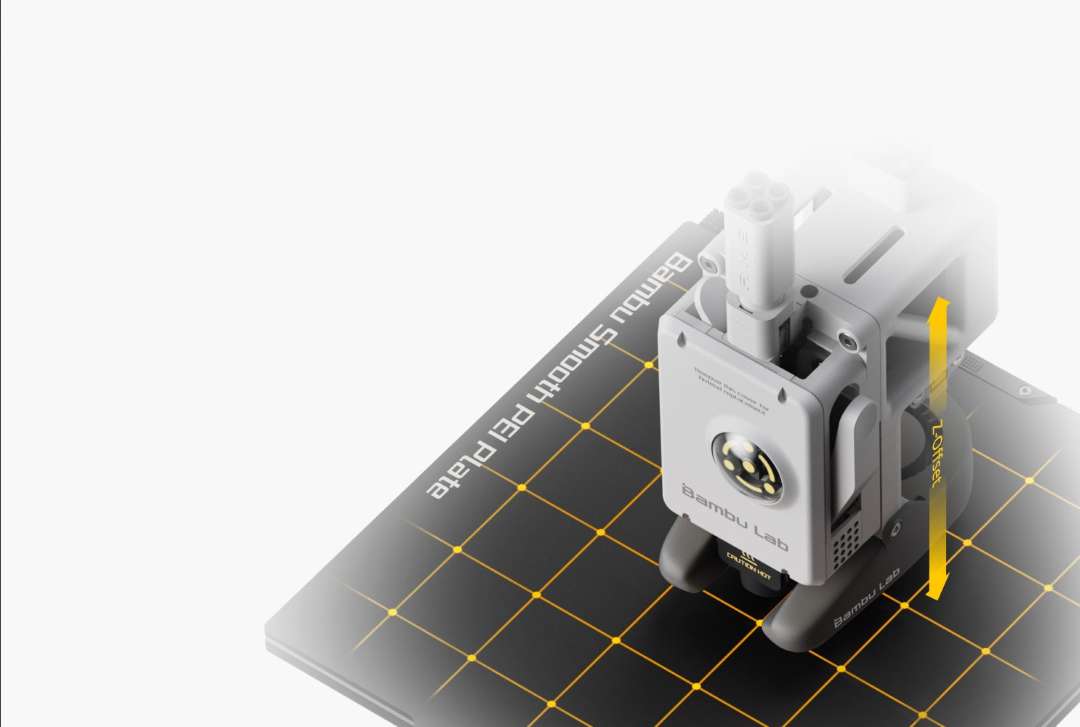
- Full auto-calibration: the system autonomously adjusts the Z-axis offset, resonance, and nozzle pressure.
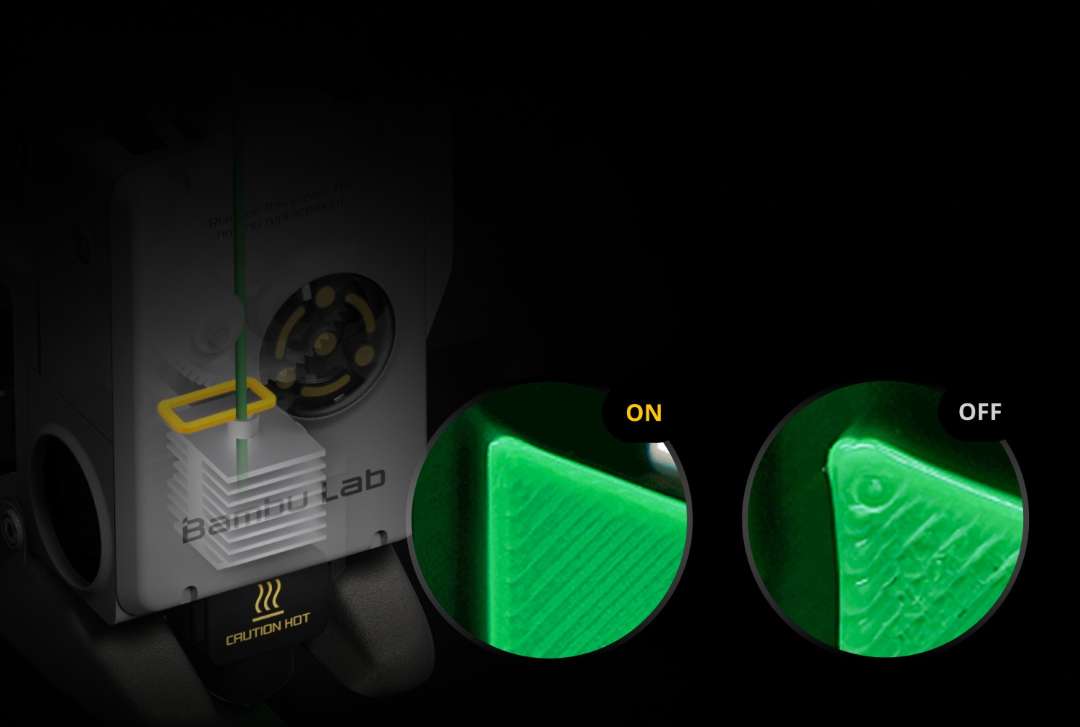
- High-frequency control: an eddy current sensor monitors the pressure for precise material extrusion.
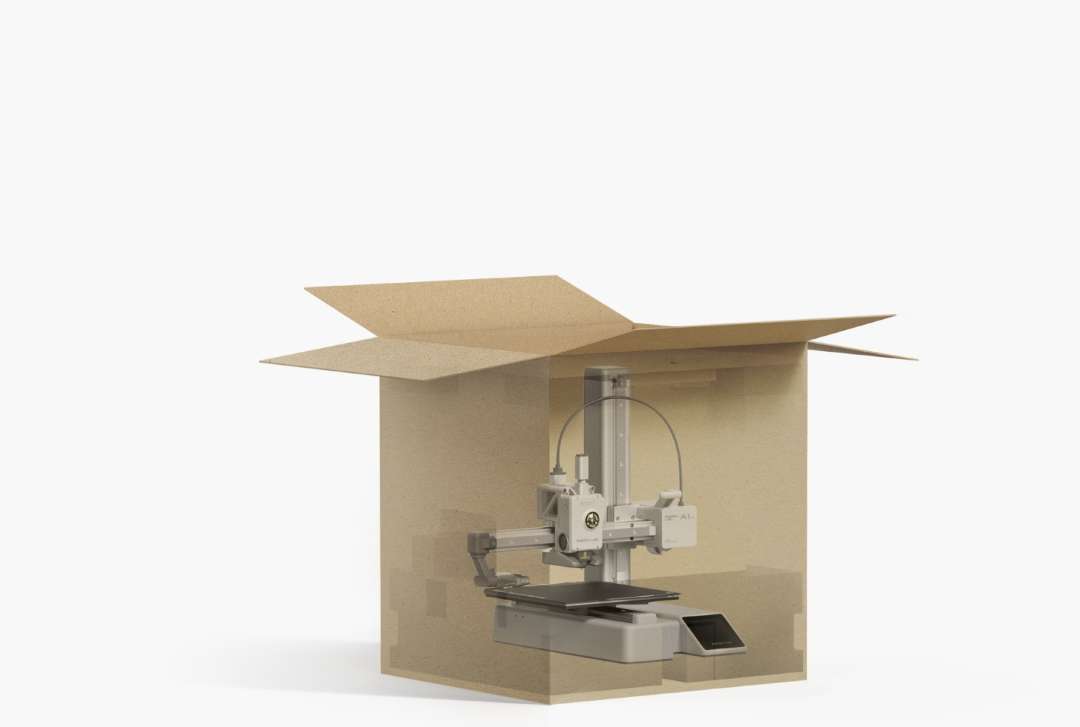
- Quick deployment: the printer comes pre-assembled, so the first launch takes about 20 min.
Printing technology and extrusion
The extruder uses an eddy current sensor to measure the pressure inside the nozzle. The active flow compensation algorithm continuously adjusts the material feed. This guarantees a stable line thickness at high speeds.
Automation and calibration
The model handles all the basic setup steps before launch. The sensors autonomously adjust the Z-axis offset and check the bed level. The equipment also scans for resonant vibrations to adapt the movements.
The user receives a device with pre-installed kinematics. Mounting the components does not require complex manipulations with tools.
Design and kinematics
The kinematic system relies on a rigid steel frame and metal linear guides. Active noise cancellation compensates for the individual acoustic deviations of the stepper motors. This reduces the operating sound level during printing.
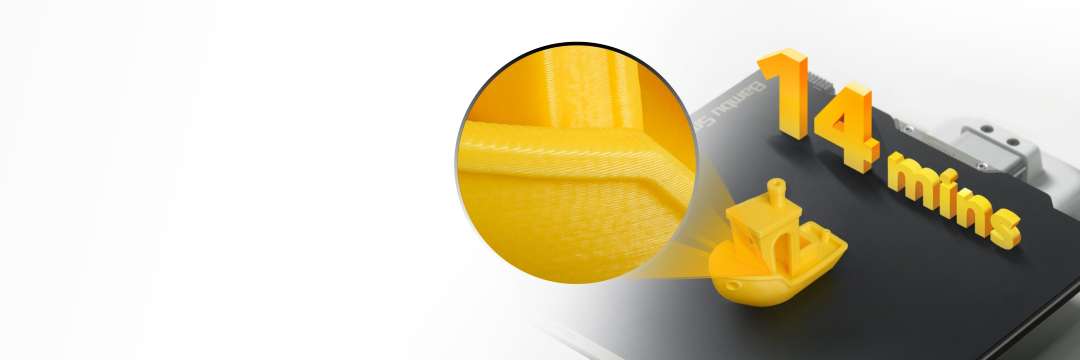
The microcontroller smoothly processes complex motion trajectories. The device is capable of producing a standard test sample in 14 min.
Software and control
The camera records the model building process and saves a timelapse video. Task management is handled via the Bambu Studio or Bambu Handy apps. The operator can monitor the process remotely.
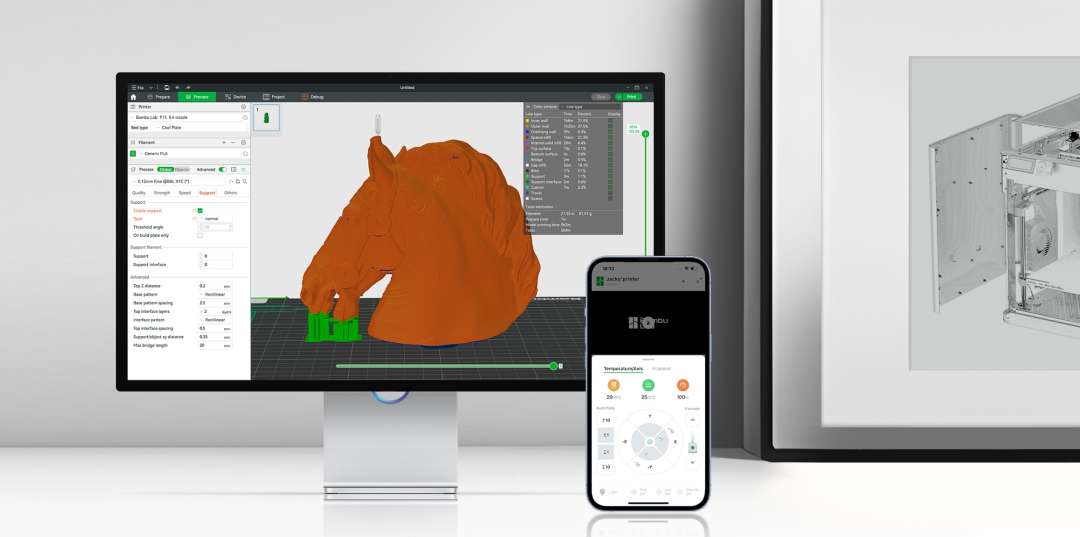
An overview of the ecosystem's capabilities demonstrates the process of preparing the printer for operation.
Areas of application
- Rapid prototyping producing test samples at a speed of 500 mm/s shortens the development cycle.
- Educational institutions a noise level of 48 dB allows the device to be safely used in classrooms.
- Small-scale production flawless auto-calibration ensures geometric repeatability in every batch.
- Architectural modelling precise material extrusion provides accurate reproduction of small facade details.
Compatible accessories and materials
- Build plates: textured Bambu Textured PEI Plate and smooth Bambu Smooth PEI Plate.
- Filaments: PLA, PETG, TPU, and PVA plastics.
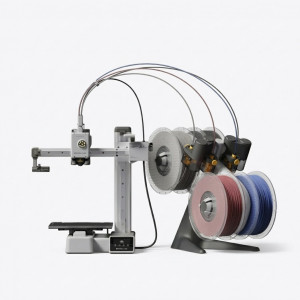
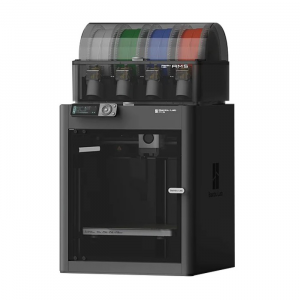
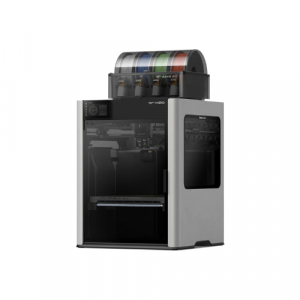
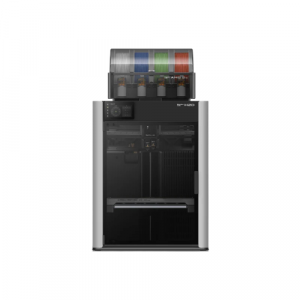
- Multi-colour systems: AMS lite module (other versions require an AMS Hub).
What's in the box?
- A1 mini
- Spool holder
- Nozzle cleaner (Purge Wiper)
- Build plate
- PTFE tube (1 pc)
- Bambu filament samples (20 g)
- Stainless steel nozzle (0.4 mm)
- Accessory box
Technical specifications
General information
| Parameter | Value |
| Build volume | 180 × 180 × 180 mm³ |
| Frame | Steel + extruded aluminium |
| Compatible build plate | Bambu Textured PEI Plate, Bambu Smooth PEI Plate |
| Max. build plate temperature | 80 °C |
| Ideal | PLA, PETG, TPU, PVA |
| Not recommended | ABS, ASA, PC, PA, PET, carbon or glass fibre reinforced polymers |
| Dimensions | 347 × 315 × 365 mm³ |
| Net weight | 5.5 kg |
| Input voltage | 100–240 VAC, 50/60 Hz |
| Max. power | 150 W |
| Slicer | Bambu Studio (supports third-party slicers that export standard Gcode, such as SuperSlicer, PrusaSlicer, and Cura, but some advanced features may not be supported) |
| Slicer supported OS | macOS, Windows |
Toolhead
| Parameter | Value |
| Hotend | All-metal |
| Extruder gears | Steel |
| Nozzle | Stainless steel |
| Max. hotend temperature | 300 °C |
| Nozzle diameter (included) | 0.4 mm |
| Nozzle diameter (optional) | 0.2 mm, 0.6 mm, 0.8 mm |
| Filament cutter | Yes |
| Filament diameter | 1.75 mm |
Speed
| Parameter | Value |
| Max. toolhead speed | 500 mm/s |
| Max. toolhead acceleration | 10 m/s² |
| Max. hotend flow | 28 mm³/s @ABS (model: 150×150 mm, single wall; material: Bambu ABS; temperature: 280 °C) |
Cooling
| Parameter | Value |
| Part cooling fan | Closed-loop control |
| Hotend fan | Closed-loop control |
| MC board cooling fan | Closed-loop control |
Sensors
| Parameter | Value |
| Monitoring camera | Low framerate camera (up to 1080P), timelapse supported |
| Filament runout sensor | Yes |
| Filament odometry | Yes |
| Power loss recovery | Yes |
| Filament tangle sensor | Yes |
Electronics
| Parameter | Value |
| Display | 2.4-inch, 320×240 IPS touchscreen |
| Connectivity | Wi-Fi, Bambu-Bus |
| Storage | Micro SD card |
| Control interface | Touchscreen, app, PC application |
| Motion controller | Dual-core Cortex M4 |
Wi-Fi
| Parameter | Value |
| Frequency range | 2412 MHz – 2472 MHz (CE), 2412 MHz – 2462 MHz (FCC), 2400 MHz – 2483.5 MHz (SRRC) |
| Transmitter power (EIRP) | ≤ 21.5 dBm (FCC), ≤ 20 dBm (CE/SRRC) |
| Protocol | IEEE 802.11 b/g/n |
Why buy the Bambu Lab A1 MIni from EXPERT3D?
EXPERT3D has been supplying professional 3D equipment since 2012. We provide expert pre-sales consultations and help with system configuration. Our company offers delivery throughout Spain and EU countries. Order original spare parts and consumables on the website: we will deliver everything promptly so that the equipment does not sit idle. Engineers provide qualified service support after purchase.