

- Stock: In Stock
- Product code: 920372000001150050
- Weight Brutto: 6.50kg
- SKU: 00-00000300

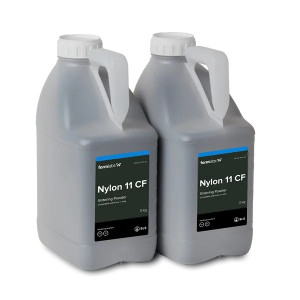
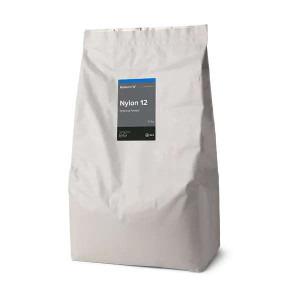
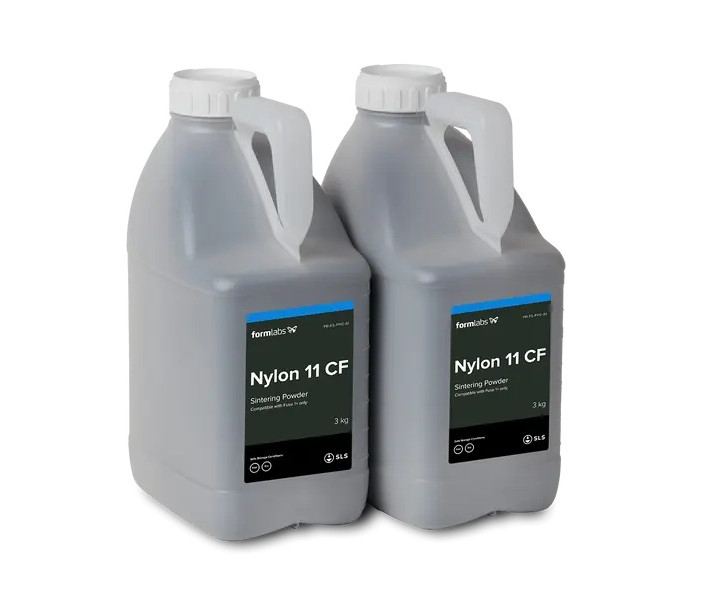
Formlabs Nylon 11 CF Powder is a carbon fiber-reinforced SLS material engineered exclusively for the Fuse 1+ 30W, combining a PA11 base with structural carbon fiber reinforcement. It achieves a tensile modulus of 5.3 GPa (X axis) and a heat deflection temperature of 178 °C at 1.8 MPa — enabling lightweight, dimensionally stable end-use parts that survive repeated dynamic loading. The 6 kg cartridge with a 30% recommended refresh rate suits production-volume workflows requiring composite-class mechanical performance.
| Specification | Why it matters |
|---|---|
| Tensile Modulus (X axis): 5.3 GPa | Enables direct substitution of machined metal in load-bearing assemblies without secondary processing. |
| Heat Deflection Temp. @ 1.8 MPa: 178 °C | Parts hold dimensional geometry under sustained combined thermal and mechanical stress. |
| Notched Izod Impact Strength: 74 J/m | Survives repeated dynamic loading — suitable for jigs, structural brackets, and protective components. |
| Recommended Refresh Rate: 30% | Low fresh-powder addition keeps per-build material cost predictable across production runs. |
Nylon 11 CF Powder sits at the intersection of toughness and stiffness in the Formlabs SLS portfolio. Its PA11 base contributes 9–15% elongation at break depending on axis orientation — parts deform before fracturing, a behavior absent in glass-fiber grades. Carbon fiber reinforcement raises the flexural modulus to 4.2 GPa while keeping part density low, producing components that replace machined aluminum jigs and lightweight aerospace brackets without adhesive bonding or secondary metal operations.
The material is evaluated for biocompatibility per ISO 10993-1:2020 for long-term intact-skin contact and passes cytotoxicity, irritation, and sensitization standards — extending its use to medical device tooling and regulated production environments. Chemical resistance covers 17 common solvents with weight gain at or below 1.3% in all tested cases.
Formlabs Nylon 11 CF Powder — Material Technology
Carbon Fiber Reinforcement
Plain PA11 absorbs impact through high elongation but lacks the stiffness structural applications demand. Carbon fiber particles anchor the polymer chains during laser sintering, raising stiffness by more than three times compared to the base resin. The tensile modulus reaches 5.3 GPa in the X axis; the flexural modulus reaches 4.2 GPa. These values place the material in composite-substitute territory, competing with machined metal in weight-sensitive assemblies.
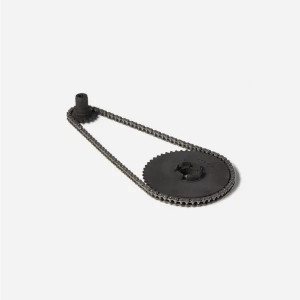
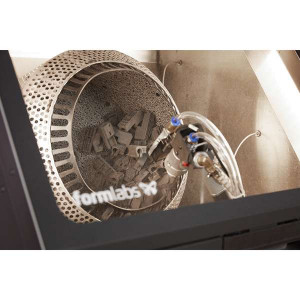
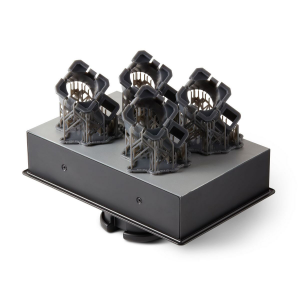
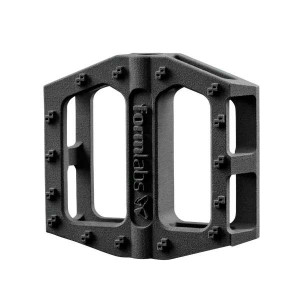
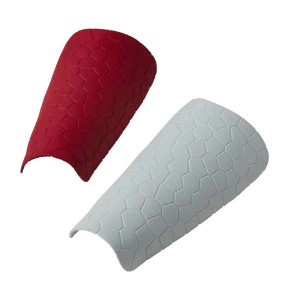
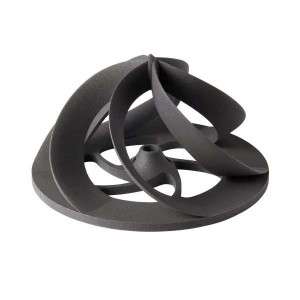
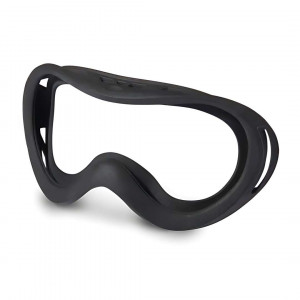
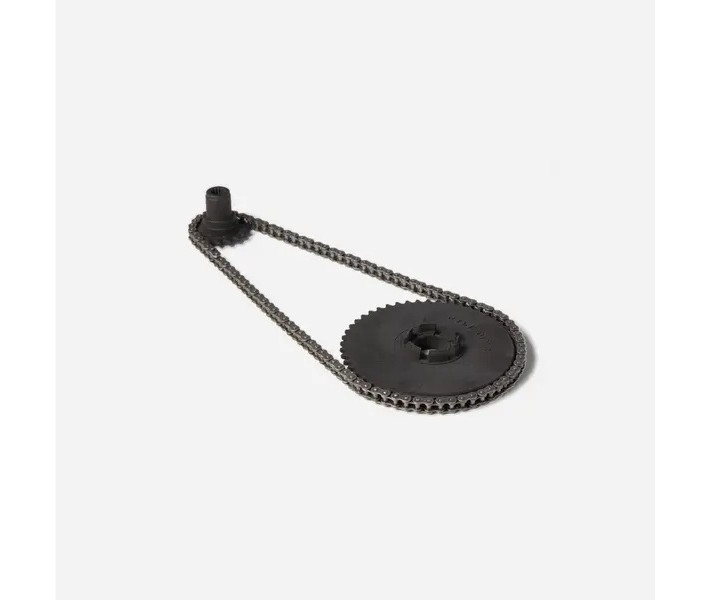
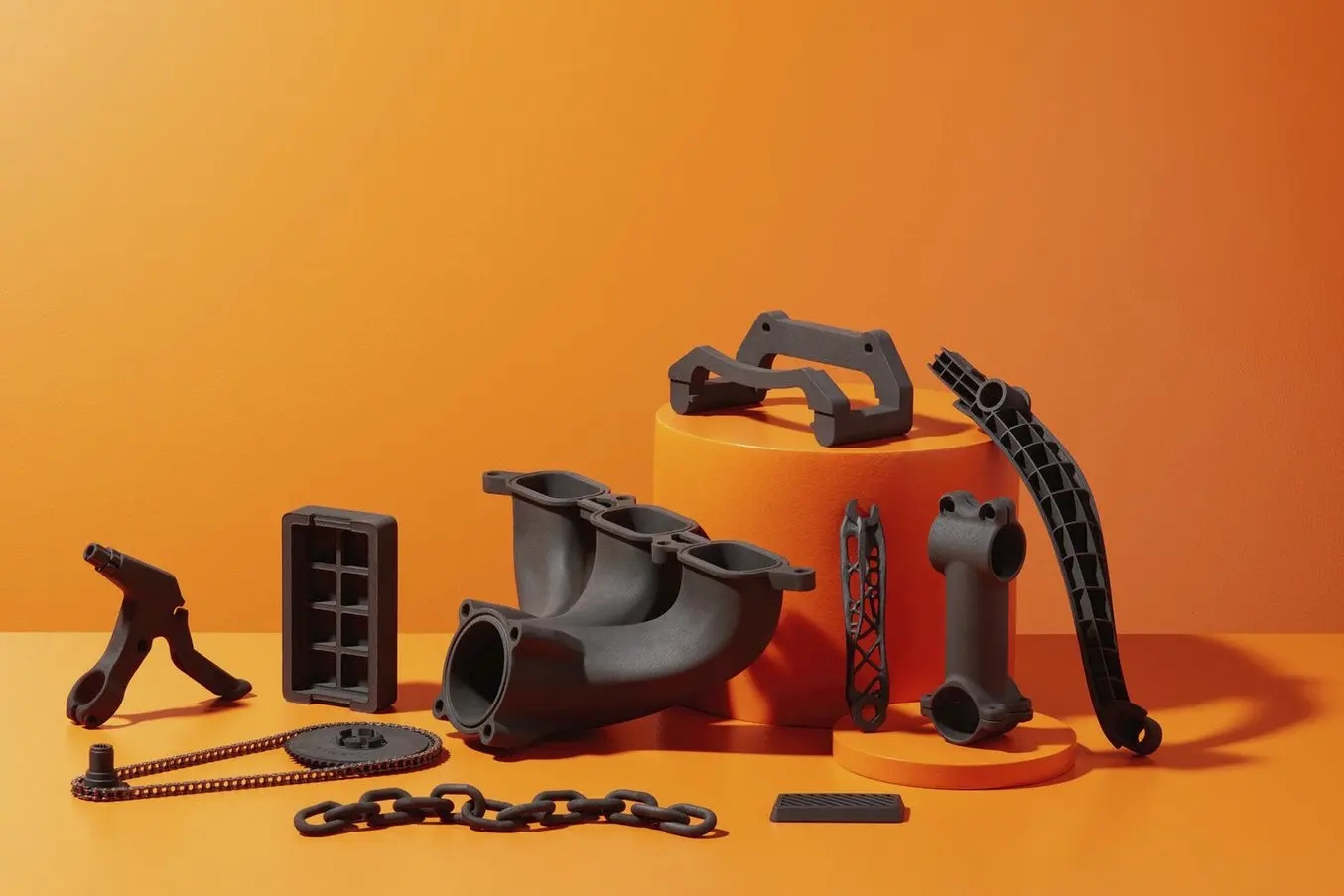
The printed part range below demonstrates the geometric complexity achievable across structural and functional component types using this material.
Anisotropic Behavior and Part Orientation
Carbon fiber particles align preferentially along the X and Y axes during sintering, creating directional stiffness. Tensile modulus is 5.3 GPa in X, 2.8 GPa in Y, and 1.6 GPa in Z — a ratio designers must account for during part orientation. Load-bearing features should align with the X axis to reach peak structural performance. Elongation at break varies correspondingly: 9% in X, 15% in Y, 5% in Z.
Fuse 1+ 30W Compatibility
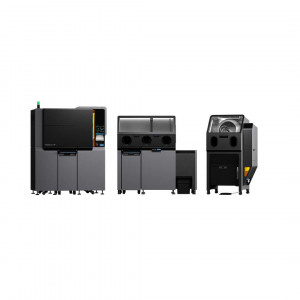
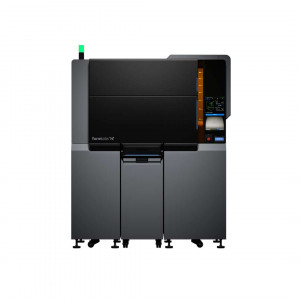
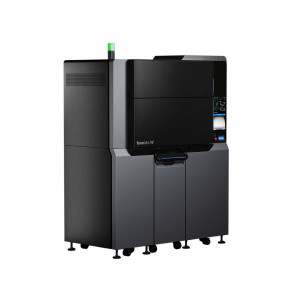
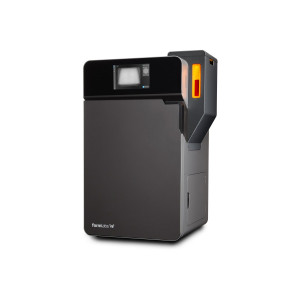
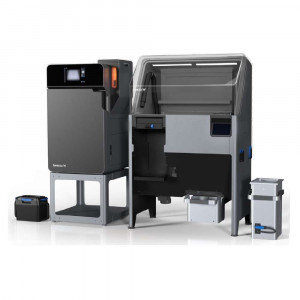
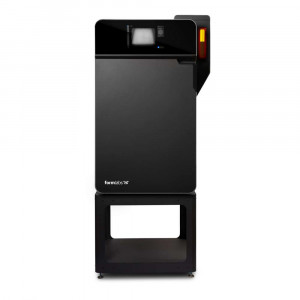
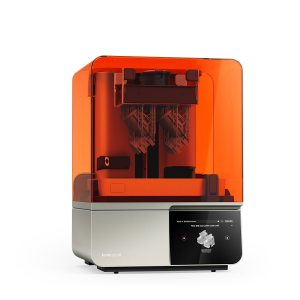
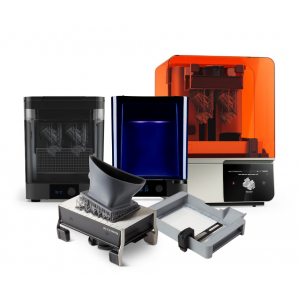
This powder requires the active powder handling system found only in the Fuse 1+ 30W. Using it in a Fuse 1 printer can permanently damage the machine — no exceptions. The Fuse 1+ 30W's nitrogen purge capability is equally critical: Formlabs recommends printing in an inert gas environment — via a nitrogen generator or bottled nitrogen — to achieve consistent mechanical results. This is not optional for optimal part quality.
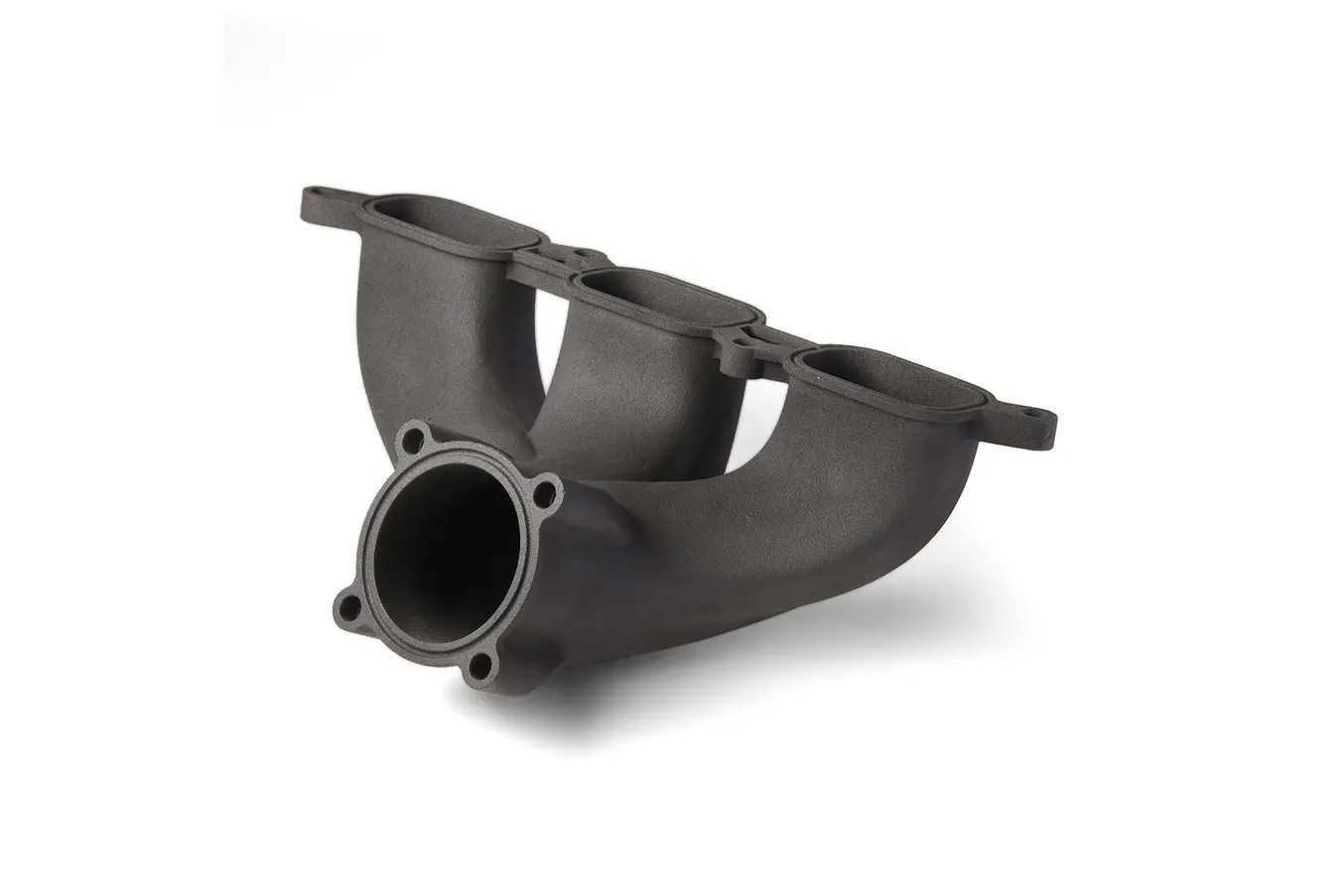
The intake manifold part below illustrates the dark grey matte surface finish characteristic of sintered Nylon 11 CF components.
Biocompatibility and Chemical Resistance
Parts printed in this material are evaluated per ISO 10993-1:2020 and confirmed safe for long-term surface contact (intact skin, >30 days). Three standards are satisfied: cytotoxicity (ISO 10993-5:2009), irritation (ISO 10993-23:2021), and sensitization (ISO 10993-10:2021). Chemical resistance covers 17 common solvents — weight gain stays at or below 1.3% in all tested cases; isooctane (gasoline) registers 0.0%.
Powder Handling and the 300 µm Sieve
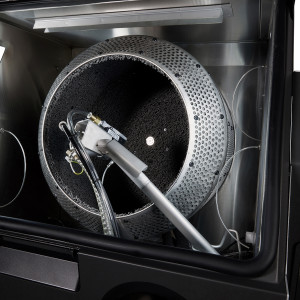
Before recovering printed parts, replace the Fuse Sift's standard 150 µm mesh with the 300 µm sifter mesh supplied separately by Formlabs. Nylon 11 CF powder clumps more aggressively than standard nylon in its unsintered state — the finer mesh blocks during part recovery. For best results, fill a powder cartridge simultaneously while sifting to keep powder in motion and prevent bridging. Pour only the fresh powder amount needed for the selected refresh rate into the fresh hopper.
Applications
- Structural metal replacement: Parts printed in this material substitute machined aluminum and steel jigs, fixtures, and brackets at significantly lower weight — without secondary bonding or machining steps.
- Automotive and aerospace: Intake manifolds, structural housings, and lightweight brackets withstand under-hood temperatures and vibration loads, supported by the 178 °C heat deflection temperature.
- High-impact tooling: Jigs and protective components that absorb repeated dynamic loads benefit from the 74 J/m impact strength and the PA11 base's pre-fracture deformation behavior.
- Functional composite prototypes: Validation workflows requiring real mechanical properties use this material to test fit, load response, and thermal behavior before committing to production tooling.
- Medical device tooling: ISO 10993-1:2020 biocompatibility evaluation enables use in regulated environments where long-term skin contact is a requirement.
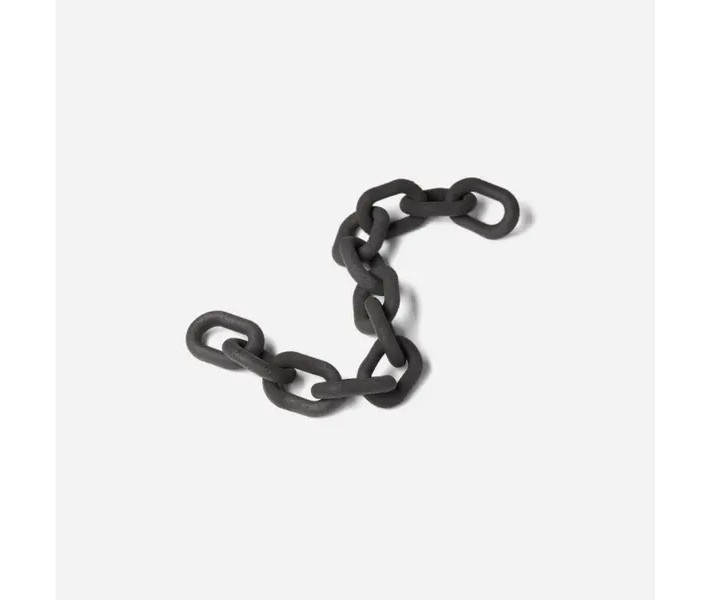
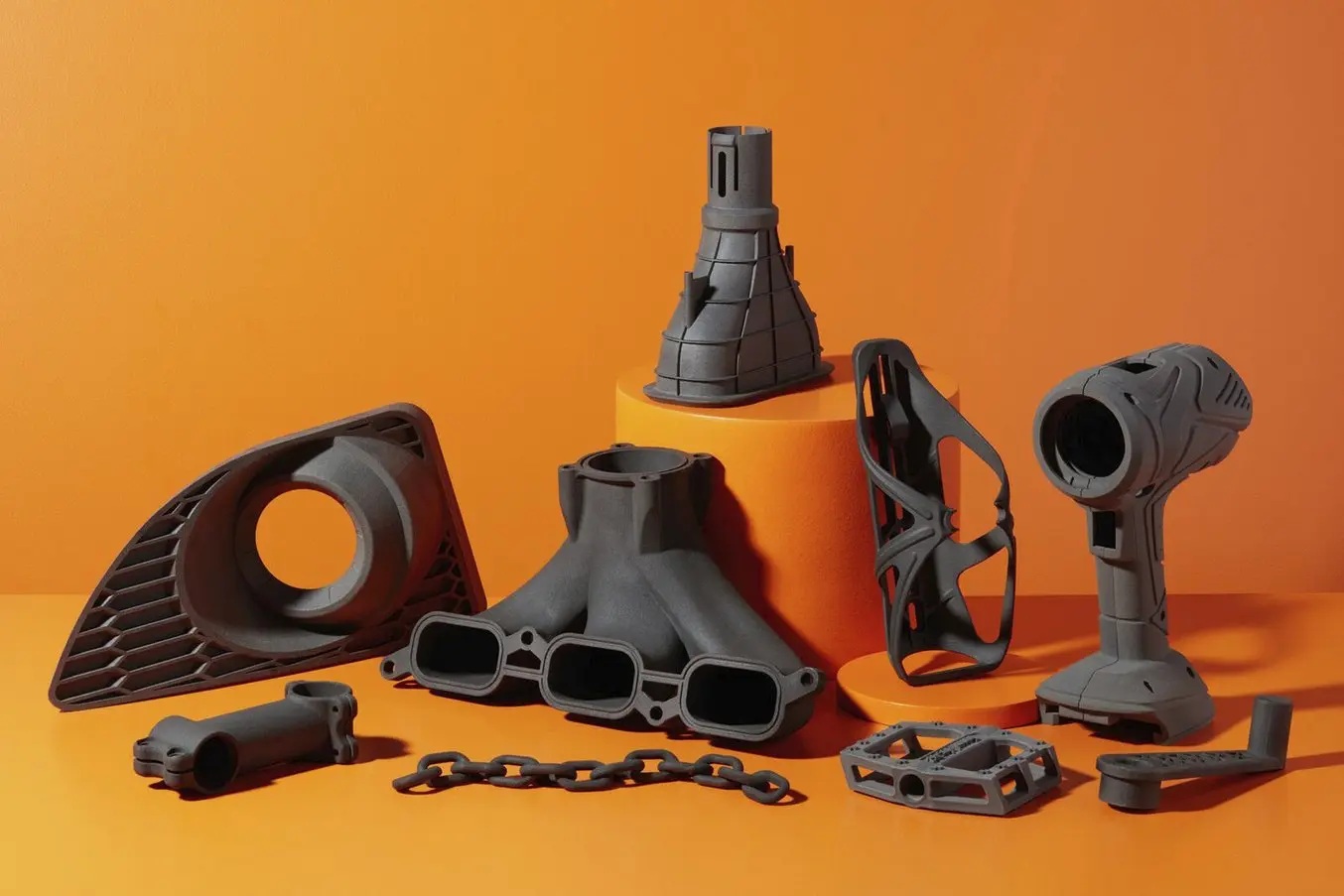
The industrial end-use part selection below shows representative automotive, aerospace, and tooling applications achievable with this material.
Compatibility and accessories
- Compatible printer: Fuse 1+ 30W only — the active powder handling system is required; use in a Fuse 1 can permanently damage the machine
- Required sifter mesh: 300 µm mesh for the Fuse Sift, replacing the standard 150 µm mesh (sold separately by Formlabs)
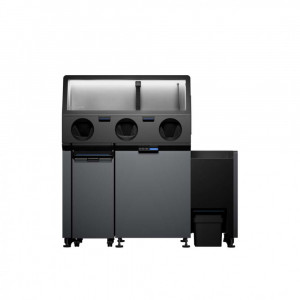
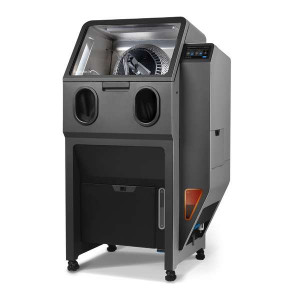
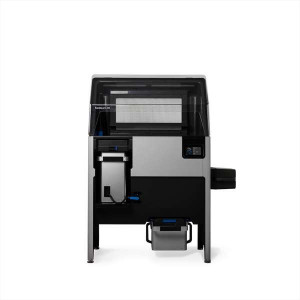
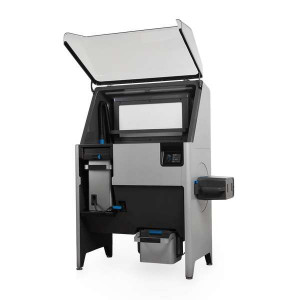
- Post-processing station: Fuse Blast — automatic cleaning cycle only; manual blasting is not permitted with this material
Technical specifications
Tensile Properties
| Parameter | Value |
| Ultimate Tensile Strength (X) | 69 MPa (10 ksi) — ASTM D638-14 Type 1 |
| Ultimate Tensile Strength (Y) | 52 MPa (7.6 ksi) — ASTM D638-14 Type 1 |
| Ultimate Tensile Strength (Z) | 38 MPa (5.5 ksi) — ASTM D638-14 Type 1 |
| Tensile Modulus (X) | 5.3 GPa (770 ksi) — ASTM D638-14 Type 1 |
| Tensile Modulus (Y) | 2.8 GPa (410 ksi) — ASTM D638-14 Type 1 |
| Tensile Modulus (Z) | 1.6 GPa (240 ksi) — ASTM D638-14 Type 1 |
| Elongation at Break (X) | 9% — ASTM D638-14 Type 1 |
| Elongation at Break (Y) | 15% — ASTM D638-14 Type 1 |
| Elongation at Break (Z) | 5% — ASTM D638-14 Type 1 |
Flexural and Impact Properties
| Parameter | Value |
| Flexural Strength | 110 MPa (16 ksi) — ASTM D790-15 |
| Flexural Modulus | 4.2 GPa (610 ksi) — ASTM D790-15 |
| Notched Izod Impact Strength | 74 J/m (1.4 ft-lb/in) — ASTM D256-10 |
Thermal Properties
| Parameter | Value |
| Heat Deflection Temp. @ 1.8 MPa | 178 °C (352 °F) — ASTM D648-16 |
| Heat Deflection Temp. @ 0.45 MPa | 188 °C (370 °F) — ASTM D648-16 |
| Vicat Softening Temperature | 188 °C (370 °F) — ASTM D1525 |
Material and Processing
| Parameter | Value |
| Recommended Refresh Rate | 30% |
| Required Sifter Mesh | 300 µm (Fuse Sift) |
| Compatible Printers | Fuse 1+ 30W only |
| Print Environment | Inert atmosphere (nitrogen recommended) |
| SKU / Part Number | FLP11C01 |
| Net Weight | 6 kg |
Biocompatibility (ISO 10993-1:2020)
| Parameter | Value |
| ISO 10993-5:2009 | Not cytotoxic |
| ISO 10993-23:2021 (Irritation) | Not an irritant |
| ISO 10993-10:2021 (Sensitization) | Not a sensitizer |
Solvent Compatibility (Weight Gain % over 24 h)
| Parameter | Value |
| Acetone | 0.2% |
| Bleach ~5% NaOCl | 0.2% |
| Butyl Acetate | 0.2% |
| Diesel Fuel | 0.6% |
| Diethyl Glycol Monomethyl Ether | 0.5% |
| Hydraulic Oil | 1.0% |
| Hydrogen Peroxide (3%) | 0.2% |
| Isooctane (gasoline) | 0.0% |
| Isopropyl Alcohol | 0.2% |
| Mineral Oil (Light) | 1.3% |
| Salt Water (3.5% NaCl) | 0.2% |
| Skydrol 5 | 0.8% |
| Sodium Hydroxide (0.025% pH 10) | 0.2% |
| Strong Acid (HCl conc.) | 0.8% |
| Tripropylene Glycol Monomethyl Ether (TPM) | 0.8% |
| Water | 0.1% |
| Xylene | 0.2% |
Why choose Formlabs Nylon 11 CF Powder?
Formlabs Nylon 11 CF Powder is the only material in the Formlabs SLS portfolio that combines PA11 ductility with carbon fiber-reinforced stiffness in a single production workflow. It is backed by complete mechanical test data across three axes, biocompatibility evaluation per ISO 10993-1:2020, and solvent resistance data covering 17 reagents. The 6 kg cartridge with a 30% refresh rate integrates directly into the Fuse 1+ 30W workflow. As an official Formlabs material, it guarantees consistent batch-to-batch mechanical performance and full access to authorized technical documentation and post-sale support. For engineering teams replacing machined metal components or validating composite structures under real load conditions, this material offers a documented, production-ready path.