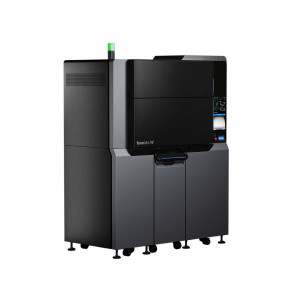


- Stock: In Stock
- Product code:
- Weight Brutto: 6.50kg
- SKU: PD-FS-TP9G-01

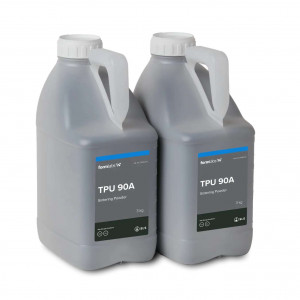
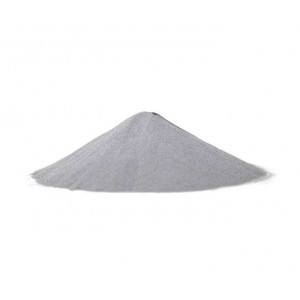
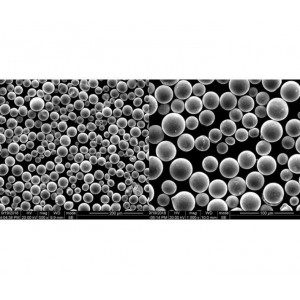
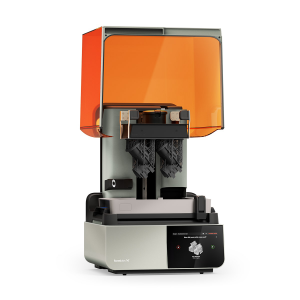
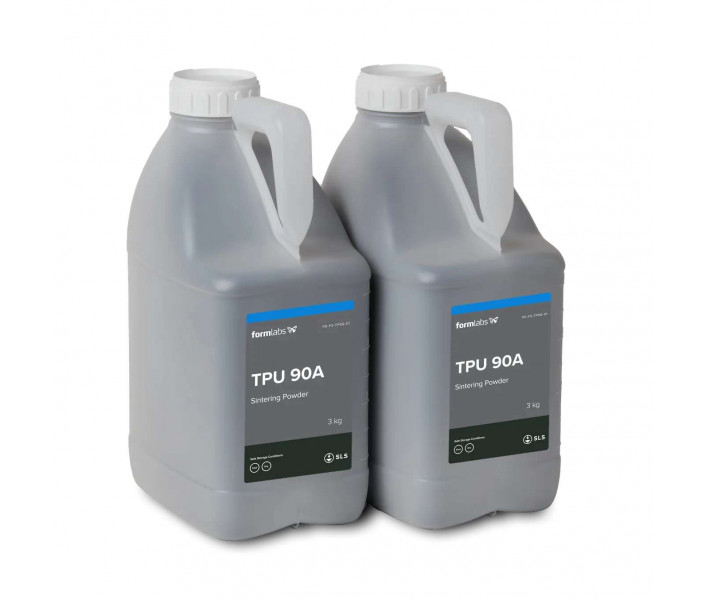
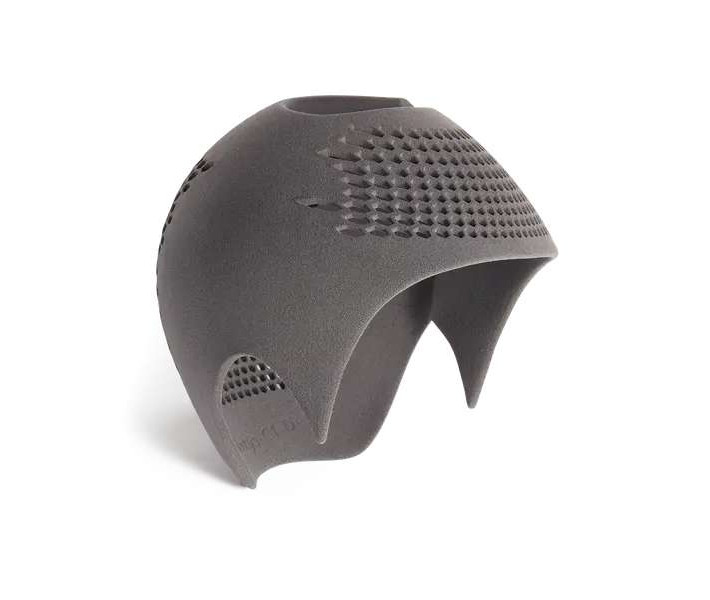
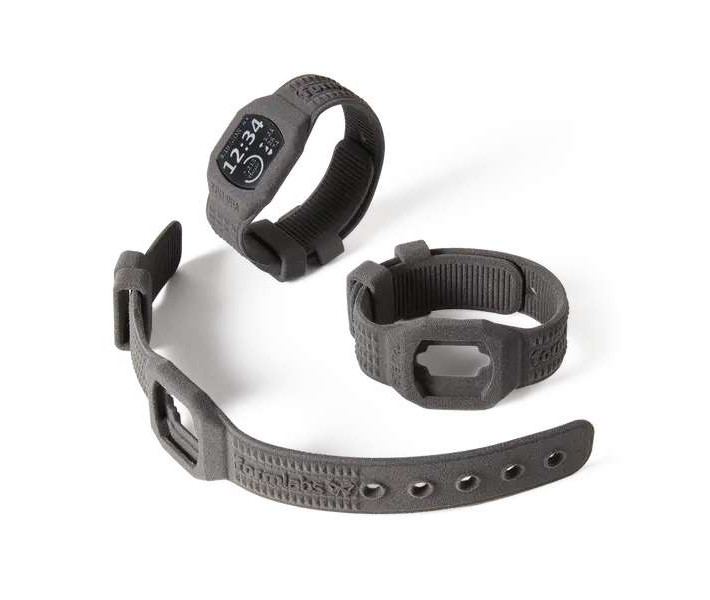
Formlabs TPU 90A Powder is a thermoplastic polyurethane elastomer for SLS printing on Fuse Series printers, producing flexible, resilient, and skin-safe parts with a Shore hardness of 90A and elongation at break of 310% (X/Y). Certified to ISO 10993-1:2018 for cytotoxicity, irritation, and sensitization, it removes the mould-tooling barrier for custom medical devices and skin-contact wearables. Supplied in a 6 kg cartridge, SKU FLTP9G01, at a 20% recommended refresh rate that allows 80% powder reuse per build.
| Specification | Why it matters |
|---|---|
| Elongation at Break (X/Y): 310% | Parts stretch, bend, and recover across thousands of cycles without cracking or splitting. |
| Tear Resistance (X/Y): 66 kN/m | Seals and straps resist splitting at stress risers under sustained working loads. |
| Shore Hardness: 90A | Firm-rubber stiffness holds printed geometry under load while remaining repeatably pliable. |
| Recommended Refresh Rate: 20% | Eighty percent of unfused powder recycles per build, reducing per-part material cost. |
TPU 90A Powder fills the gap between rigid nylon powders and injection-moulded rubber. As the sole elastomer in the Formlabs SLS portfolio, it handles applications where no nylon grade can perform. Compression set at 23 °C measures only 20.5%, so parts recover most of their original shape after sustained loading — a property that makes functional seals, dampers, and wearable devices viable directly from the printer. The 20% refresh rate is the lowest of all Formlabs SLS powders, but the trade-off is justified wherever rigid materials cannot substitute.
Formlabs TPU 90A — Elastomeric Performance
Standard powder-bed fusion powders cannot produce a gasket that seals, a strap that bends, or an orthotic that conforms to skin. TPU 90A addresses this directly. Its 90A Shore hardness places it in firm-rubber territory — stiff enough to hold geometry under load, yet pliable enough to flex repeatedly without cracking. Elongation at break reaches 310% in the X/Y plane, while tear resistance of 66 kN/m (X/Y) prevents splitting at the stress risers that destroy rigid parts.
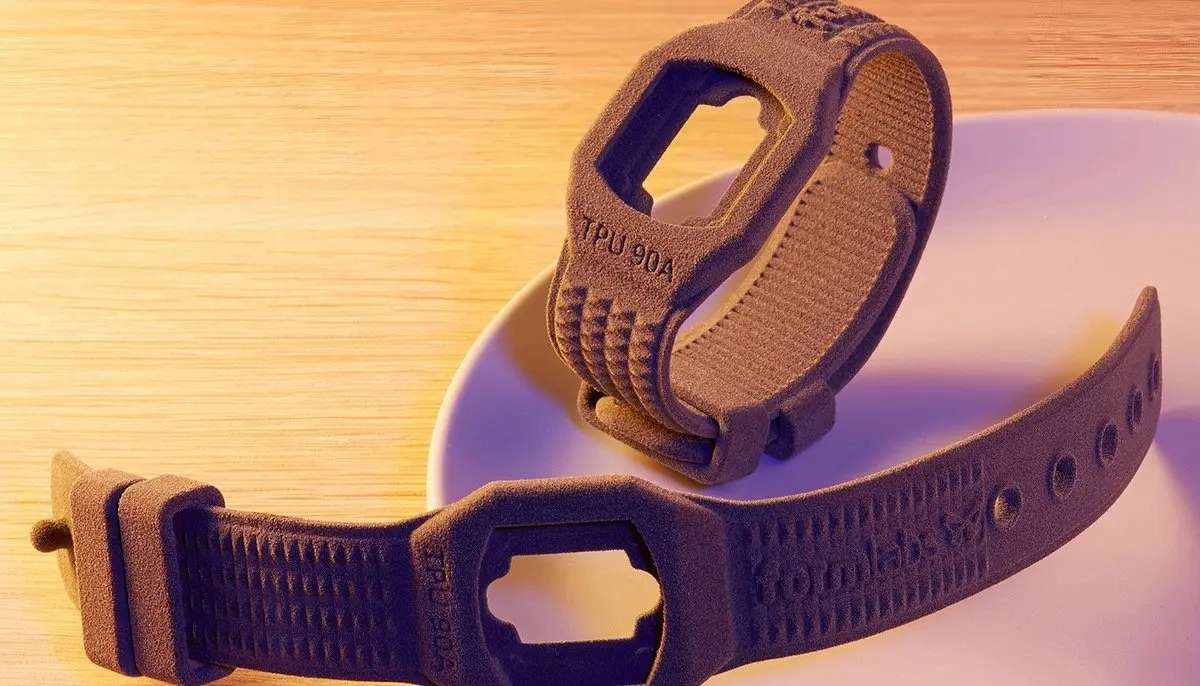
Parts can be bent, twisted, and compressed across thousands of cycles. Compression set at 23 °C is 20.5%, meaning parts recover most of their shape after sustained compression — the property that makes functional seals, dampers, and wearable devices viable from a Fuse printer.
Skin-Safe Certification
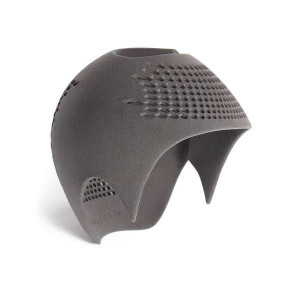
Parts printed in TPU 90A have been evaluated per ISO 10993-1:2018 and passed cytotoxicity (ISO 10993-5:2009), irritation (ISO 10993-23:2021), and sensitization (ISO 10993-10:2021) requirements. This opens a direct path to custom medical devices — cranial helmets, thumb braces, prosthetic liners, and splints — designed from patient scan data and printed on demand without mould tooling.
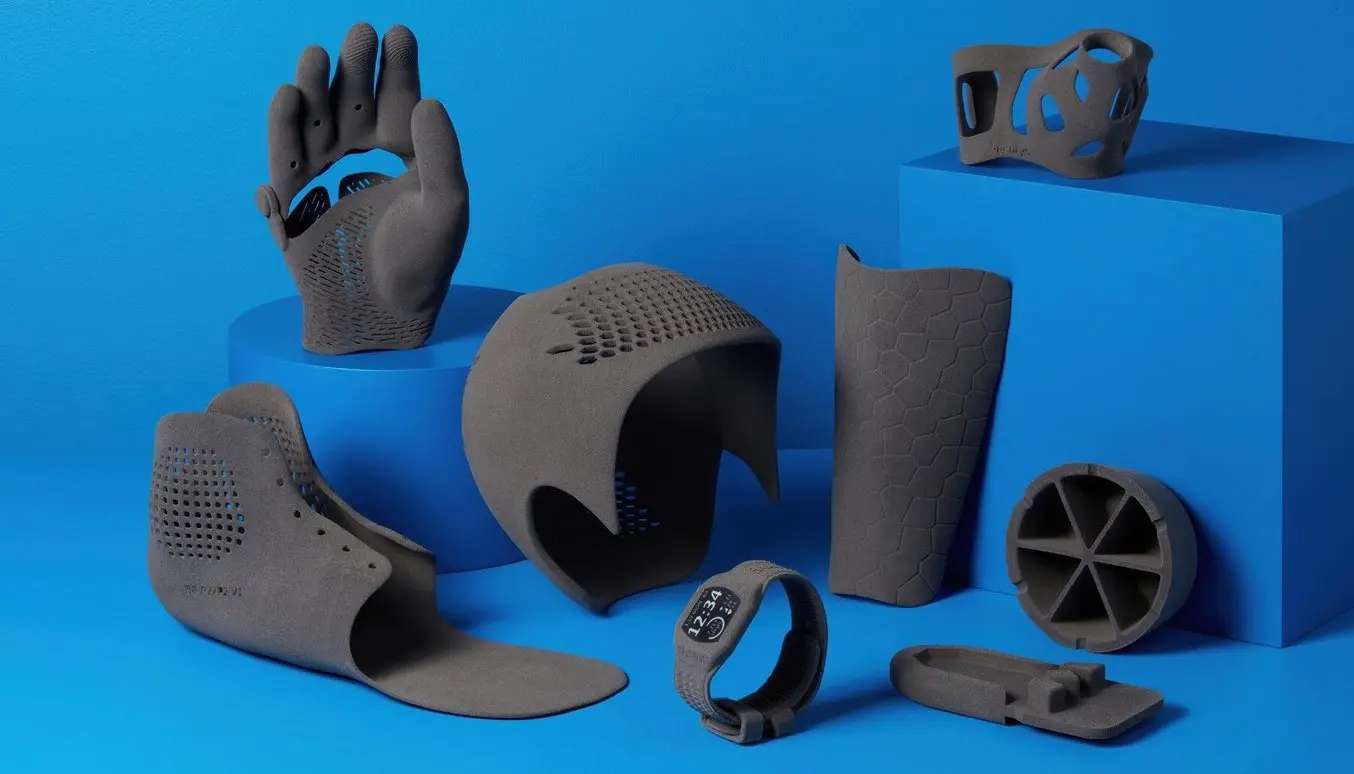
Beyond healthcare, the biocompatibility certification makes this material a practical choice for sports padding, fitness tracker straps, protective gloves, and custom orthotics produced at single-unit volumes.
Sifting Requirements
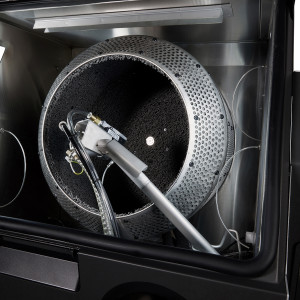
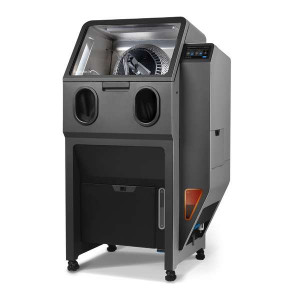
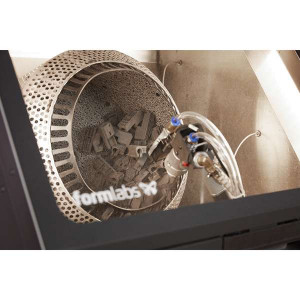
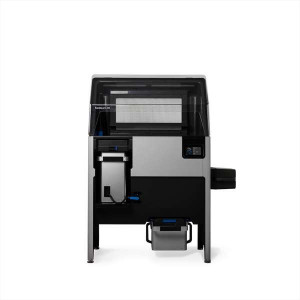
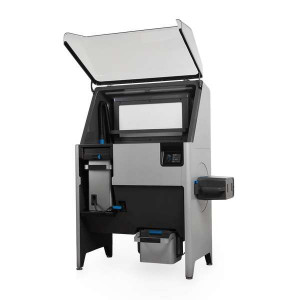
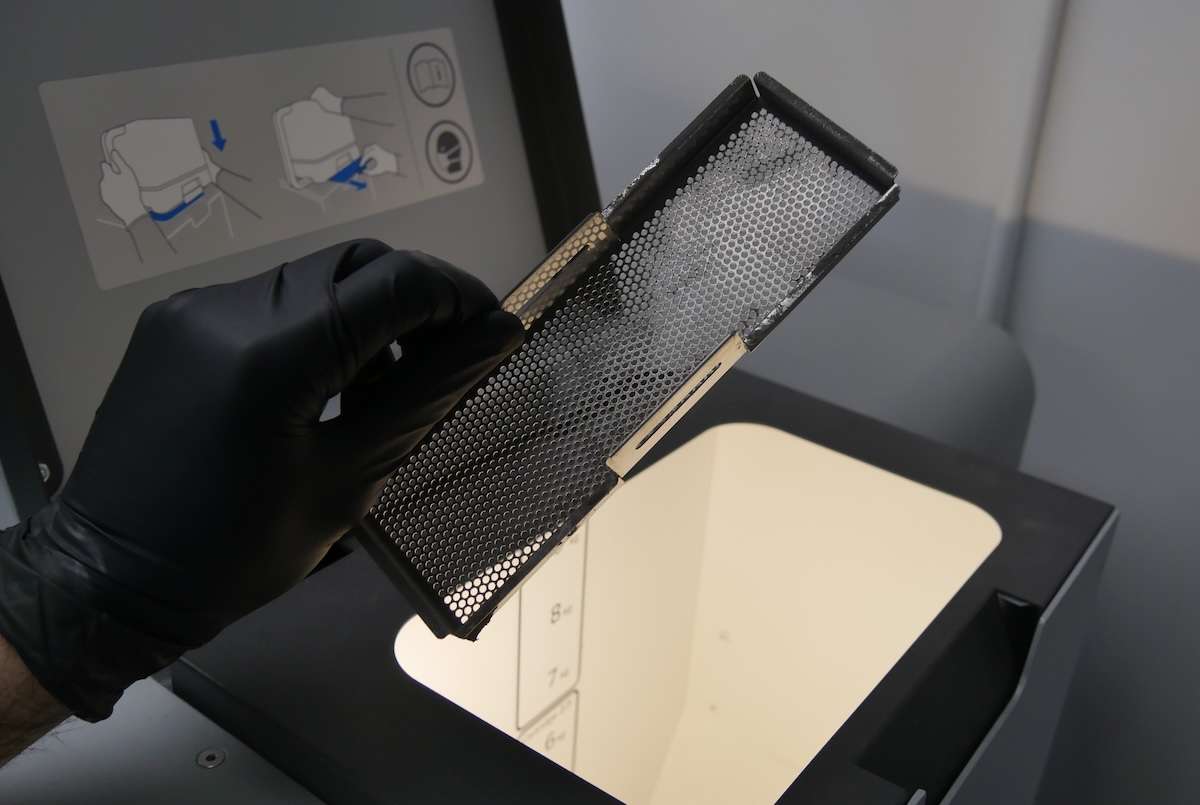
TPU 90A behaves differently from nylon powders in the Fuse Sift. The material requires the standard 150 µm sifter mesh and must be processed while the powder cake is still warm — ideally at 35–40 °C. At room temperature, TPU powder cakes onto parts and resists passing through the mesh; sifting times are noticeably longer than with nylon powders.
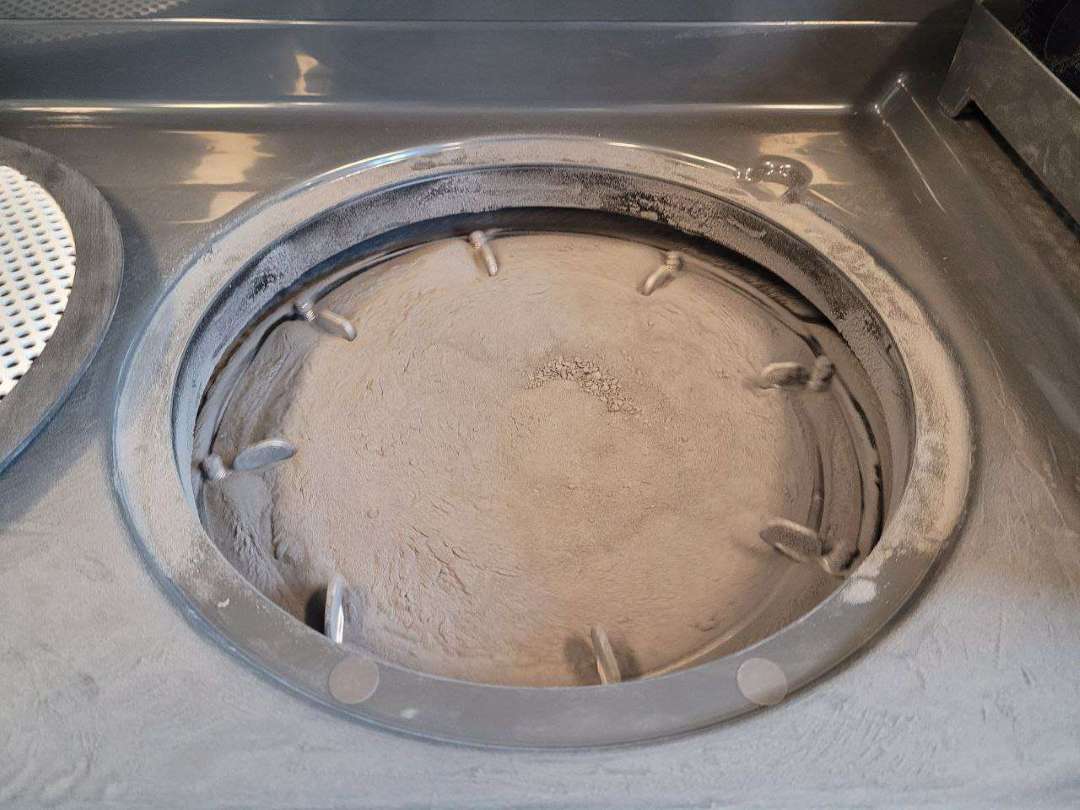
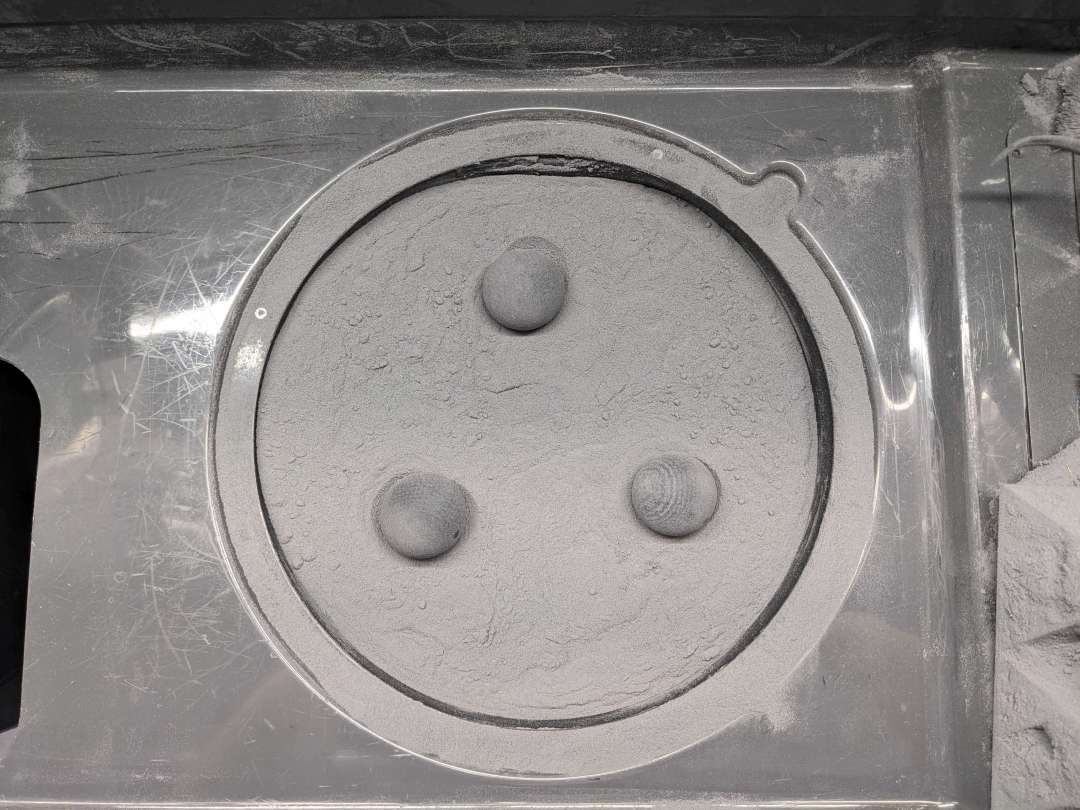
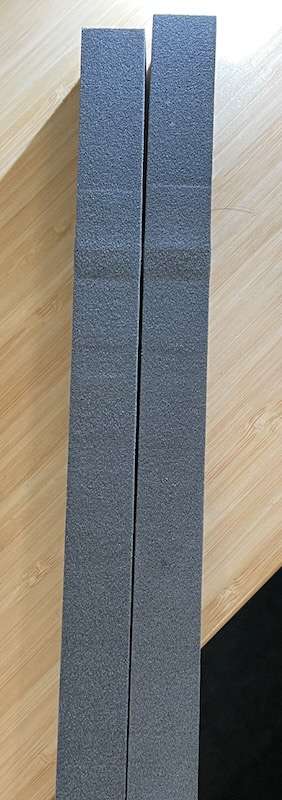
Formlabs recommends printing three mesh clearing balls in TPU 90A and placing them on top of the sieve. These balls agitate during sifting and significantly reduce mesh clogging.
Printer Preparation and Maintenance
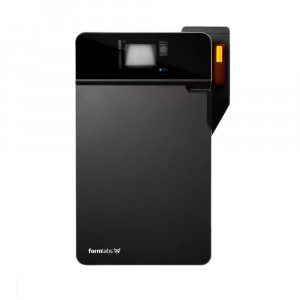
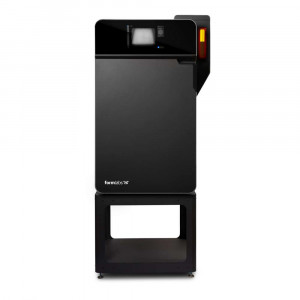
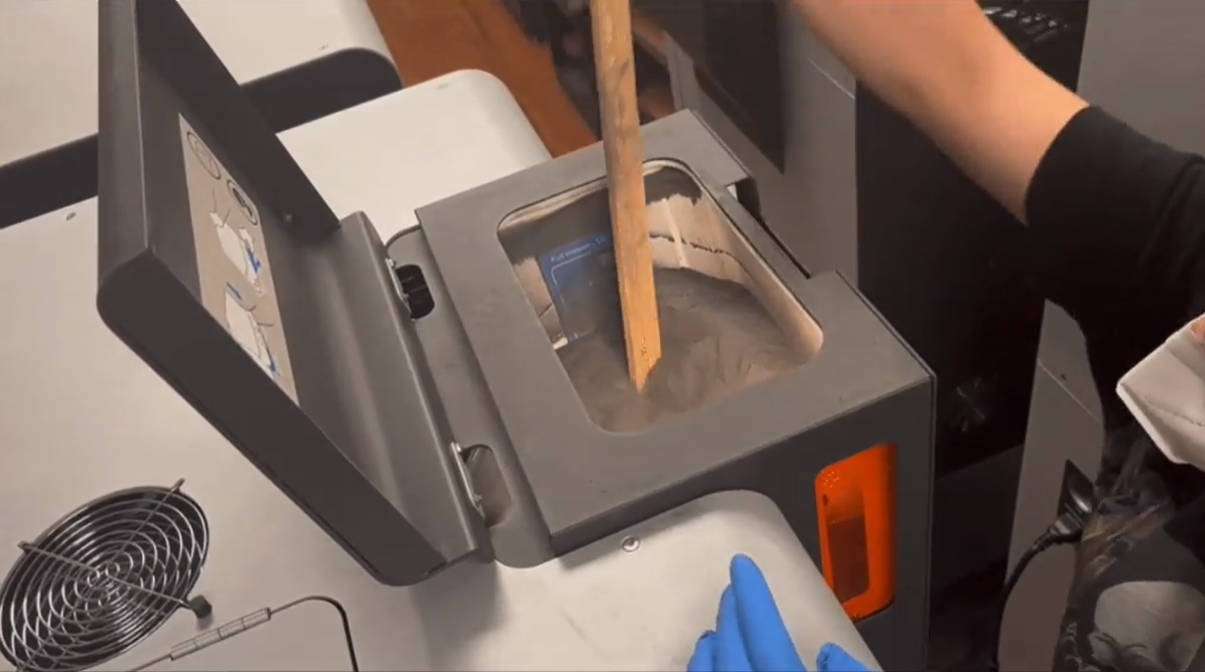
TPU 90A settles and clumps more readily than nylon — mandatory preparation and cleaning steps apply between every print job. On the Fuse 1, always remove the debris catcher from the hopper before printing; leaving it in place causes the material to clump and triggers underdosing failures. Stir the powder in the hopper with a wooden rod before every print. If the printer has been idle more than three days, empty the hopper completely via Settings > Calibration > Empty Hopper, sift the recovered powder, and reload fresh material.
Confirm the powder is levelled and flowing freely before starting a print run.
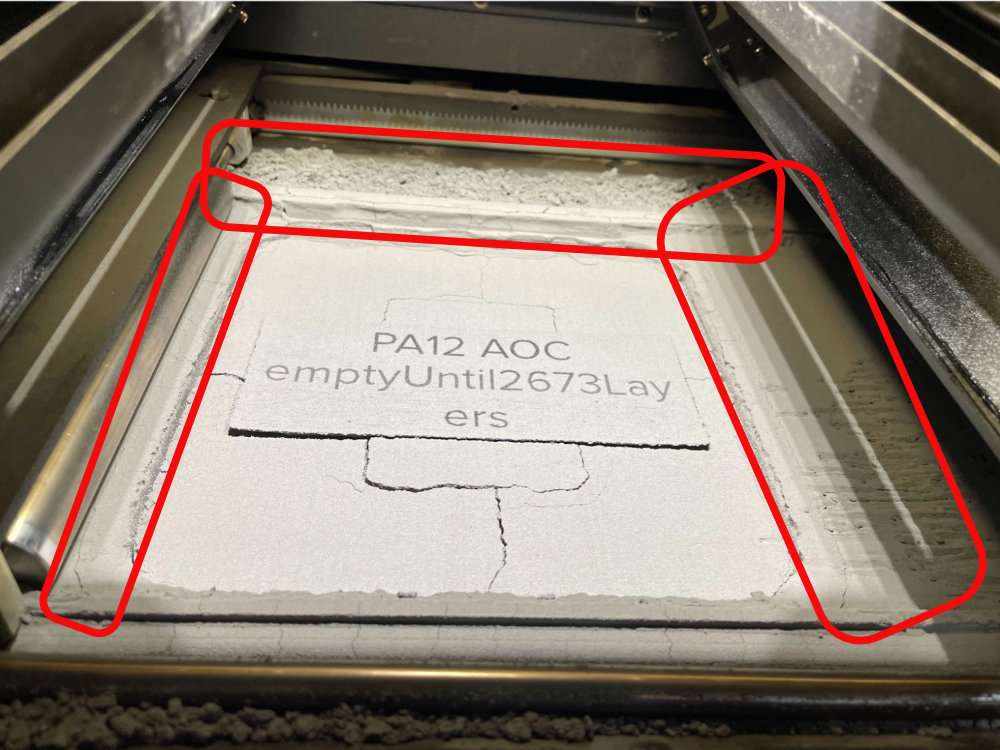
Powder accumulates at the top of the print enclosure, particularly on the runways between the powder troughs and the build chamber. This excess can fuse and be dragged into the next build — vacuum the area thoroughly after every print.
TPU 90A accumulates in the printer troughs more heavily than nylon. Vacuum both troughs completely, using the flipper motor moves via the touchscreen to dislodge compacted powder from hard-to-reach areas before vacuuming.
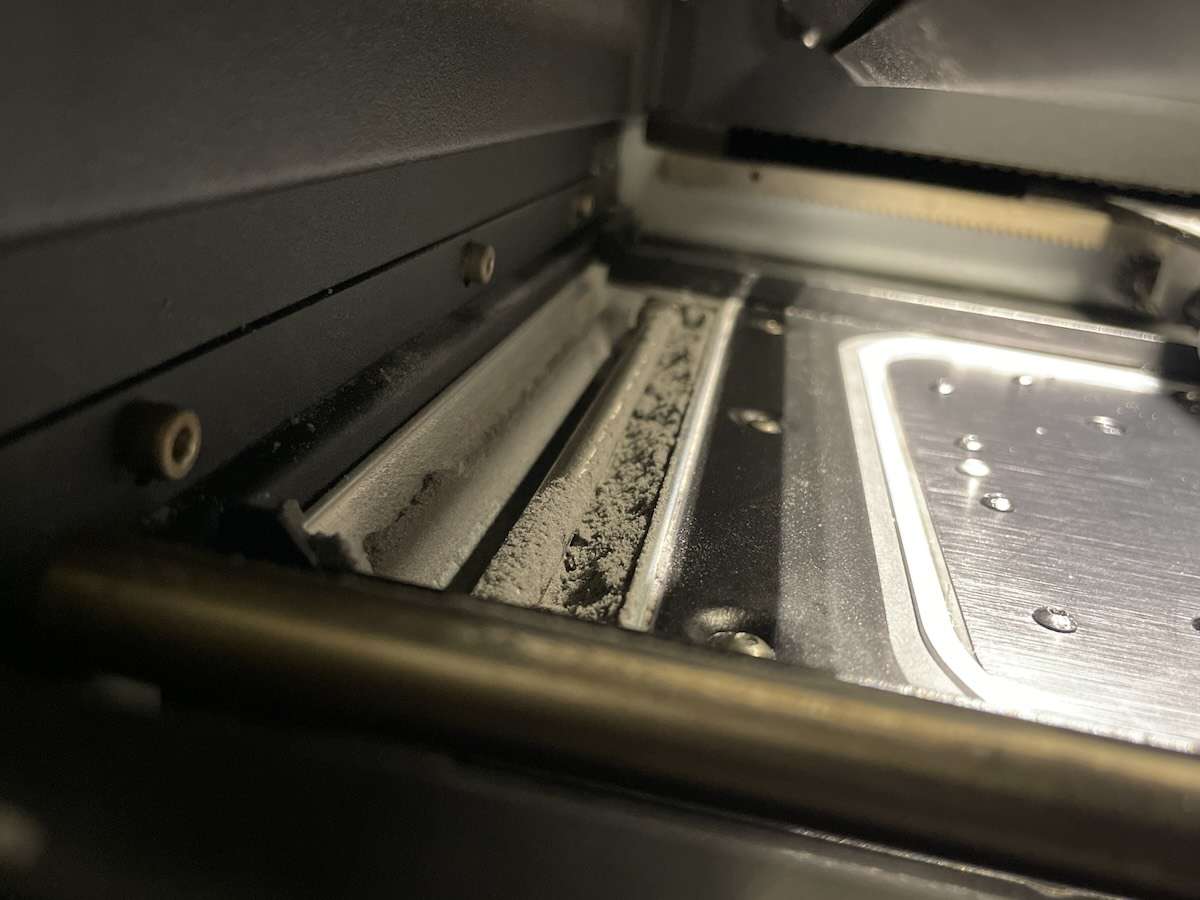
Vacuum the left trough completely, paying particular attention to inner walls and corners.
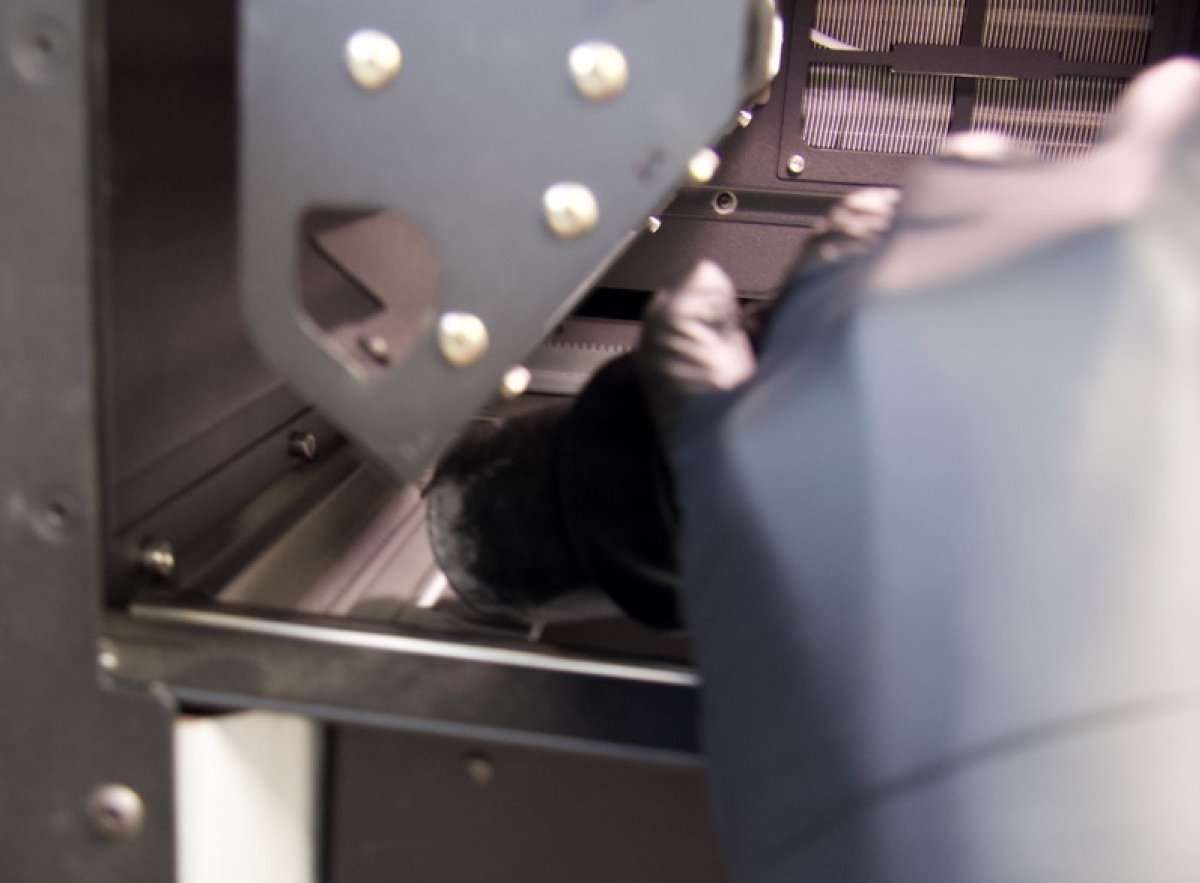
Repeat on the right trough, ensuring the flexible hose attachment reaches all corners and the recoater path area.
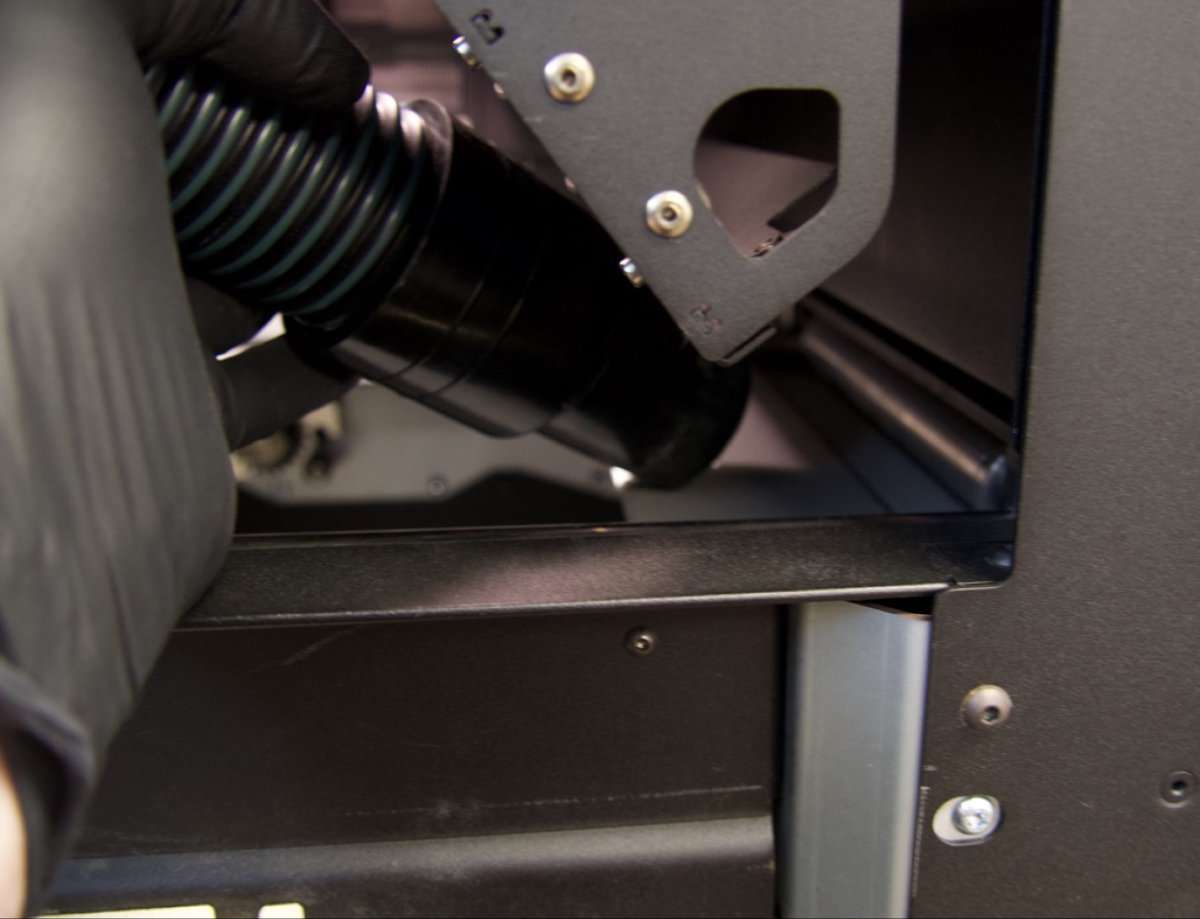
The inner edge of each trough is where TPU 90A most frequently compacts and can cause recoater drag if not cleared.
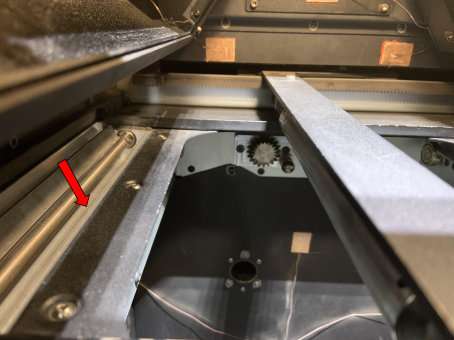
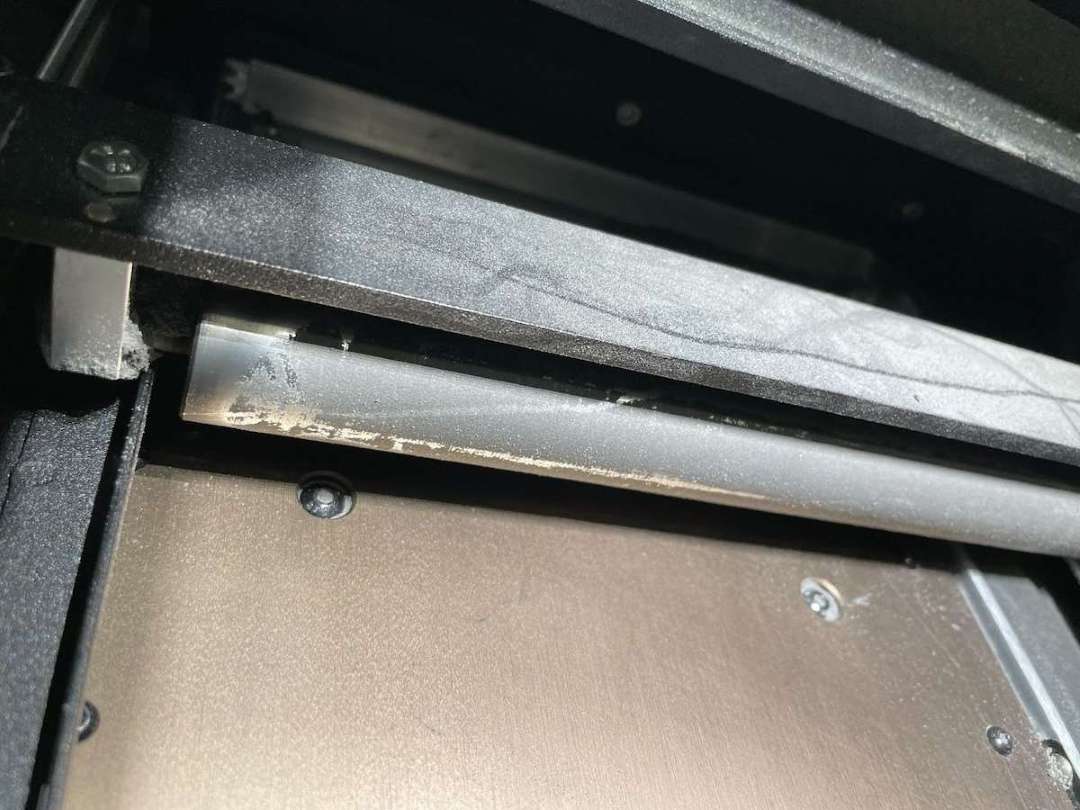
Finally, move the recoater to an accessible position and inspect it for semi-sintered deposits. If coated, clean with a lint-free microfibre cloth wetted with ethanol. When switching to or from TPU 90A, clean every component more thoroughly than a nylon-to-nylon swap — TPU melts at a lower temperature and cross-contamination causes immediate print failures.
Dimensional Accuracy and Fine-Tuning
Dimensional deviations of up to 5% are expected with TPU 90A. For best Z-axis accuracy with V2.1 print settings — which also deliver up to 25% faster print times — place parts near the bottom of the build chamber and away from the walls. If thermal banding, wavy surfaces, or dark sintered regions appear, reduce the Bed Temperature Target in 1–1.5 °C increments and retry.
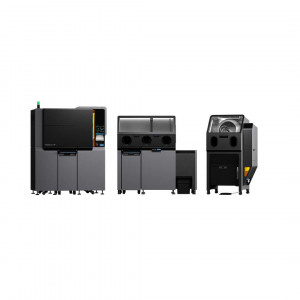
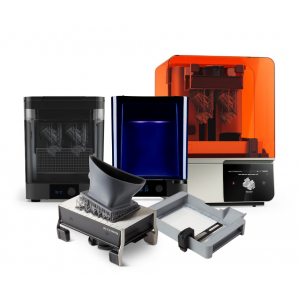
The following video covers SLS powders in the Fuse Series ecosystem, placing TPU 90A in context among the full material portfolio.
Applications
- Medical orthotics and prosthetics: Cranial helmets, thumb braces, prosthetic liners, and splints designed from patient scan data and printed on demand — ISO 10993-1:2018 certification removes the skin-contact regulatory barrier without mould tooling investment.
- Sealing and fluid handling: Gaskets, seals, bellows, and flexible tubing that must deform under pressure and recover shape — a 20.5% compression set at 23 °C ensures reliable sealing over repeated cycles.
- Vibration and impact damping: Soft-touch grips, dampers, vibration isolators, and cushions that absorb shock loads rigid nylon cannot handle.
- Wearable devices: Device housings, straps, and sports padding certified for skin contact — fitness tracker bands, protective gloves, and custom orthotics at single-unit volumes.
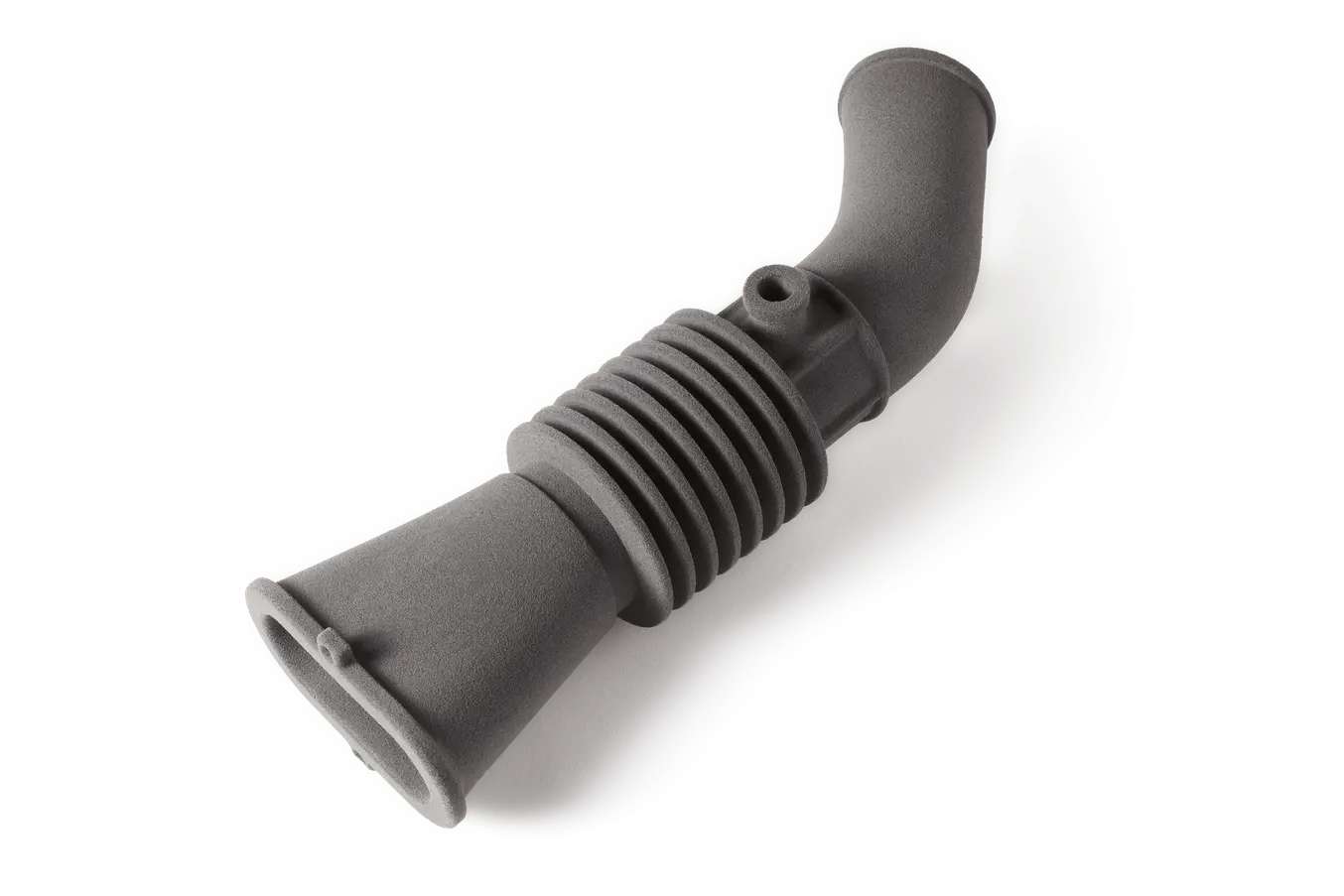
- Automotive flexible components: Corrugated air-intake ducts, hoses, and flexible connectors with integrated bellows and mounting features impossible to achieve in rigid nylon.
- Tooling and forming: Soft moulds and sheet-metal forming dies requiring controlled compliance rather than rigid support.
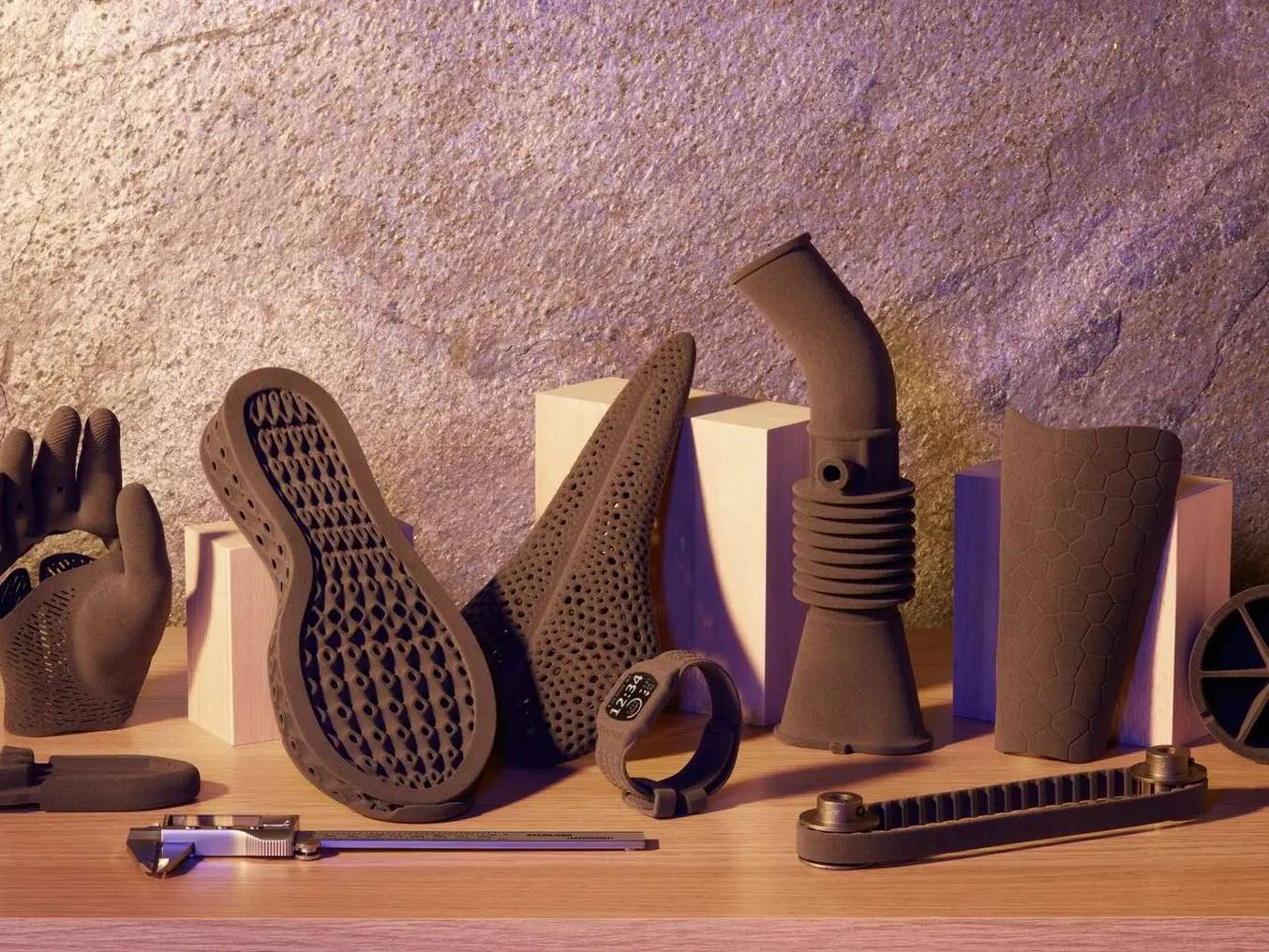
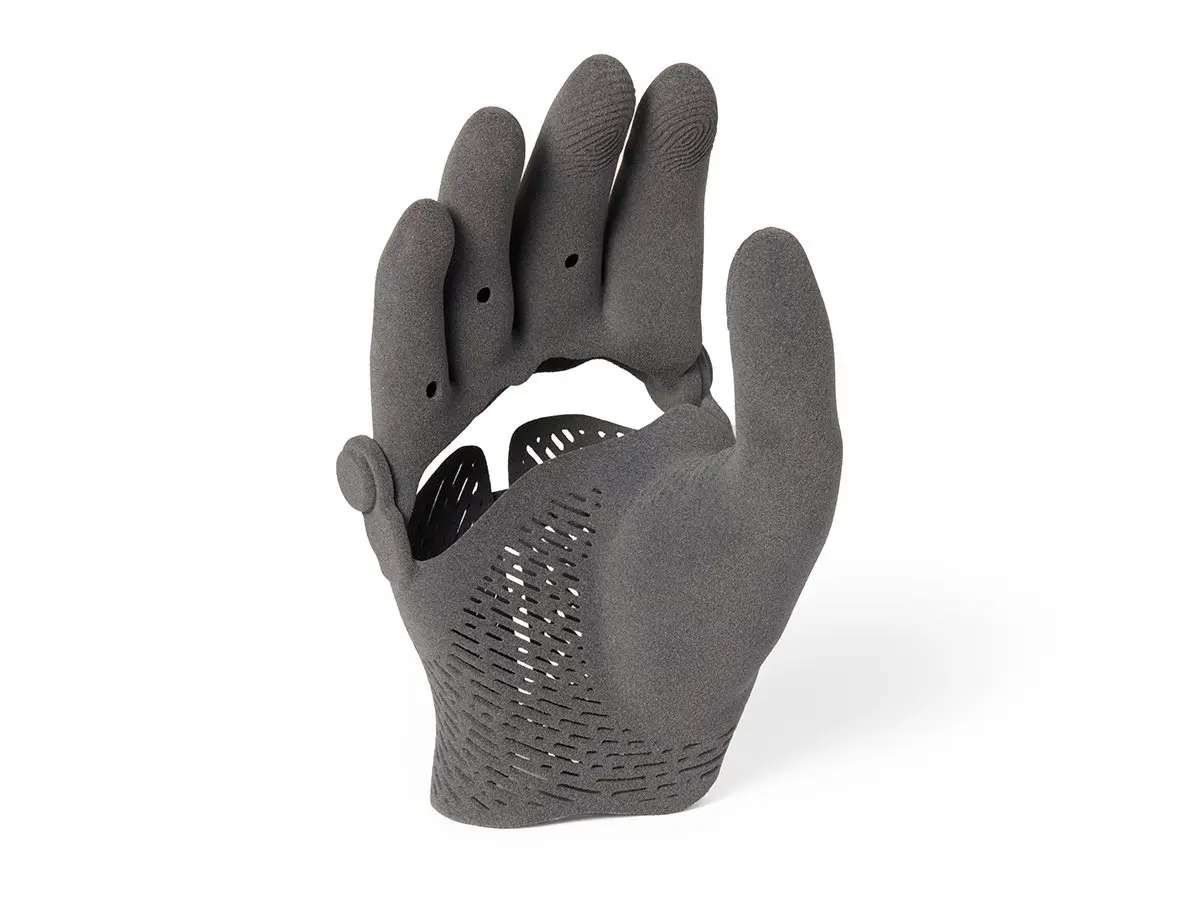
Complex functional geometries — latticed shoe soles, corrugated hoses, prosthetic hands, wristband assemblies — are achievable with SLS elastomer printing at production volumes.
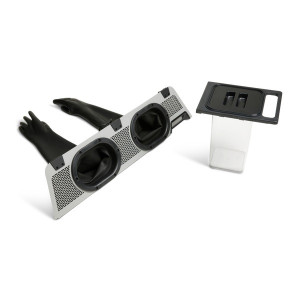
A corrugated automotive air-intake hose illustrates the material's ability to reproduce flexible geometries with integrated bellows — geometry that rigid nylon cannot replicate.
Compatibility and accessories
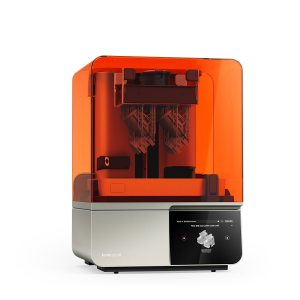
- Compatible printers: Fuse 1, Fuse 1+ 30W (Fuse Series)
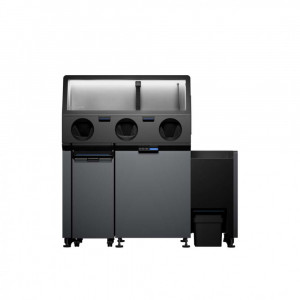
- Sifting station: Fuse Sift with 150 µm sifter mesh (standard equipment)
- Print environment: Air — no inert atmosphere required
What's in the box
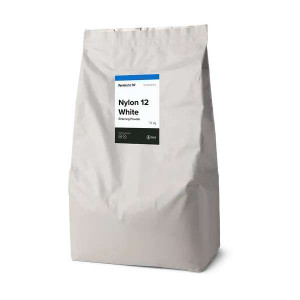
- Formlabs TPU 90A Powder cartridge — 6 kg net weight, SKU FLTP9G01
Technical specifications
Mechanical properties
| Parameter | Value |
| Ultimate Tensile Strength (X/Y) | 8.7 MPa (1,260 psi) — ASTM D412-16, Method A |
| Ultimate Tensile Strength (Z) | 7.2 MPa (1,050 psi) — ASTM D412-16, Method A |
| Elongation at Break (X/Y) | 310% — ASTM D412-16, Method A |
| Elongation at Break (Z) | 110% — ASTM D412-16, Method A |
| Stress @ 50% Elongation (X/Y) | 6.1 MPa (889 psi) — ASTM D412-16, Method A |
| Stress @ 50% Elongation (Z) | 5.9 MPa (860 psi) — ASTM D412-16, Method A |
| Stress @ 100% Elongation (X/Y) | 7.2 MPa (1,050 psi) — ASTM D412-16, Method A |
| Stress @ 100% Elongation (Z) | 7.0 MPa (1,020 psi) — ASTM D412-16, Method A |
| Tear Resistance (X/Y) | 66 kN/m (378 lb/in) — ASTM D624-00 (2020) |
| Tear Resistance (Z) | 39 kN/m (247 lb/in) — ASTM D624-00 (2020) |
| Compression Set (23 °C) | 20.5% — ASTM D395-18, Method B |
| Compression Set (70 °C) | 59.9% — ASTM D395-18, Method B |
| Shore Hardness | 90A — ASTM D2240-15 (2021) |
| Taber Abrasion | 122 mm³ — ISO 4649 (40 rpm, 10 N load) |
Thermal and material properties
| Parameter | Value |
| Vicat Softening Temperature | 94.3 °C (201.7 °F) — ASTM D1525 |
| Moisture Content (powder) | 0.19% — ISO 15512 Method D |
| Water Absorption (printed part) | 0.89% — ASTM D570 |
| Bulk Density (sintered) | 1.14 g/cm³ (71.2 lb/ft³) |
| Recommended Refresh Rate | 20% |
| Compatible Printers | Fuse 1, Fuse 1+ 30W (Fuse Series) |
| Print Environment | Air (no inert atmosphere required) |
| Sifter Mesh Requirement | 150 µm (standard Fuse Sift mesh) |
| SKU / Part Number | FLTP9G01 |
| Net Weight | 6 kg |
Biocompatibility (ISO 10993-1:2018)
| Parameter | Value |
| ISO 10993-5:2009 | Not cytotoxic |
| ISO 10993-23:2021 | Not an irritant |
| ISO 10993-10:2021 | Not a sensitizer |
Solvent compatibility (weight gain % over 24 h)
| Parameter | Value |
| Acetic Acid 5% | 1.3% |
| Acetone | 28.6% |
| Isopropyl Alcohol | 4.8% |
| Bleach ~5% NaOCl | 0.8% |
| Butyl Acetate | 16.5% |
| Diesel Fuel | 2.0% |
| Diethyl Glycol Monomethyl Ether | 14.4% |
| Hydraulic Oil | 2.8% |
| Skydrol 5 | 6.5% |
| Hydrogen Peroxide (3%) | 1.0% |
| Isooctane (gasoline) | 0.7% |
| Mineral Oil (Light) | 2.3% |
| Mineral Oil (Heavy) | 2.1% |
| Salt Water (3.5% NaCl) | 0.9% |
| Sodium Hydroxide (0.025% pH 10) | 0.9% |
| Water | 0.9% |
| Xylene | 20.8% |
| Strong Acid (HCl conc.) | −5.2% |
| Tripropylene Glycol Monomethyl Ether | 9.9% |
How to print with TPU 90A Powder
A step-by-step guide to setting up a Fuse Series printer for TPU 90A Powder, from hopper preparation through sifting and cleaning.
Step 1: Prepare the hopper
On the Fuse 1, remove the debris catcher from the hopper. Fill with slightly more powder than PreForm indicates — do not overfill, as excess weight accelerates clumping. On the Fuse 1+ 30W, fill to the brim for full-volume jobs.
Step 2: Stir the powder
Use a wooden rod to stir the powder before every print. If the printer has been idle more than three days, empty the hopper via Settings > Calibration > Empty Hopper, sift the recovered powder through the Fuse Sift, and reload fresh material.
Step 3: Print the job
In PreForm, select TPU 90A as the material and choose V2.1 print settings for improved dimensional accuracy and up to 25% faster print times. Place parts near the bottom of the build chamber and away from the walls for best Z-axis accuracy, then send the job to the printer.
Step 4: Sift while warm
After printing, wait until the powder cake reaches 35–40 °C, then transfer to the Fuse Sift. Use the 150 µm mesh and work the powder through with a gloved hand. Place three TPU 90A mesh clearing balls on the sieve to reduce clogging.
Step 5: Clean the printer
Vacuum the top of the print enclosure, both powder troughs (using flipper motor moves to dislodge compacted powder), and the recoater blade. Clean the recoater with a lint-free microfibre cloth and ethanol if semi-sintered deposits are present. This cleaning sequence is mandatory between every TPU 90A print job.
Why specify Formlabs TPU 90A Powder?
TPU 90A Powder is the only elastomer in the Formlabs SLS portfolio — the sole material that delivers true rubber-like flexibility and recovery directly from a Fuse Series printer. Its ISO 10993-1:2018 certification removes the regulatory barrier for skin-contact medical devices and wearables, enabling on-demand production without mould tooling. The 310% elongation at break and 66 kN/m tear resistance confirm functional-grade performance: these are production components that survive repeated bending, compression, and skin contact. For orthotics labs, wearable product teams, and industrial workshops producing seals and dampers, TPU 90A is the most accessible SLS elastomer available for mould-free manufacturing.