

- Stock: In Stock
- Product code: 920372000002173097
- Weight Brutto: 60.00kg

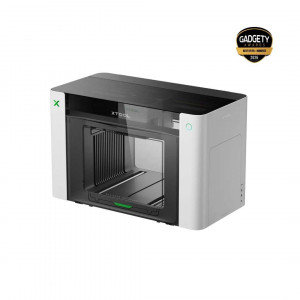
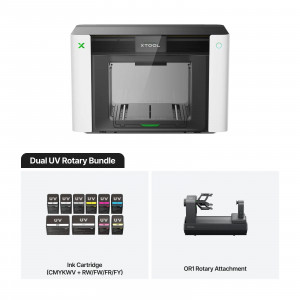
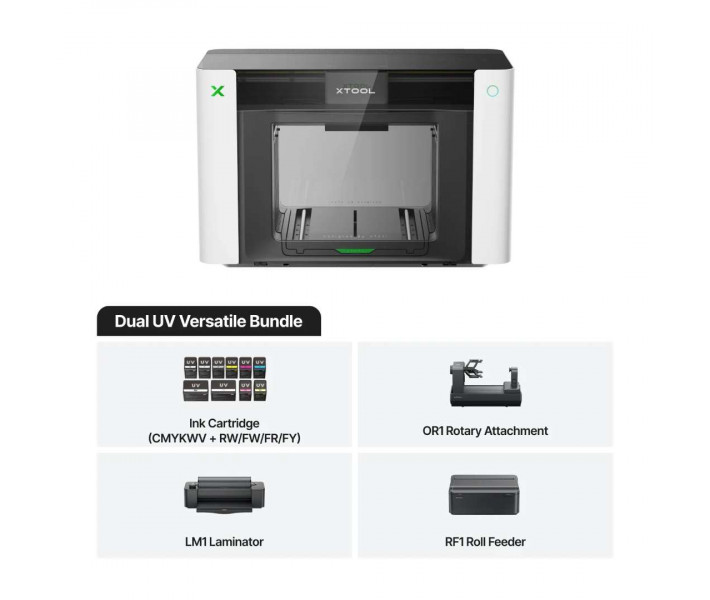
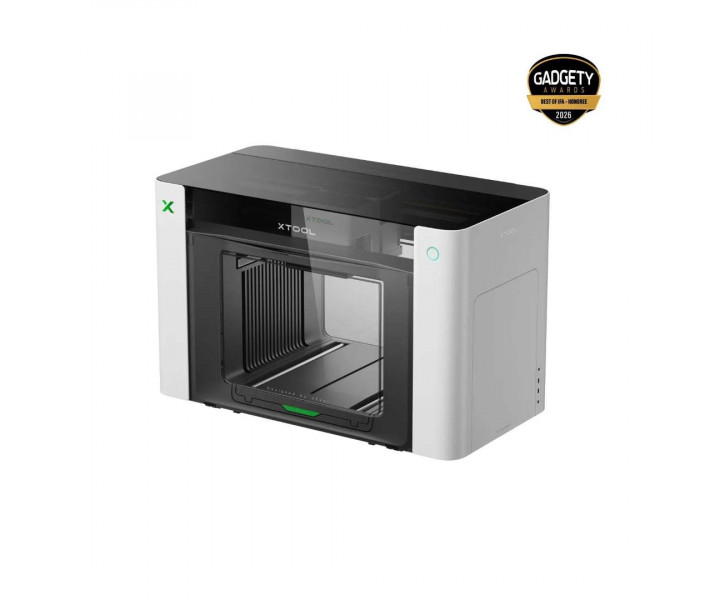
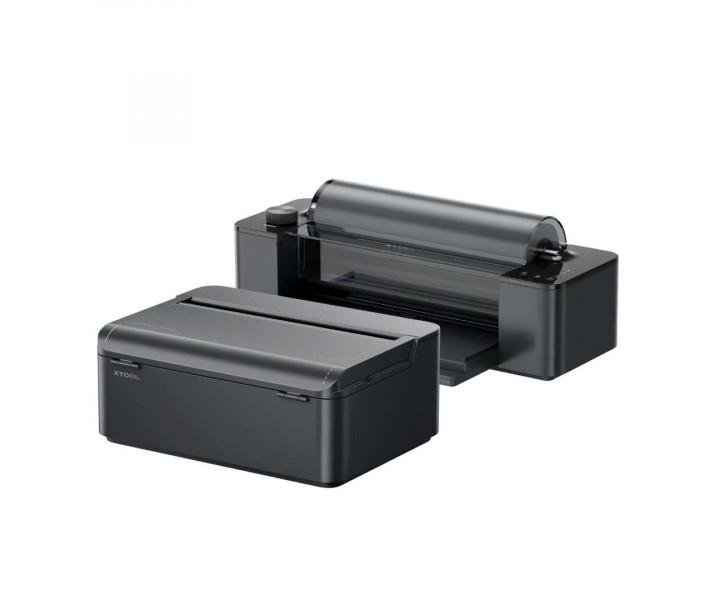
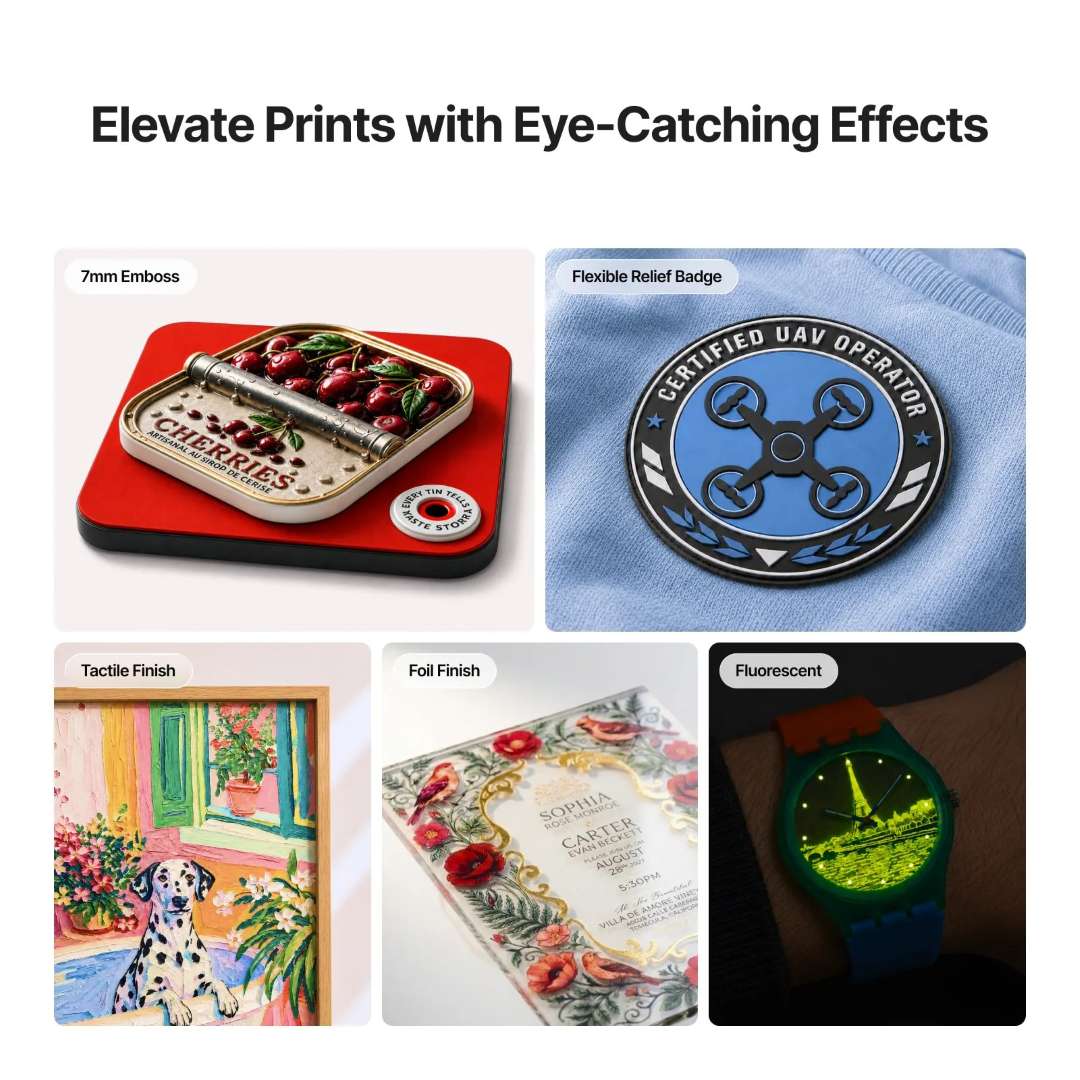
xTool O1 Omni Dual UV Versatile multifunctional printer is a printer for applying images to rigid and flexible surfaces. It features dual printheads for UV printing. The presence of the Pixel-Scan™ system ensures positioning accuracy of up to ±0.2 mm without image deformation. Fluorescent inks and varnish allow forming a relief with a height of up to 7 mm.
Key features and advantages
- Working area: 330 × 420 mm — Apply images to large workpieces or multiple small parts simultaneously.
- Positioning accuracy: ±0.2 mm — Achieve precise layer alignment even during multi-pass printing.
- Embossed print height: 7 mm — Create perceptible tactile effects and dimensional lettering on souvenirs.
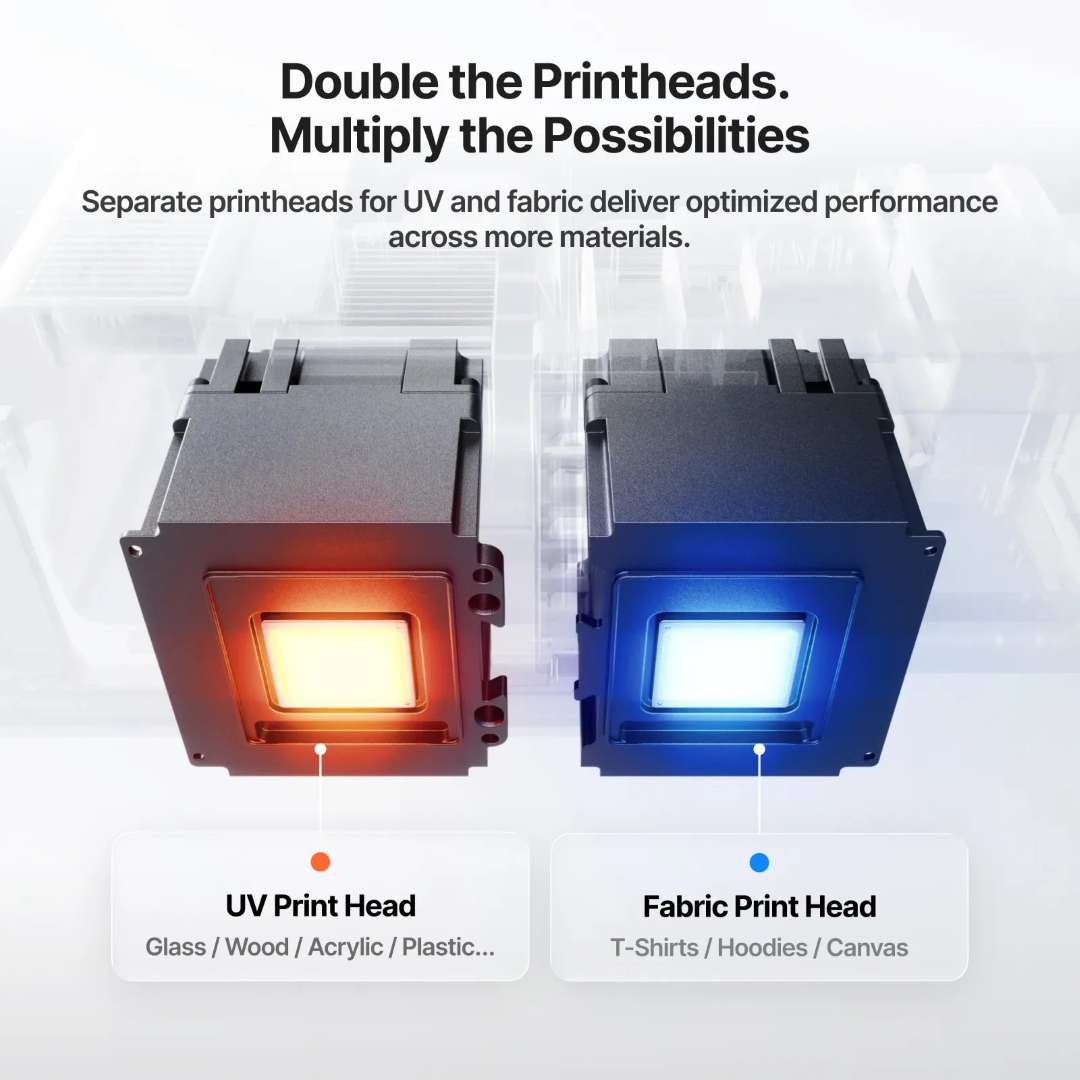
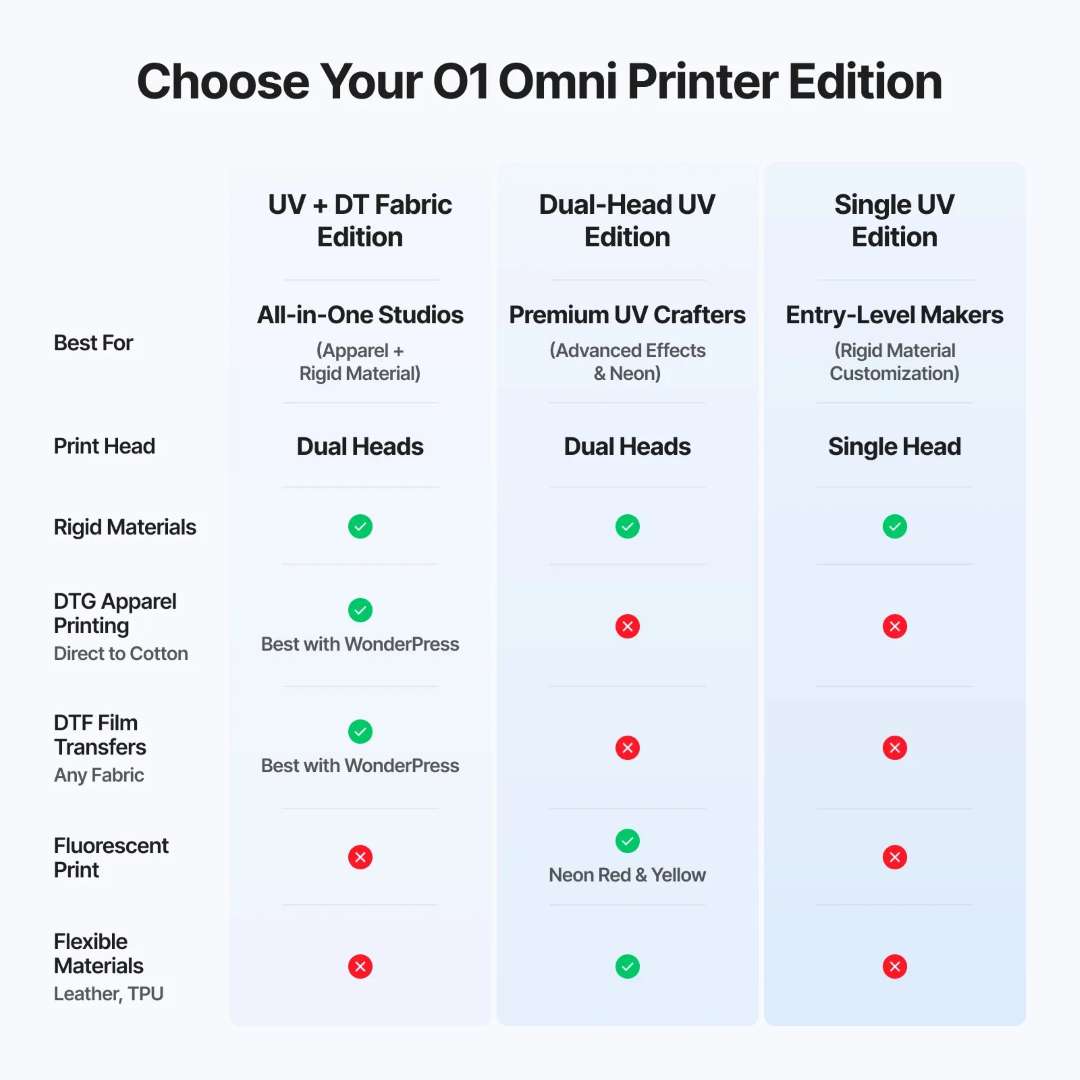
- Two printheads: application of fluorescent colours and printing on flexible materials.
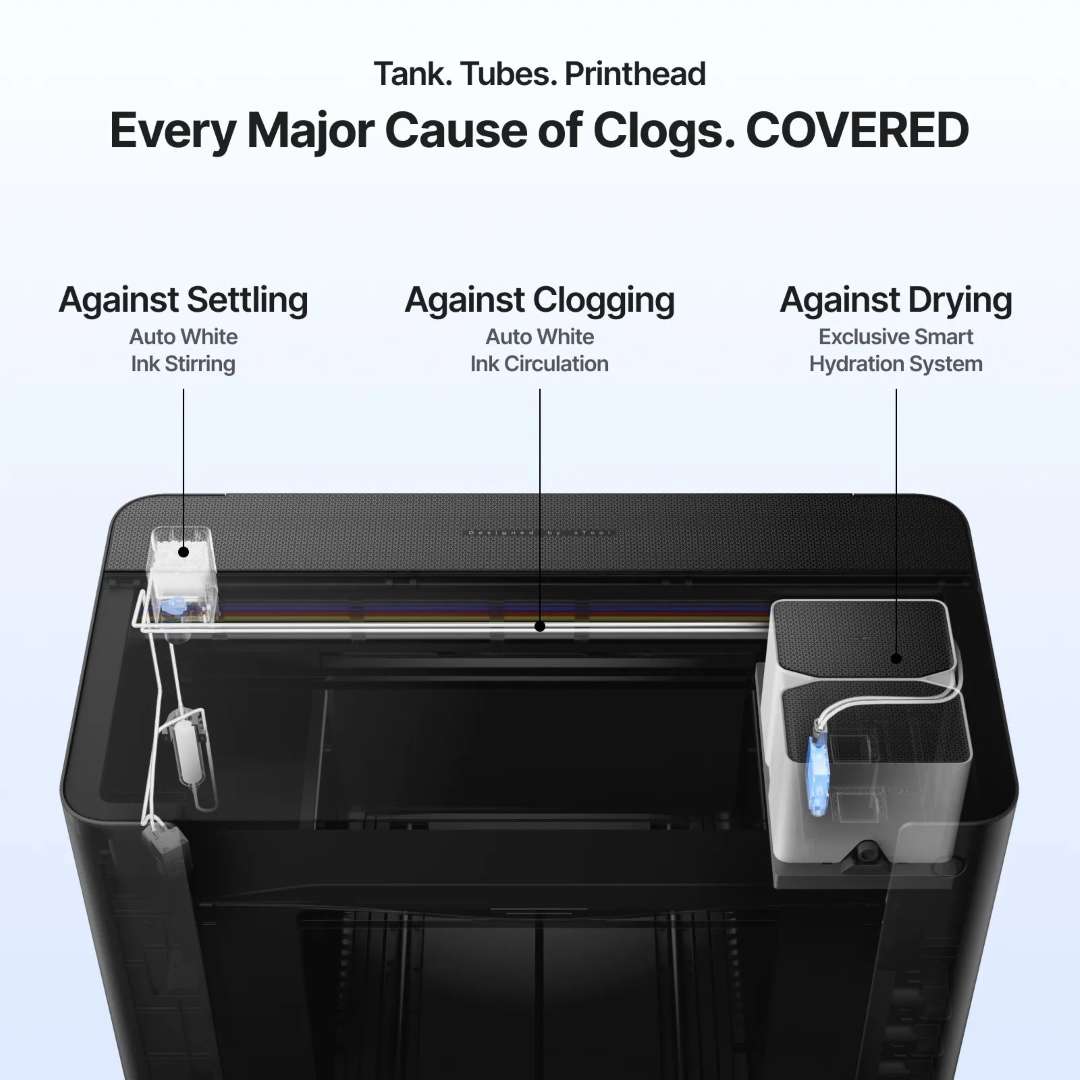
- Automated maintenance: mixing and circulation of white inks prevent nozzle clogging.
- High resolution: ability to reproduce fine fonts and graphics with 720 × 1440 dpi detail.
- Environmental safety: the integrated air purification system effectively captures volatile organic compounds.
Working principle and printing technology
The model is equipped with two printheads for applying images to rigid and flexible materials. The separate channel configuration allows working with neon colours, ensuring optimal performance.
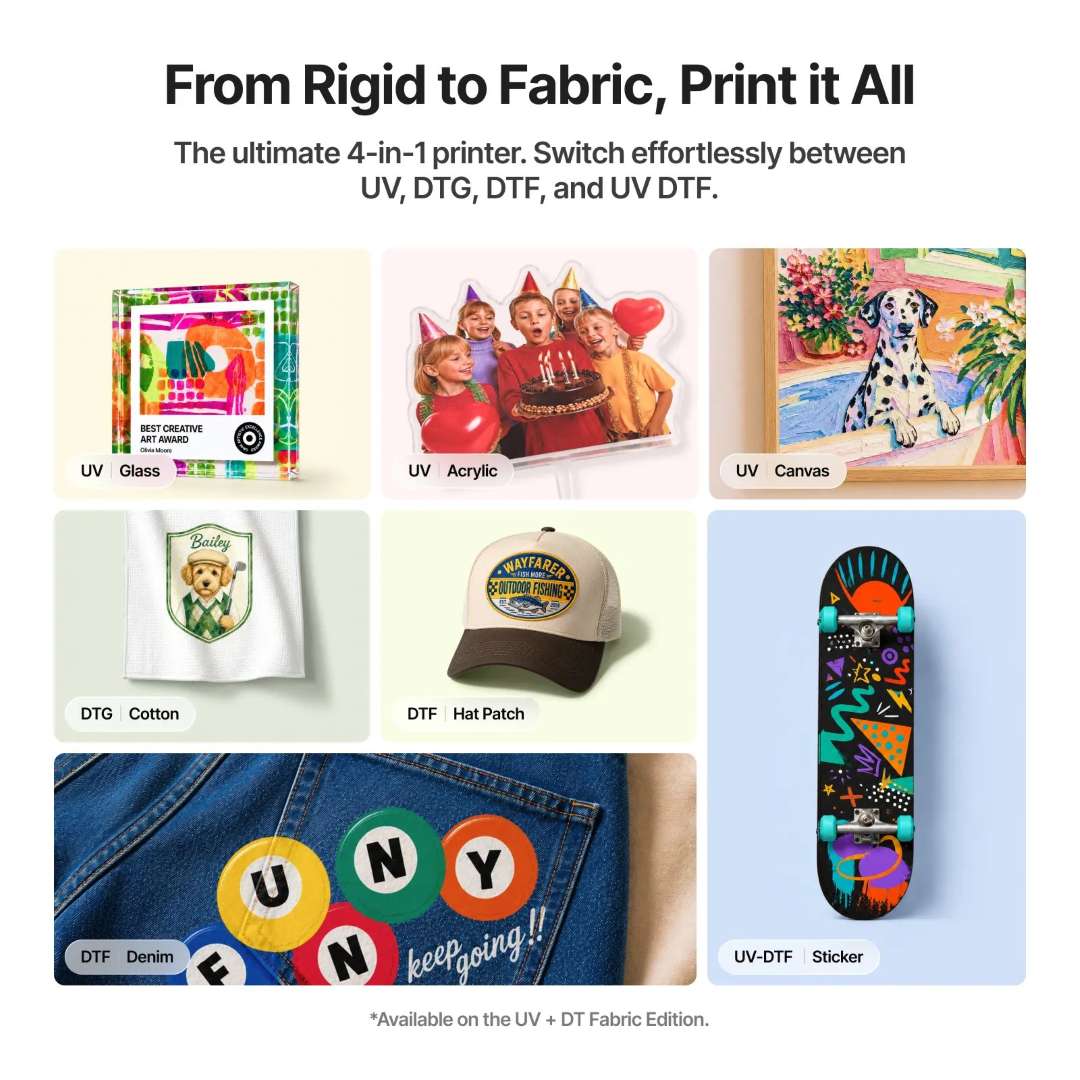
The device supports various methods of transferring images onto hard and textile surfaces. This versatility allows applying prints to glass, acrylic, canvas, and leather with high adhesion.
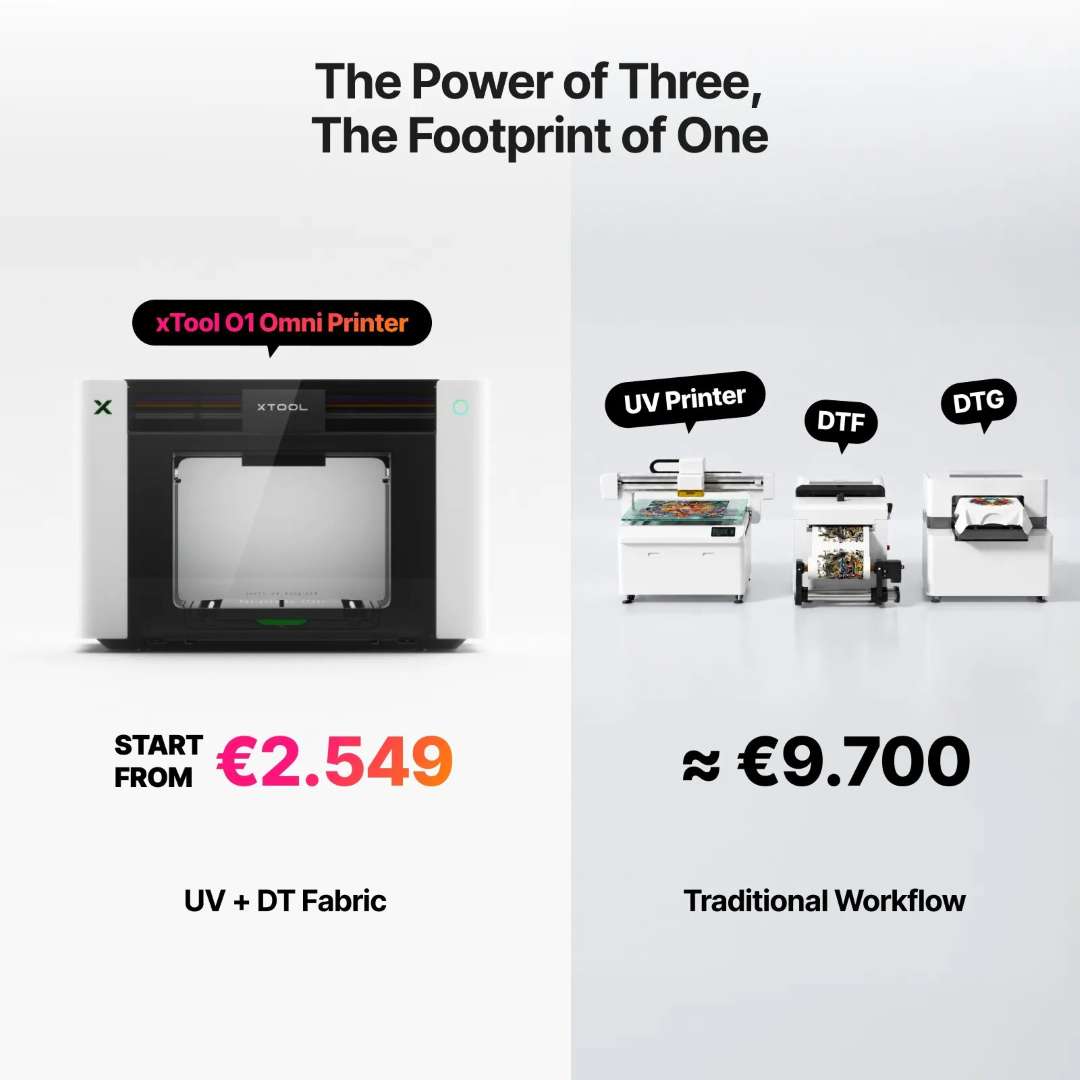
A single device replaces multiple individual printers for different types of printing. This optimises the workspace and reduces the overall costs of equipping the workshop.
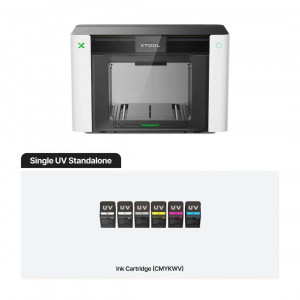
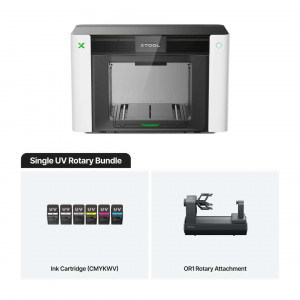
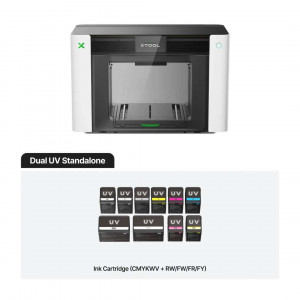
The series offers several configurations depending on production needs. The Dual UV version is optimal for creating neon effects and working with flexible workpieces.
Positioning system and software
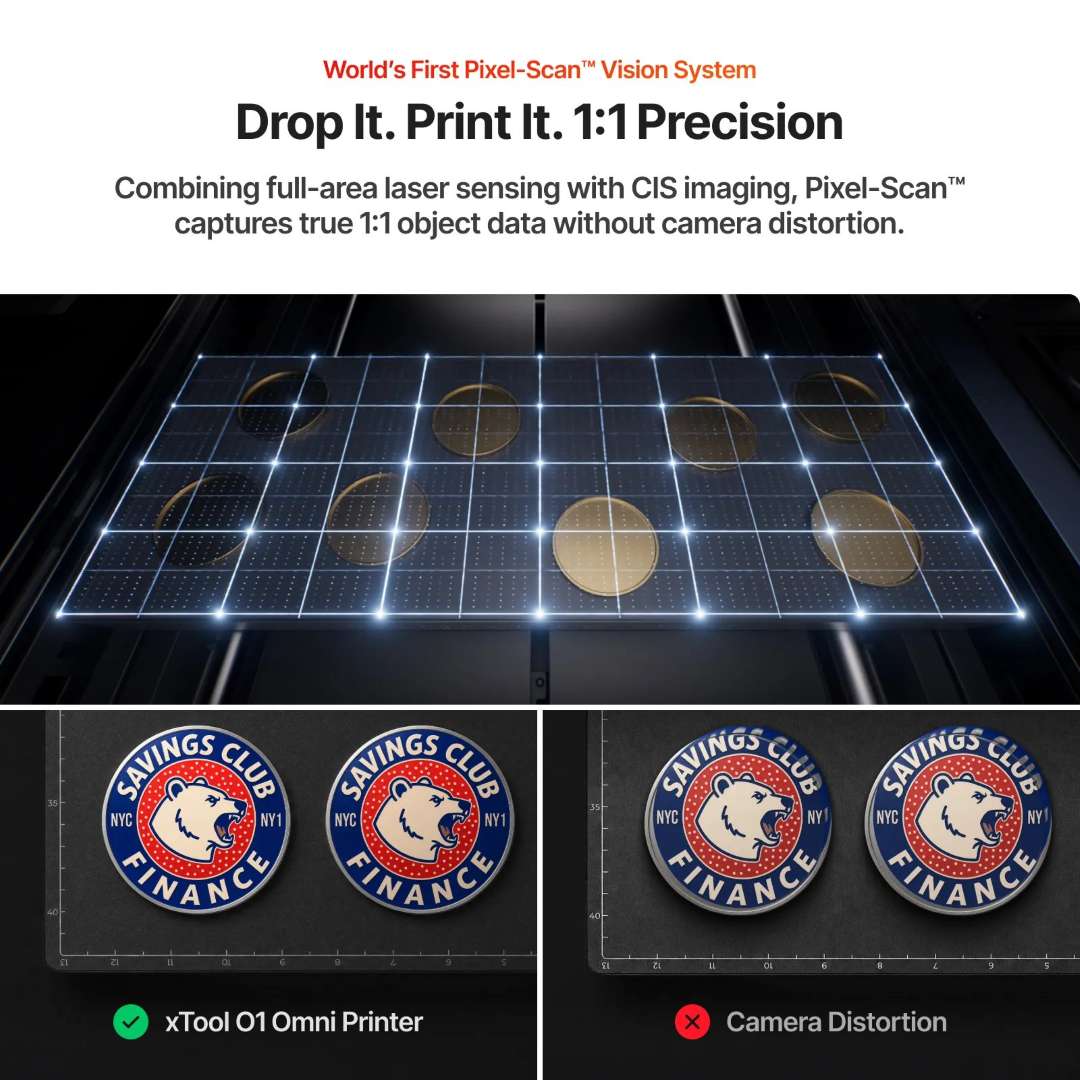
The Pixel-Scan™ system combines full-area laser scanning with CIS imaging. This ensures object capture at a 1:1 scale without optical distortion.
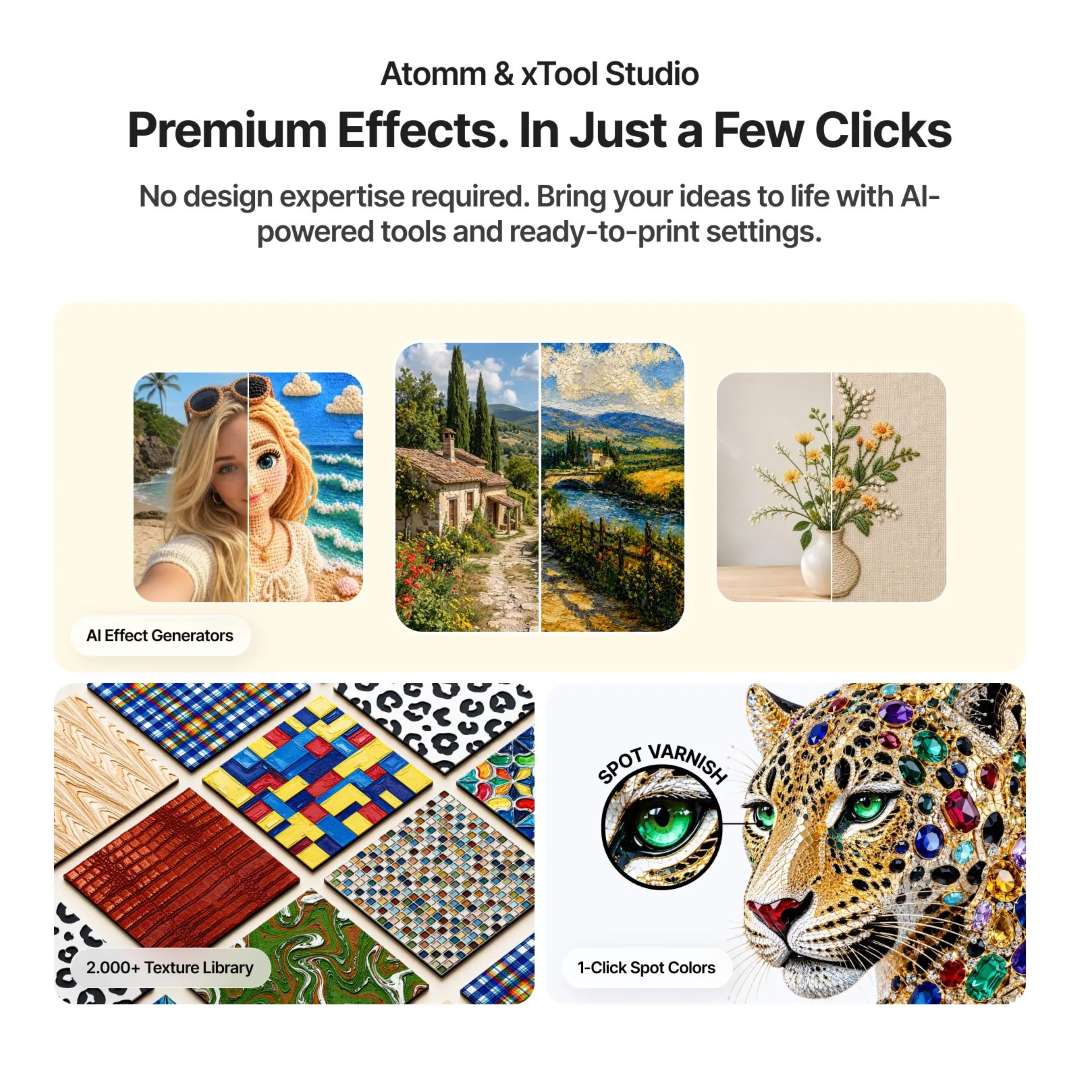
The software includes a library of over 2000 textures and artificial intelligence-based tools. This allows generating effects and quickly applying spot colours.
A unified workspace integrates control of the printer and laser machines. This simplifies combined tasks of printing and subsequent material cutting.

Automated maintenance and safety
The device features a white ink mixing and circulation system. A smart moisturising system prevents the printhead from drying out during technological downtime.
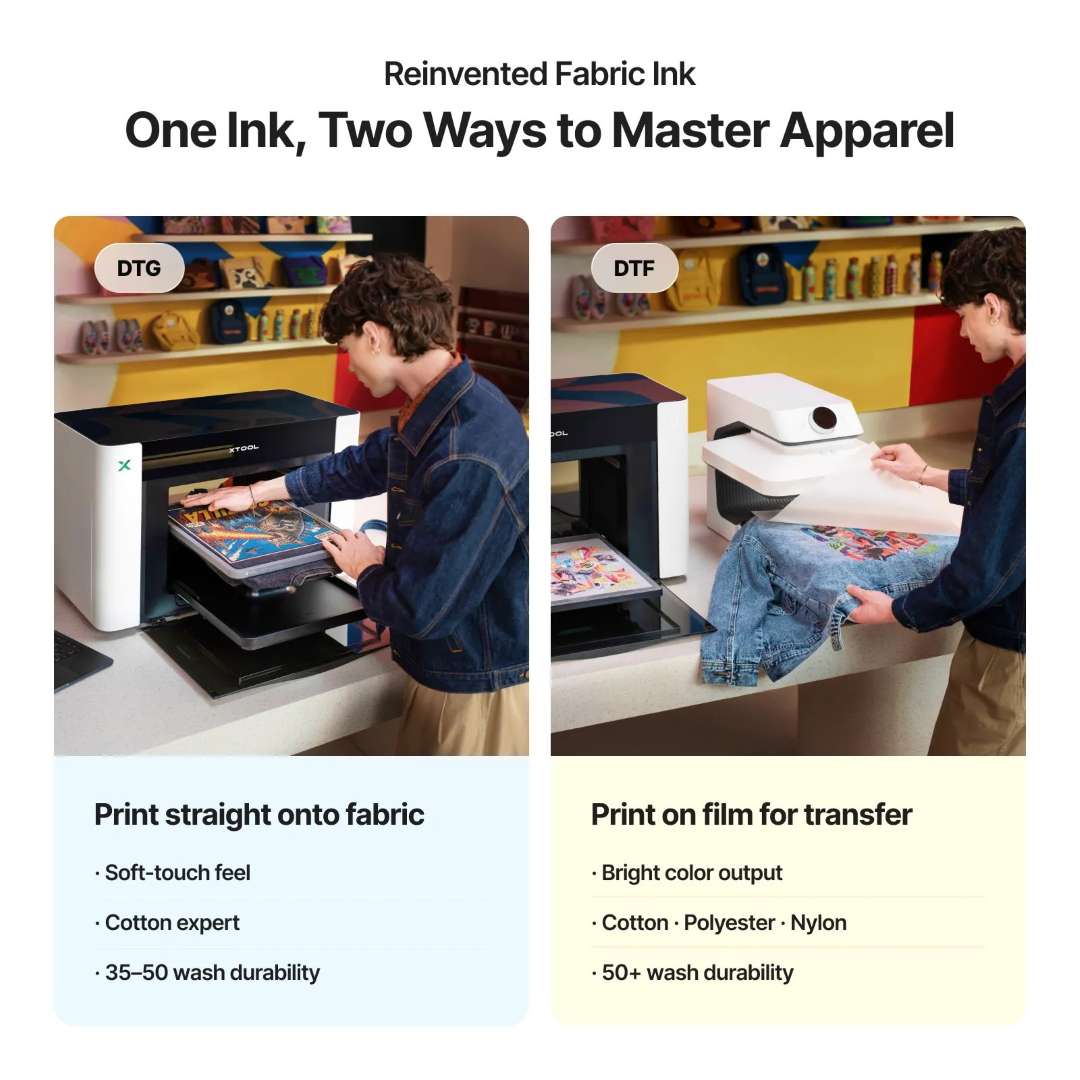
The DTF method is used to create vibrant fabric transfers. This approach guarantees the durability of prints for up to fifty wash cycles.
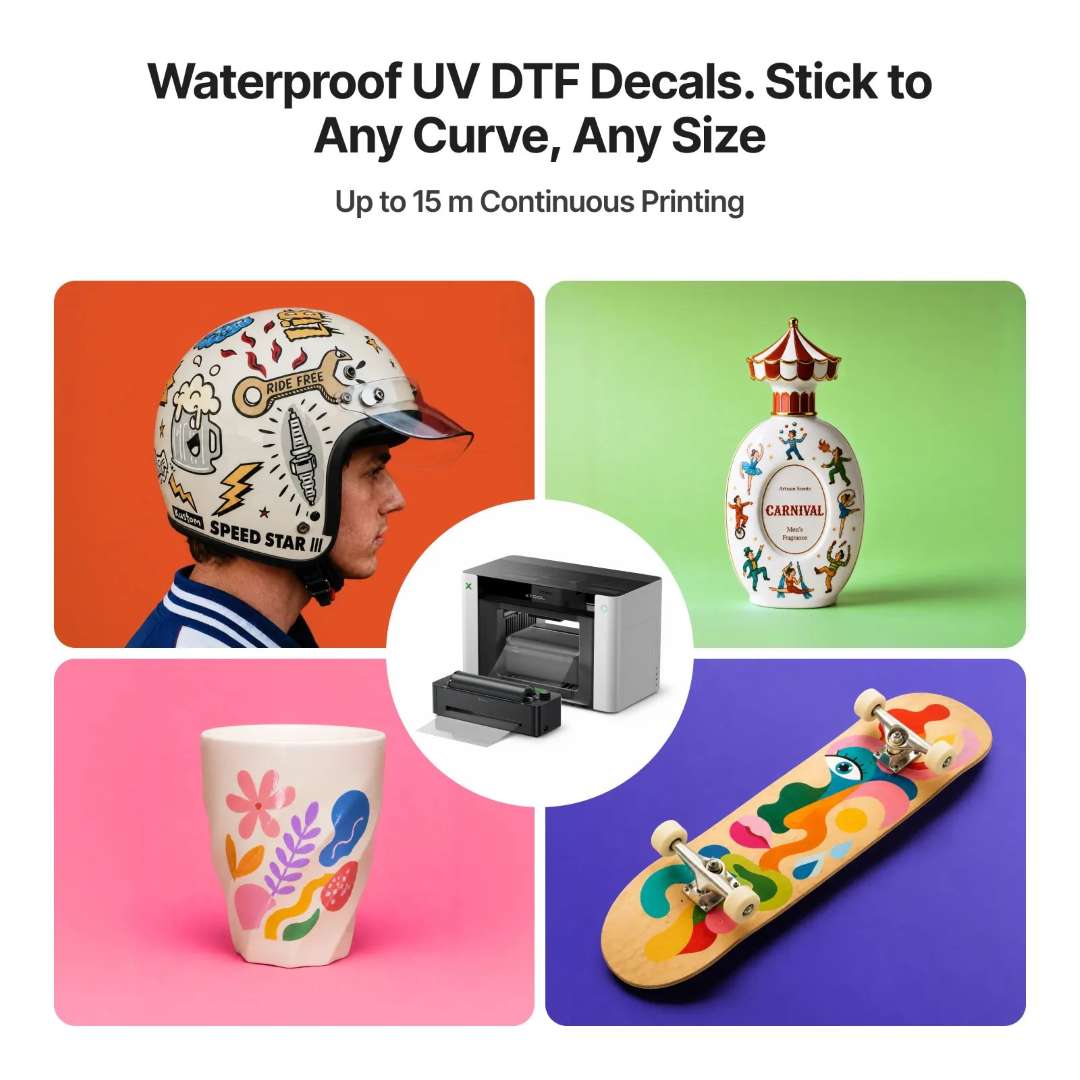
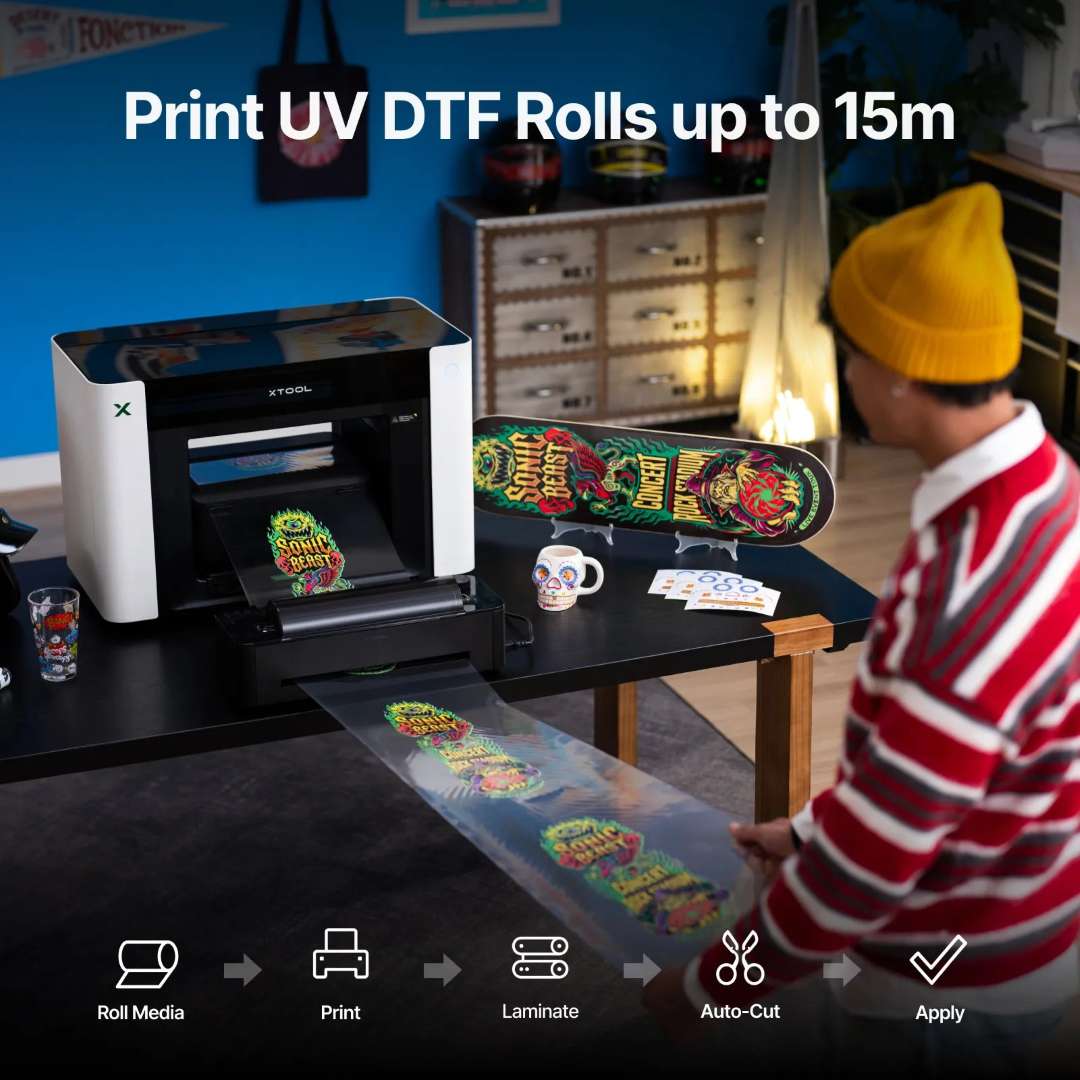
Creating waterproof UV DTF stickers allows transferring images to any curved surfaces. The technology supports continuous printing on film lengths of up to 15 m.
Working with curved surfaces
The software integrates with the rotary attachment for accurate object previewing. This allows adapting the design to the complex shape of a cylindrical product.
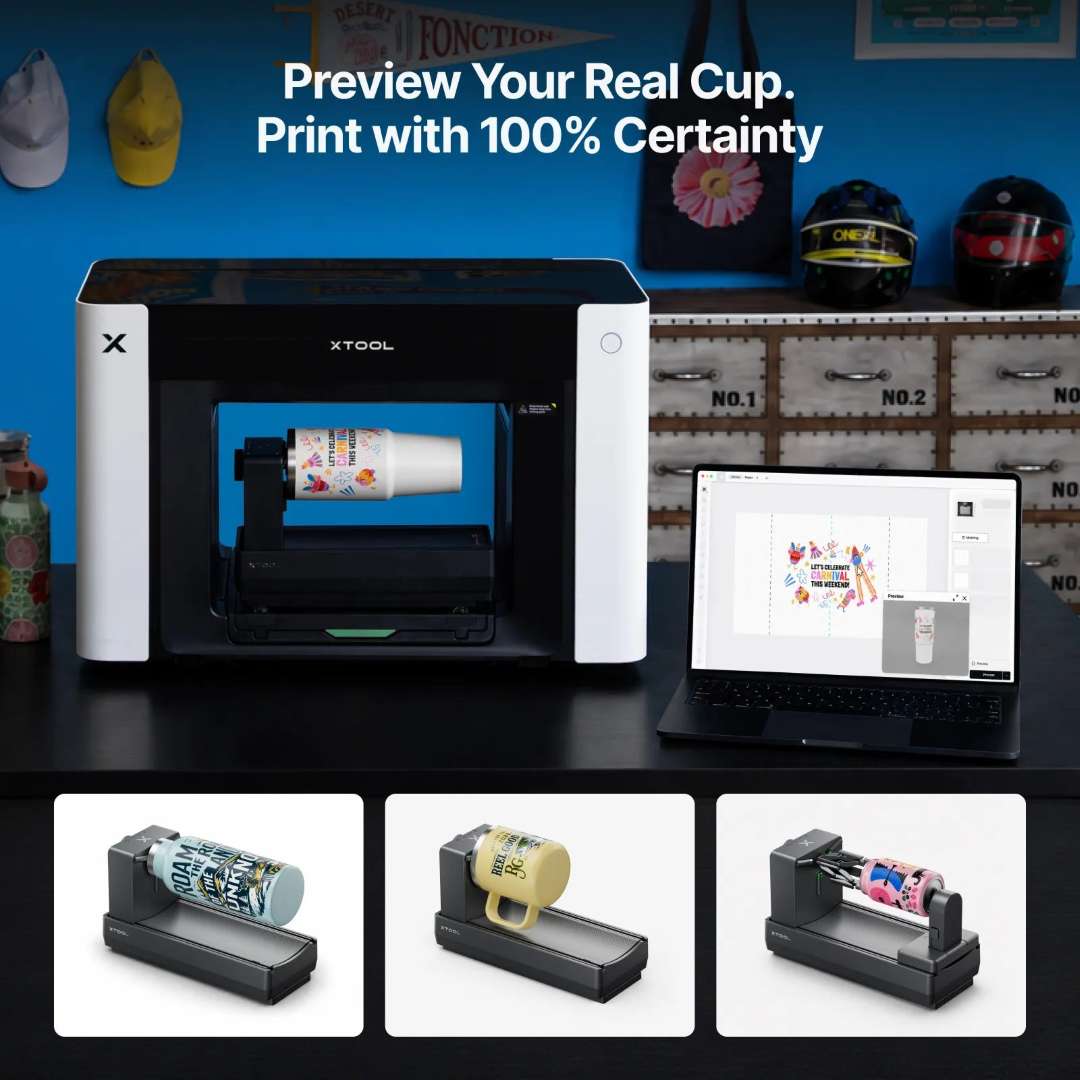
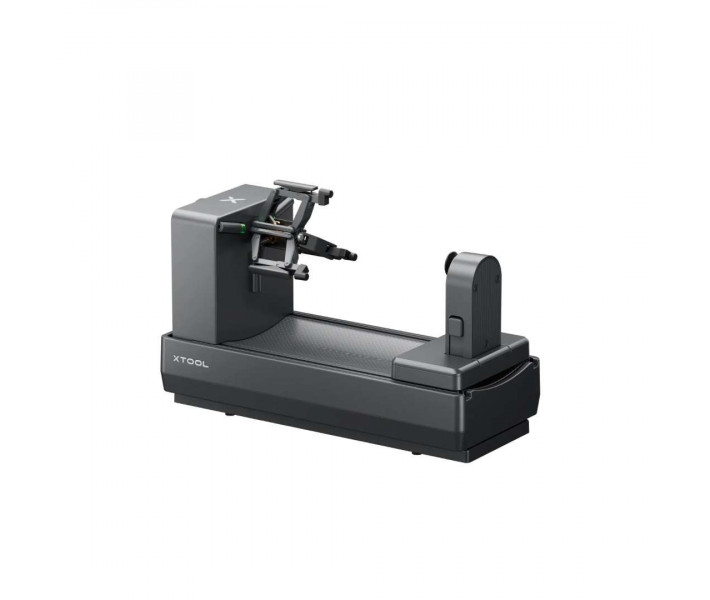
The rotary attachment supports two clamping options for different types of workpieces. The chuck securely holds mugs, while the tailstock module stabilises lightweight cans.

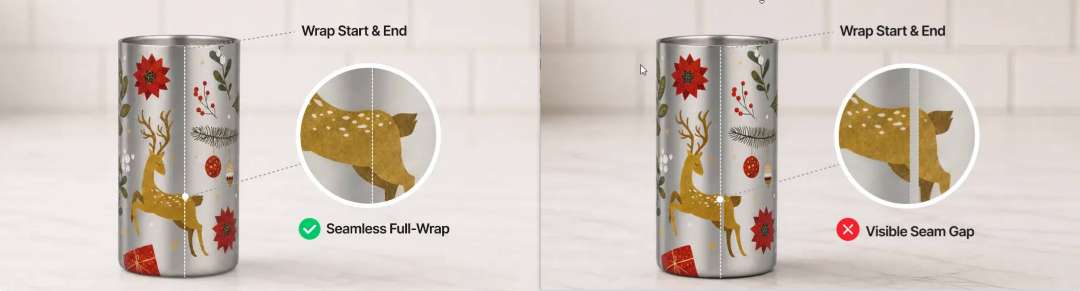
360° rotation and chuck clamping ensure full-circle printing without manual measurements. This eliminates visible seams and pattern misalignment at the joints.
Special effects and mass production
Varnish allows forming embossed images up to 7 mm high and creating tactile effects. Fluorescent inks provide the glow of individual details in the dark.
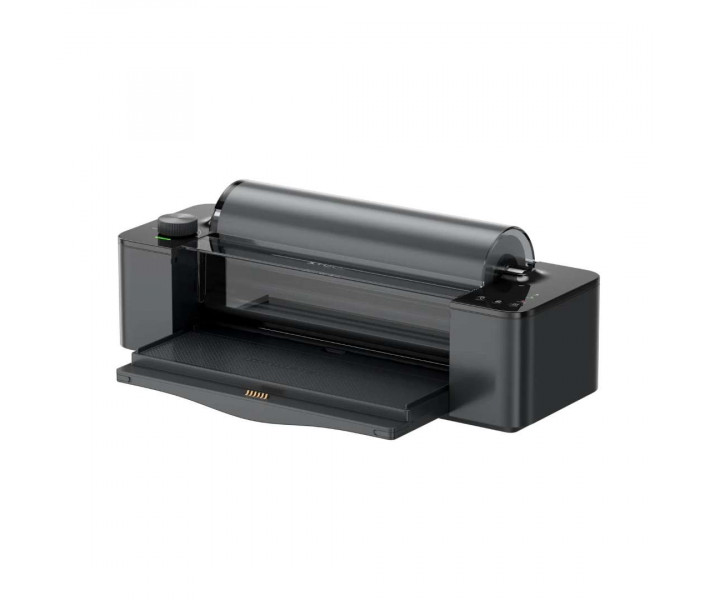
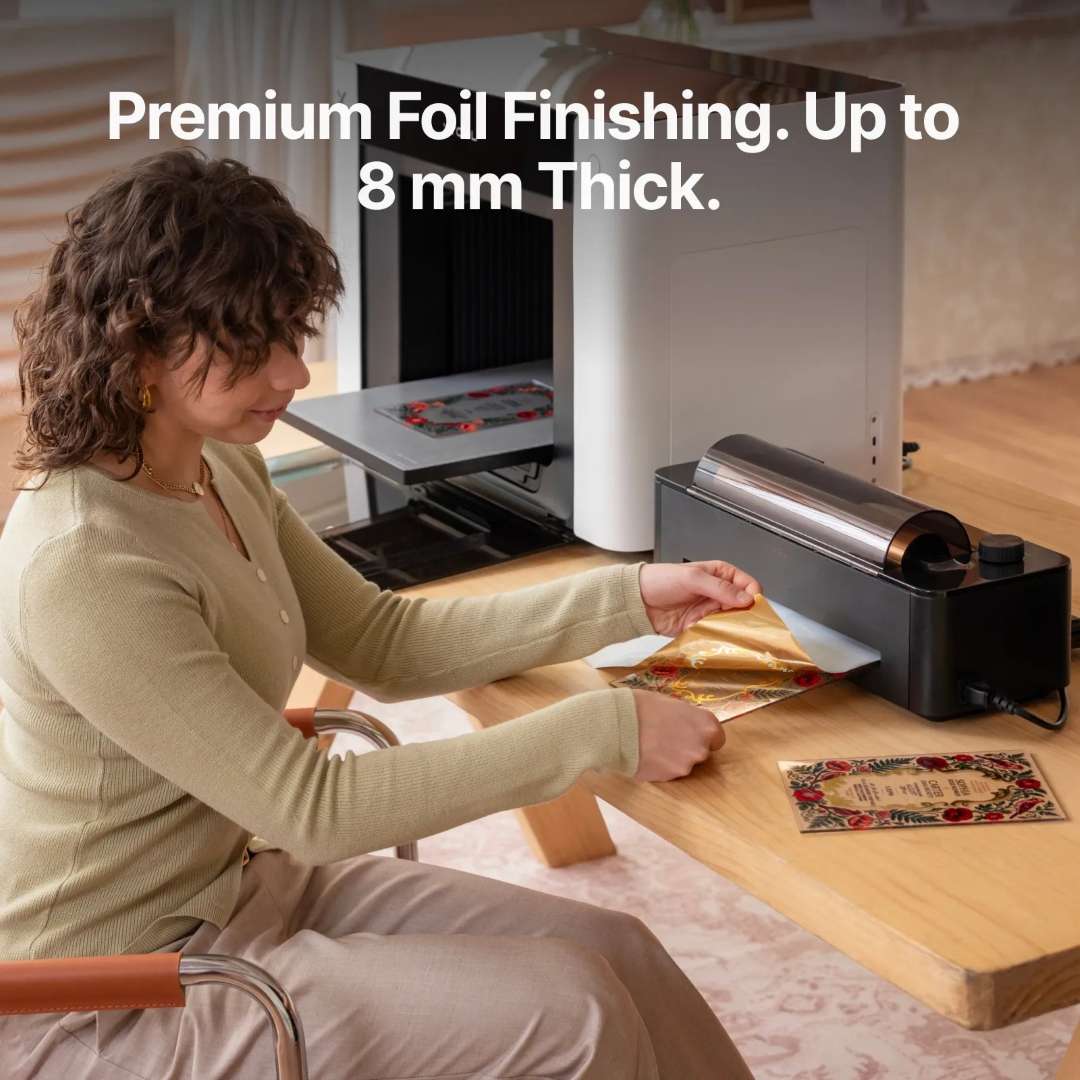
The laminator module supports the application of gold, silver, or holographic foil to flat materials. This process forms a premium finish on surfaces up to 8 mm thick.
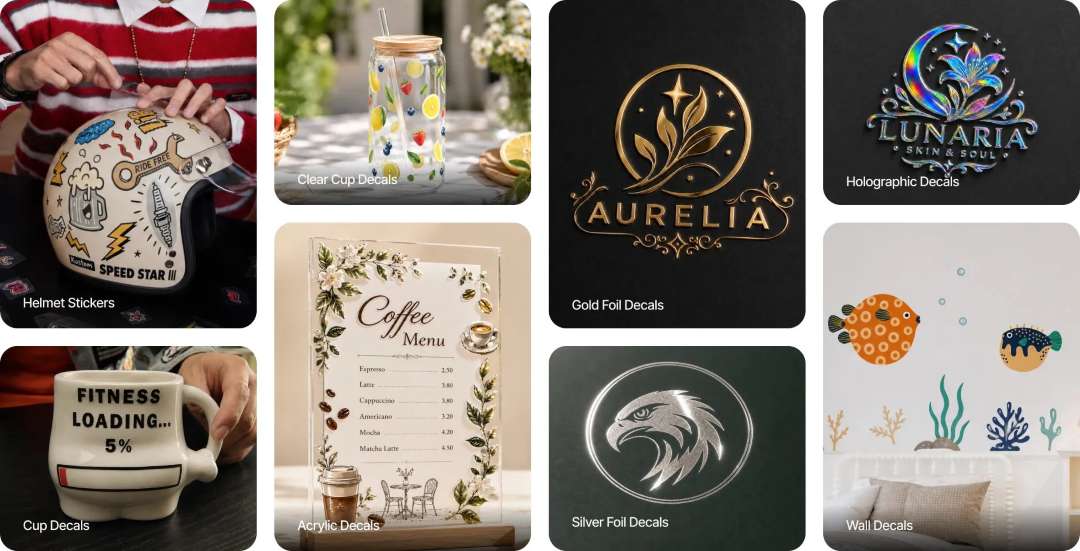
Ready-made UV DTF crystal decals feature resistance to water and scratches. They are suitable for application on dimensional and uneven objects without thermal processing.
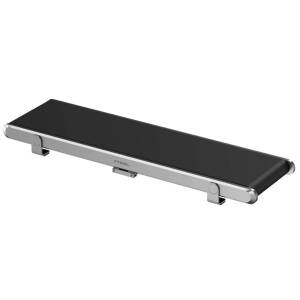
The roll feeder automates the layout and cutting process for small-batch production. It allows continuously creating rolls of UV DTF stickers.
The device supports direct printing on canvas, static cling vinyl, and transparent films. The actual application length for these materials reaches 11.8 m.

Areas of application
- Souvenir products full-circle printing on mugs and tumblers using the rotary attachment.
- Advertising industry creation of roll banners and window stickers from static vinyl.
- Apparel decoration transfer of vibrant prints onto cotton and polyester using the DTF method.
- Premium packaging applying a 7 mm high relief and gold foil effects to cardboard.
- Industrial marking manufacturing of wear-resistant UV DTF decals for equipment labelling.
Compatible accessories and attachments
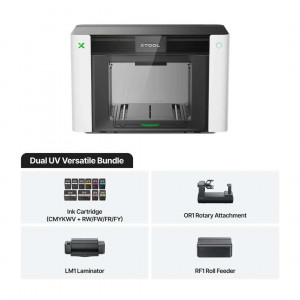
- Rotary attachment: xTool OR1 Rotary Attachment for mugs and cylindrical workpieces.
- Laminator: xTool LM1 Laminator for creating decals and foil processing.
- Roll feeder: xTool RF1 Roll Feeder for materials up to 310 mm wide.
What's in the box?
- xTool O1 Omni Dual UV printer
- xTool OR1 Rotary Attachment
- xTool LM1 Laminator
- xTool RF1 Roll Feeder
Technical specifications
Main parameters
| Parameter | Value |
| Best suited for | Creators working with advanced UV applications and exclusive neon effects |
| Working area | Standard print bed: 330 × 122 mm; large print bed: 330 × 420 mm |
| Printhead | Epson F1080*2 printhead |
| Print resolution | 720 × 1440 dpi |
| Ink channels | CMYKWV + RW/FW/FR/FY (RW = rigid white, FW = flexible white, FR = fluorescent red, FY = fluorescent yellow; V = 3-in-1 varnish: matte, glossy, and foil effect) |
| Ink capacity | Standard inks: 125 ml; increased capacity white inks: 290 ml |
| Applicable materials | Rigid and flexible: acrylic, leather, wood, canvas, etc. |
| Fluorescent colour printing | Yes |
| Creation of UV DTF stickers / transfers / decals | Laminator required |
| Embossed print height | 7 mm |
| Vision system resolution | 1440 × 1200 dpi |
| Positioning accuracy | ±0.2 mm |
| Safety and certification | Non-reprotoxic inks; GREENGUARD® Gold certified UV inks |
| Automated maintenance | Automatic mixing of white inks, automatic circulation of white inks, automatic moisture protection of the printhead |
| Supported software | macOS, Windows |
| Remote control | Remote cleaning and control via the app |
| Product weight | 41.12 kg |
| Device dimensions (main unit only) | 714 × 374 × 468.5 mm |
Rotary attachment specifications
| Parameter | Value |
| Device dimensions without packaging | 328 × 140 × 193 mm |
| Device weight without packaging | 2.4 kg |
| Packaging dimensions | 399 × 257 × 206 mm |
| Weight with packaging | 3.1 kg |
| Operating temperature | 15 °C – 30 °C |
| Operating relative humidity | 30 % – 80 % |
| Printing direction | Unidirectional only |
| Varnish settings | Matte finish only; mirror finish is not supported |
| Print mode | Flat, textured, embossed |
| Spot colour setting | Fluorescent ink printing is supported in combination with the dual UV version |
| Supported workpiece weight | Less than 1 kg |
| Mug / straight tumbler with handle | Inner diameter: 46.5–100 mm, outer diameter: ≤ 102 mm, body diameter: ≤ 100 mm, total height: ≤ 250 mm |
| Conical open container | Taper angle range: from -8° to 12°, total height: ≤ 250 mm |
| Standard beverage can | Total height: ≤ 120 mm |
| Spherical workpiece | Diameter: ≤ 102 mm |
Laminator specifications
| Parameter | Value |
| Laminating width | 310 mm |
| Supported material thickness | 0–8 mm |
| Supported films | Film B, residue removal film, foil film |
| Supported processing types | UV DTF lamination, processing with residue removal, foil processing |
| Laminating speed | 10 mm/s |
| Preheating time | 90 seconds at 25 °C |
| Power supply | AC 110 V / 220 V |
| Product dimensions | 480 × 163 × 173 mm |
| Net weight | 8.1 kg |
Roll feeder specifications
| Parameter | Value |
| Supported media width | 100–310 mm |
| Supported media thickness | 0.1–0.6 mm |
| Supported core diameter | 76.2 mm |
| Supported roll outer diameter | Up to 89 mm |
| Maximum print length | Up to 15 m for UV DTF crystal decals; up to 11.8 m actual print length for canvas, vinyl, and selected roll materials |
| Maximum roll material length | Up to 15 m for UV DTF crystal decal film; up to 13 m for canvas, vinyl, and selected roll materials |
| Maximum roll load | 4.1 kg |
| Product dimensions | 363 × 269 × 145 mm |
| Supported materials | Film A, canvas, static cling vinyl, ultra-clear UV vinyl, polymeric vinyl |
| Support for third-party materials | 76.2 mm core, 100–310 mm width, 0.1–0.6 mm thickness, up to 89 mm outer diameter |
Why is it worth buying the xTool O1 Omni Dual UV Versatile multifunctional printer at EXPERT3D?
EXPERT3D has been supplying professional 3D equipment since 2012. As an official representative of xTool, we guarantee 100 % authenticity, a fair price, authorised service, and an official warranty. We provide delivery throughout Spain and EU countries. We offer expert advice on selecting the optimal configuration for your tasks. Order original spare parts and consumables on the website: we will promptly deliver everything so your equipment does not sit idle.