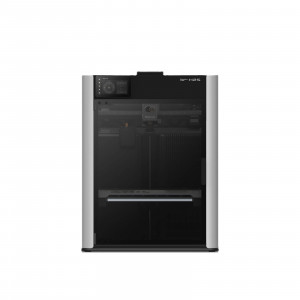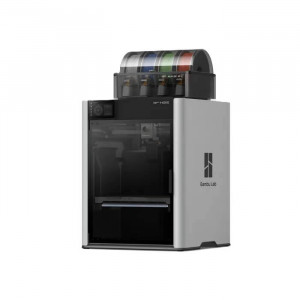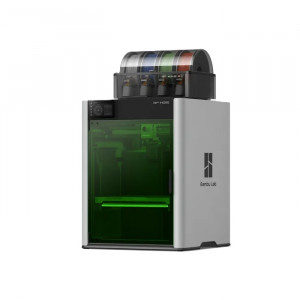
- Stock: In Stock
- Product code: 920372000000860195
- Weight Brutto: 0.78kg
- SKU: FAP039

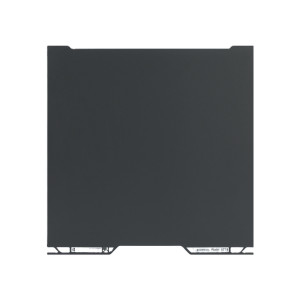
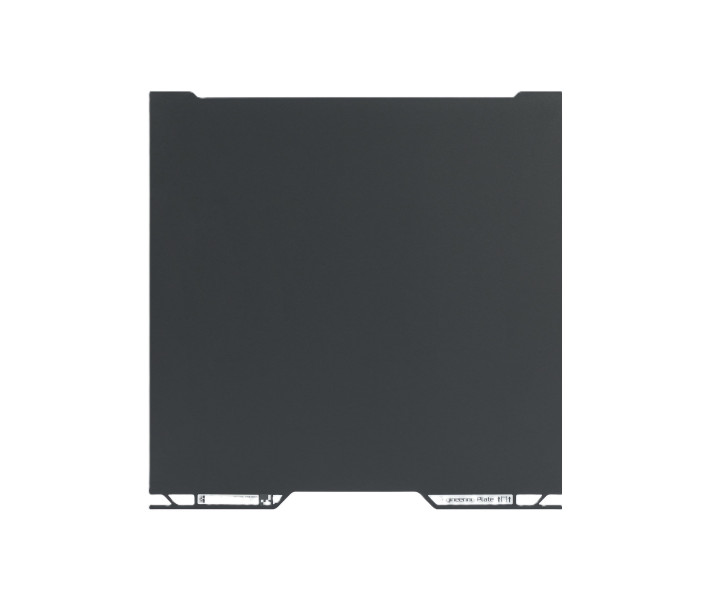
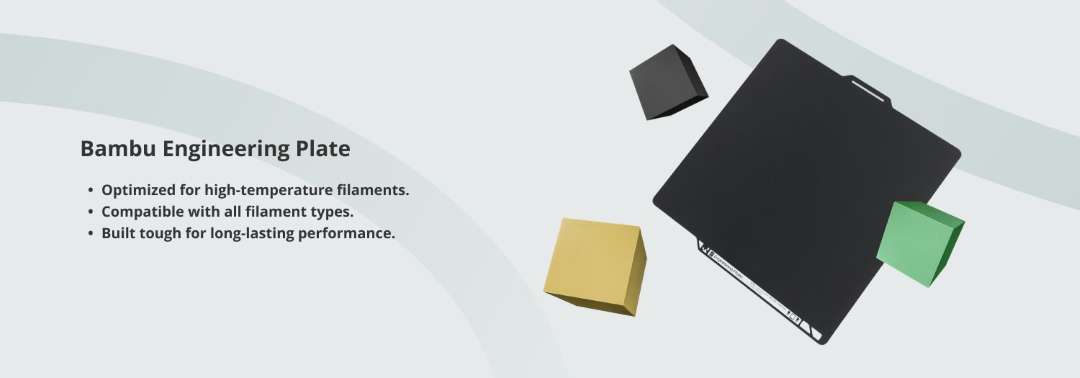
The Bambu Lab Engineering Plate H2C engineering plate is a 3D printing build surface designed for stable adhesion with high-temperature filaments. The thick polyester powder coating on manganese steel withstands prolonged printing at elevated bed temperatures. The plate is compatible with the entire range of Bambu Lab filaments, provided glue is applied beforehand. The printable area covers almost the entire build area of the printer.
| Parameter | Your benefit |
|---|---|
| Surface temperature resistance: up to 120 °C | Withstands printing with high-temperature filaments such as ABS, ASA, PC and PA without damaging the coating. |
| Plate thickness: 0.5 mm | Ensures even heat transfer from the heated bed to the model during printing. |
| Printable area: 330 × 320 mm | Allows printing of large parts within almost the entire build area of the printer. |
| Coating material: polyester powder on manganese steel | Increases resistance to scratches and corrosion, extending the plate's service life over hundreds of print cycles. |
- Versatility: one plate replaces a set of specialised beds for different filaments, provided glue is applied before printing.
- Durable coating: the updated coating withstands hundreds of washing and peeling cycles without losing adhesion.
- Smooth part surface: the base coating gives the bottom surface of the model an even texture for better bonding with other structural elements.
Universal build surface
The Bambu Lab Engineering Plate H2C is compatible with the entire range of the company's filaments, only provided glue is applied to the surface beforehand. This approach removes the need to choose a separate plate for each type of plastic when changing materials. The type of glue — stick or liquid — is chosen depending on the filament and printing conditions. Solid glue makes part removal easier, while liquid glue provides better first-layer stability.
The bed temperature is chosen according to the specific filament. PLA and PETG require moderate heating, while ABS, ASA, PC and PA are heated to 90–110 °C. Correctly chosen temperature strengthens first-layer adhesion and reduces the risk of the model peeling off during printing.
Coating wear resistance
The updated plate coating increases resistance to high temperatures, scratches and corrosion. The surface withstands hundreds of washing and peeling cycles of printed models, maintaining stable adhesion at every print cycle. The smooth texture of the coating transfers to the bottom surface of the model, making it even for bonding with other structural parts.
Automatic Micro Lidar calibration
The current firmware of Bambu Lab printers improves the calibration of the Engineering Plate using the Micro Lidar sensor (a laser rangefinder for determining surface relief). The plate is fully compatible with the automatic calibration process, eliminating the need for manual nozzle height adjustment before each print.
Care and maintenance
- Cleaning: regular washing with warm water and washing-up liquid removes dust and grease deposits that reduce adhesion. Acetone must not be used, as it damages the coating.
- Removing models: parts are removed with a scraper after the plate has cooled; if adhesion is too strong, alcohol is applied at the boundary between the model and the surface to make removal easier.
- Nozzle wiping area: for X1, P1 and A1 series printers, the nozzle must be wiped several times against the plate's cleaning zone before auto-calibration. This is necessary to remove material residue.
- Type of glue: Bambu Lab recommends using only branded glue — third-party products may damage the coating, and such damage is not covered by warranty.
Areas of application
- Functional prototyping: The plate withstands temperature resistance of up to 120 °C. This allows printing engineering prototypes from high-temperature filaments, such as PC or PA-CF, without first-layer deformation.
- Production parts from composite materials: Glass- or carbon-reinforced filaments (PETG-CF, PA-CF, PC-CF) require bed heating to 100–110 °C. The plate's coating withstands this temperature without losing adhesion.
- Small-batch printing with a single material type: The coating's resistance to hundreds of washing and peeling cycles is suitable for repeated printing of batches of parts without replacing the build surface.
- Printing parts with complex geometry: The smooth texture of the coating produces an even bottom surface on the model, making further machining or bonding with other elements easier.
- Replacing a universal plate in a printer fleet: Compatibility with the entire range of Bambu Lab filaments, provided glue is applied, allows one plate to be used instead of a set of specialised beds.
Compatible materials and accessories
- Glue for application: branded Bambu Lab glue stick or Bambu Lab liquid glue for surface pre-treatment.
- Compatible filaments: PLA, PETG, ABS, ASA, TPU, PVA, PC, PA and their reinforced versions (CF/GF).
- Compatible printers: X1, P1 and A1 series (nozzle cleaning procedure in the wiping zone).
Technical specifications
Material and coating
| Parameter | Value |
| Material | Polyester powder + manganese steel |
| Thickness | 0.5 mm |
| Surface temperature resistance | Up to 120 °C |
Dimensions and packaging
| Parameter | Value |
| Printable area | 330 × 320 mm |
| Package size | 393 × 380 × 15 mm |
| Package weight | 0.78 kg |
Why buy the Bambu Lab Engineering Plate H2C at EXPERT3D?
EXPERT3D has been supplying professional 3D printing equipment since 2012. Our specialists will provide advice on choosing the glue and temperature settings for a specific filament before printing on the Engineering Plate H2C. The plate is covered by the manufacturer's warranty, which covers manufacturing defects identified upon receipt of the goods. We provide delivery throughout Spain and EU countries. Order original Bambu Lab consumables and accessories on our website: we will promptly deliver everything you need so your printer doesn't sit idle. After purchase, we provide service support on operating and caring for the build surface.