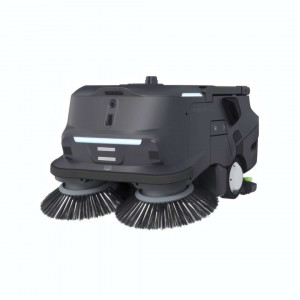
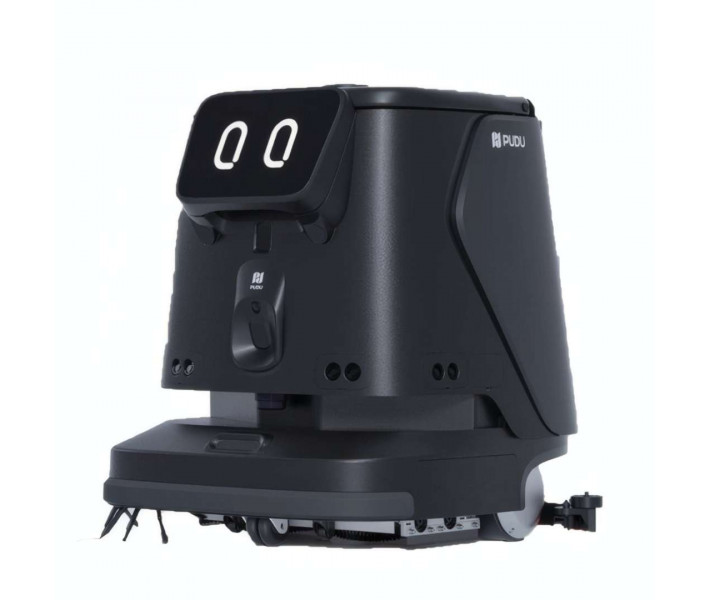
- Stock: In Stock
- Product code: 920372000001161202
- Weight Brutto: 110.00kg
- SKU: 10110-000076

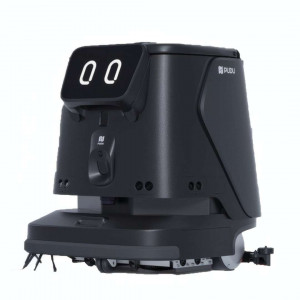
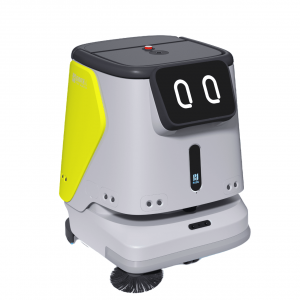
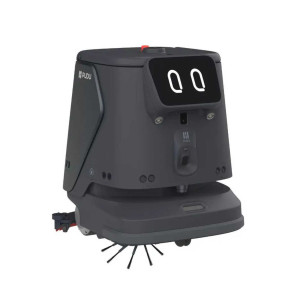
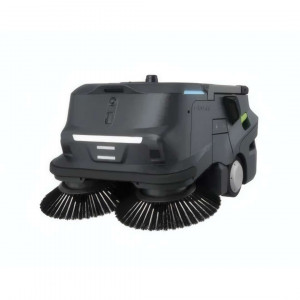
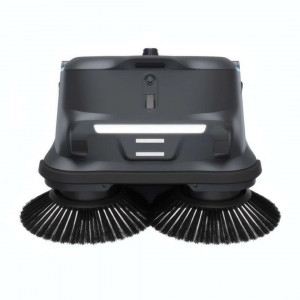
PUDU CC1 Black is a commercial autonomous scrubber-dryer built for indoor commercial floors. A single 75 kg platform combines scrubbing, sweeping, vacuuming, and silent dust-mopping in one chassis. It targets office lobbies, retail floors, hotel corridors, and healthcare facilities that need repeated daily cleaning cycles. PUDU SLAM dual-mode navigation keeps the robot oriented across complex, low-light, or reflective indoor layouts.
| Specification | Why it matters |
|---|---|
| Max. Suction Power: 17000 Pa | Lifts dirty water out of grout lines and floor joints that weaker vacuums leave wet. |
| Cleaning Efficiency: 700–1000 m²/h | Covers large retail or lobby floor plans within a single scheduled shift. |
| Battery Capacity: 50 Ah | Supports up to 9 h of continuous operation in silent mopping mode without a recharge stop. |
| Water Tanks (Clean + Dirty): 15 L + 15 L | Separate clean and recovery reservoirs reduce manual refill and drain interruptions during long runs. |
- PUDU SLAM dual-mode navigation: LiDAR and visual SLAM run together, so the robot keeps its position in poor lighting or reflective corridors without manual remapping.
- Breakpoint Resume: when battery runs low the robot docks, recharges, then returns to the exact interruption point, avoiding missed or double-cleaned zones.
- Autonomous water management: with the optional docking station, clean-water refill and dirty-water drain happen without an operator standing by.
- Digital cleaning reports: the companion app logs area, time, and water use per session, giving facility managers a verifiable record with no manual sign-off sheets.
Four Cleaning Modes, One Machine
Commercial facilities rarely need only one cleaning method. The CC1 Black measures 62.9 × 55.2 × 69.5 cm and ships in a stealth black finish, integrating four swappable cleaning configurations on a single chassis — no additional machines required for hard floors, carpets, or noise-sensitive shifts.
The rear three-quarter view below reveals the complete cleaning head assembly working in coordination on every pass.
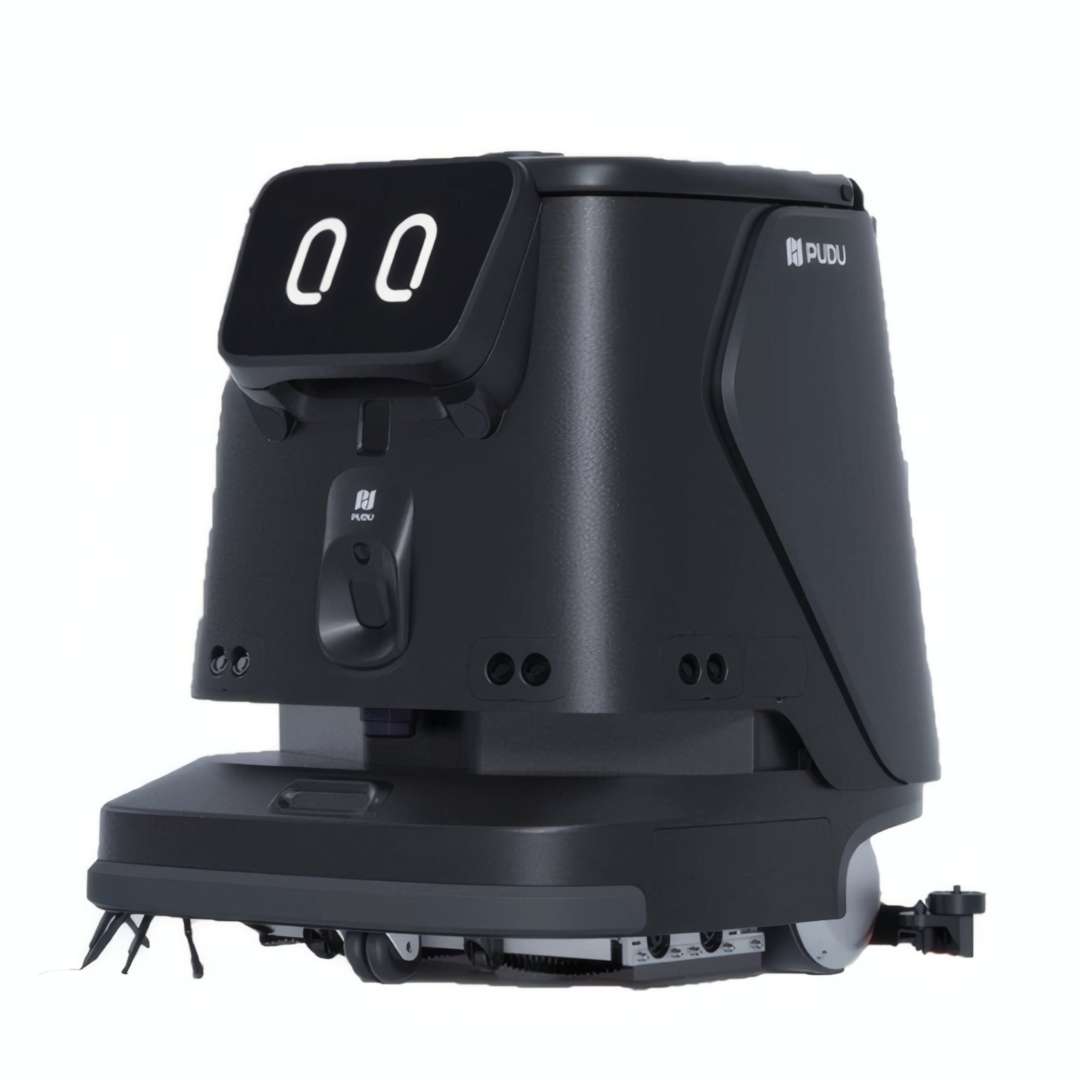
- Scrubbing Mode: dual roller brushes and the squeegee perform deep wet scrubbing on hard floors — polished concrete, tiles, epoxy resin, marble, and terrazzo.
- Sweeping Mode: side brush, sweeping roller brush, and the mopping-vacuuming part run a combined sweep, vacuum, and dust-mop pass in one cycle.
- Carpet Vacuuming Mode: side brush and sweeping brush pair with an optional carpet nozzle attachment for short-pile commercial carpets.
- Silent Mopping Mode: the blower switches off to cut operating noise, suiting hotel floors and open offices during business hours.
The clip below demonstrates all four cleaning modes in a typical commercial deployment.
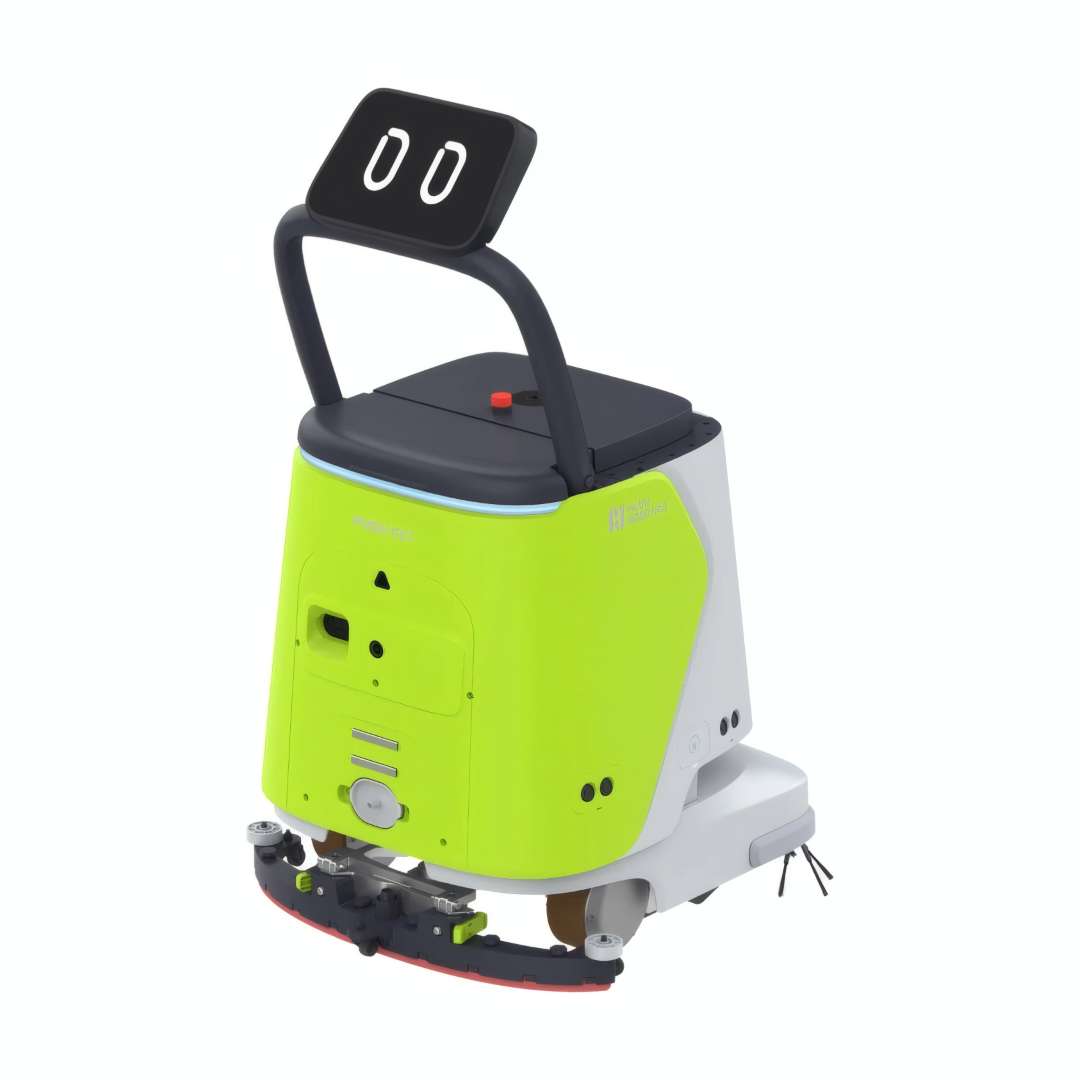
An extendable steering handle carries the 10.1-inch LCD screen and provides manual control during map-building runs or emergency repositioning. Lowering the handle for autonomous operation reduces the robot's overall profile.
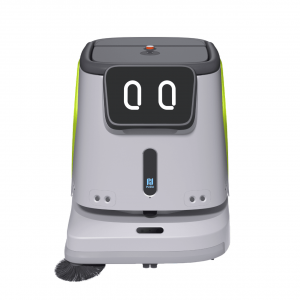
The green variant below shows the handle fully raised with the scrubbing brush assembly deployed at the base.
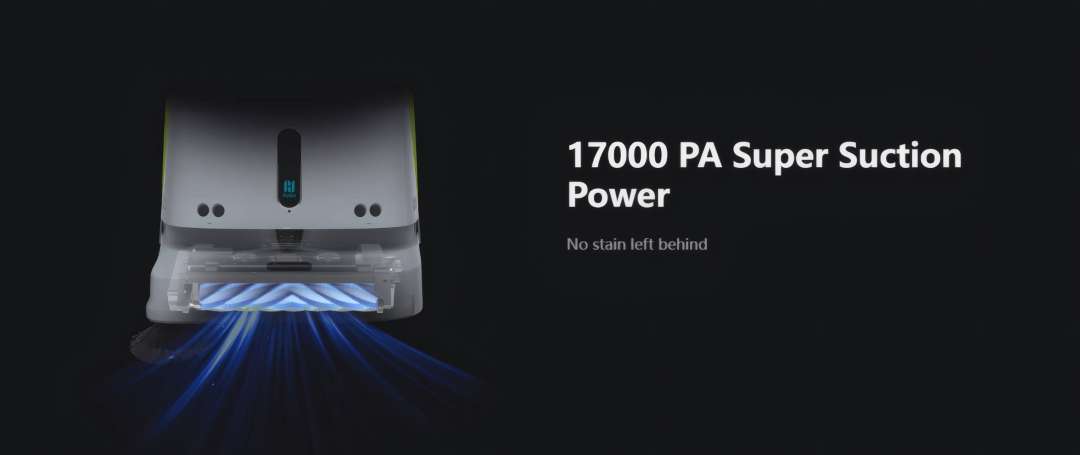
17000 Pa Suction: No Residue on the Floor
The CC1 generates up to 17000 Pa of suction pressure — strong enough to draw dirty water out of floor joints, grout lines, and surface micro-irregularities where lower-powered machines leave residue. A 63 cm squeegee and mopping-vacuuming part width ensures each wet pass exits the floor dry, while a 70 cm minimum path clearance keeps the robot operational in narrow service corridors.
The graphic below illustrates the bottom-up view of the CC1's suction head with airflow visualisation across the full cleaning width.
PUDU SLAM Navigation: Dual-Mode Positioning in Complex Spaces
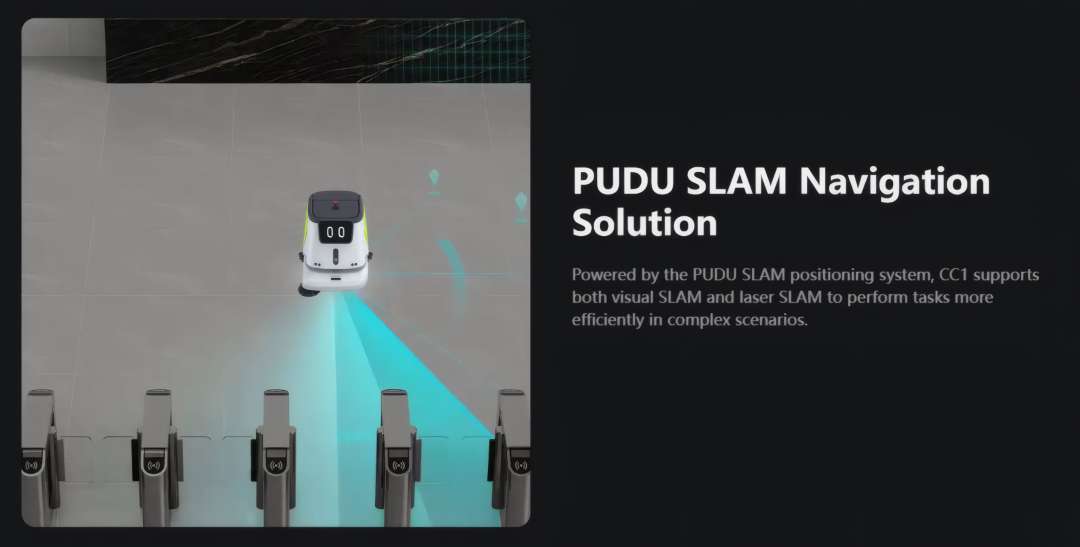
The CC1 navigates via the proprietary PUDU SLAM positioning system, running visual SLAM (camera-based simultaneous localisation and mapping) and laser SLAM at the same time. Dual-mode positioning makes the robot resilient to poor lighting, featureless corridors, glass facades, and rearranged floor furniture. A solid-state LiDAR delivers 360° horizontal scan coverage, while an RGBD camera and ultrasonic radar add near-field depth awareness below the LiDAR scan plane.
The illustration below shows the CC1 navigating an access-controlled lobby, with the cyan fan representing the live laser scan used for localisation and path planning.
Breakpoint Resume: No Lost Coverage
When battery power drops during an active task, the CC1 navigates to the charging station, recharges fully, then returns to the exact interruption point and continues from there. No zone is double-cleaned and none is skipped — a relevant behaviour for large retail floors, hotel lobbies, and open-plan offices where one charge cycle may not cover the full assigned area.
Autonomous Water Management: Hands-Free Operation
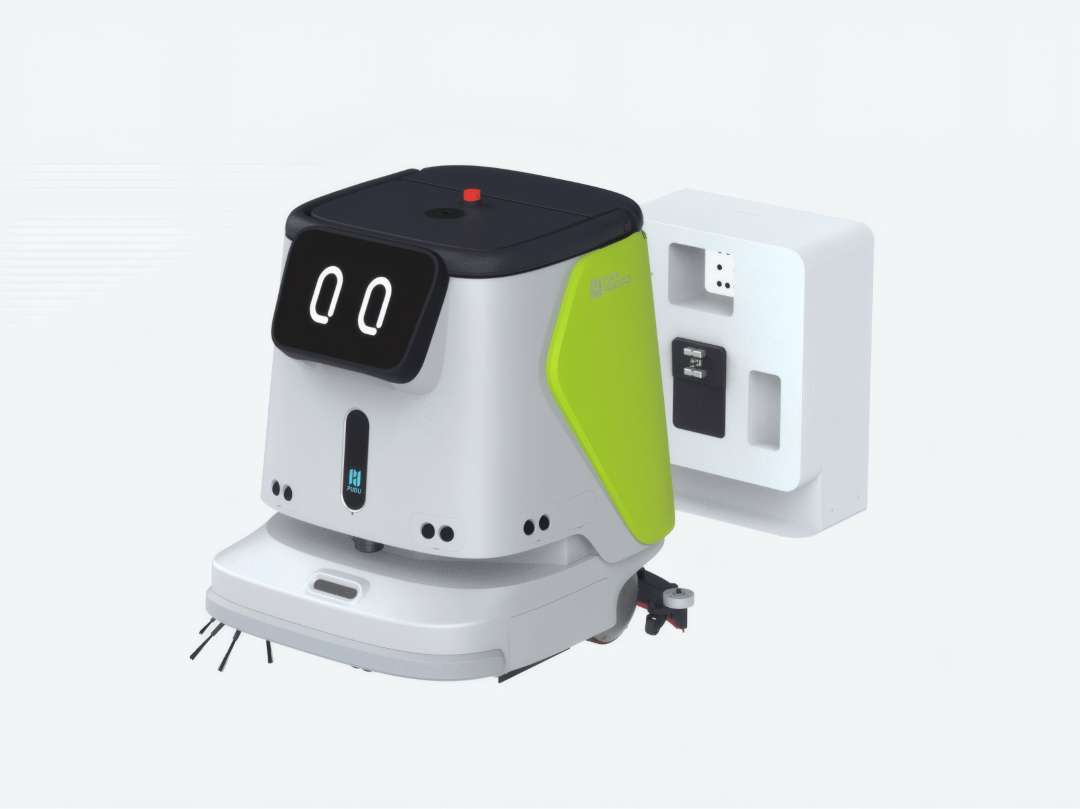
The CC1 carries symmetric 15 L tanks — one for clean solution, one for dirty water recovery. Paired with the optional docking station, water filling, draining, and charging all occur without operator involvement. The optional mobile water station works alongside the docking station to remove any need for fixed plumbing connections, so the robot can be deployed where pipe runs are not practical.
The green PUDU CC1 model is shown below docked at its charging and water management station, illustrating the compact footprint of the full servicing setup.
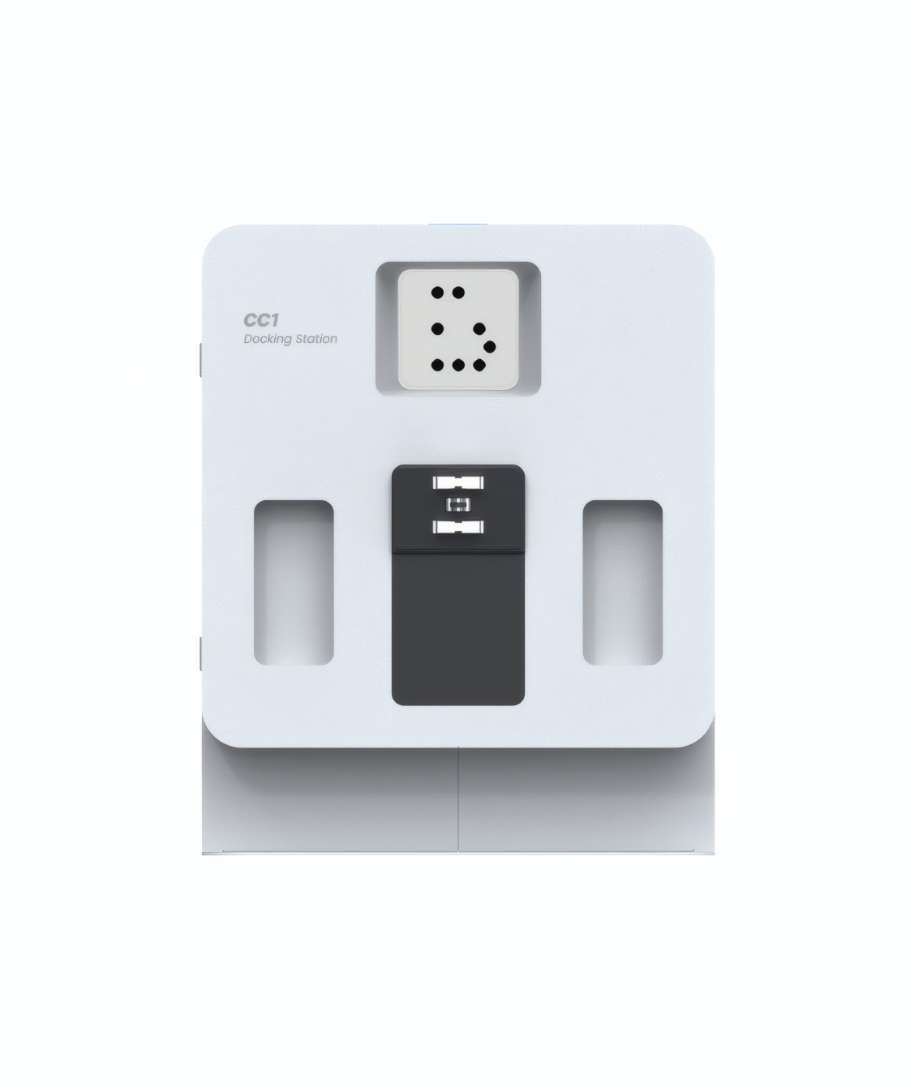
The station itself (front view below) manages the charging contact plate, a visual positioning marker, and water connection interfaces in a compact white unit designed to blend into service areas.
Three-Component Ecosystem
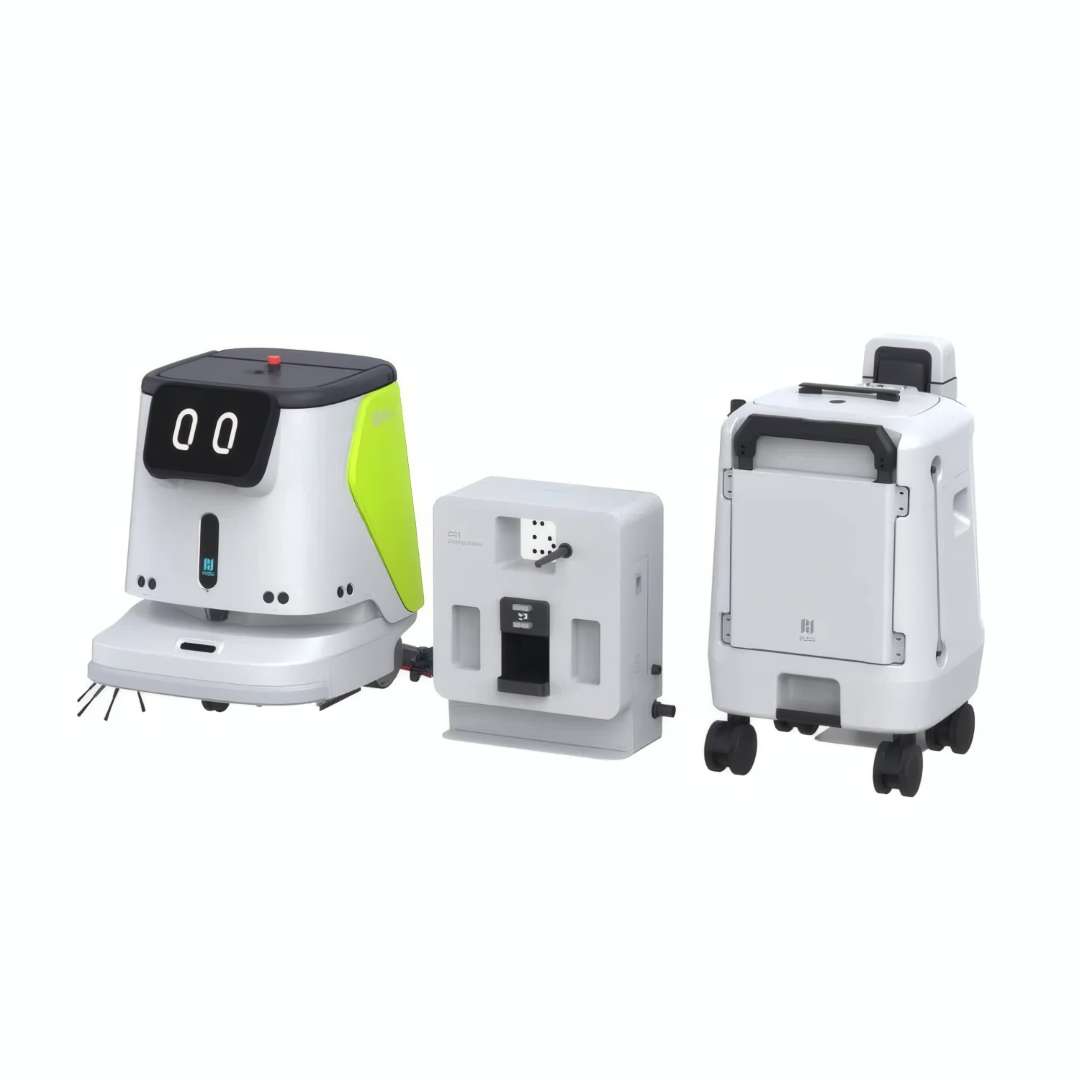
PUDU offers the CC1 in three service configurations, each sold separately from the robot. The charging-only station handles autonomous power management alone. The full docking station adds automated water supply and drainage. The mobile water station acts as a companion to the docking station and removes the requirement for fixed plumbing entirely.
The image below captures the complete PUDU CC1 ecosystem: the cleaning robot, the docking station, and the mobile water station shown together.
Digital Cleaning Reports: Area, Time, and Water Tracking
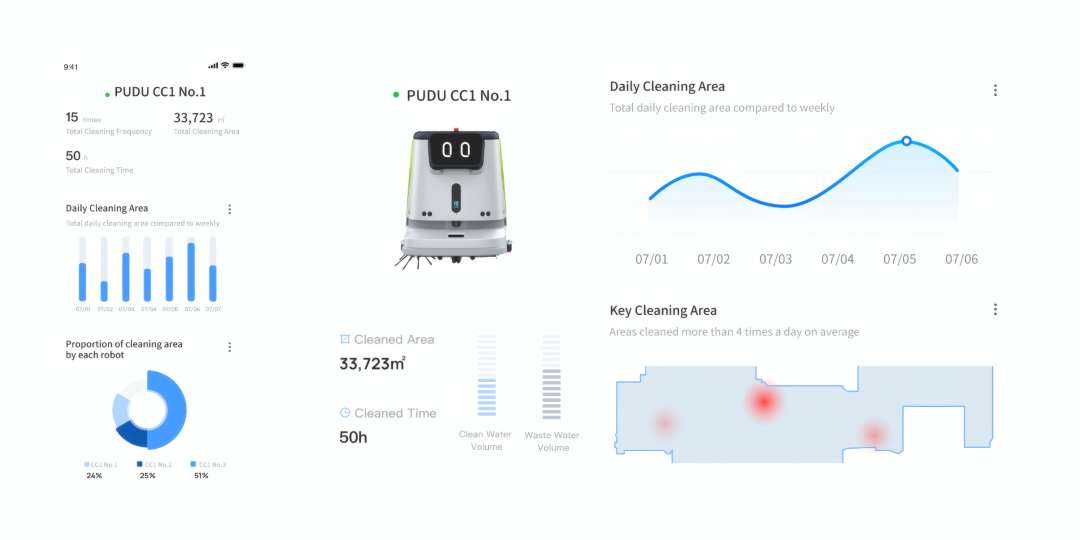
Facility managers rarely have direct oversight of every cleaning cycle. The CC1 app — Android-based, accessible over 4G or WiFi — automatically logs cleaning frequency, total surface area covered, operating hours, and water consumption per session. A daily-vs-weekly area trend chart highlights cleaning consistency, while a floor heatmap flags zones cleaned more than four times daily. All data is timestamped without manual input.
The dashboard below shows a single CC1 unit accumulating 33,723 m² of total cleaned area across 15 sessions in 50 h of operating time, with clean- and dirty-water volume indicators running in parallel.
Multi-Robot Fleet and Map Management
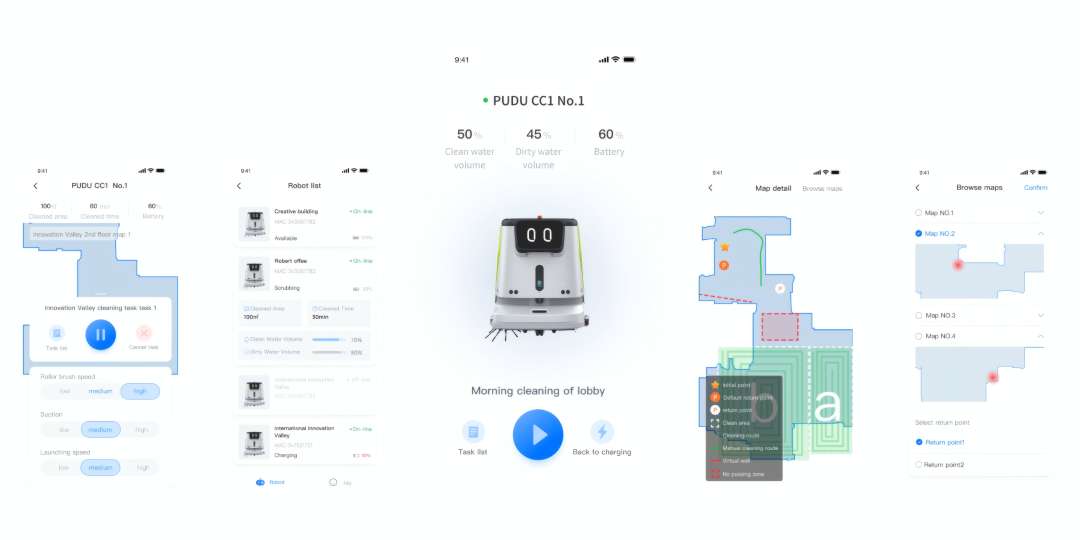
The same app supports multi-robot fleet views, selection across up to four saved floor maps, virtual wall and no-go zone editing, and scheduled task configuration. Before each autonomous run, the robot verifies battery level, water level, and physical position at the start marker, protecting task integrity even for overnight cycles.
The collage below shows five app screens together: the active task panel with pause and cancel controls, the fleet list with per-robot status, the live device status panel, the map editor with virtual walls, and the map selection screen.
Maintenance & Real-World Performance
The 17000 Pa suction figure holds up in practice: during wet scrubbing passes on epoxy-coated commercial floors, dirty-water recovery stays clean and complete. In high-use scenarios, replace the squeegee rubber strips monthly and the side brushes once bristle wear becomes visible, since these two components most directly affect recovery quality. Silent mopping mode is best reserved for light surface dust rather than heavily soiled floors.
Applications
- Office and corporate lobbies: the low-noise silent mopping mode allows scheduled cleaning during business hours without disrupting foot traffic.
- Retail floors and shopping centres: the 700–1000 m²/h cleaning efficiency covers large sales floor plans within a single shift window.
- Hotel corridors and hospitality venues: Breakpoint Resume keeps multi-corridor routes covered even when a single charge does not span the full floor.
- Healthcare facilities: repeated deep-scrubbing passes on hard flooring support the higher cleaning frequency these environments require.
- Facility management and multi-site portfolios: the fleet view and per-robot reporting in the app give managers a consolidated record across several buildings.
Compatibility of the PUDU CC1 Black
- Docking station: optional accessory adding automated charging plus water supply and drainage.
- Mobile water station: optional companion unit to the docking station, removing the need for fixed plumbing connections.
- Carpet vacuuming nozzle: optional attachment enabling Carpet Vacuuming Mode on short-pile commercial carpets.
What's in the Box
- PUDU CC1 cleaning robot
- Side brushes ×2
- Sweeping roller brush
- Mopping-vacuuming attachment (sweeping mode)
- Washing roller brush (scrubbing mode)
- Squeegee assembly
- Charger / power adapter
- Quick Start Guide
Docking station, mobile water station, and carpet vacuuming nozzle are sold separately.
Technical specifications of the PUDU CC1 Black
General
| Parameter | Value |
| Model | CCBC01 |
| Enclosure Material | PC+ABS |
| Screen Size | 10.1-inch LCD |
| Operating System | Android |
| IP Rating | IPX4 |
Physical Dimensions
| Parameter | Value |
| Robot Dimensions (L × W × H) | 62.9 × 55.2 × 69.5 cm |
| Weight | 75 kg |
Power & Battery
| Parameter | Value |
| Operating Voltage | DC 23 V–29.2 V |
| Power Input | AC 100 V–240 V, 50/60 Hz |
| Power Output | 29.2 V, 15 A |
| Battery Capacity | 50 Ah |
| Charging Time | < 3 h |
| Battery Life (general range) | 3 h–8 h |
Cleaning Mode Runtime
| Parameter | Value |
| Scrubbing Mode | 5 h |
| Sweeping + Vacuuming + Mopping Mode | 5 h |
| Carpet Vacuuming Mode | 4 h |
| Silent Mopping Mode | 9 h |
Navigation & Mobility
| Parameter | Value |
| Navigation Method | Integrated LiDAR and visual SLAM positioning |
| Cruise Speed | 0.2–1.2 m/s |
| Working Noise | < 70 dB |
| Max. Climbing Angle | 8° |
| Max. Surmountable Height | 20 mm |
| Max. Surmountable Gap | 35 mm |
| Min. Path Clearance | 70 cm |
| Min. Turning Width | 88 cm |
| Min. Passing Height Limit | 76 cm |
Cleaning Performance
| Parameter | Value |
| Max. Suction Power | 17000 Pa |
| Cleaning Efficiency | 700–1000 m²/h |
| Cleaning Width — with Side Brush | 50 cm (MAX) |
| Cleaning Width — Squeegee / Mopping-Vacuuming Part | 63 cm |
| Cleaning Width — Carpet Nozzle (short-pile) | 51.5 cm |
| Application Scope | Terrazzo, Marble, Tiles, Epoxy resin, Sandstone, Artificial stone, Short-pile carpets |
Capacity
| Parameter | Value |
| Dustbin Capacity | 2.5 L |
| Solution Tank (Clean Water) | 15 L |
| Recovery Tank (Dirty Water) | 15 L |
Connectivity & Control
| Parameter | Value |
| Communication | 4G, WiFi, Bluetooth, LoRa (optional) |
| Mobile App | Supported (Android) |
| Operation Mode | Manual / Auto |
| Auto Charging | Supported (with docking or charging station) |
| Auto Water Filling & Draining | Supported (with docking station) |
Operating Environment
| Parameter | Value |
| Working Temperature | 1 °C – 40 °C |
| Working Humidity | RH ≤ 85% |
| Storage Temperature | -20 °C – 60 °C |
| Storage Humidity | RH ≤ 85% |
| Working Altitude | < 2000 m |
How to Start an Automatic Cleaning Task on the PUDU CC1
This guide describes how to launch an autonomous cleaning run on a previously mapped floor area.
Step 1: Power On the Robot
Turn the key switch (item 21) to the ON position. Press and hold the power button (item 11) for approximately 3 seconds until the LED strip at the base turns blue, confirming the robot has powered on.
Step 2: Position at the Start Marker
Confirm the robot sits directly below or in front of the visual positioning marker, whether ceiling- or wall-mounted. Correct initial position lets the robot localise itself at the task start point before the run begins.
Step 3: Lower the Steering Handle
Lower the steering handle and screen to the downward position. Automatic tasks cannot start while the handle is raised — the LCD screen shows a warning if you attempt to launch with the handle up.
Step 4: Launch the Automatic Cleaning Task
On the home screen, tap "Auto-Cleaning". Select the desired task from the pre-configured list; if no selection is made, the default task runs. Tap "Start" to begin the autonomous run.
Step 5: Monitor and Resume if Interrupted
The CC1 executes the task autonomously. Tap the screen to pause and tap again to resume. If the battery drops mid-task, the robot returns to the charging station, recharges, then resumes from the exact interruption point through the Breakpoint Resume function.
Frequently Asked Questions
What cleaning modes does the PUDU CC1 support?
The PUDU CC1 supports four cleaning modes: Scrubbing (deep wet scrubbing on hard floors), Sweeping (combined sweep, vacuum, and dust mop in one pass), Carpet Vacuuming (short-pile carpets via the optional nozzle), and Silent Mopping (blower off for noise-sensitive environments). Each mode uses a specific set of interchangeable accessories.
How long does the PUDU CC1 battery last per charge?
Runtime depends on the selected cleaning mode. Scrubbing and the combined Sweeping+Vacuuming+Mopping mode each run for approximately 5 h, carpet vacuuming for approximately 4 h, and silent mopping for approximately 9 h with the blower deactivated. Figures assume low gear from 100% to 10% battery; general mixed-use range is 3 h–8 h.
Does the PUDU CC1 support autonomous charging and water management?
Yes, when paired with the optional docking station. The CC1 returns to base autonomously when battery is low, recharges, and manages clean-water refilling and dirty-water drainage automatically. The optional mobile water station works alongside the docking station to remove the need for fixed plumbing connections.
What floor types is the PUDU CC1 suitable for?
The CC1 is rated for terrazzo, marble, ceramic tiles, epoxy resin, sandstone, artificial stone, and short-pile hard carpets. It is not recommended for heavily oil-stained surfaces, outdoor environments, or slopes greater than 3°. In cleaning mode, maximum surmountable step height is 8 mm; in passage-only mode, the robot clears obstacles up to 20 mm.
Can the PUDU CC1 generate automated cleaning reports?
Yes, through the Android app over 4G or WiFi. It automatically records cleaning frequency, total area cleaned, operating hours, and water consumption per session, and shows daily-vs-weekly trend charts, floor heatmaps, and per-robot data across a multi-unit fleet without manual entry.
Why buy the PUDU CC1 Black from EXPERT3D?
EXPERT3D supplies professional robotics and 3D equipment since 2012. We provide expert pre-sales consultation to match the CC1 configuration to your facility, official PUDU warranty and authorized after-sales service, delivery across Spain and the EU, and post-sale support with operator training. Financing options are available for qualifying commercial purchases. As an official representative of PUDU, we guarantee 100% authenticity, a fair price, authorized service, and an official warranty on the CC1 and the full PUDU cleaning robot range.