

- Stock: In Stock
- Product code: U1
- Weight Brutto: 26.00kg

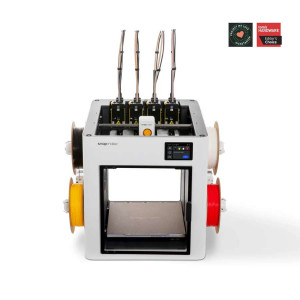
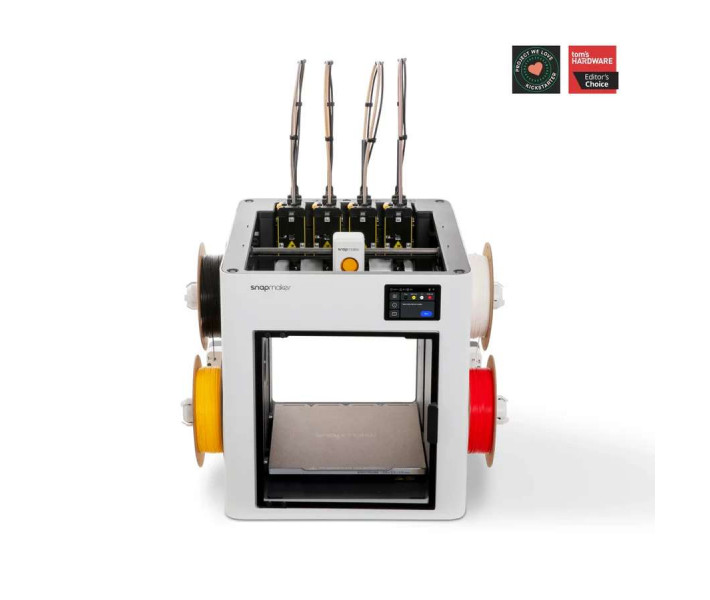
Switch filament in 5 seconds with SnapSwap™
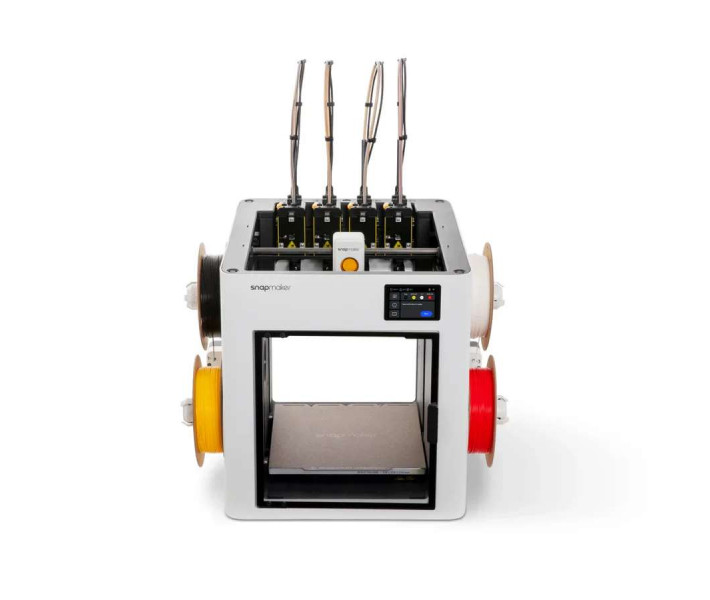
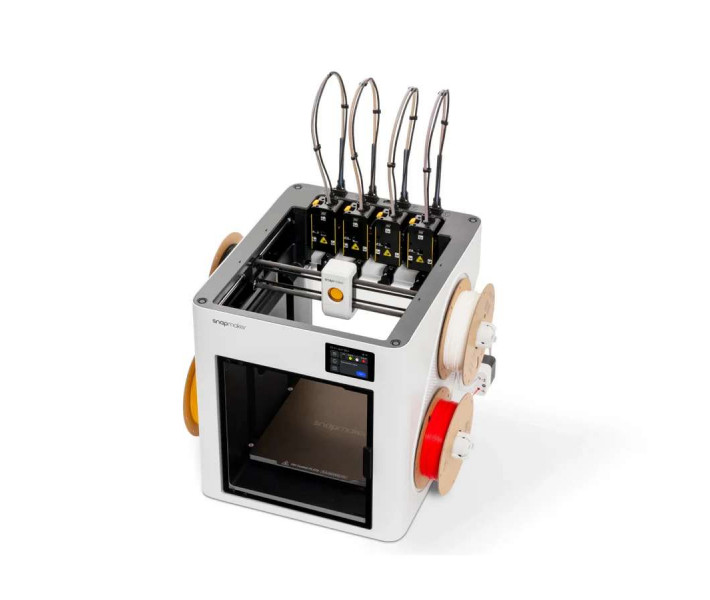
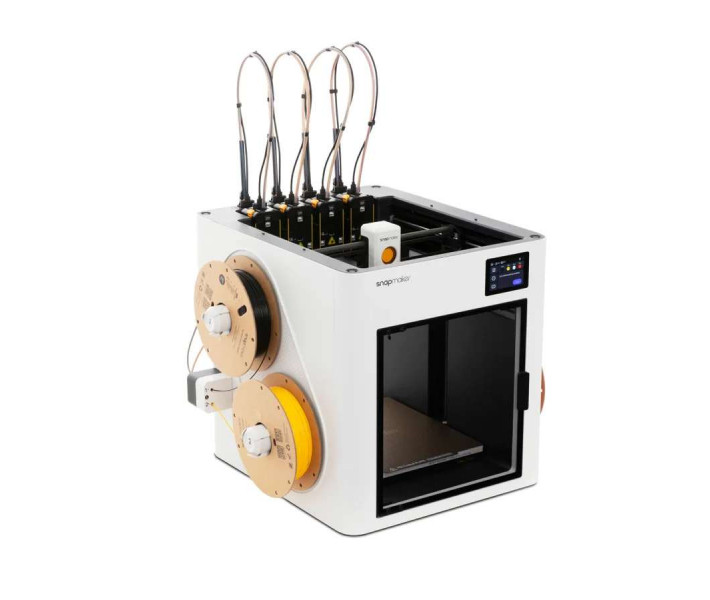
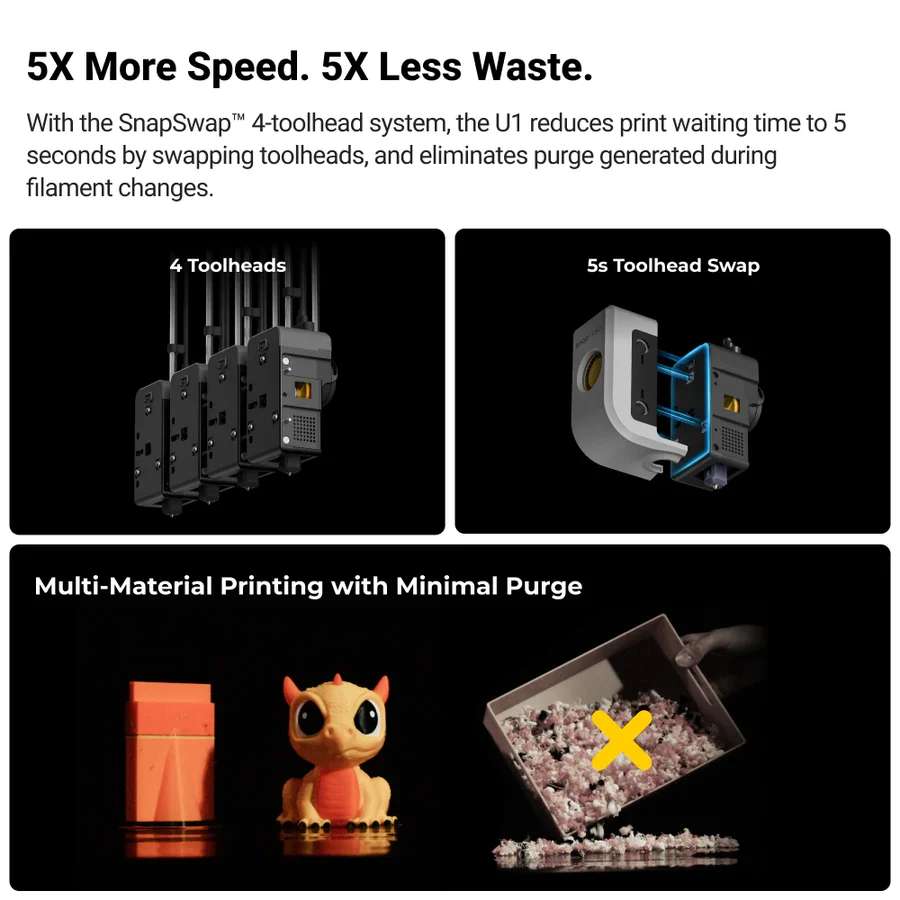
Most multi-toolhead printers waste an eternity purging material between colour changes. The U1 changes the game entirely. Thanks to its four pre-loaded, pre-heated toolheads, the SnapSwap™ system lets you switch between materials by physically swapping the entire tool. You go from two-minute waits to a transition of just five seconds, keeping your workflow fast and uninterrupted.
Say goodbye to purge waste
Traditional printers "purge" material by pushing clean plastic through until the nozzle is clear, generating mountains of waste. The U1 doesn't work that way. With a dedicated toolhead for each filament, it only purges the minimal amount required due to thermal degradation at start-up. This reduces waste by up to 80% per print, saving you both money and material.
Industrial-precision locking mechanism
Reliability is non-negotiable. The U1 uses a kinematic coupling system with steel balls that locks each toolhead into its exact position, securing it mechanically without relying on magnets or screws. It is a robust, proven system capable of withstanding more than one million swaps without any alignment failure.
Real cost savings: Less waste, more value
Multi-colour printing is often synonymous with throwing money away in the form of purge towers. The U1 eliminates this hidden cost through its intelligent tool-changing system. It is not just a matter of sustainability — it is a direct financial benefit for your workshop.
How much could you save per year?
The U1's efficient design has a direct impact on your running costs, depending on how you use it:
*Calculations based on comparisons with purge-based filament-change printers, using PLA at $15/kg and a frequency of one print per week.
Complete freedom to combine materials
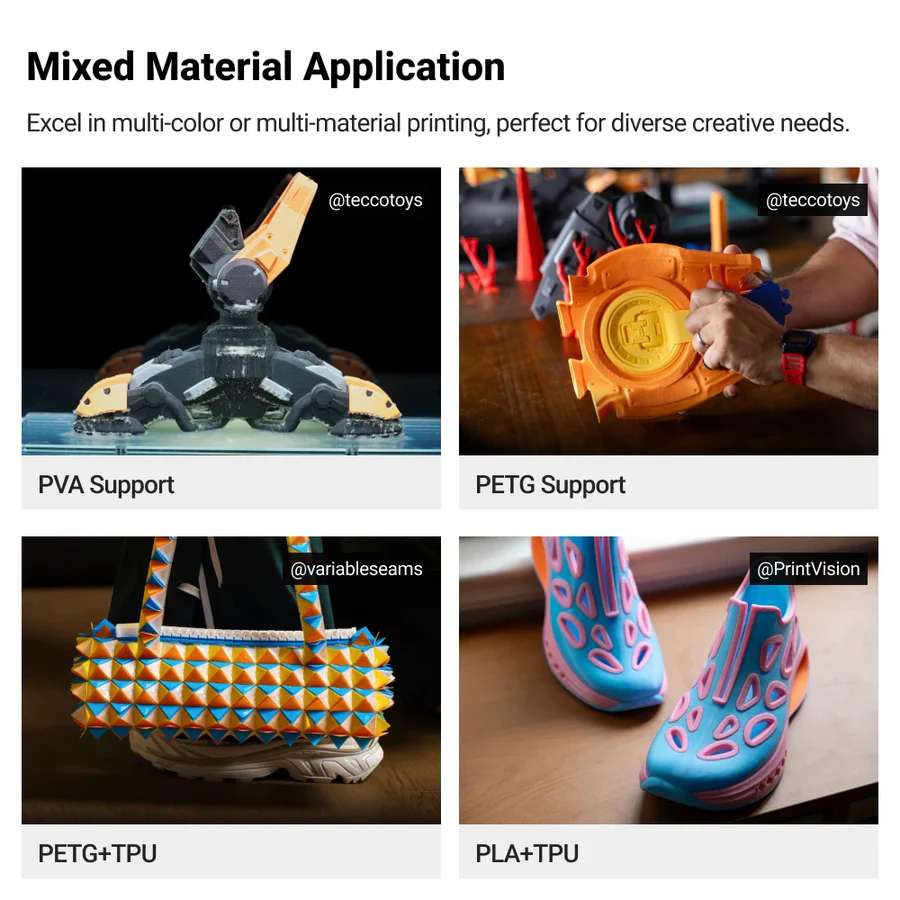
With four independent extruders, you have full control to blend mechanical properties or simplify post-processing. Assign a specific function to each part of your model, or make clean-up straightforward.
Supports that remove effortlessly
Polyethylene Terephthalate Glycol (PETG) supports for Polylactic Acid (PLA): Use PETG as a support interface for your PLA parts. Because the two materials do not bond strongly to one another, supports peel away cleanly without leaving marks, eliminating tedious sanding and preserving fine details.
Soluble PVA support: PVA is remarkable but costly. Because the U1 wastes no material on purging, you can use this premium filament only where it is truly needed without breaking the bank, achieving complex geometries with zero support residue.
Functional hybrid parts
Polyethylene Terephthalate Glycol (PETG) + Thermoplastic Polyurethane (TPU): The ultimate combination. Fuse the structural rigidity of PETG with the flexibility of TPU in a single part. Ideal for creating complex objects such as enclosures with soft-grip surfaces or integrated flexible mechanisms.
Polylactic Acid (PLA) + Thermoplastic Polyurethane (TPU): Design custom footwear or fashion accessories by combining colours and hardnesses without any adhesives. Using PLA as a support for TPU also makes removal incredibly straightforward.
Intelligent calibration for perfect results
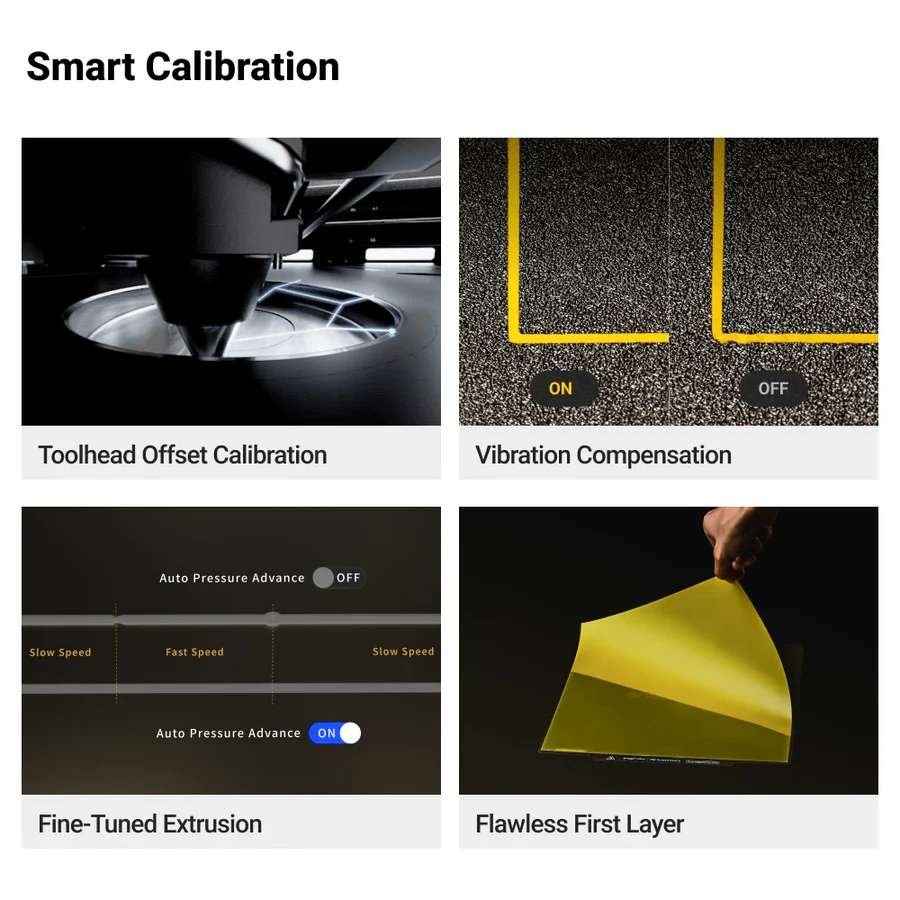
Speed means nothing without control. The U1 integrates compensation algorithms that synchronise all four toolheads, eliminate vibrations, and ensure the first layer is always perfect — delivering the dimensional accuracy of a single-toolhead printer.
Automatic toolhead alignment
Forget tedious manual calibrations. The U1 automatically aligns the offset of each tool to a precision of less than 0.04 mm, ensuring that colour or material transitions are imperceptible to the touch.
Vibration compensation (Input Shaping)
Using accelerometer sensors, the printer analyses and neutralises resonance frequencies before they can cause problems. This allows printing at high speeds whilst maintaining sharp edges and smooth walls, eliminating visual defects such as ghosting.
Millimetre-precise extrusion
Thanks to Pressure Advance, the U1 manages flow pressure at corners and during rapid direction changes. The result is consistent fine detail, with no bulging corners and no under-extrusion during fast moves.
Stress-free filament management
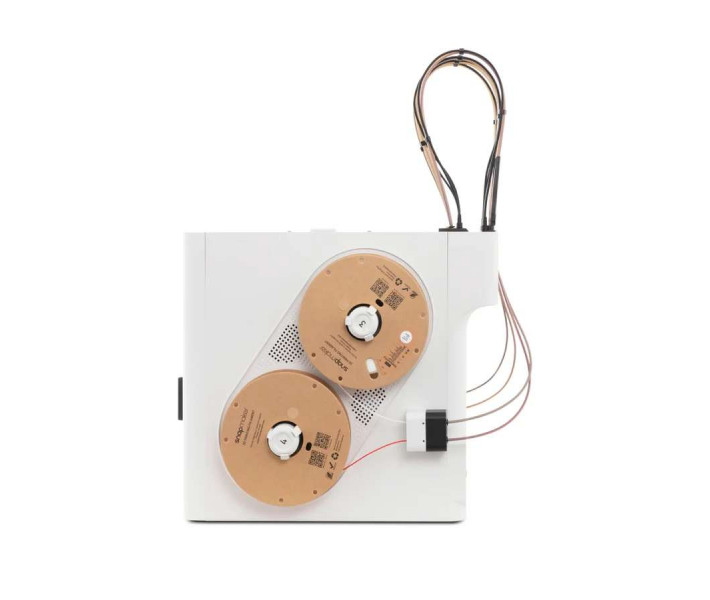
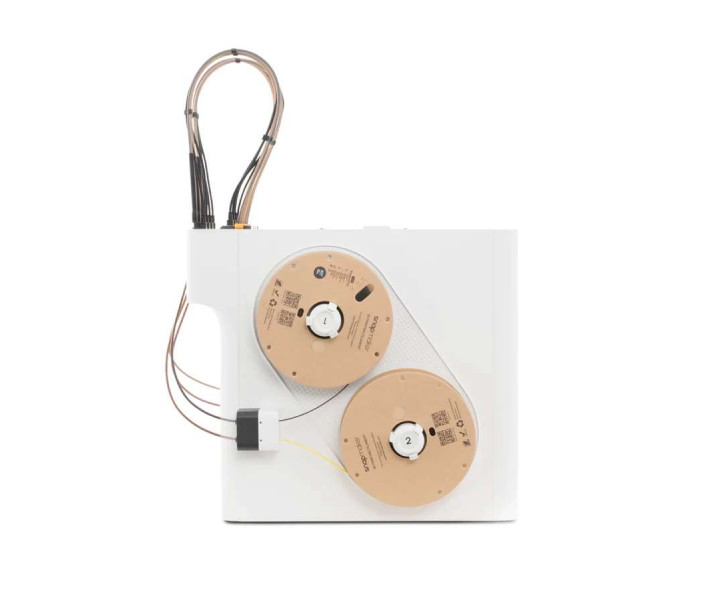
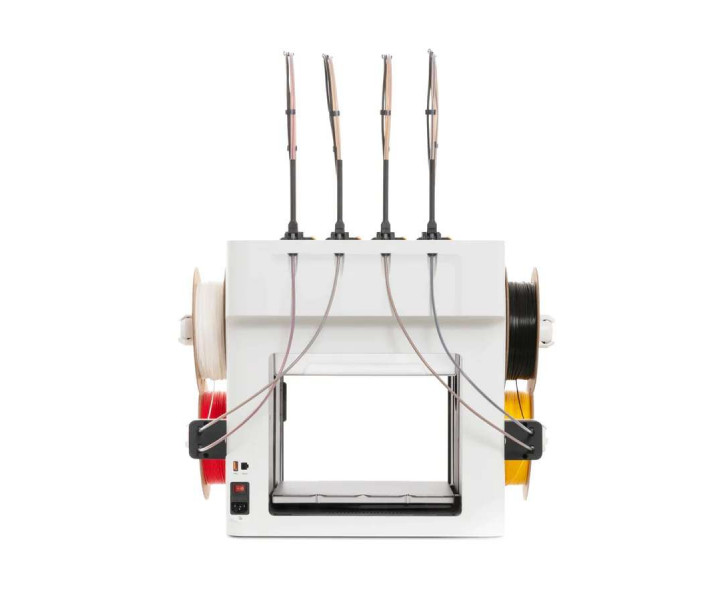
The U1's automatic system manages up to four spools on standby, handling loading, detection, and switching without any intervention from you.
- Automatic loading: Simply place the spool and let the system do the rest. No manual threading required.
- Backup mode: Does a spool run out mid-print? The U1 automatically switches to the next spool of the same material so your print is never left unfinished.
- RFID recognition: When using official Snapmaker filaments, the machine automatically detects the type and colour to adjust parameters for you.
*Note: The system is also compatible with third-party spools of 1.75 mm filament.
Anomaly detection and AI on the horizon
Equipped with over a dozen sensors, the U1 monitors your print continuously. Furthermore, the integrated camera does not just capture time-lapses; from December 2025 onwards (via OTA update), it will incorporate AI to detect failures such as spaghetti stringing or blockages, pausing the print to save your material.
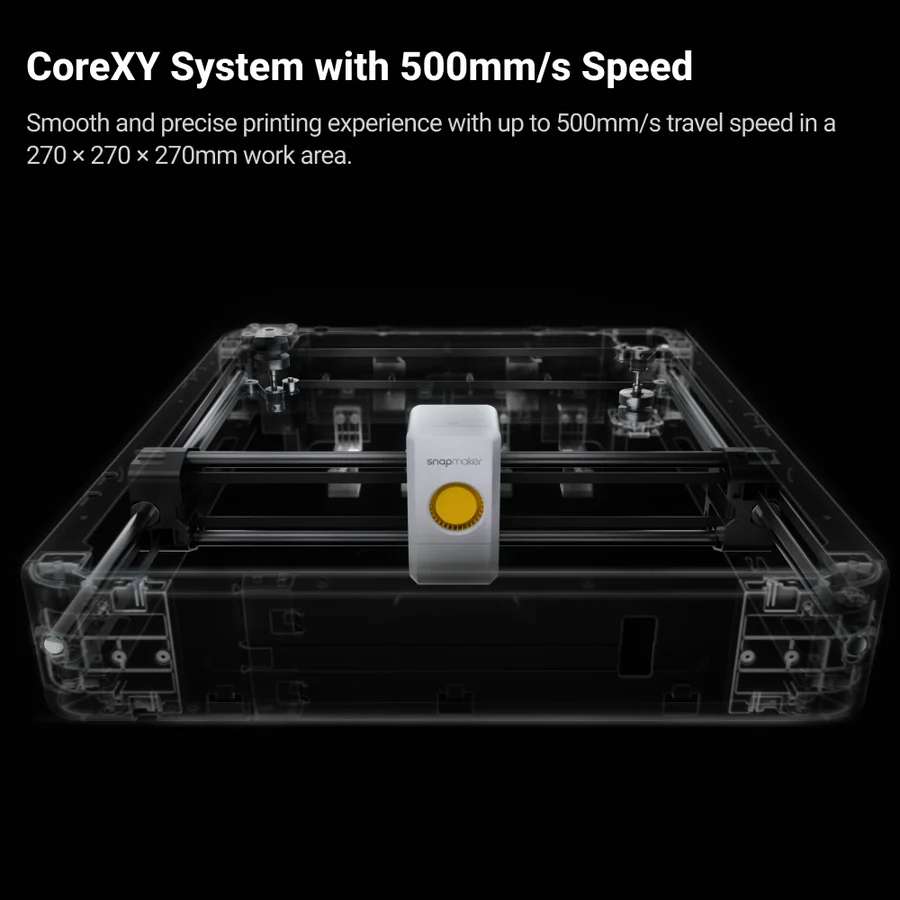
High-speed CoreXY kinematics
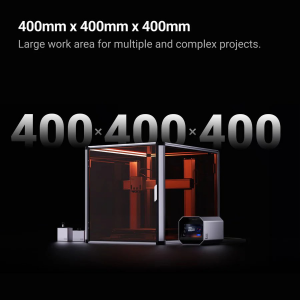
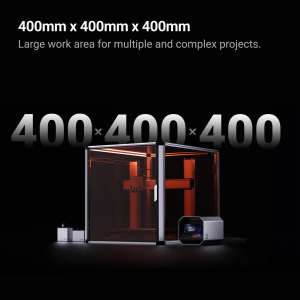
Built on a rigid chassis with carbon fibre rails on the X-axis, the U1 reaches speeds of up to 500 mm/s with an acceleration of 20,000 mm/s². All within a 270 × 270 × 270 mm build volume engineered to last.
How the U1 is built and tested
Snapmaker machines are designed for excellence, as our regular users know well. From careful assembly to rigorous laboratory testing, every unit is manufactured to deliver the reliability, consistency, and creative freedom you expect.
Manage your prints with complete freedom
Forget complicated settings and take full control of your workflow. Snapmaker Orca is not simply an adapted version of the powerful Orca Slicer engine; it is a refined tool that incorporates engineer-tested profiles specifically for the brand's official materials and machine models. This means you get optimised parameters from the very first print, saving you hours of trial and error.
The experience is completed by integrating it with the Snapmaker App. Imagine being able to launch, pause, or monitor your projects without being tied to the printer. Thanks to its remote connectivity, you can supervise every layer from anywhere. The time-lapse video functionality also lets you not only verify quality, but relive and share the creation process in a visually compelling way. You have the full power of print management, literally, in the palm of your hand.

Technical Specifications
General
- Dimensions: 584 mm × 499 mm × 730 mm
- Weight: 18.2 kg
Print Properties
- Technology: Fused Deposition Modeling (FDM)
- Build volume: 270 × 270 × 270 mm
- Max. toolhead speed: 500 mm/s
- Max. acceleration: 20,000 mm/s²
Toolhead
- Toolheads included: 4
- Max. flow rate: 32 mm³/s
- Nozzle material: Stainless steel
- Max. temperature: 300°C
- Nozzle diameter: 0.4 mm (1.75 mm filament)
Build Plate / Heatbed
- Surface: Textured PEI flexible steel sheet
- Max. temperature: 100°C
Material Compatibility
- Standard: PLA, PETG, TPU, PVA, PCTG
- With top enclosure (optional): ABS, ASA, PA, PC, PET
- With enclosure and hardened nozzle: Carbon fibre or glass fibre reinforced polymers
Electronics and Connectivity
- Display: 3.5-inch touchscreen
- Connectivity: Wi-Fi (2.4 GHz), USB
- Storage: 26 GB eMMC
- Camera: 2 MP built-in enclosure camera
Calibration and Sensors
- Levelling: Automatic bed mesh
- Vibration: Accelerometer + Input Shaping
- Flow: Pressure Advance
- Offset: Automatic coordinate calibration
- Detection: Filament run-out, power loss, blockage, build plate presence
Software
- Slicer: Snapmaker Orca, OrcaSlicer
- Mobile app: Snapmaker App (Android/iOS)
- Firmware: Klipper
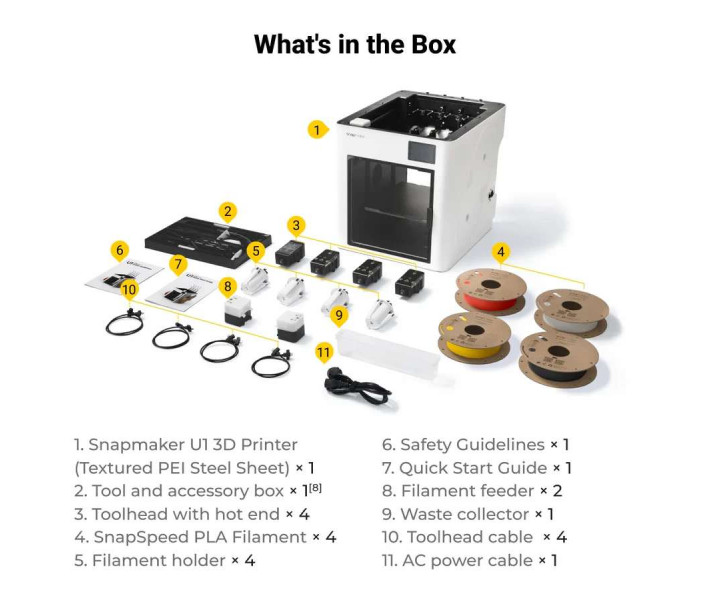
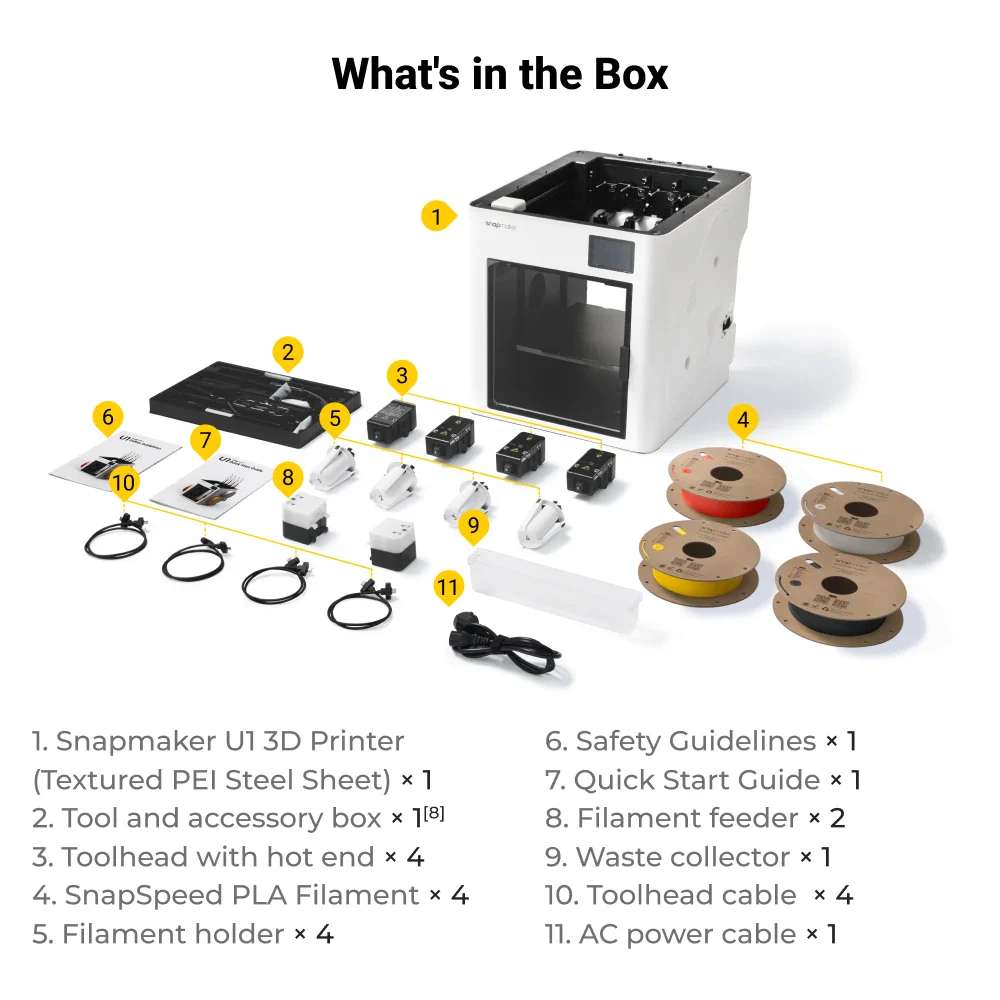
What's in the Box
When you open your new machine, you will find everything you need to get started straight away — no surprises, no additional purchases required. Snapmaker includes a complete set of tools and consumables so your only concern is deciding what to design first.
What's included with your Snapmaker U1
This package is designed to maximise your productivity from minute one. Particularly noteworthy is the inclusion of 4 toolhead modules with hotends and high-speed filament, letting you take full advantage of the SnapSwap™ system right away.
- 1× Snapmaker U1 3D Printer (fitted with textured PEI steel sheet).
- 1× Essential tools and accessories kit.
- 4× Toolhead modules with pre-installed hotends.
- 4× SnapSpeed PLA filament spools.
- 4× Filament spool holders.
- 1× Safety manual.
- 1× Quick-start guide.
- 2× Filament feeders.
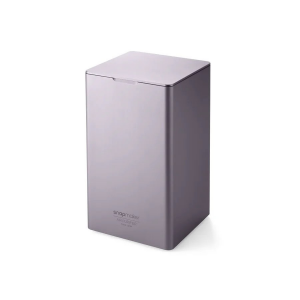
- 1× Purge waste collector.
- 4× Toolhead connection cables.
- 1× AC power cable.
Frequently Asked Questions
What are the dimensions and weight of the box?
The box measures 580 × 540 × 500 mm and has a total weight of 26 kg (including 4 spools of 500g each).
What type of nozzles does it use?
It comes equipped with 4 proprietary stainless steel hotends of 0.4 mm (plus one spare). The heatsink, heat break, and heater block form an integrated unit to prevent leaks and improve thermal performance, meaning individual components cannot be replaced — the entire hotend is swapped as one assembly.
How do I send files to the printer?
You have two options: wireless transfer via Wi-Fi for convenience, or via USB drive for direct transfers.
What are the characteristics of the build plate / heatbed?
It has a total thickness of 6.5 mm (1.5 mm base + 5 mm reinforcements). This robust structure keeps levelling variation below 0.4 mm, ensuring a reliable first layer every time.
Does it support third-party filaments?
Yes, you can use any quality 1.75 mm filament. Please note that the automatic RFID reading function is exclusive to official Snapmaker spools, but all other functions operate normally with third-party filaments.
Can it print flexible Thermoplastic Polyurethane (TPU)?
Yes. TPU materials with a hardness of ≥90A have been validated. Testing for softer grades (<90A) is still being finalised. We always recommend drying TPU filament before printing to avoid stringing.
Is the firmware open source?
The U1 runs on Klipper with Moonraker. Snapmaker is committed to releasing the modified code as open source before March 2026, once the development environment has stabilised sufficiently to allow safe user modifications.
Why buy from EXPERT3D?
Since 2012, EXPERT3D has been a trusted partner in Additive Manufacturing, ensuring you receive not just a machine, but a complete solution. We provide expert guidance to help you maximise the capabilities of advanced systems such as the Snapmaker U1 3D Printer.