
- Disponibilidad: En stock
- Código del producto: 920372000001145522
- Peso bruto: 140.00
- SKU: 10251-000002

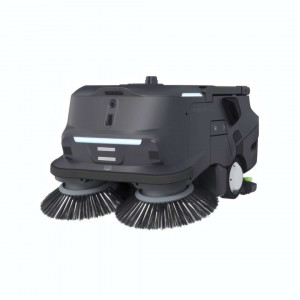
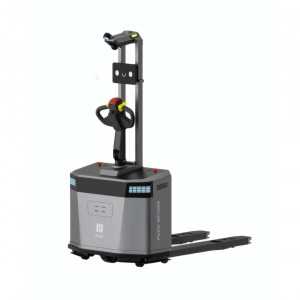
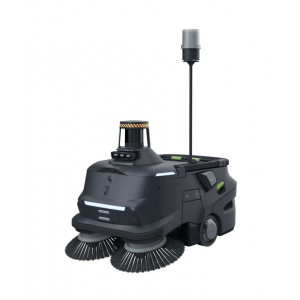
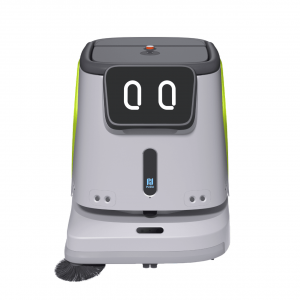
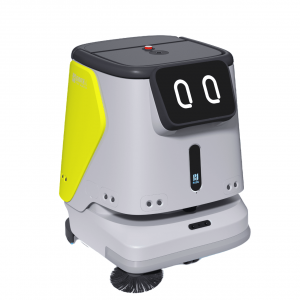
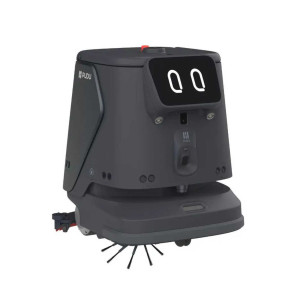
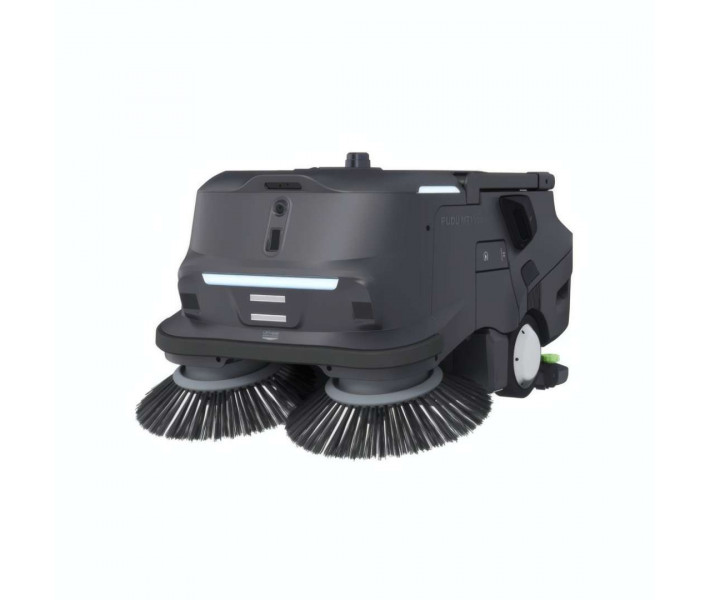
El PUDU MT1 Vac es un robot de nivel comercial impulsado por IA para el barrido, la aspiración y el fregado en seco autónomos. Está pensado para espacios de gran tamaño como aeropuertos, hoteles de cinco estrellas y salones de banquetes. Un sistema fusionado de LiDAR SLAM y VSLAM se combina con una succión de doble ventilador para lograr un alto rendimiento. La visión por IA integrada se adapta al tipo de suelo, y su larga autonomía de batería permite turnos de varias horas.
| Especificación | Por qué es importante |
|---|---|
| Cobertura máxima de limpieza: 1.400 m²/h | Limpia un vestíbulo completo de aeropuerto o un salón de banquetes en un único turno operativo. |
| Anchura de aspirado: 55 cm | Cubre el doble de superficie que un cabezal de aspiración comercial estándar de 25–30 cm en cada pasada. |
| Capacidad de la bolsa de polvo: 14 L (7 L × 2) | Amplía el intervalo entre vaciados manuales, manteniendo la flota operativa durante más tiempo. |
| Autonomía: 3–6,5 h | Permite turnos prolongados antes de necesitar una parada de carga sin supervisión. |
Más allá de las cifras principales, varias decisiones de diseño definen el comportamiento del PUDU MT1 Vac en el servicio diario:
- Doble conducto de aire independiente que aumenta la eficiencia de succión en un 200% respecto a los diseños de conducto único, fijando el polvo fino al suelo antes de que pase el cepillo de rodillo.
- Navegación LiDAR SLAM + VSLAM + Marker que mantiene un posicionamiento fiable incluso cuando se mueven los muebles o pasa gente, evitando bloqueos en espacios públicos concurridos.
- Reconocimiento de suelo por IA que alterna automáticamente la succión y la velocidad del cepillo entre suelo duro y moqueta, eliminando la necesidad de cambios manuales de modo.
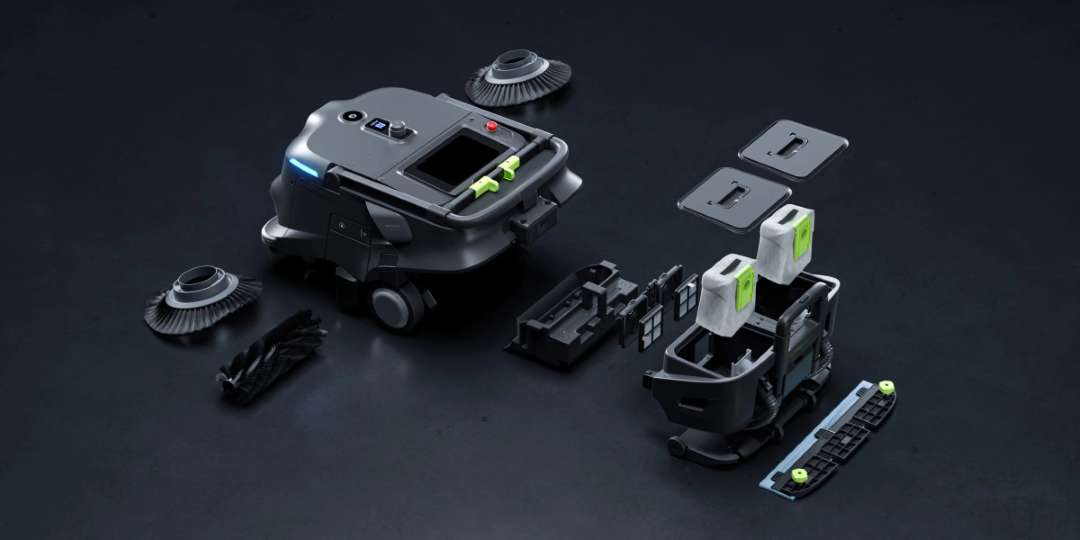
- Componentes modulares sin herramientas: los cepillos laterales, el cepillo de rodillo, las bolsas de polvo y las placas de fregado se desmontan todos sin herramientas, reduciendo el tiempo de inactividad entre turnos.
- Integración IoT con PUDU Link que se conecta a ascensores y puertas electrónicas para que el robot llegue a varias plantas y zonas con control de acceso sin necesidad de escolta.
Dos decisiones de ingeniería definen cómo se mueve y limpia el PUDU MT1 Vac: un sistema de succión de doble conducto y un sistema de navegación SLAM fusionado. Juntos marcan el ritmo de todas las capacidades descritas a continuación.
El breve clip a continuación muestra el ciclo de limpieza del robot de principio a fin, ilustrando cómo se combinan el barrido, la aspiración y el fregado en seco en una sola pasada autónoma.
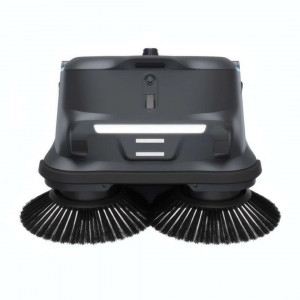
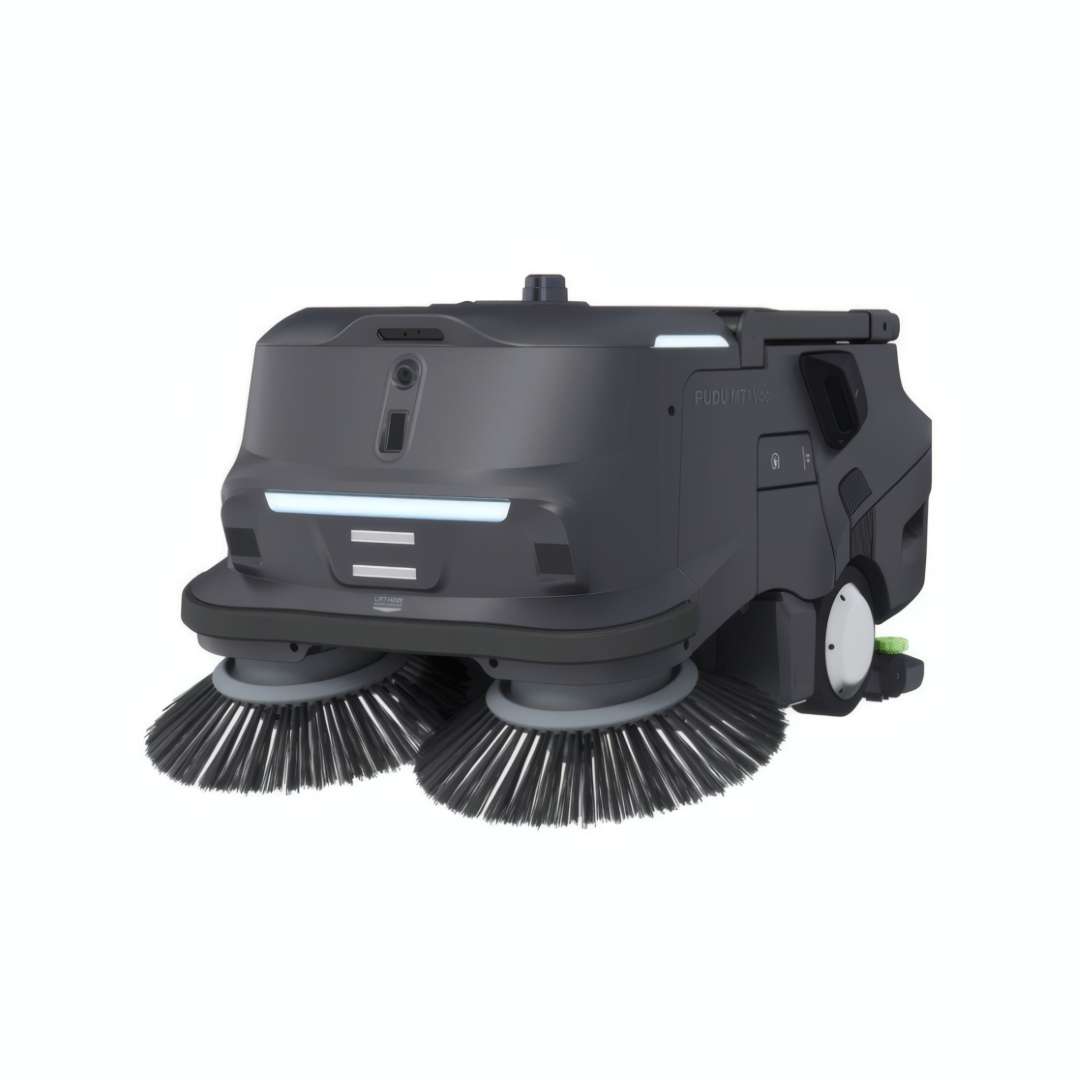
Vistos desde el frente, los cepillos laterales contrarrotativos son los que canalizan los residuos sueltos hacia el interior antes de que actúe el conducto de succión central.
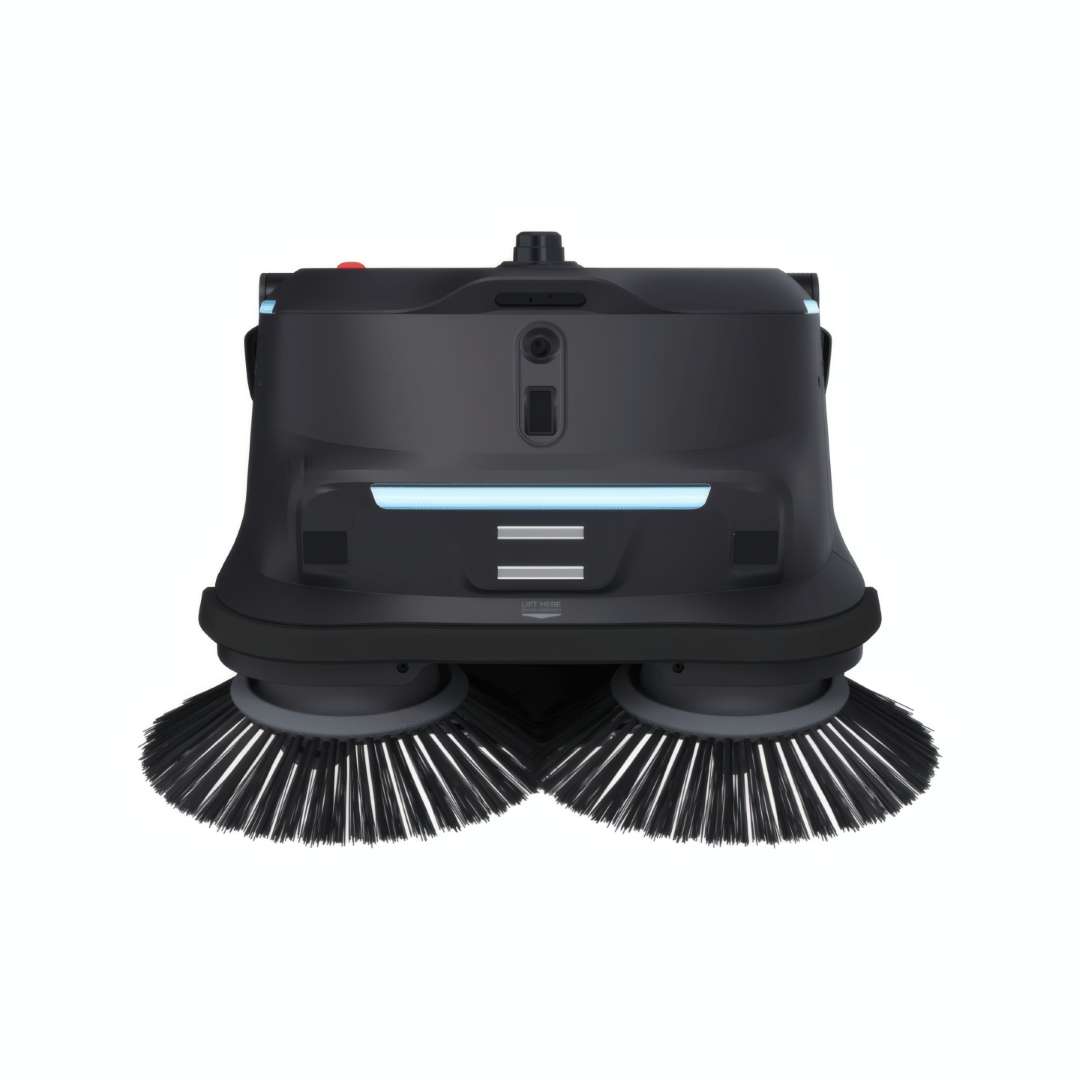
Sistema de succión del PUDU MT1 Vac
Las aspiradoras comerciales convencionales dependen de un único conducto de aire. El diseño de doble conducto independiente fija el polvo fino a la superficie del suelo antes de que el cepillo de rodillo lo alcance, suprimiendo las nubes de polvo que las máquinas de una sola pasada dispersan. Los trozos de papel, virutas de madera, arena y residuos granulares quedan todos dentro de las especificaciones. Una succión fuerte y constante también gestiona las transiciones de suelo duro a moqueta sin necesidad de ajustar manualmente la velocidad del cepillo.
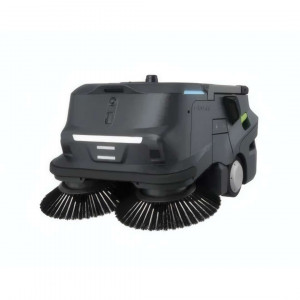
La vista en tres cuartos a continuación muestra la carcasa compacta, las ruedas motrices y el etiquetado del panel lateral que le dan al robot su postura estable.
Geometría de cobertura de paso ancho
La mayoría de las aspiradoras verticales comerciales funcionan con un cabezal de 25–30 cm. Con una anchura de succión de 55 cm y una anchura total de barrido de 70 cm con los cepillos laterales desplegados, el MT1 Vac completa en una sola pasada lo que una máquina convencional necesita dos o tres pasadas para cubrir. A velocidades de crucero de hasta 1,2 m/s, esa geometría eleva la cifra de rendimiento lo suficiente como para limpiar un vestíbulo de aeropuerto completo en una sola franja horaria. Un perfil de holgura baja de 52 cm se desliza bajo estanterías, expositores y mobiliario de recepción sin intervención del operador.
Navegación y cartografía
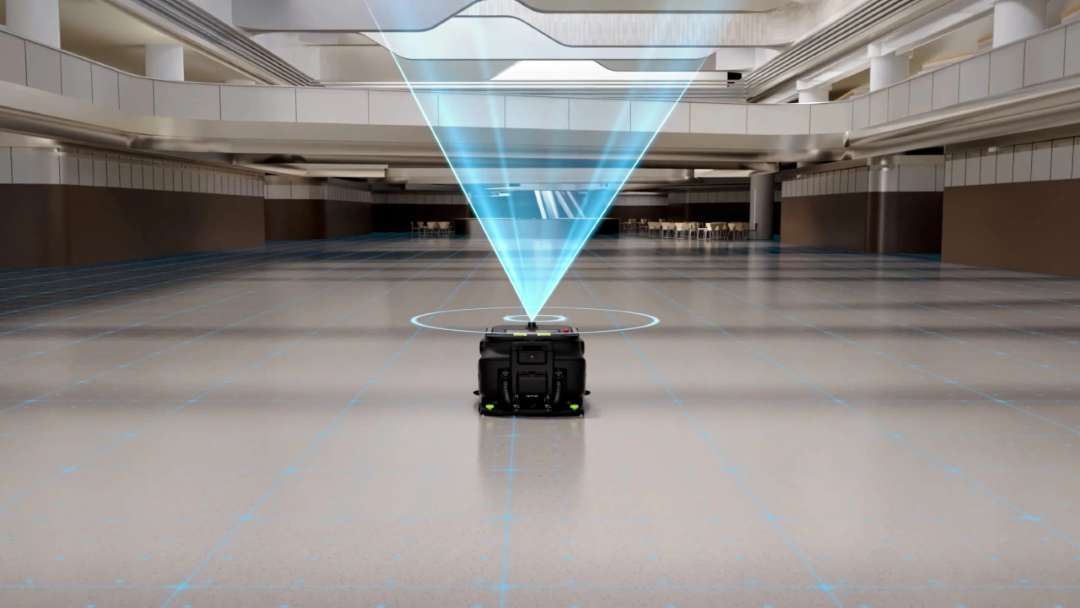
El sistema de posicionamiento fusiona tres métodos complementarios: LiDAR SLAM para un mapeo espacial de precisión láser, VSLAM (localización y mapeo simultáneos visuales) para el reconocimiento de entornos ricos en características, y posicionamiento por Marker visual para un anclaje determinista de la ubicación de inicio. Esta arquitectura redundante permite relocalizarse de forma fiable incluso cuando se reorganizan los muebles, aparecen bloqueos temporales o hay aglomeraciones de gente en la zona de limpieza. La holgura mínima de paso es de 75 cm, y los pasillos de más de 80 cm de ancho permiten que el robot pase sin ninguna reducción de velocidad.
Al escanear un gran salón vacío, el robot proyecta un cono de escaneo LiDAR en tiempo real sobre el plano del suelo mientras construye su ruta.
Reconocimiento de suelo por IA
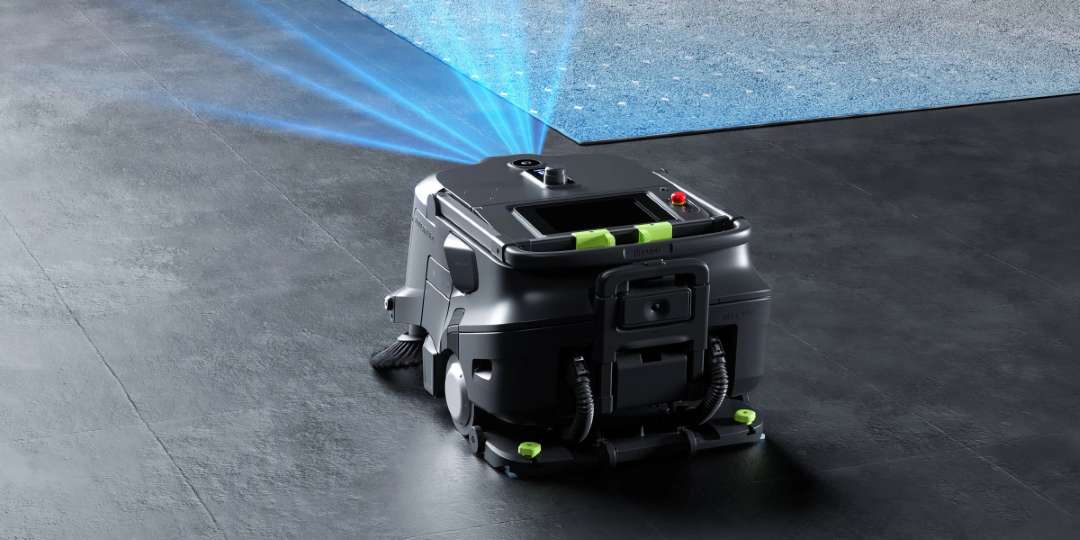
Un módulo de visión por IA integrado clasifica el tipo de superficie del suelo en tiempo real. Al entrar en una zona de moqueta se activa el ajuste automático de la intensidad de succión y la velocidad del cepillo de rodillo, protegiendo el pelo delicado de la moqueta al tiempo que se extraen las partículas incrustadas. Al volver al suelo duro, el sistema restablece los parámetros estándar sin intervención del operador. Una función complementaria, AI Exemption, permite a los operadores enseñar al robot a ignorar los patrones decorativos del suelo que la cámara podría interpretar erróneamente como residuos.
Justo en el límite exacto entre las baldosas y la moqueta, la transición es donde los robots de limpieza de modo único suelen perder eficacia.
Limpieza inteligente de puntos por IA
Durante las pasadas de inspección estándar, el sistema de visión por IA escanea continuamente en busca de concentraciones de residuos. Cuando se identifica un punto crítico de suciedad, como un derrame de bebida o basura dispersa, el robot se desvía de forma autónoma de su ruta planificada, ejecuta una secuencia de limpieza específica y luego vuelve a la trayectoria original. El modo Ultra Spot Clean amplía esto todavía más: el análisis de mapas de calor de las zonas de alto tráfico activa pasadas adicionales en zonas con una probabilidad estadísticamente alta de acumular residuos, todo ello sin intervención de un supervisor.
El clip a continuación muestra una desviación de limpieza de punto específica, activada automáticamente en cuanto el sistema de visión detecta una concentración de residuos.
Capacidad de la bolsa y del depósito de polvo
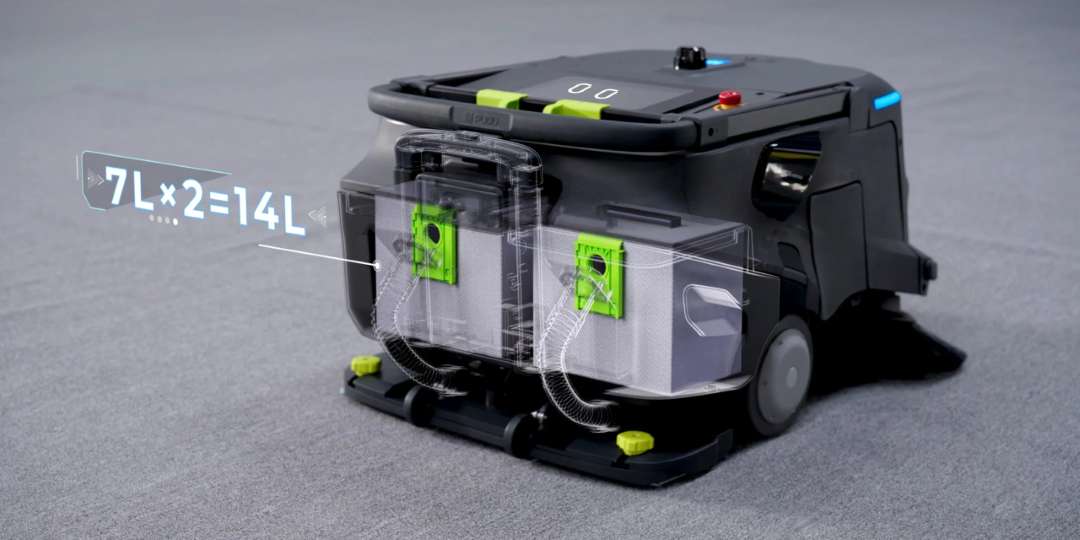
La capacidad de limpieza sirve de poco si el robot necesita vaciarse constantemente. El MT1 Vac cuenta con dos bolsas de polvo independientes de 7 L, 14 L en total, respaldadas por un depósito rígido independiente de 6 L para residuos de mayor tamaño que evitan el circuito de la bolsa. Esta arquitectura de doble depósito amplía la distancia que el robot cubre antes de necesitar una parada de mantenimiento. En condiciones de uso mixto habituales, la frecuencia de vaciado cae muy por debajo de una vez por turno.
Vistas a través de un corte transparente, ambas bolsas se sitúan una junto a la otra dentro del chasis, confirmando su volumen de almacenamiento combinado sin necesidad de abrir un panel.
Filtración HEPA
El filtro HEPA estándar de grado H11 captura más del 98% de las partículas de hasta 0,3 µm, lo suficientemente fino como para atrapar las partículas en suspensión generadas por la limpieza de suelos de alto tráfico. Las instalaciones con requisitos de calidad del aire más estrictos —pasillos farmacéuticos, hoteles sensibles a alergias, áreas de recepción sanitarias— pueden especificar el filtro H13 opcional, que eleva la eficiencia de captura al 99,97% a 0,3 µm. Ninguno de los dos grados es lavable; el intervalo de sustitución recomendado es semanal en uso comercial estándar.
Mantenimiento modular sin herramientas
Los robots de limpieza comerciales acumulan desgaste en cinco categorías de consumibles. El MT1 Vac lo resuelve con una arquitectura totalmente modular: las placas del mopa de fregado en seco, el depósito de polvo, el conjunto de la bolsa de polvo, el cepillo de rodillo y los cepillos laterales se desmontan todos sin herramientas. Cada sustitución tarda segundos en lugar de minutos, lo cual es importante en entornos de aeropuertos y hoteles donde la flota debe volver rápidamente al servicio entre ventanas de mantenimiento.
Dispuesto en una vista despiezada, cada componente extraíble aparece separado de la unidad principal, formando de un vistazo un mapa completo de consumibles.
Extensión de aspiración manual
Una manguera de aspiración de liberación rápida amplía el alcance de limpieza del robot a superficies a las que el cuerpo del robot no puede acceder: bordes de cojines de sofá, zócalos de paredes verticales, mamparas de cristal y superficies elevadas de exposición. Esta única función cierra la brecha entre la limpieza autónoma de suelos y el trabajo manual residual que queda tras el paso del robot, sin necesidad de una máquina separada.
El clip a continuación muestra la manguera en uso, alcanzando una superficie que el cuerpo del robot por sí solo no podría limpiar.
Integración IoT y con el edificio
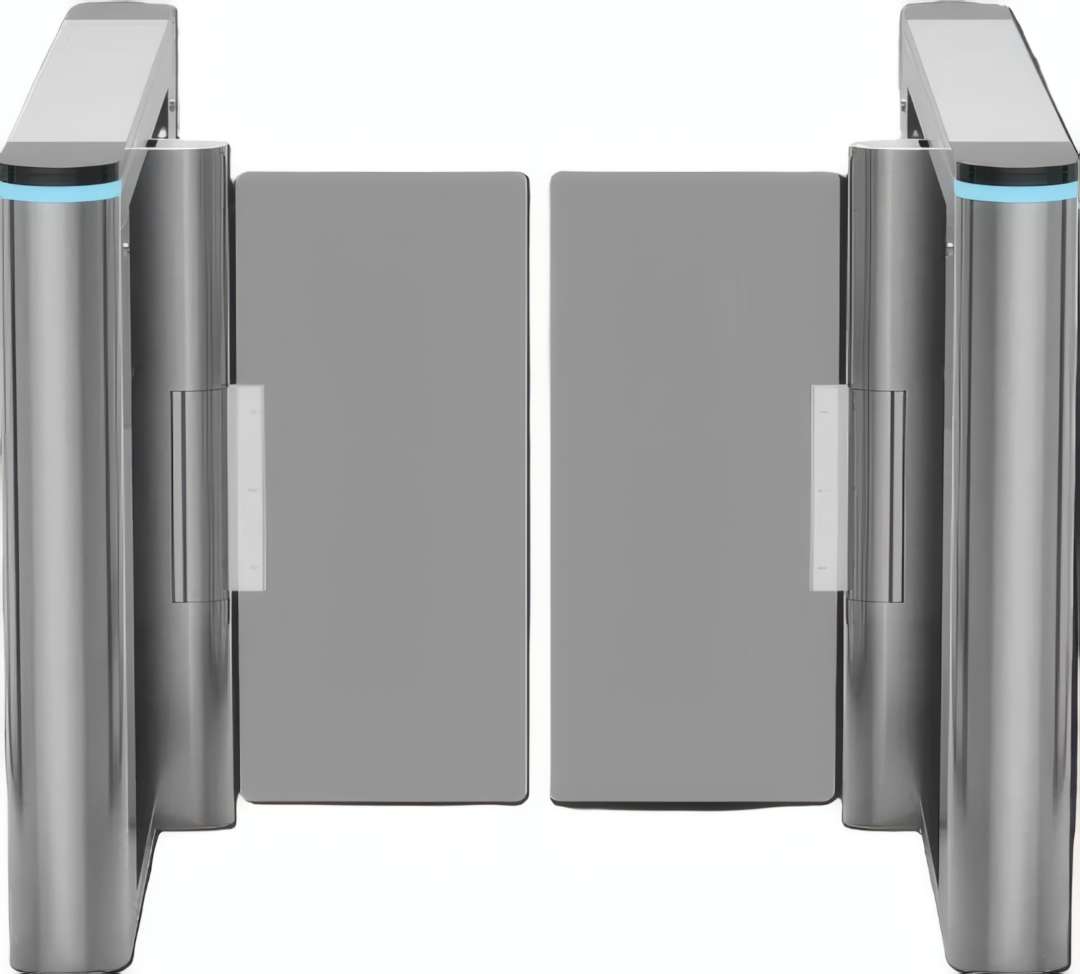
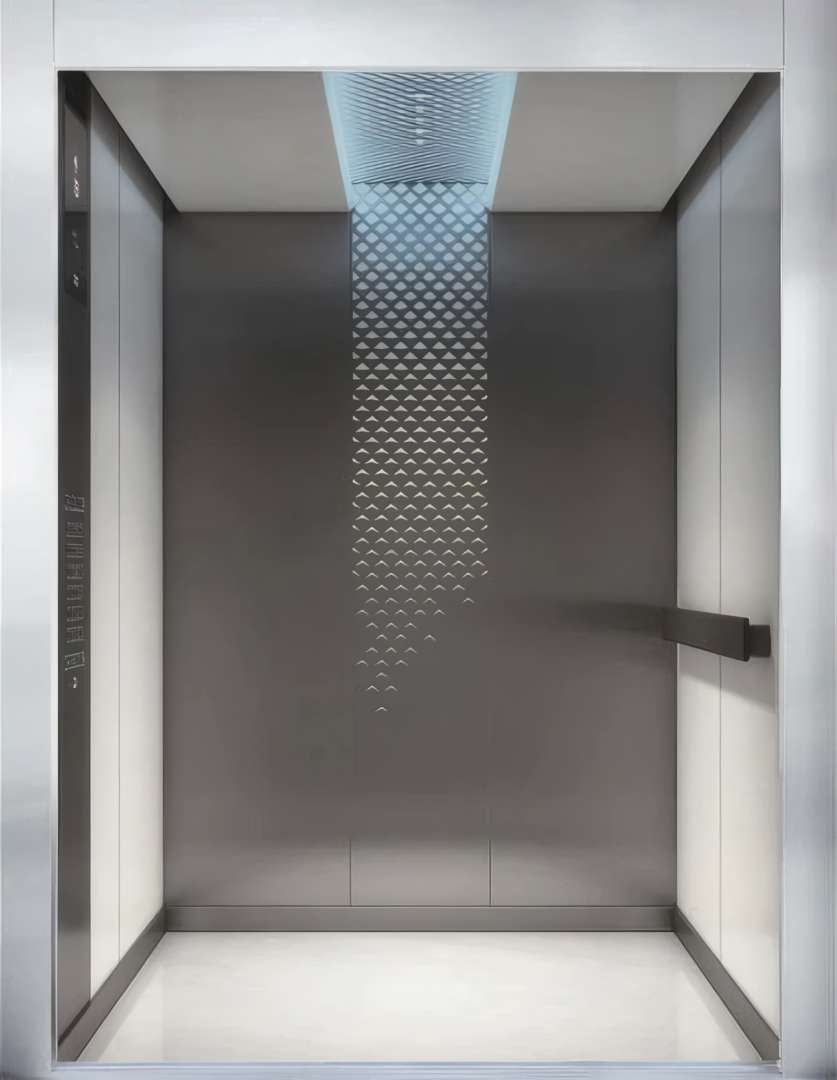
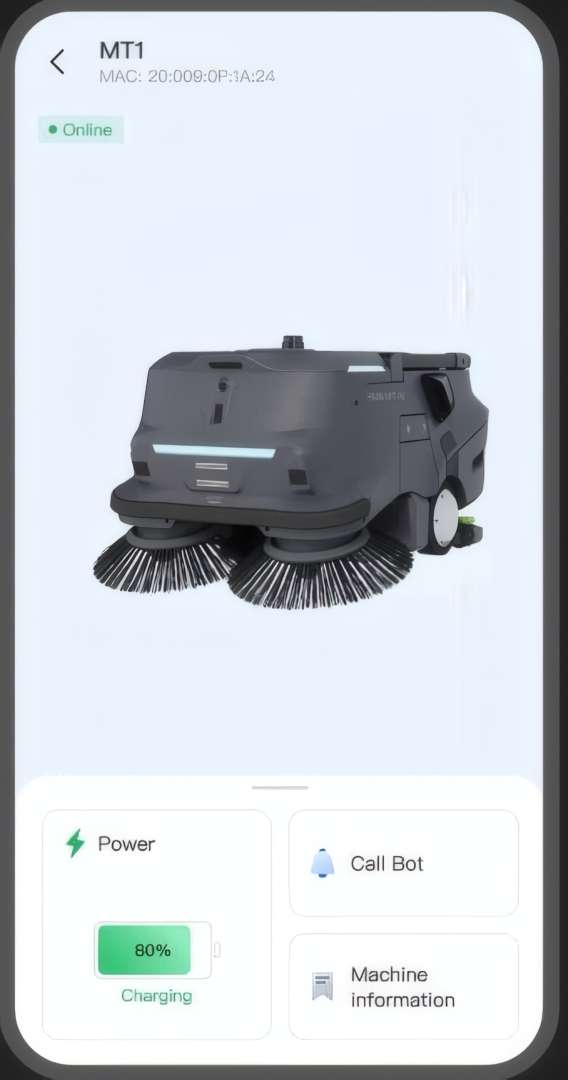
El MT1 Vac admite una integración IoT completa con el edificio a través de la plataforma PUDU Link. Las API de despacho de ascensores permiten al robot llamar y abordar los ascensores de forma autónoma, posibilitando la limpieza de varias plantas sin escolta humana. La integración con puertas electrónicas hace que las zonas con control de acceso, como los pasillos de embarque de terminales o las áreas restringidas de hoteles, se abran automáticamente a medida que el robot se acerca. Las opciones de comunicación incluyen 4G, Wi-Fi, Bluetooth y, opcionalmente, LoRa / 2.4G para instalaciones con topologías de red específicas.
Las puertas giratorias de barrera abatible como las que se muestran a continuación se sortean de forma autónoma gracias a la misma integración IoT, eliminando la necesidad de que el personal mantenga las puertas abiertas.
Una cabina de ascensor moderna, una vez configurada la API de despacho, no supone ningún obstáculo: el robot llama al ascensor, sube, se desplaza hasta la planta de destino y sale por sí solo.
Los gestores de instalaciones obtienen visibilidad en tiempo real de la flota a través de la aplicación móvil PUDU Link, que se muestra a continuación en la pantalla de un smartphone.
Carga automática y funcionamiento 24/7
Una estación base de carga automática dedicada permite ciclos de despliegue continuo 24/7. Cuando el nivel de batería se acerca a su umbral mínimo, el robot navega de forma autónoma hasta la base de carga, se conecta mediante electrodos de contacto y retoma su programa de limpieza una vez recargado, sin intervención del operador. La recarga completa tarda aproximadamente 3,5 horas. Las tareas de limpieza programadas se ejecutan en horarios preestablecidos, maximizando las horas de limpieza durante los periodos de baja actividad, cuando las instalaciones están vacías y los suelos son accesibles.
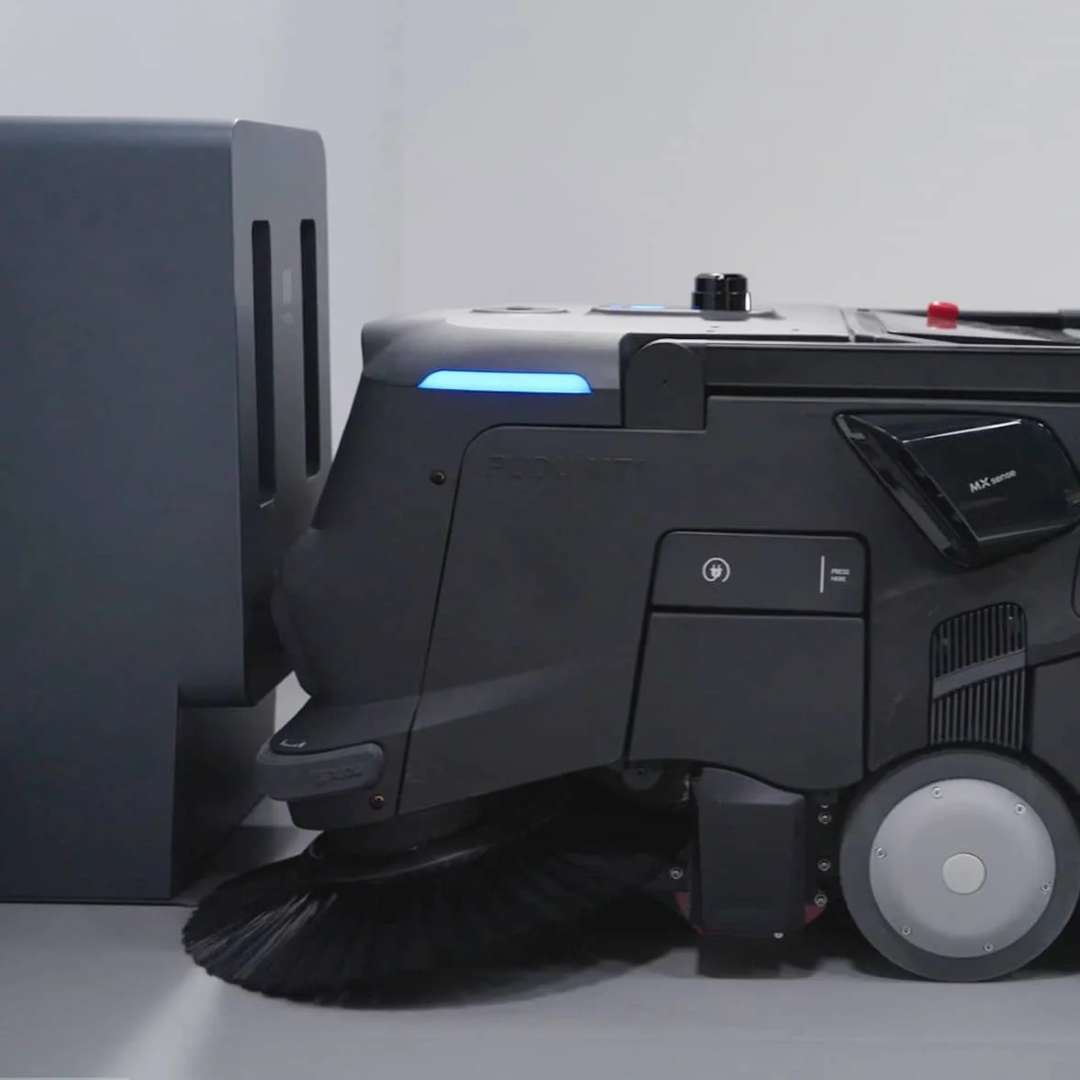
Acoplado con precisión a su estación base, los electrodos de contacto del robot encajan con los pines del muelle de carga para completar el ciclo autónomo de retorno a carga.
Aplicaciones
- Aeropuertos y centros de transporte: Cubre vestíbulos amplios en una sola pasada autónoma y, una vez configurada la integración con la API de ascensores, se desplaza entre plantas de la terminal sin necesidad de escolta.
- Hoteles de cinco estrellas y salones de banquetes: Barre, aspira y friega en seco alrededor del mobiliario de los vestíbulos y los expositores, deslizándose bajo el mobiliario gracias a su perfil de baja holgura.
- Pasillos sanitarios y farmacéuticos: El filtro HEPA H13 opcional eleva la eficiencia de captura al 99,97% a 0,3 µm para instalaciones con requisitos de calidad del aire más estrictos.
- Zonas con control de acceso: La integración con puertas electrónicas abre automáticamente pasillos de embarque y áreas restringidas a medida que el robot se acerca, eliminando la necesidad de que el personal mantenga las puertas abiertas.
- Edificios comerciales de varias plantas: El despacho de ascensores a través de PUDU Link permite al robot llamar, subir y salir de los ascensores por sí solo para limpiar varias plantas en una sola tarea programada.
- Espacios de eventos con suelos mixtos: El reconocimiento de suelo por IA cambia automáticamente entre los ajustes de suelo duro y moqueta, protegiendo el pelo de la moqueta al tiempo que extrae las partículas incrustadas.
Accesorios y complementos compatibles
- Filtración de aire: Filtro HEPA H11 estándar, con un filtro opcional de grado H13 para requisitos de calidad del aire más estrictos.
- Extensión del alcance de limpieza: Manguera de aspiración manual de liberación rápida para superficies a las que el cuerpo del robot no puede acceder, como los bordes de sofás y los zócalos de paredes verticales.
- Infraestructura de carga: Estación base de carga automática dedicada con acoplamiento por electrodos de contacto para un funcionamiento 24/7 sin supervisión.
- Módulos de comunicación: Módulo opcional LoRa / 2.4G junto con la conectividad estándar 4G, Wi-Fi y Bluetooth.
Contenido de la caja
- Unidad principal PUDU MT1 Vac × 1
- Cargador × 1
- Cepillo lateral de barrido × 2
- Cepillo de rodillo de barrido × 1
- Bolsa de polvo × 6
- Filtro HEPA × 4
- Paño de fregado en seco × 2
- Código de posicionamiento × 1
- Mástil de señalización × 1
- Manual de usuario × 1
- Certificado de conformidad × 1
Especificaciones técnicas
Dimensiones mecánicas
| Parámetro | Valor |
| Modelo | MTBC02 |
| Dimensiones (L × An × Al) | 840 × 600 × 490 mm |
| Peso | ~77 kg |
| Material de la carcasa | PC+ABS |
| Pantalla | LCD de 10,1 pulgadas |
| Sistema operativo | Android |
Rendimiento de limpieza
| Parámetro | Valor |
| Capacidades de limpieza | Barrido, aspiración, fregado en seco |
| Cobertura máxima de limpieza | 1.400 m²/h |
| Anchura de aspirado | 55 cm |
| Anchura de barrido (con cepillo lateral) | 70 cm |
| Altura máxima superable | 20 mm |
| Hueco máximo superable | 30 mm |
| Pendiente máxima de limpieza | 3° |
| Nivel de filtro de aire | H11 (H13 opcional) |
| Capacidad de la bolsa de polvo | 14 L (7 L × 2) |
| Capacidad del depósito de polvo | 6 L |
Navegación y movilidad
| Parámetro | Valor |
| Método de navegación | LiDAR SLAM + VSLAM + Marker |
| Velocidad de crucero | 0,2–1,2 m/s (ajustable) |
| Anchura mínima de paso | 75 cm |
| Holgura mínima en altura | 52 cm |
| Ángulo máximo de subida (sin limpieza) | 8° |
| Grado de protección IP | IPX3 |
| Ruido de funcionamiento | <65 dB(A) (modo de reducción de ruido) |
Alimentación y batería
| Parámetro | Valor |
| Voltaje de funcionamiento | DC 23 V–29,2 V |
| Entrada de alimentación | AC 100 V–240 V, 50/60 Hz |
| Salida de alimentación (máx.) | 29,2 V, 20 A |
| Capacidad de la batería | 60 Ah |
| Tiempo de carga | ~3,5 h |
| Autonomía | 3–6,5 h |
Conectividad
| Parámetro | Valor |
| Comunicación | 4G, Wi-Fi, Bluetooth, LoRa / 2.4G (opcional) |
| Aplicación móvil | PUDU Link (compatible) |
¿Por qué comprar el PUDU MT1 Vac en EXPERT3D?
EXPERT3D está especializada en robótica avanzada y soluciones tecnológicas de nivel profesional desde 2012. Como representante oficial de PUDU, garantizamos el mejor precio, servicio autorizado y garantía oficial. Nuestro equipo ofrece asesoramiento técnico previo a la venta para configurar el tamaño de la flota, el grado de filtro y la configuración IoT para cada instalación. Coordinamos la entrega en toda España y la UE, y respaldamos cada pedido con soporte posventa a través de contactos directos con el fabricante. Desplegar un robot de limpieza comercial como el PUDU MT1 Vac implica la configuración de la flota, la integración IoT de ascensores y puertas, y la planificación de consumibles: nuestros especialistas le guían desde la consulta inicial hasta el mantenimiento continuo y el suministro de piezas de repuesto.