
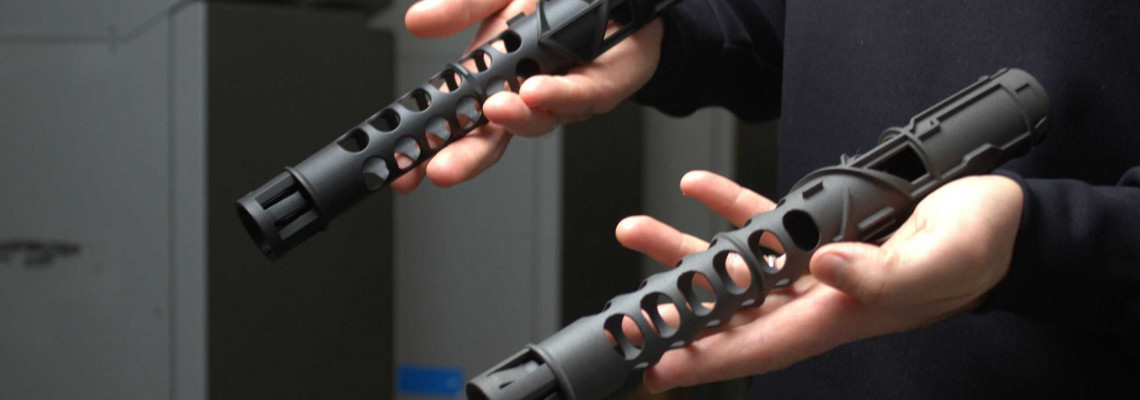
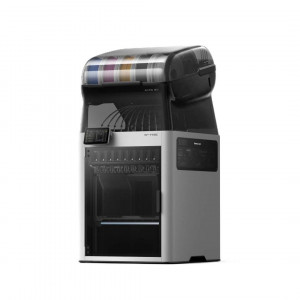
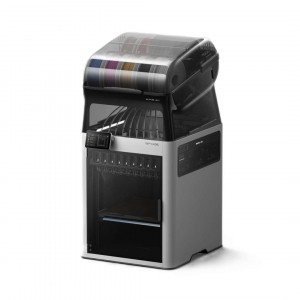
On 9 June 2026 Formlabs unveiled the Fuse X1, a large-format industrial SLS printer. In a market where such systems used to cost hundreds of thousands of euros, this is a change of scale: a technology reserved for large contract manufacturers now comes within reach of the industrial SME. We look at the machine, but above all at the question that really matters: when does it pay off to buy your own equipment, and when is it better to outsource printing?
What Formlabs announced
The Fuse X1 is a selective laser sintering (SLS) ecosystem for producing functional parts in short and medium runs. Key announced specs (per Formlabs and industry media):
- Build volume: 330 × 330 × 565 mm.
- Packing density: over 30% of the chamber, versus the usual 10–15% in MJF.
- Speed: production-quality parts in under 24 hours, up to half the cost per part and triple the productivity of comparable industrial systems.
- Availability: orders open, first deliveries in Q4 2026.
- Installation: fits through a standard door, runs on single-phase power without special HVAC, set up in about an hour.
Why SLS and nylon change the rules
Unlike FDM and SLA/DLP, SLS laser-sinters a powdered polymer (PA12/PA11 nylon). This brings three decisive advantages for industry: support-free printing (complex geometries, assemblies with moving parts), functional, durable parts (end-use parts, not just prototypes) and real series production (dense packing turns every cycle into a batch). That is why cheaper SLS matters more than another desktop-FDM upgrade: it enables local manufacturing of end-use parts in short runs.
The economics: cost per part and break-even
More affordable SLS does not mean buying it suits everyone. The decision depends on how regular your workload is and on your control requirements:
| Criterion | Own equipment (Fuse X1) | Outsourced printing |
|---|---|---|
| Upfront investment | High (equipment + powder and post-processing) | Zero, pay per part |
| Regularity | Profitable with constant flow | Ideal for occasional batches |
| Cost/part at volume | Falls as load grows | Fixed, no economies of scale |
| Control and confidentiality | Full, everything in-house | Dependence on the supplier |
| Iteration speed | Hours | Plus logistics and queue |
Rule of thumb: if you print functional parts every week and value speed and confidentiality, your own equipment pays off. If your load is irregular, start by outsourcing and make the jump when volume becomes predictable.
What it means for industry
Accessible industrial SLS is, above all, local short-run manufacturing: spare parts and tooling on demand without imports or long waits, faster R&D and end-use parts in small batches. In sectors where speed of component replacement and independence from external suppliers matter, an in-house powder machine solves what used to require moulding or importing. Even so, be realistic: owning equipment requires a workload; first calculate your real monthly volume and validate the technology by outsourcing before you invest.
How to choose the right technology
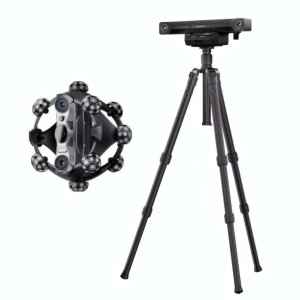
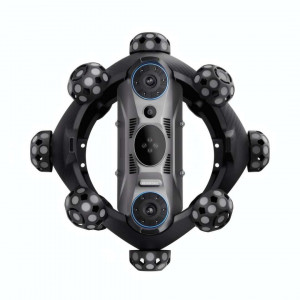
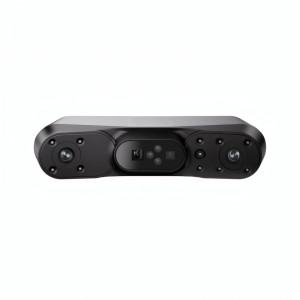
SLS is not always the answer. For prototypes, SLA (detail) or FDM (economical) is often enough. SLS is justified when you need strength, functionality and series production. Our catalog has solutions for every level — from desktop FDM and SLA printers to industrial systems and 3D scanners for reverse engineering. Not sure which technology fits your part? Our team helps you choose based on part and volume.
Conclusion
The Fuse X1 signals a trend: industrial SLS is getting cheaper and is no longer exclusive to large manufacturers. But "more accessible" is not "needed by everyone": the decision rests on workload, control and the real cost per part. Start by calculating volume and validating the technology.
Frequently asked questions
Why is SLS better than FDM for manufacturing?
It prints without supports, produces functional, durable nylon parts and lets you pack a batch per cycle. FDM is cheaper but loses out on the strength of complex geometries and on series production.
When is the Fuse X1 available?
Orders open and deliveries expected in Q4 2026 (Formlabs data, June 2026).
When is outsourcing better than buying?
When your load is irregular. Owning equipment pays off with constant flow and demands for speed and confidentiality.
Author: impresora-3d.es Team. Content based on official Formlabs data and industry media; informational article.




Leave a Comment