- Stock: In Stock
- Product code: 10701
- Weight Brutto: 1.30kg
- SKU: A00-P2-1.75-1000-SPL

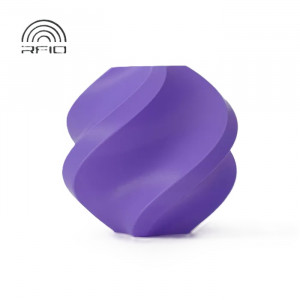
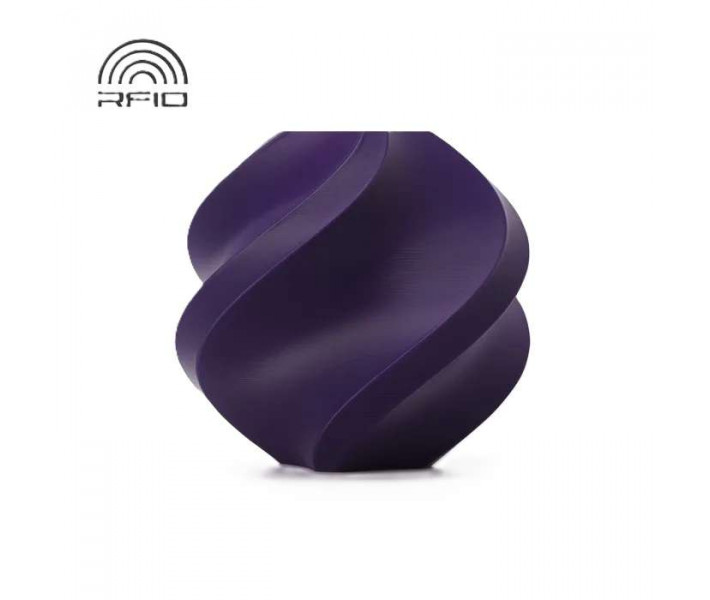
Bambu PLA Basic Filament (with spool) 1kg Indigo Purple is a premium 1.75 mm material optimised for high-speed 3D printing, reaching up to 300 mm/s. Thanks to its integrated RFID chip, it synchronises automatically with the Bambu Lab AMS system, setting the exact parameters without any manual calibration. This biodegradable polymer offers smooth extrusion and robust parts, making it ideal for technical applications, education, and rapid prototyping.
Summary of key features
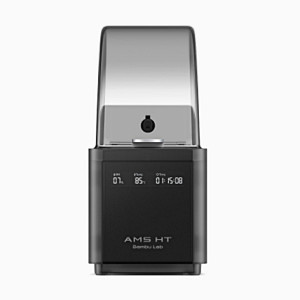
- AMS Compatibility: Fully compatible and recommended for use with AMS, AMS 2 Pro, AMS HT, and AMS Lite systems.
- Build Plate Compatibility: Optimal results when printing on Cool Plate SuperTack, Smooth PEI Plate, Textured PEI Plate, and 3D Effect Plate.
- Hotend Compatibility: Works perfectly with hotends of any size and material (All Size / Material).
- Maximum Speed: Supports print speeds of up to 300 mm/s without any loss of structural integrity or dimensional accuracy.
- Intelligent Automation: Integrated RFID chip for automatic configuration and recognition via the AMS system.
- Optimal Temperatures: Ideal nozzle range of 190–230 °C and heatbed at 35–45 °C.
- Sustainability: Made from biodegradable Polylactic Acid (PLA) derived from renewable resources, suitable for industrial composting.
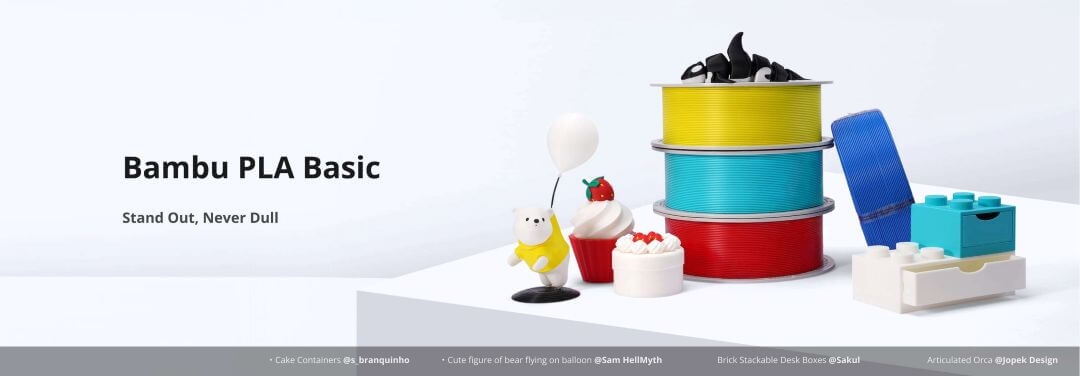
Capabilities of the PLA Basic (with spool) 1kg Indigo Purple
Intelligent extrusion for uninterrupted workflows
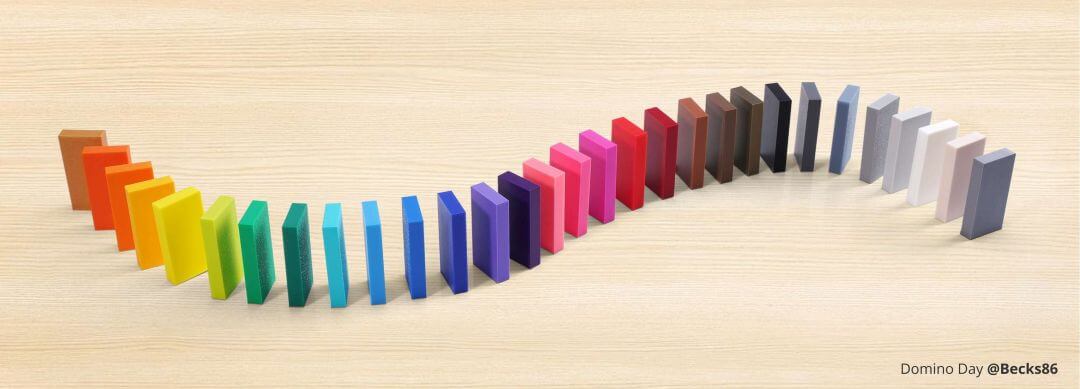
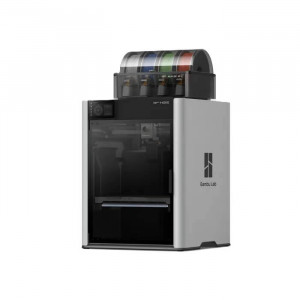
Your time is for designing, not wrestling with slicer profiles. The RFID chip integrated into the spool communicates directly with the Bambu Lab AMS (Automatic Material System). No more entering parameters by hand: your printer instantly recognises the PLA Basic (with spool) 1kg Indigo Purple and applies the exact temperature, flow, and cooling settings. Whether you're running a full-capacity print farm or teaching a robotics class, you can skip the tedious configuration and get straight to work.
High-speed formula without compromise
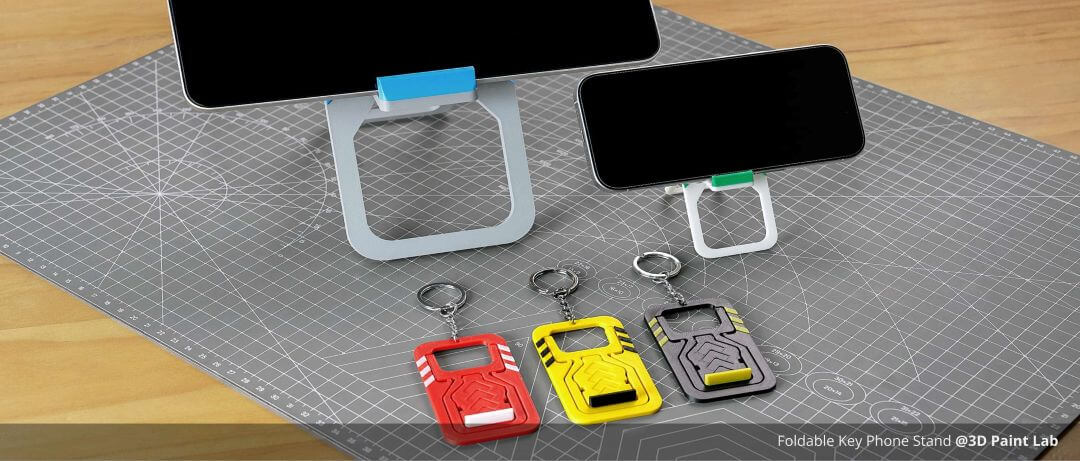
Standard filaments often struggle with sharp accelerations, leading to under-extrusion and brittle parts. This exclusive formula is chemically optimised to deliver excellent Z-axis strength and outstanding impact resistance, even at sustained print speeds of up to 258 mm/s. Print rapid engineering prototypes or iterate product designs in no time at all — without ever sacrificing dimensional accuracy or professional surface finish.
Impeccable aesthetics and environmental responsibility
The crisp, uniform finish of this material is ideal for architectural models, decorative figures, and educational projects. Manufactured from renewable resources, it is a biodegradable filament under industrial composting conditions. You get a reliable material that delivers professional, defect-free results on every part, whilst also reducing your environmental footprint.
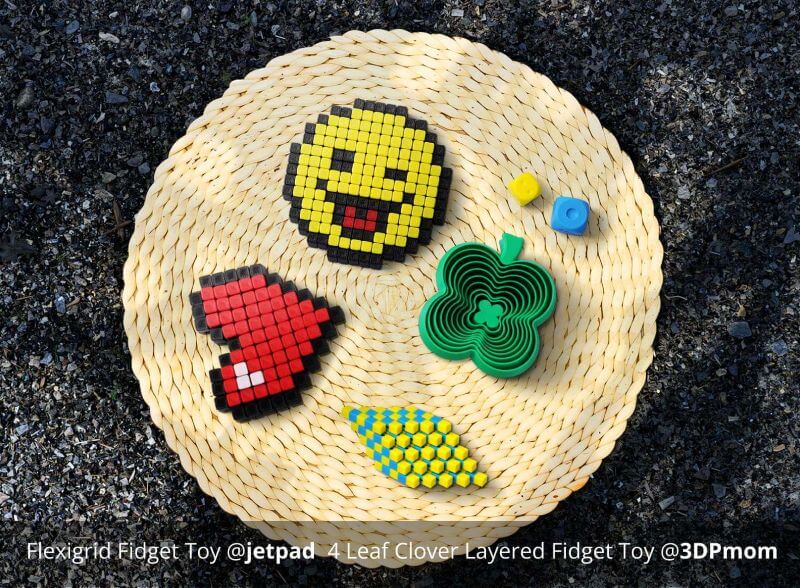
Technical specifications of the PLA Basic (with spool) 1kg Indigo Purple
1. Basic specifications
| Diameter | 1.75 mm |
|---|---|
| Net filament weight | 1 kg |
| Spool material | ABS (Thermal resistance of 70 °C) |
| Spool dimensions | Diameter: 200 mm; Height: 67 mm |
2. Recommended print settings
| Drying settings (before printing) |
Hot air drying oven: 50 °C for 8 h X1 Series heatbed: 60–70 °C for 12 h |
|---|---|
| Printing and storage humidity | < 20% RH (Sealed with desiccant) |
| Nozzle diameter | 0.2, 0.4, 0.6, 0.8 mm |
| Nozzle temperature | 190–230 °C |
| Build plate type | Cool Plate, High-temperature Plate, or Textured PEI Plate |
| Build plate surface preparation | Glue stick or liquid glue |
| Bed temperature | 35–45 °C |
| Part cooling fan | On |
| Print speed | < 300 mm/s |
| Retraction length | 0.6–1.0 mm |
| Retraction speed | 20–40 mm/s |
| Chamber temperature | 25–45 °C |
| Maximum overhang angle | 55° |
| Maximum bridge length | 30 mm |
| Support material | PLA Support |
3. Physical properties
| Density | 1.24 g/cm³ (ISO 1183) |
|---|---|
| Melt flow index | 23.2 ± 3.5 g/10 min (210 °C, 2.16 kg) |
| Melting temperature | 160 °C (DSC, 10 °C/min) |
| Glass transition temperature | 60 °C (DSC, 10 °C/min) |
| Crystallisation temperature | N/A (DSC, 10 °C/min) |
| Vicat softening temperature | 57 °C (ISO 306, GB/T 1633) |
| Heat deflection temperature | 54 °C at 1.8 MPa / 57 °C at 0.45 MPa (ISO 75) |
| Saturated water absorption rate | 0.43% (25 °C, 55% RH) |
4. Mechanical properties
| Young's Modulus (X-Y) | 2580 ± 220 MPa (ISO 527, GB/T 1040) |
|---|---|
| Young's Modulus (Z) | 2060 ± 170 MPa (ISO 527, GB/T 1040) |
| Tensile strength (X-Y) | 35 ± 4 MPa (ISO 527, GB/T 1040) |
| Tensile strength (Z) | 31 ± 3 MPa (ISO 527, GB/T 1040) |
| Elongation at break (X-Y) | 12.2 ± 1.8 % (ISO 527, GB/T 1040) |
| Elongation at break (Z) | 7.5 ± 1.3 % (ISO 527, GB/T 1040) |
| Flexural modulus (X-Y) | 2750 ± 160 MPa (ISO 178, GB/T 9341) |
| Flexural modulus (Z) | 2370 ± 150 MPa (ISO 178, GB/T 9341) |
| Flexural strength (X-Y) | 76 ± 5 MPa (ISO 178, GB/T 9341) |
| Flexural strength (Z) | 59 ± 6 MPa (ISO 178, GB/T 9341) |
| Impact resistance (X-Y) | 26.6 ± 2.8 kJ/m²; 7.9 ± 1.2 kJ/m² (notched) (ISO 179, GB/T 1043) |
| Impact resistance (Z) | 13.8 ± 0.9 kJ/m² (ISO 179, GB/T 1043) |
5. Other physical and chemical properties
| Odour | Odourless |
|---|---|
| Composition | PLA |
| Skin hazards | No hazard |
| Chemical stability | Stable under normal storage and handling conditions |
| Solubility | Insoluble in water |
| Acid/alkali resistance | Not resistant |
| Organic solvent resistance | Not resistant to certain organic solvents |
| Oil and grease resistance | Resistant to most oils and greases |
| Flammability | Flammable |
| Combustion products | Water vapour, carbon oxides |
| Odour of combustion products | Odourless |
6. Sample test conditions
| Nozzle temperature | 220 °C |
|---|---|
| Bed temperature | 35 °C |
| Print speed | 200 mm/s |
| Infill density | 100% |
| Pre-test treatment | Samples were annealed and dried at 55 °C for 8 h. (General suggested annealing: 50–60 °C for 6–12 hours). |
How to dry Bambu PLA Basic filament on your printer's heatbed
A step-by-step guide to correctly drying your Bambu PLA Basic filament using the enclosed chamber and heatbed of your 3D printer (such as the Bambu Lab X1 or P1S). Proper drying prevents stringing, oozing, and surface defects.
Tools and materials required
- Enclosed 3D printer (e.g. Bambu Lab X1 Series, P1S, P2S)
- Drying cover (a PC-printed cover or an empty filament cardboard box)
- Heat-resistant gloves
- Moisture-affected Bambu PLA Basic filament
- Desiccant (silica gel) and an airtight container or AMS unit
Instructions
Step 1: Remove the filament and clear the printer
Clear the area above and below the build plate to avoid any mechanical collisions. Remove any filament from the printhead to prevent it from softening inside the extruder, which could cause a severe jam. Home the printer and lower the heatbed to its lowest position.
Step 2: Place and cover the spool
Lay the Bambu PLA Basic spool flat directly on the heatbed. Cover it with a high-temperature-rated printed lid or its original cardboard box. This retains heat and maintains a high temperature around the material. Close the top cover and front door of your printer securely.
Step 3: Set the temperature and begin drying
Set the heatbed temperature to between 60 °C and 70 °C. The total recommended drying time for PLA Basic in the printer is 12 hours. (Note: If using a hot air drying oven, set it to 50 °C for 8 hours).
Step 4: Flip the spool halfway through
After 6 hours, put on your heat-resistant gloves, carefully open the printer, and flip the spool over. This ensures heat is distributed evenly throughout. Close the printer again and allow the drying process to complete for the remaining 6 hours.
Step 5: Cool down and store the filament
Once the 12 hours are up, set the bed temperature to 0 °C. Wait until the spool is no longer warm to the touch before removing it. Immediately afterwards, store your dry PLA Basic in an airtight container or in the AMS with fresh desiccant to maintain humidity below 20%.
Frequently asked questions about Bambu PLA Basic
What are the recommended print settings for Bambu PLA Basic?
For optimal results, set the nozzle temperature between 190 °C and 230 °C, and the heatbed between 35 °C and 45 °C. This filament prints perfectly on the Cool Plate, High-temperature Plate, or Textured PEI Plate with a thin layer of glue applied. Always ensure the part cooling fan is switched on.
How fast can I print with Bambu PLA Basic?
This material is specifically designed for high-speed printing. It effortlessly reaches speeds of between 250 and 300 mm/s (with a maximum limit of < 300 mm/s), whilst consistently maintaining excellent hardness and strong Z-axis adhesion.
Can I dry Bambu PLA Basic inside the AMS?
We recommend avoiding the "static drying mode" inside the AMS for PLA. As PLA Basic has a very low Vicat softening temperature (57 °C), keeping it static whilst heat is applied can cause the filament layers to expand, stick together, and deform — potentially ruining your spool entirely.
How can I anneal parts printed in Bambu PLA Basic?
To increase the thermal and structural resistance of your parts, you can anneal them in a hot air drying oven at between 50 and 60 °C for 6 to 12 hours. Bear in mind that, depending on size, infill, and geometry, some models may warp or curl. Never use a microwave or a domestic oven, as uneven heat distribution will damage the part.
What is the best way to store Bambu PLA Basic?
The filament should always be kept away from ambient moisture. Store your PLA Basic in an airtight container, a vacuum bag, or inside an AMS unit using silica gel desiccants. The storage environment should always be kept below 20% relative humidity (RH).
Is Bambu PLA Basic environmentally friendly?
Yes. As well as being one of the most popular and accessible 3D printing materials available, Bambu PLA Basic is biodegradable under controlled industrial composting conditions.
Why buy from EXPERT3D?
Buying your materials from a trusted distributor ensures consistent print quality and saves you from frustrating bottlenecks. At EXPERT3D, we have been equipping engineers, businesses, and makers across Spain with the best Additive Manufacturing solutions since 2012. As official Bambu Lab distributors, we guarantee excellent value for money, specialist technical support, and official warranty on every spool, along with express 24/48h shipping.