



- Stock: In Stock
- Product code: 13873-00012110
- Weight Brutto: 42.00kg

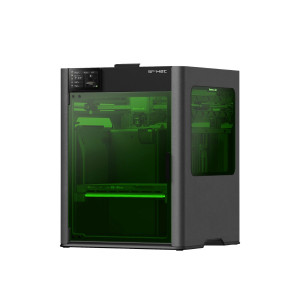
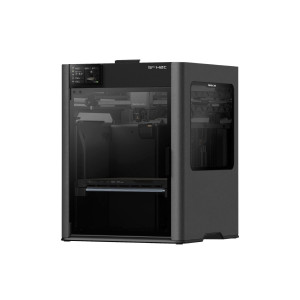
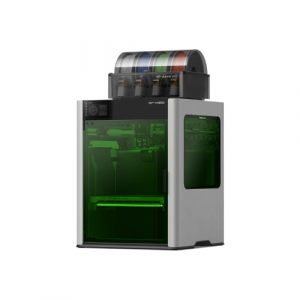
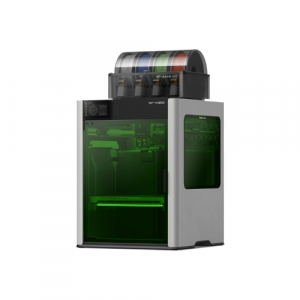
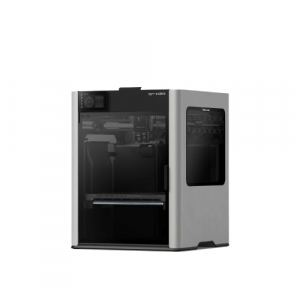
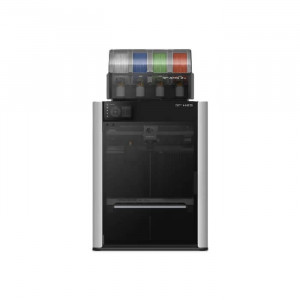
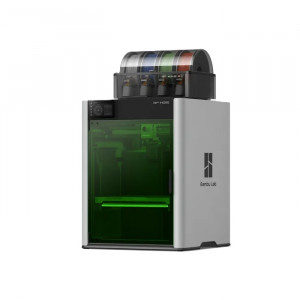
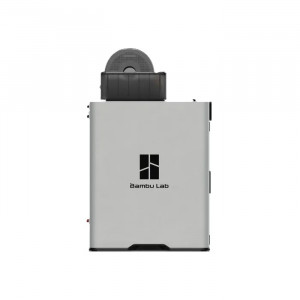
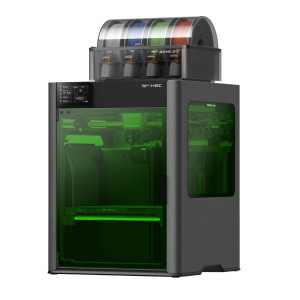
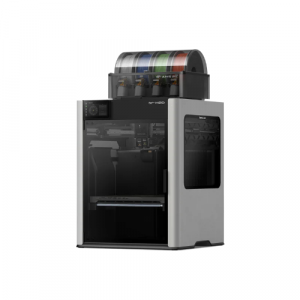
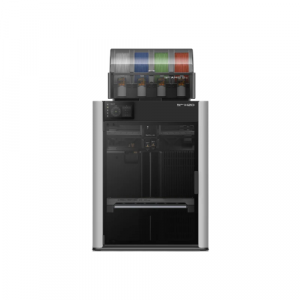
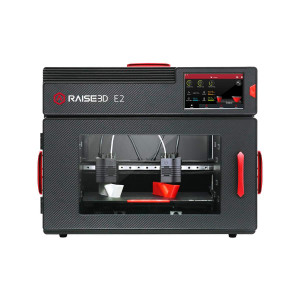
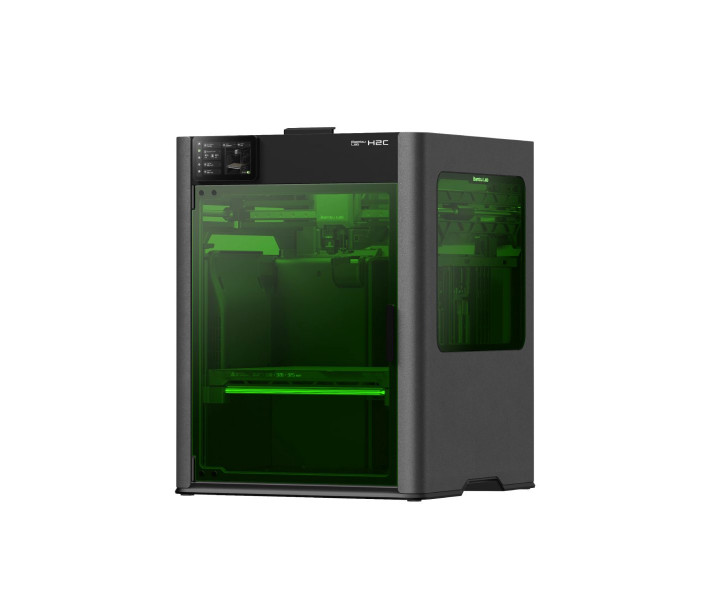
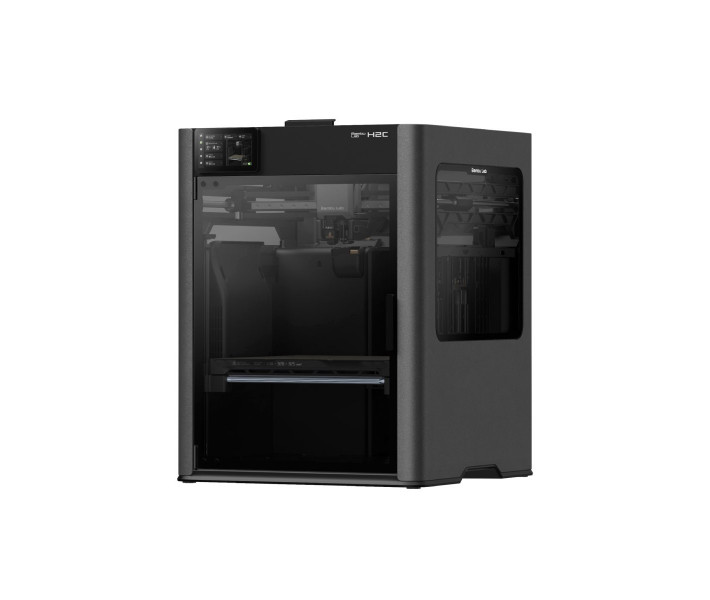
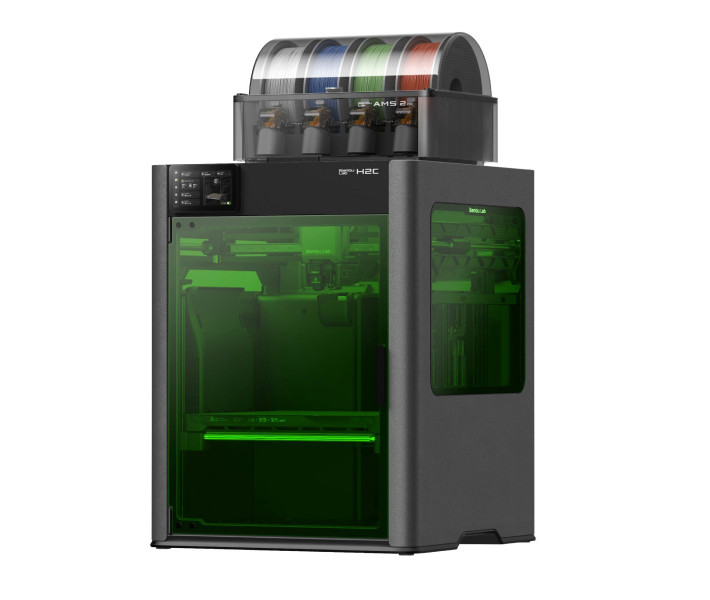
Bambu Lab H2C: Multi-Material 3D Printer with Vortek System
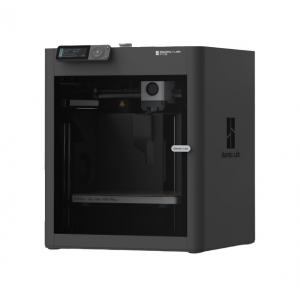
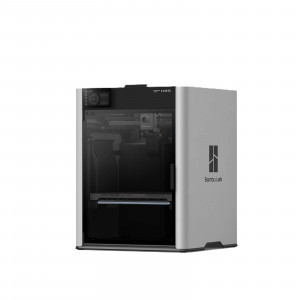
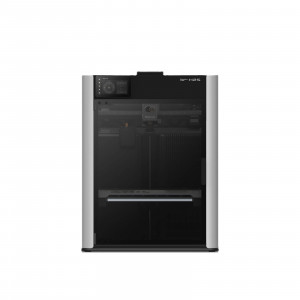
Bambu Lab H2C is not simply a 3D printer — it is an innovative, highly automated desktop factory, engineered to overcome the traditional limitations of FDM technology, particularly in multi-material printing. It is built to eliminate critical bottlenecks such as low speed and significant material waste, which are characteristic of most systems. The H2C is the perfect synthesis of engineering precision, automation, and reliability, combined with the ease of use expected from the consumer segment.
This powerful 3D printer is designed for small-batch manufacturers, research and development (R&D) units, and professionals who require industrial-grade quality and reliability in a compact desktop format. The H2C occupies a niche defined by high stability, high quality, and engineering-grade materials.
Innovative Positioning and the "Four-in-One" Concept
H2C: Engineering-Class Desktop Printer
Choosing the Bambu Lab H2C means acquiring a tool whose functionality goes far beyond that of standard desktop systems. Unlike previous models focused primarily on speed and convenience, the H2C incorporates features that are critically important for working with demanding, high-performance materials.
Key Engineering Features:
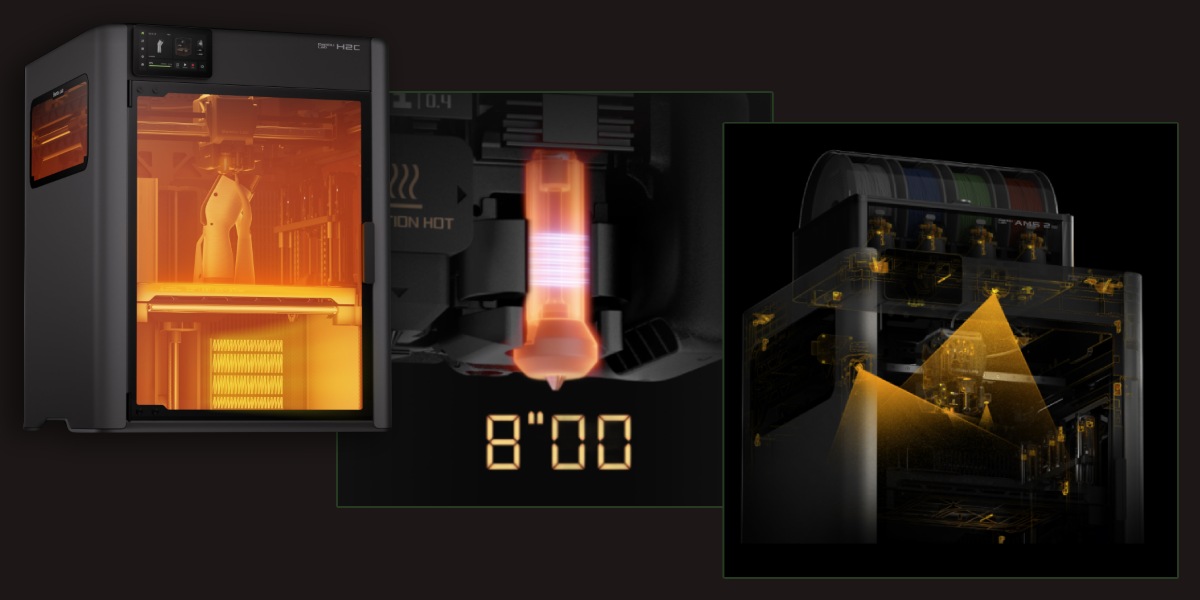
Actively heated chamber (up to 65 °C): Ensures successful printing with engineering polymers, minimising warping and improving layer adhesion for mechanically robust parts.
Precision motion control (Vision Encoder): Guarantees movement accuracy below 50 µm — finer than a human hair — something without parallel in the desktop FDM segment.
This technological shift allows the H2C to serve as a bridge between affordable desktop printers that are limited in material compatibility and costly industrial systems. The printer focuses on solving complex challenges that arise when working with engineering plastics requiring precise thermal control and high stability.
The "4-in-1" Multi-Function Concept
The H2C platform is designed from the outset as a multi-functional product, significantly expanding the user's capabilities within a single workstation. This is the "Four-in-One" concept, which includes:
- High-speed 3D printing.
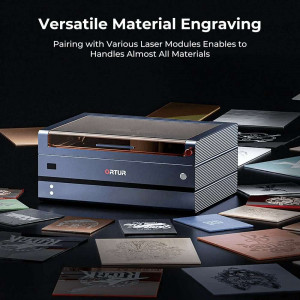
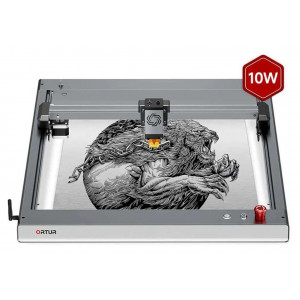
- Laser engraving and cutting: compatibility with 10 W laser modules and a high-power 40 W laser module.
- Digital Cutting: for working with thin materials such as vinyl or paper.
- Pen Plotter: for drawing and marking.
This versatility allows several production tasks to be consolidated into a single workstation, increasing the efficiency of prototyping and small-batch production.
Platform Architecture and Thermal Compatibility
Bambu Lab H2C Specifications
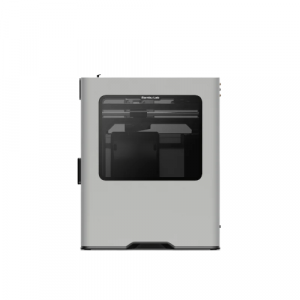
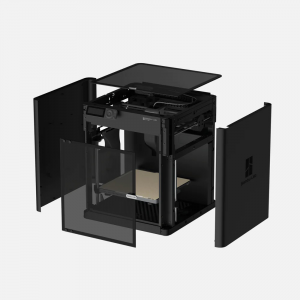
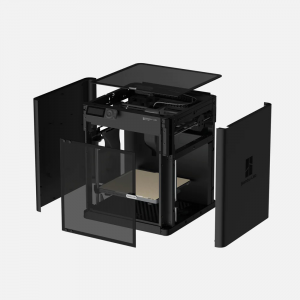
The foundation of the H2C is the CoreXY kinematic system, well regarded in the industry for its ability to deliver high precision at significant toolhead speeds. Mechanical stability is achieved through a robust aluminium and steel chassis, enclosed within a reliable outer housing of plastic and glass.
Key Technical Parameters:
|
Parameter |
Detail / Value |
|
Kinematic System |
CoreXY |
|
Build Volume (Total Volume) |
330 x 320 x 325 mm³ (XYZ) |
|
Volume (Dual Nozzle Printing) |
300 x 320 x 325 mm³ |
|
Max. Nozzle Temperature |
350 °C |
|
Max. Build Plate Temperature |
120 °C |
|
Max. Chamber Temperature |
65 °C (Actively Heated) |
|
Nozzle / Extruder Material |
Hardened Steel |
Thermal Management and Engineering-Grade Plastics
Support for a wide range of filaments is the cornerstone of the H2C's professional positioning. A maximum nozzle temperature of 350 °C and the use of hardened steel for nozzles and extruder gears ensure full compatibility with abrasive, carbon fibre- or glass fibre-reinforced materials (CF/GF), as well as high-temperature polymers such as PC, PA, PA-CF, PET-CF, and ABS/ASA.
To ensure safe operation with these materials, the H2C is equipped with:
- Three-stage air filtration system: captures harmful volatile organic compounds (VOCs).
- Fire-resistant chamber construction: provides passive fire safety.
Important note: When using Dual Nozzle Printing or the right-hand nozzle, the maximum build volume on the X axis is reduced to 300 mm or 305 mm respectively, due to the placement of the innovative Vortek system. For large single-nozzle parts, the more spacious fixed left tool port should be used.
The Revolutionary Vortek Multi-Material System
The Vortek system is the H2C's primary distinguishing feature and represents a fundamental shift in the approach to multi-material FDM printing, focused on maximum efficiency and material savings.

Radical Reduction in Waste and Print Time
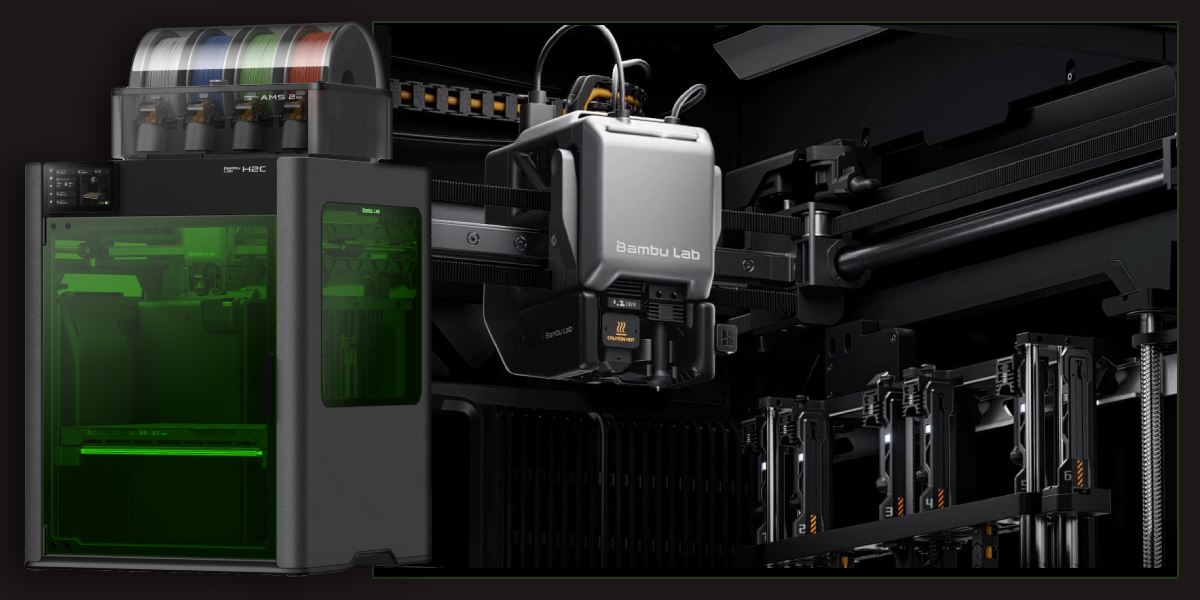
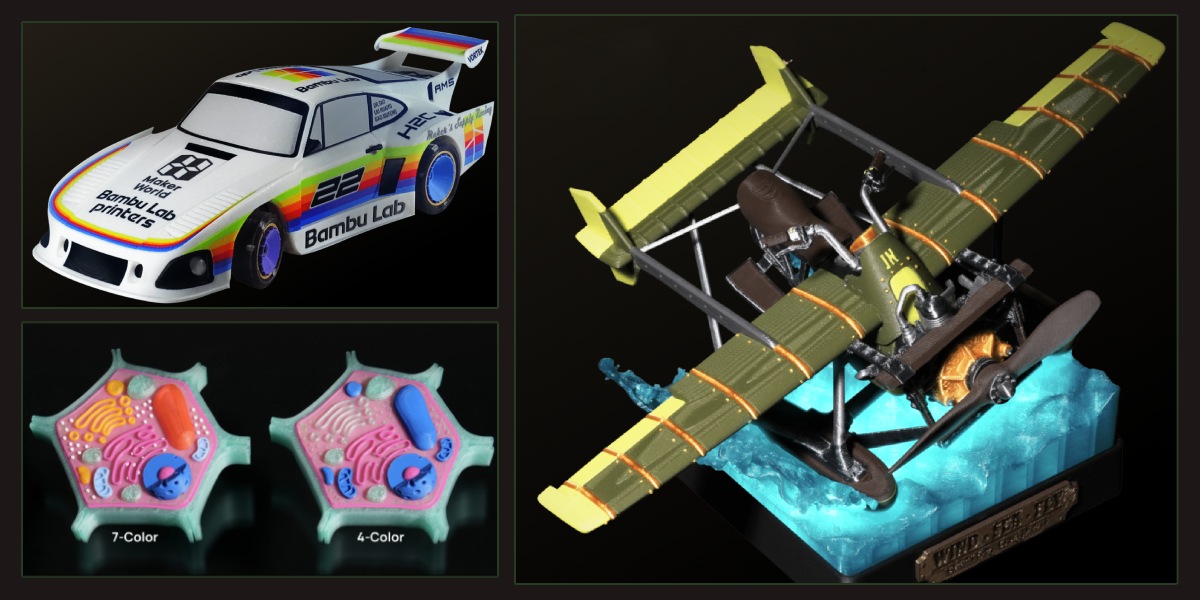
The innovative Bambu Lab H2C 3D printer uses a Multi-Nozzle Changer mechanism. It enables rapid switching between six interchangeable hotends in the Vortek mechanism and one fixed (left) nozzle. In total, this allows up to seven different nozzles and materials to be used within a single job.
Induction heating allows hotends to reach operating temperature in just 8 seconds. This significantly reduces waiting time and overall print duration.
The Dedicated Hotends principle means no time is lost cleaning the nozzle of the previous material or colour, as each nozzle is assigned to a specific filament and colour.
The purge cycle can be eliminated entirely when printing with up to seven materials, resulting in:
- A significant reduction in material waste.
- A reduction in print time for complex multi-colour models of more than 50% — for example, a saving of over 12 hours on a large 4-colour project compared to dual-nozzle H2D systems.
This acceleration is the H2C's most valuable asset in professional production environments, where time is a critical resource.
Scalability and Further Automation
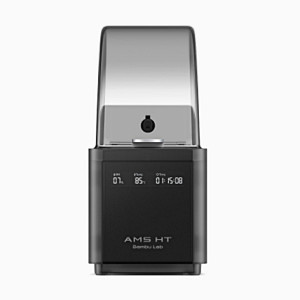
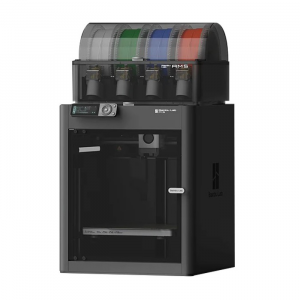
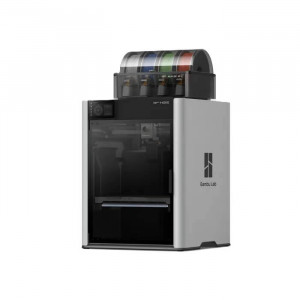
The H2C's functionality is not limited to seven nozzles. The system is scalable through connection to the Automatic Material System (AMS) (compatible with first-generation AMS). When using AMS, the H2C can print with up to 24 filaments simultaneously, whilst the intelligent algorithm continues to minimise waste and material consumption.

Hotend Memory
Each hotend has built-in memory that records which type of filament was last used in it, automatically suggesting the correct settings. Complex printing using both flexible (TPU) and rigid materials is possible, but requires the flexible material to be fed through the right-hand Vortek hotend and the rigid material through the left-hand one.
Precision, Artificial Intelligence, and Automation
Distinguishing Feature II: AI-Driven Quality Control and Precision
The H2C takes on quality control functions traditionally performed by the operator, using an advanced computer vision and AI system.
Vision Encoder (Accuracy below 50 µm): This high-precision vision sensor not only delivers exceptional initial movement accuracy, but also actively compensates for any mechanical drift — whether from wear or thermal deformation — during the calibration process, ensuring precision remains stable throughout the printer's entire service life.
AI Camera at the Nozzle
The AI camera, positioned at the nozzle, is fitted with a macro lens. This intelligent system continuously monitors extrusion patterns in real time. Using its own neural algorithm, the H2C immediately detects critical failures and anomalies, such as:
- Material accumulation (Nozzle Clumping).
- Spaghetti printing.
Automatic Pre-Flight Inspection
Before each print job, the system initiates a Pre-Flight Checklist, scanning the build surface for debris and confirming the correct configuration before printing begins. High-precision calibration is further supported by the use of a PMSM servo motor and high-resolution eddy current sensors, which enable precise measurement of extrusion dynamics and automatic calibration of Pressure Advance (PA) parameters for each filament type.
Software, Management, and Reliability
Bambu Lab Integration and Ecosystem
The H2C is managed via an intuitive 5-inch touchscreen, as well as remotely through the Bambu Handy mobile app and the Bambu Studio slicer.
The key advantage is deep integration with Bambu Studio. The slicer automatically synchronises all machine parameters and takes on the task of assigning filaments to the available hotends. The user simply selects the nozzle, and the system automatically applies the corresponding presets and settings.
Safety and Durability
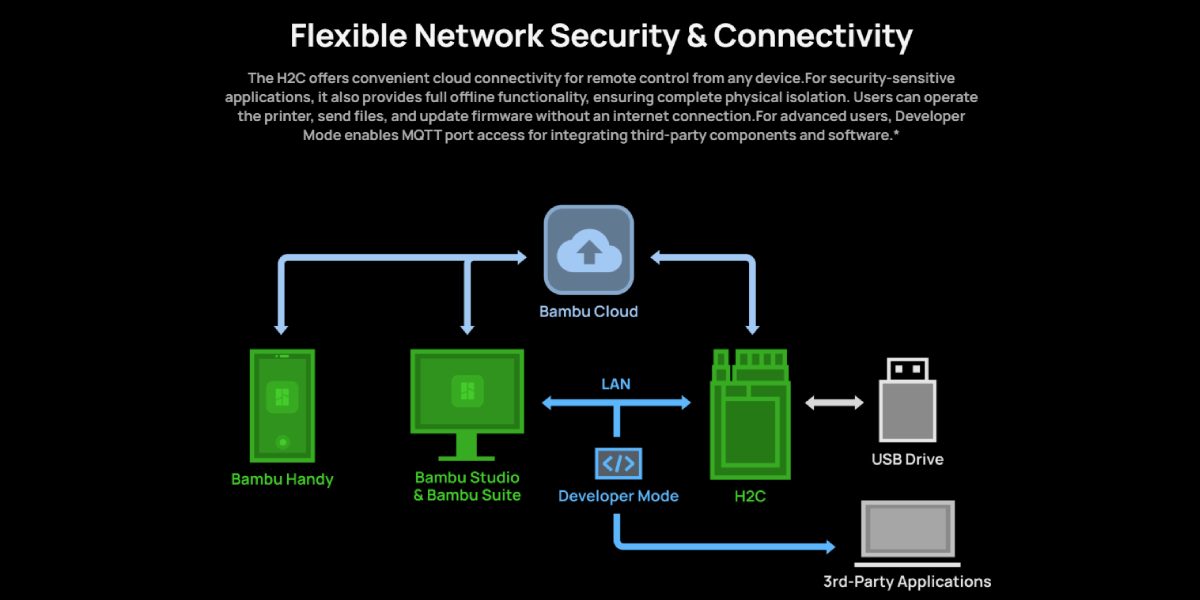
The Bambu Lab H2C professional 3D printer offers flexible connectivity options. In addition to convenient cloud connectivity, the H2C supports full offline functionality — which is of vital importance for applications with stringent network security requirements.
The Vortek mechanism, despite its complexity, was designed with durability as a priority. The contactless design and minimal number of moving parts contribute to high reliability. Stress testing demonstrated the mechanism's resistance to 30,000 hotend-change cycles without failure, equivalent to hundreds of hours of intensive printing.
The Uniqueness and ROI of the Bambu Lab H2C – the Ideal Choice
Bambu Lab H2C occupies a unique and highly competitive niche in the market. It is a machine for users who place great value on overall performance (speed combined with number of colours) and the potential for scalability (up to 24 filaments). The significant reduction in waste also makes the Bambu Lab H2C an extremely attractive investment.
Get maximum performance in the desktop segment. One of the most cost-effective propositions in the professional FDM printing market combines:
- high-speed CoreXY motion;
- the revolutionary Vortek mechanism (inductive heating in 8 seconds);
- AI-driven precision control.
The Bambu Lab H2C 3D printer delivers a rapid return on investment (ROI) through its high throughput and minimised operational costs. Its high precision and print speed across a wide range of engineering materials make it the ideal choice for the most demanding professional applications.
Start printing on the H2C and see how it transforms complex multi-colour and multi-material projects from lengthy and wasteful processes into fast, cost-efficient ones. Have questions? Contact us — our specialists know everything about 3D printers and will be happy to share their expertise.