

- Stock: In stock
- Product code: 920372000001458676
- Weight Brutto: 28.00kg

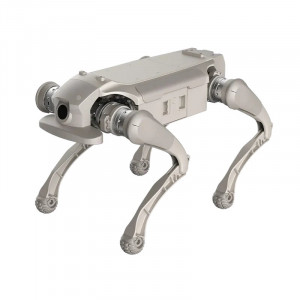
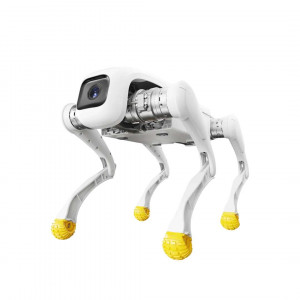
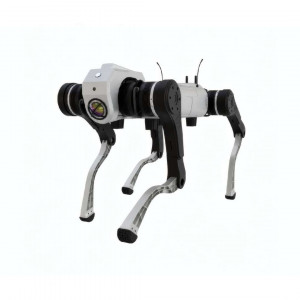
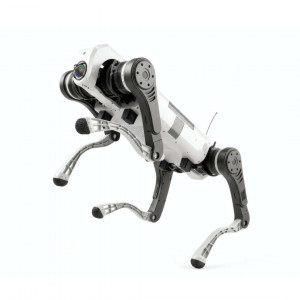
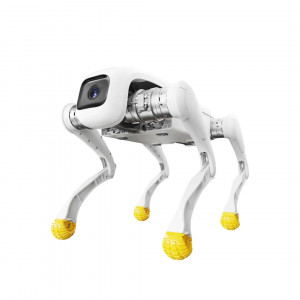
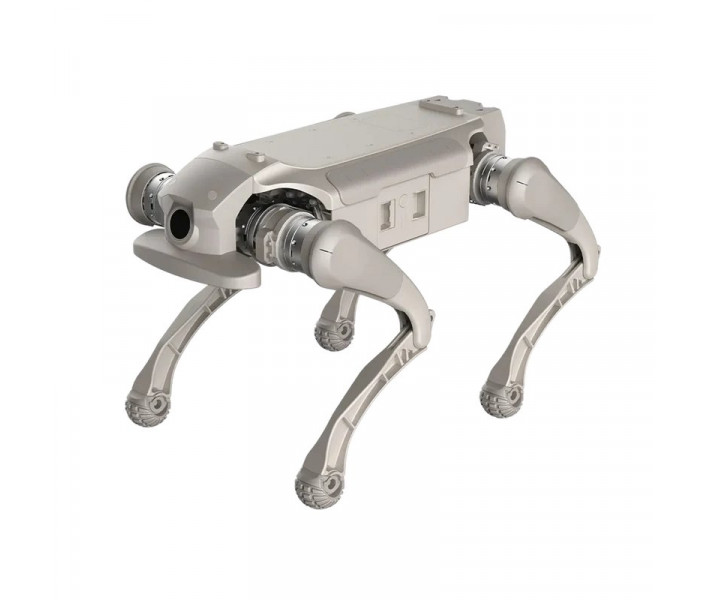
AgiBot D1 Ultra is a quadruped robot with powerful actuators for patrolling production sites. The patrol route runs across wet and sandy areas. Dust and water protection allows it to work reliably in such conditions. The built-in reinforcement learning algorithm adapts the gait to the type of surface on its own.
Below is a video about the AgiBot D1 Ultra. It covers various application scenarios.
Key features and benefits
- Maximum speed: 3.7 m/s — This running speed shortens the time taken to move between points on the route.
- Peak torque: 48 N·m — The joints keep working reliably under heavy loads and resistance.
- Protection rating: IP54 — Dust and water protection allows the robot to cross wet and sandy sections of the route.
- Payload: 5 kg — The standardised interfaces of the AgiBot D1 Ultra allow you to mount sensors or equipment of this weight.
- Terrain adaptation: the built-in RL algorithm adapts the gait to the type of surface on its own and keeps the robot balanced on difficult terrain.
- Calibration-free start-up: dual-encoder controllers eliminate zero-position calibration, so the robot is ready immediately after power-on.
- Open ecosystem: the open SDK and standardised interfaces support the integration of your own equipment and system scaling.
AgiBot D1 Ultra: a compact platform for industrial tasks
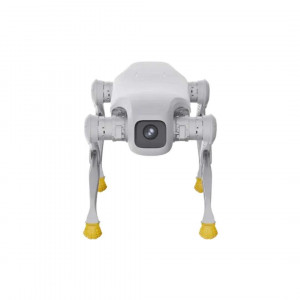
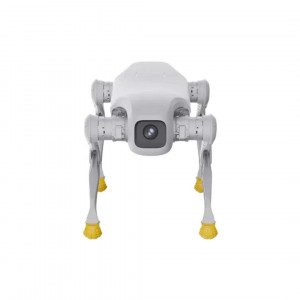
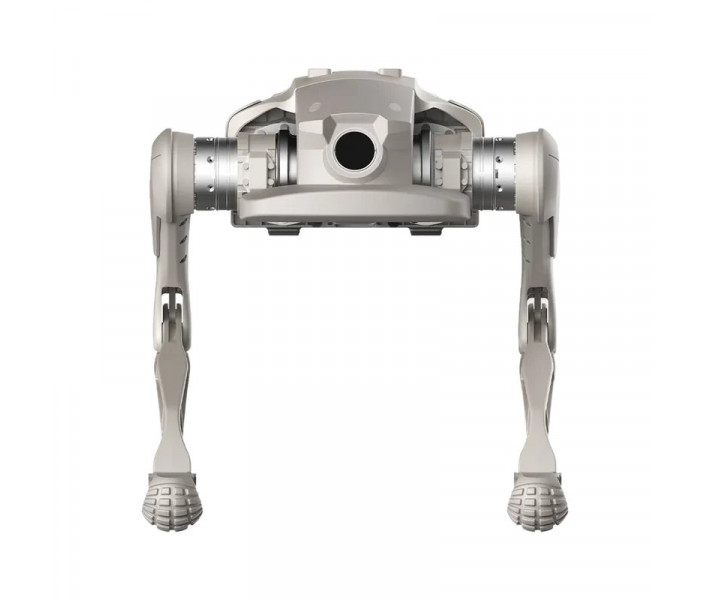
This quadruped robot is designed for specialised industrial tasks. Such tasks demand reliability and flexible deployment. With reinforcement learning (RL), motion control improves based on the results of the robot's own actions. As a result, the robot adapts to different surfaces and achieves all-terrain locomotion. The integrated front sensor can be seen in the front view image.
Protected design for demanding conditions
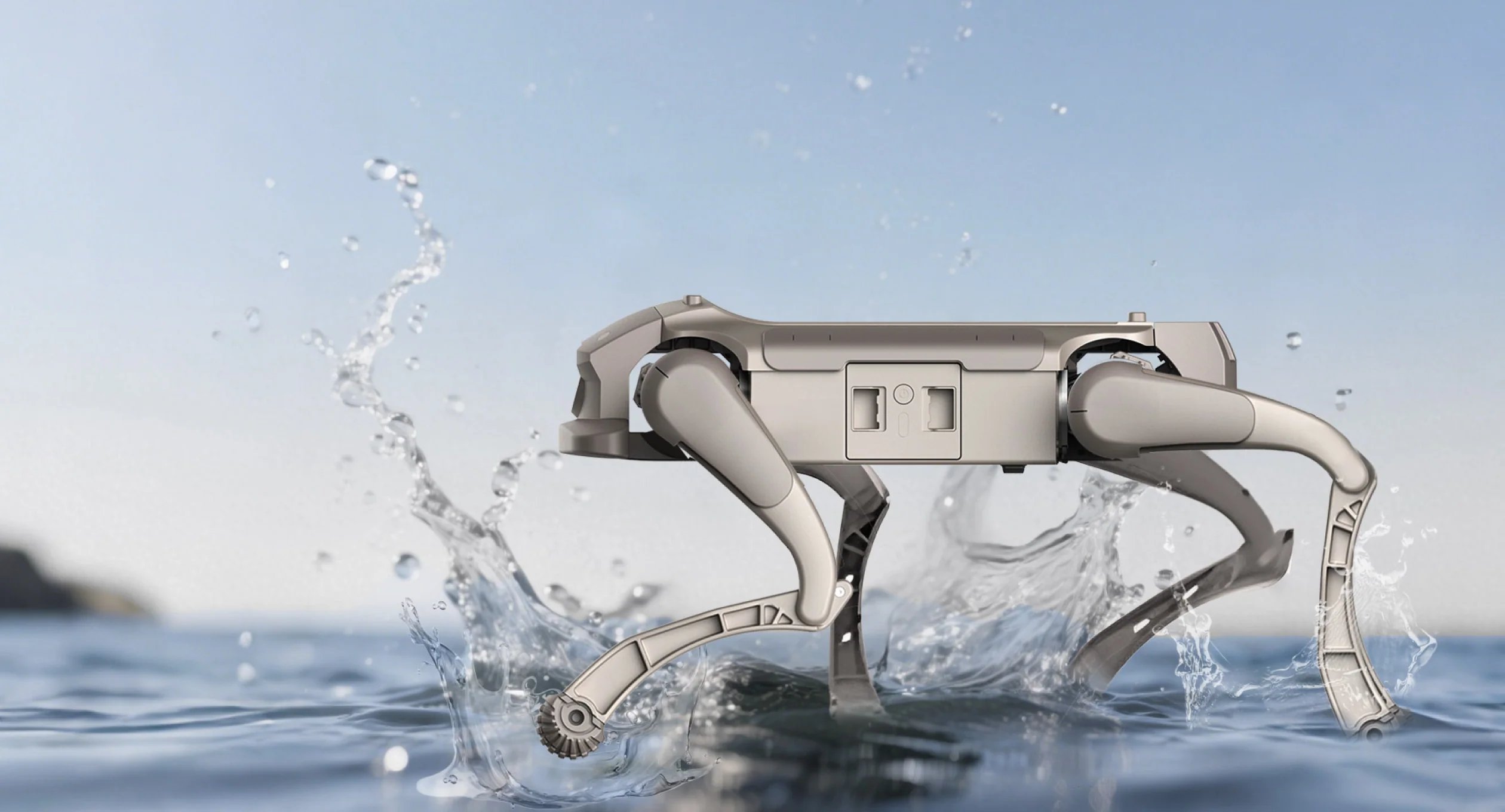
The body is designed for long-term use in harsh conditions. The aluminium alloy shafts are produced by vacuum pressing. Key components have anti-corrosion treatment and sealing. Enhanced dust and water protection ensures reliable operation under splashes and on wet sections. The robot works in the same way on dirty and sandy surfaces. The operating temperature range is 0 °C ~ 40 °C. In the image, the robot is walking through water.
All-terrain mobility and manoeuvrability
RL-based intelligent gait control dynamically adapts movement to complex terrain. Self-balancing and anti-tipping keep the body stable. Compensation for external disturbances preserves balance while moving. The main mobility figures are given below.
- Speed: maximum running speed — 3.7 m/s.
- Slopes: standard climbing angle — 30°, maximum — up to 40°.
- Stairs: continuous climbing of steps up to 16 cm high.
- Jumping: vertical jump height — 35 cm.
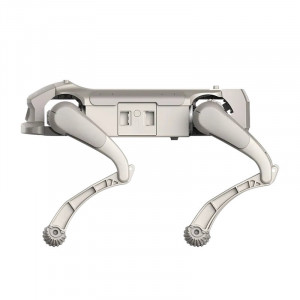
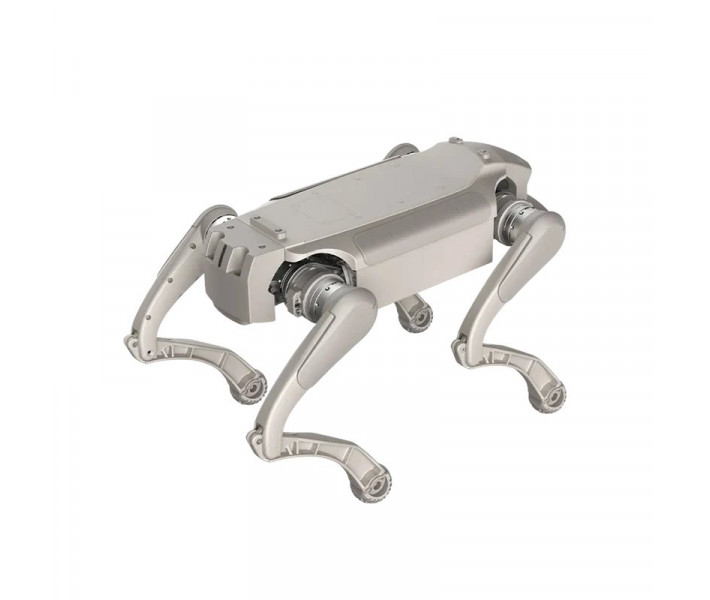
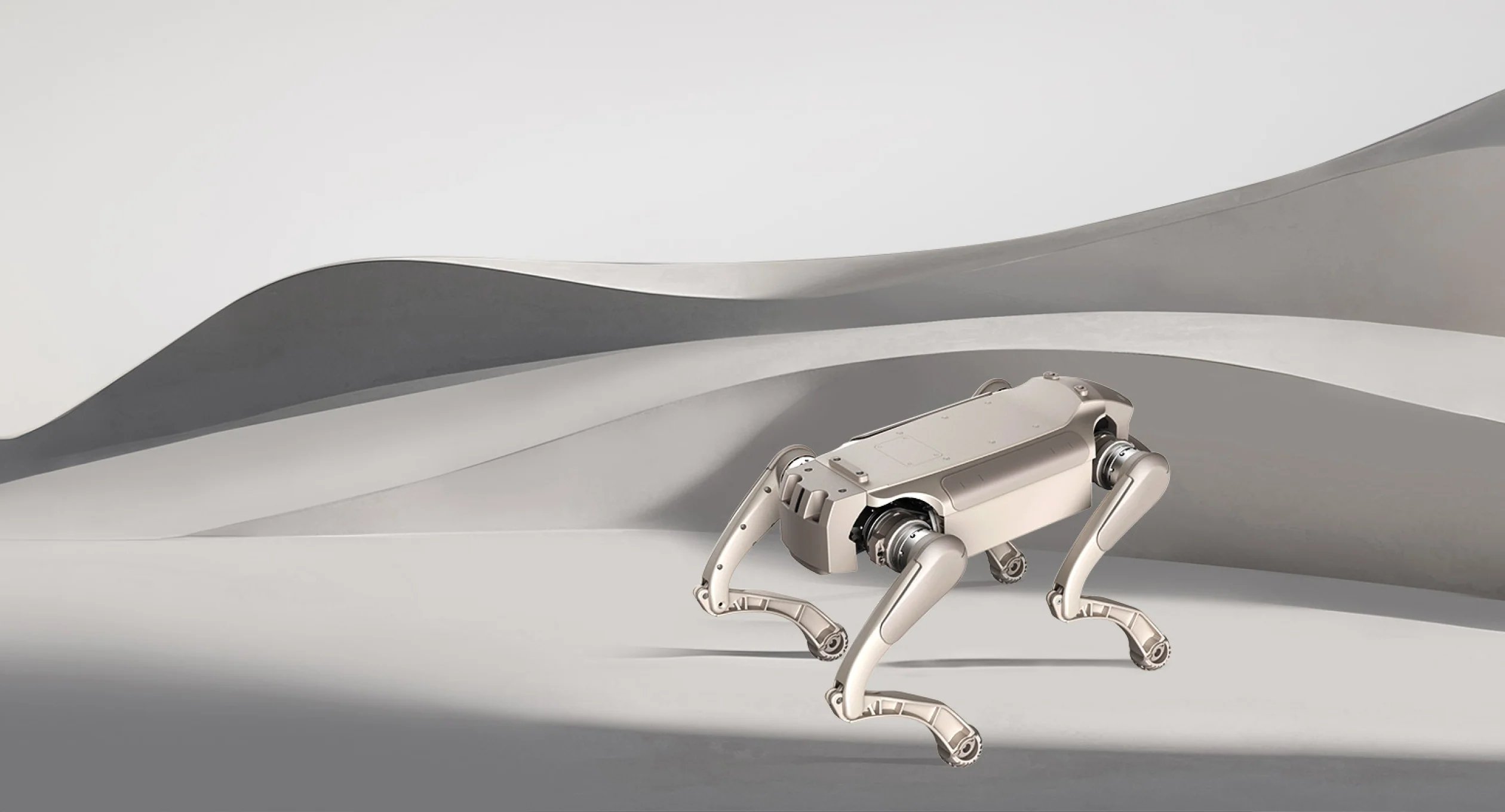
The robot has 12 degrees of freedom (independent axes of motion) — 3 per limb. In the image, it stands on a curved architectural surface, so the articulated structure of the legs is clearly visible.
Powerful actuators and calibration-free start-up
The peak joint torque reaches 48 N·m. Torque is the rotational force of a joint, so a higher figure allows it to withstand greater resistance and load.
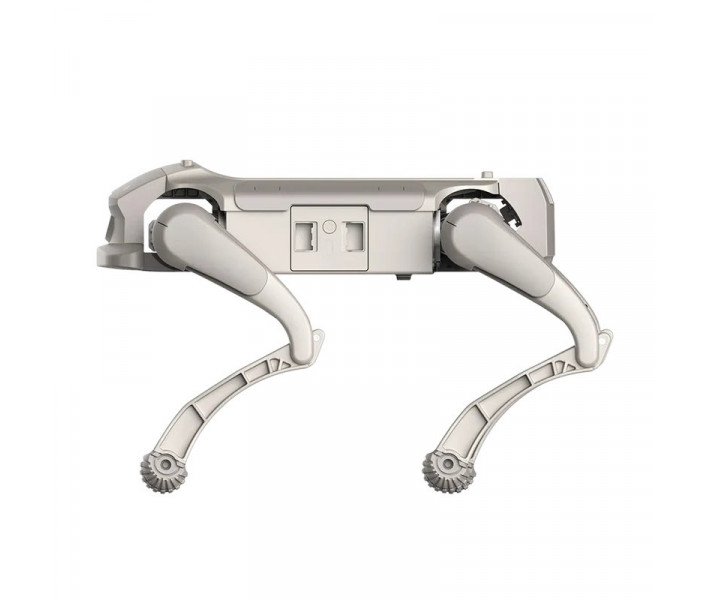
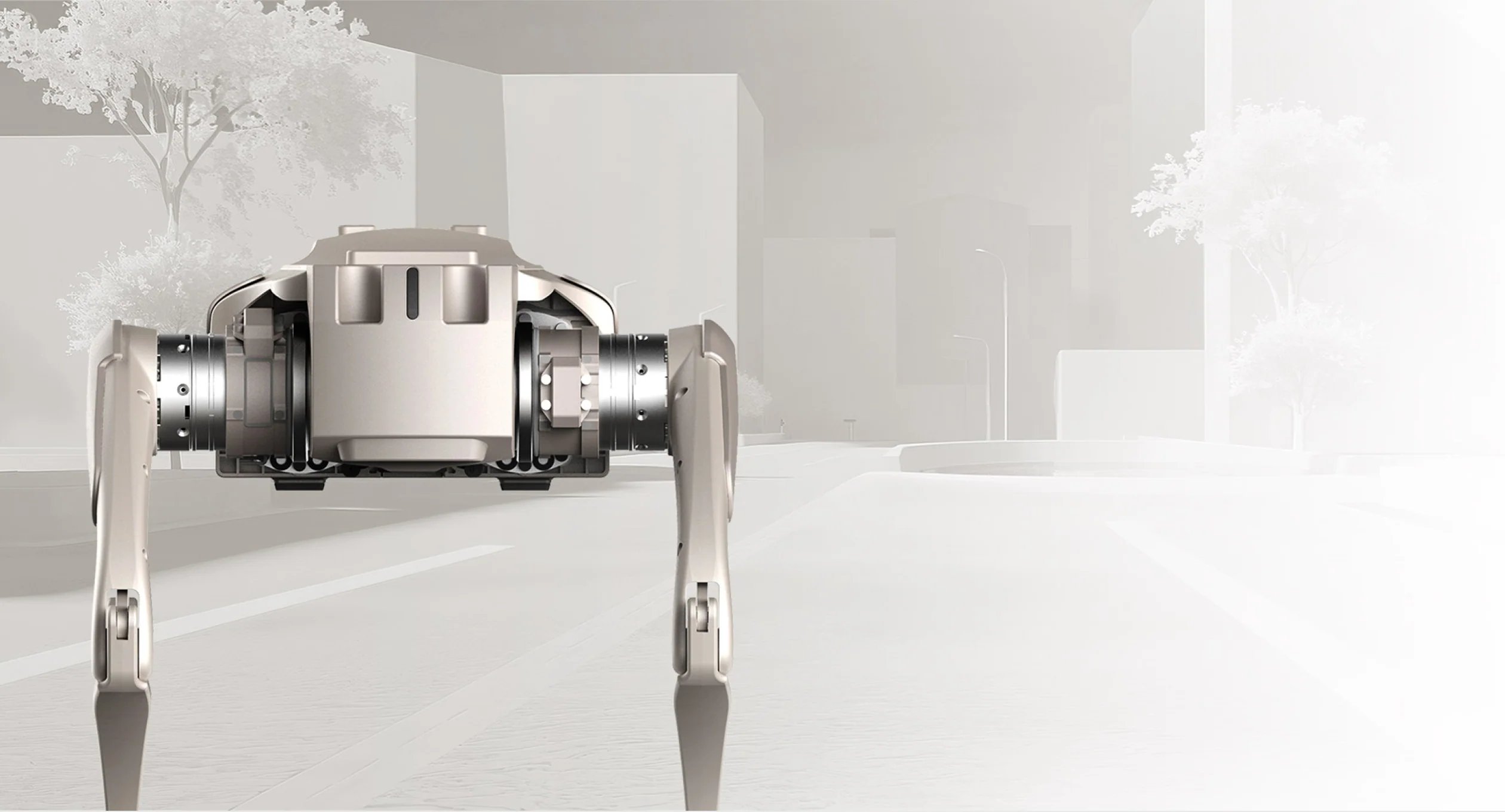
The motor modules are designed for intensive use. They have a long service life even in scenarios with shock loads. Dual-encoder controllers eliminate zero-position calibration. As a result, the robot is ready to work immediately after power-on. The leg joints to which these specifications relate are visible in the image.
Open ecosystem and payload integration
The open SDK (software development kit) is intended for secondary development. It also supports the integration of your own equipment and scaling at system level. SDK packages and standardised interfaces are provided. Robot models and simulation interfaces are also available.
Support for URDF modelling (a robot model description format) makes it possible to test solutions using the Sim-to-Real approach. This approach involves transferring solutions developed in simulation to the physical robot. Isaac Sim and MuJoCo are available for this purpose.
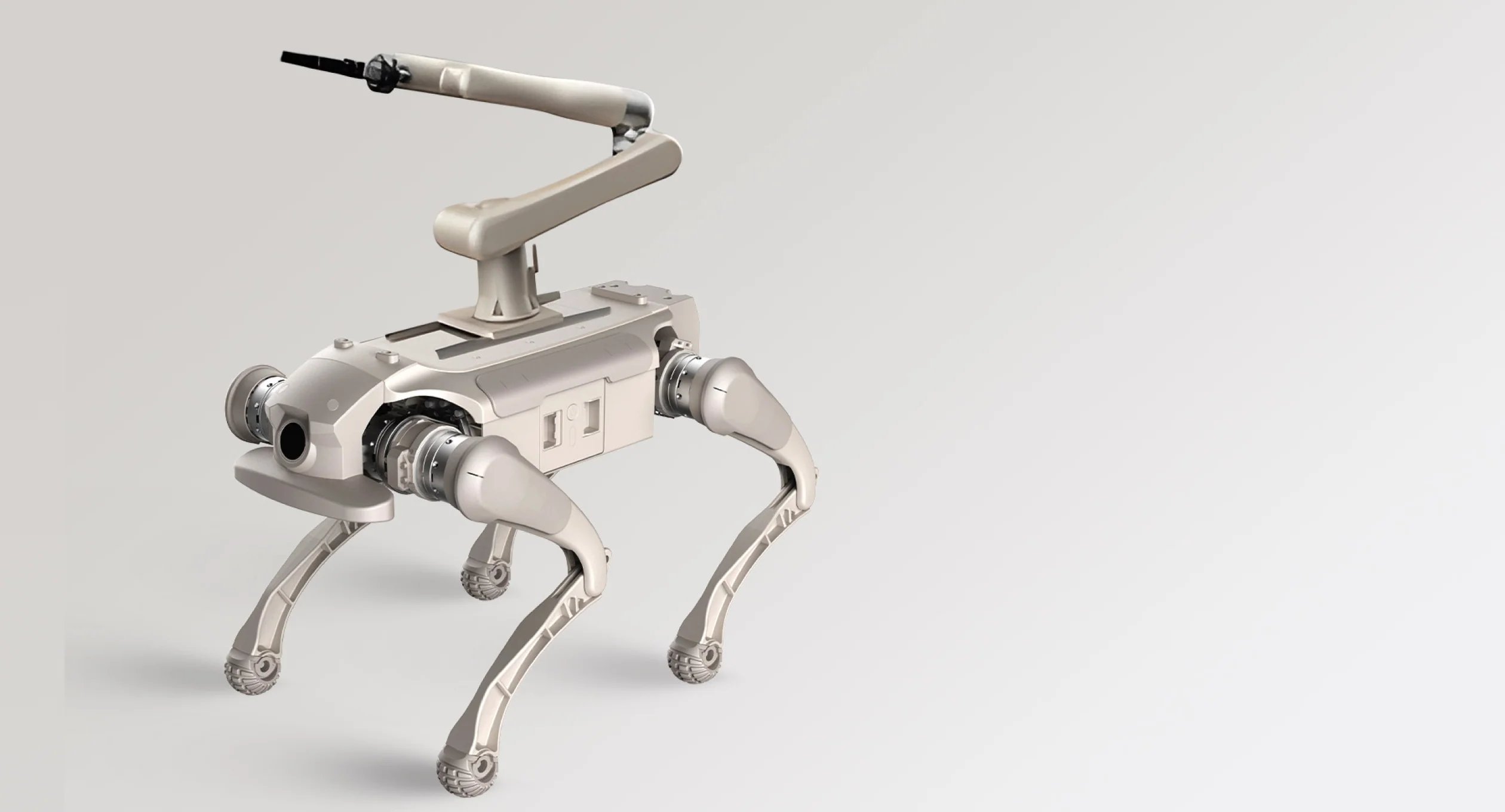
Various payloads can be mounted via the standardised interfaces. The example in the image is an articulated robotic manipulator mounted on top of the body.
Camera, control and connectivity
Camera and sensors
An IMU (inertial measurement unit) is included as standard. The camera records at a resolution of 1920 × 1080 pixels. The diagonal field of view is 122°. The horizontal angle is 111° and the vertical angle is 70°. Real-time image transmission and target tracking are supported.
Control and connectivity
The remote control has a screen. Connectivity is provided by WiFi and Bluetooth 5.0. Standard actions include standing and lying down. A damping mode and height and pitch angle adjustment are also available. Forward and upward jumps are additionally implemented. There is also a two-limb handstand and a backflip.
Battery life and charging
The battery life is 1–2 hours, and the range is 6±1 km. Charging from 10 % to 90 % takes about 1 hour. The battery module has a voltage of 43.2 V. With these figures, you can plan work and charging cycles for a specific route.
Design and component layout
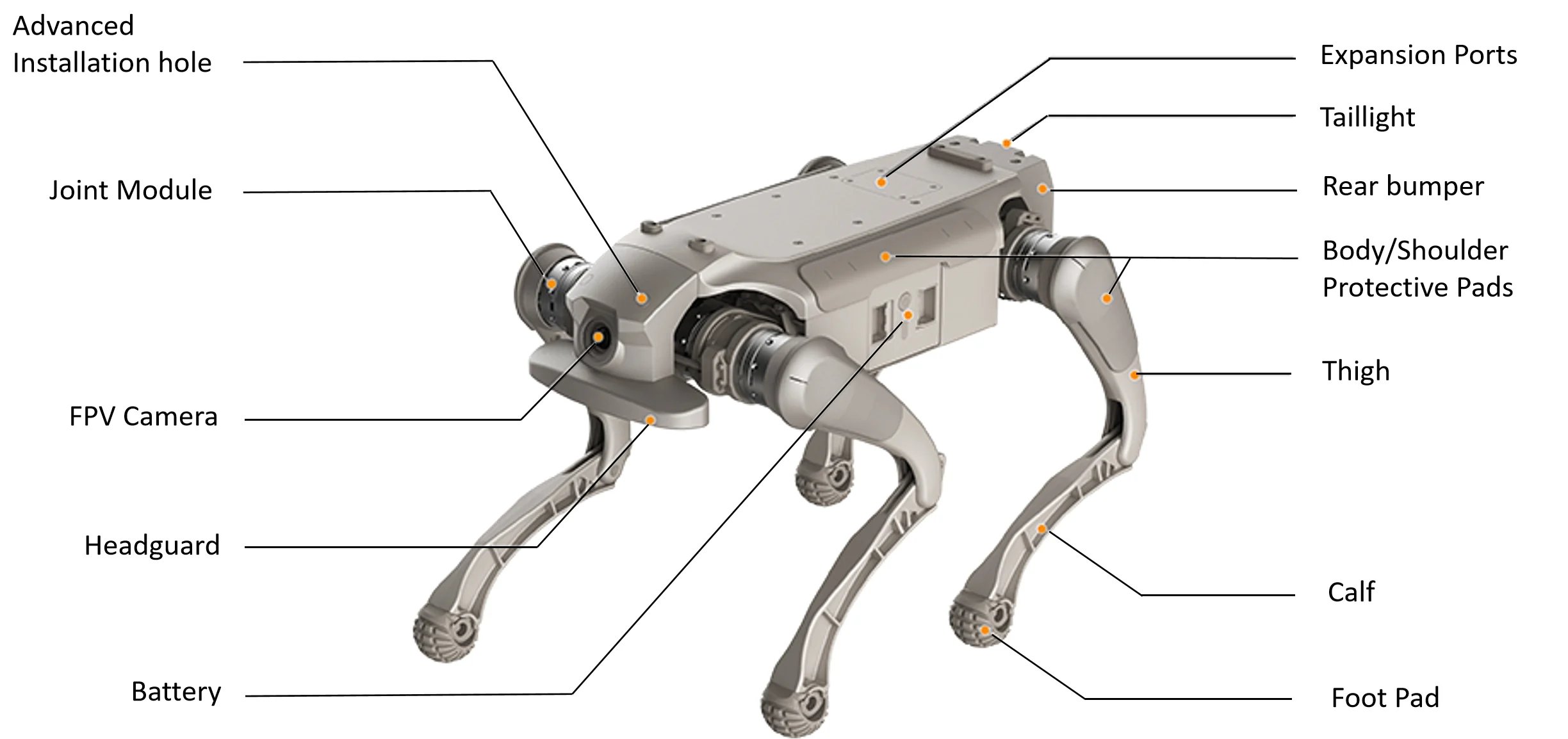
The diagram below labels the key structural parts and joints. The camera is also marked, and the elements are divided between the left and right sides of the body.
Left side
- Extended mounting hole: a mounting point on the left side of the body.
- Joint module: a leg assembly; each limb has 3 degrees of freedom.
- FPV camera: the viewing parameters are given in the specifications table.
- Head guard: a protective element in the area of the robot's head.
- Battery: a power module with a voltage of 43.2 V.
Right side
- Expansion ports: located on the right side of the body.
- Rear light: a lighting element at the rear of the body.
- Rear bumper: a body protection element at the back.
- Body and shoulder protective covers: protective elements for the body and shoulder areas.
- Thigh: the joint's range of motion is −170° ~ −66°.
- Shank: the joint's range of motion is +35° ~ +156°.
- Foot pad: 4 pcs included.
Areas of application
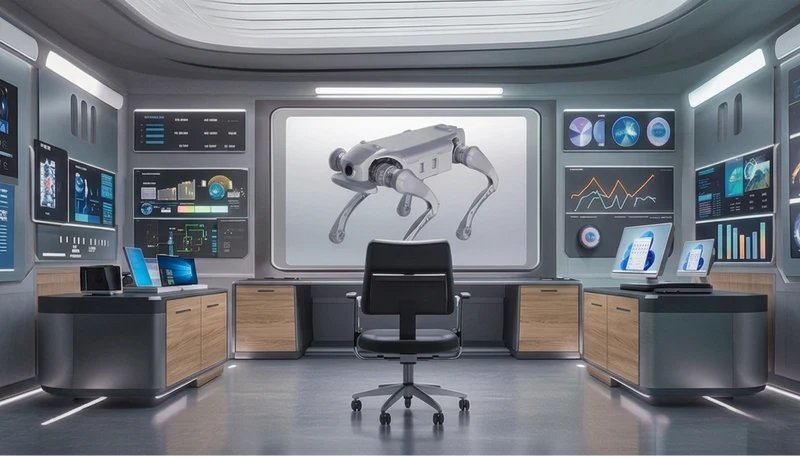
For scientific research and education, the AgiBot D1 Ultra offers an open SDK. The image shows a control room where a 3D model of the robot is displayed on a large central screen.
Security patrolling is another stated use. It is illustrated by an industrial workshop with CNC machines and an operator's control panel.
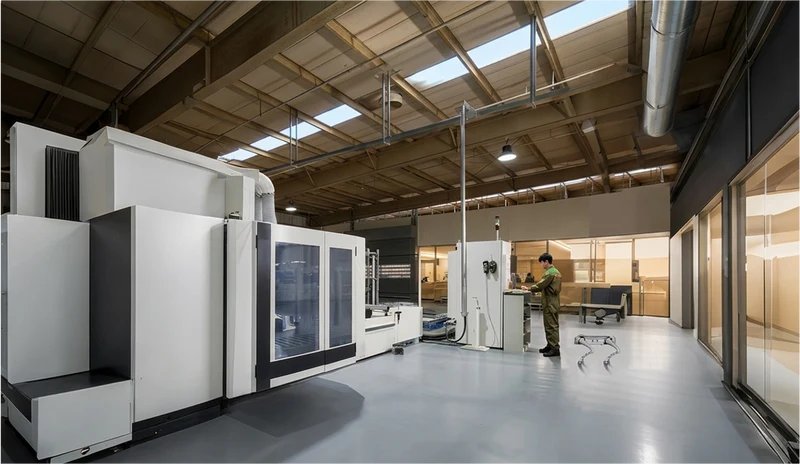
- Security patrolling: IP54 protection allows the robot to cross wet and sandy sections of the route; the camera transmits images in real time, and target tracking is supported by the platform.
- Scientific research: the SDK supports secondary development and the integration of your own equipment. Simulation in Isaac Sim and MuJoCo allows algorithms to be verified before they are run on the robot.
- Education: the open SDK and URDF modelling make it possible to study quadruped robot control first in simulation and then on the real platform.
- Interactive entertainment: jumps and backflips are among the standard actions, and a remote control with a screen is included.
- Specialised industrial tasks: standardised interfaces and expansion ports allow you to mount equipment weighing up to 5 kg, and the sealing of key assemblies supports operation in harsh conditions.
Compatible accessories and mounts
- Sensors: LiDAR and depth cameras are compatible with the AgiBot D1 Ultra.
- 5G modules: supported by the platform.
- Expansion ports: five types of interfaces, including Ethernet and USB; the full list is given in the specifications table.
- Payload: up to 5 kg via standardised interfaces.
What's in the box?
- AgiBot D1 Ultra quadruped robot — 1 pc.
- Battery — 1 pc.
- Battery charger — 1 pc.
- Adapter — 1 pc.
- Adapter power cable — 1 pc.
- Remote control — 1 pc.
- User manual — 1 pc.
- Transport case — 1 pc.
- Foot pad — 4 pcs.
- Tool kit — 1 pc.
Technical specifications
Design and dimensions
| Parameter | Value |
| Material | Aluminium alloy with high-strength engineering plastic |
| Dimensions in standing position (L × W × H) | 630 × 360 × 420 mm |
| Dimensions in lying position (L × W × H) | 670 × 435 × 145 mm |
| Total weight (with battery) | 16 kg |
| Operating temperature | 0 °C ~ 40 °C |
| Protection rating | IP54 |
Movement and mechanics
| Parameter | Value |
| Degrees of freedom (entire robot) | 12 |
| Degrees of freedom (each limb) | 3 |
| Maximum speed | 3.7 m/s |
| Payload | 5 kg |
| Continuous step-climbing height | 16 cm |
| Maximum climbing angle | 30° standard, up to 40° maximum |
| Vertical jump height | 35 cm |
| Maximum joint torque | 48 N·m |
| Joint range of motion (body) | −28° ~ +28° |
| Joint range of motion (thigh) | −170° ~ −66° |
| Joint range of motion (shank) | +35° ~ +156° |
| Standard actions | Standing position, lying position, damping mode, pitch angle adjustment, height adjustment, horizontal turning; forward jump, upward jump, two-limb handstand, backflip, greeting, etc. |
Power and battery life
| Parameter | Value |
| Rated capacity of the battery module | 4.6 Ah |
| Battery module voltage | 43.2 V |
| Charging time | about 1 hour (charge level: 10 %–90 %) |
| Battery life (operating time) | 1–2 hours |
| Range | 6±1 km |
| Rated battery capacity | 5 Ah |
| Nameplate battery capacity | 4.6 Ah |
| Battery voltage | 43.2 V |
| Power adapter | Standard |
| Charging dock | Standard |
Camera and sensors
| Parameter | Value |
| IMU | Standard |
| Camera resolution | 1920 × 1080 pixels |
| Camera field of view DFOV | 122° |
| Camera field of view HFOV | 111° |
| Camera field of view VFOV | 70° |
| Real-time image transmission | Supported |
| Target tracking | Supported |
Connectivity and software
| Parameter | Value |
| Secondary development capabilities (SDK) | Supported; SDK development packages, standardised interfaces, robot models and simulation interfaces are provided, with support for simulation environments such as Isaac Sim. |
| Connectivity | WiFi and Bluetooth 5.0 support |
| Functionality expansion ports | Ethernet × 1, USB × 2, power port × 2, SBUS × 1, UART × 1 |
| Remote control | Remote control with a screen |
Why buy the AgiBot D1 Ultra from EXPERT3D?
EXPERT3D has supplied professional 3D equipment since 2012. Our specialists provide advice before purchase and help with configuration. For the AgiBot D1 Ultra, we help you choose a set-up for your scenario. We provide delivery throughout Spain and the EU countries. After purchase, we offer service support. Spare parts and consumables can be ordered on the website so that your equipment does not stand idle. Contact EXPERT3D to discuss your requirements and receive a commercial offer.