

- Stock: In stock
- Product code: 920372000001458655
- Weight Brutto: 55.00

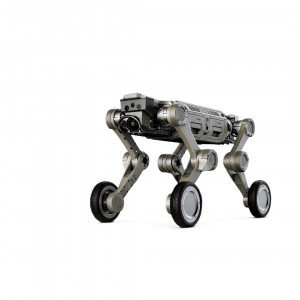
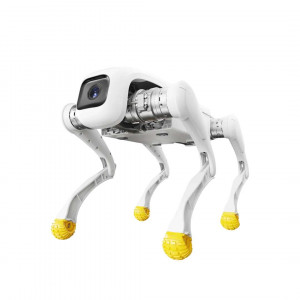
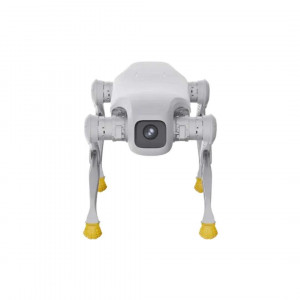
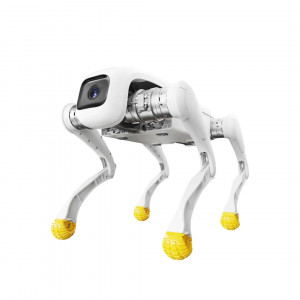
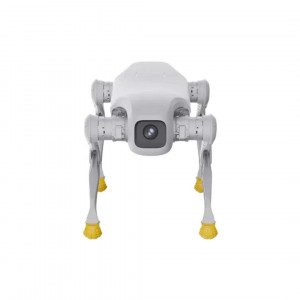
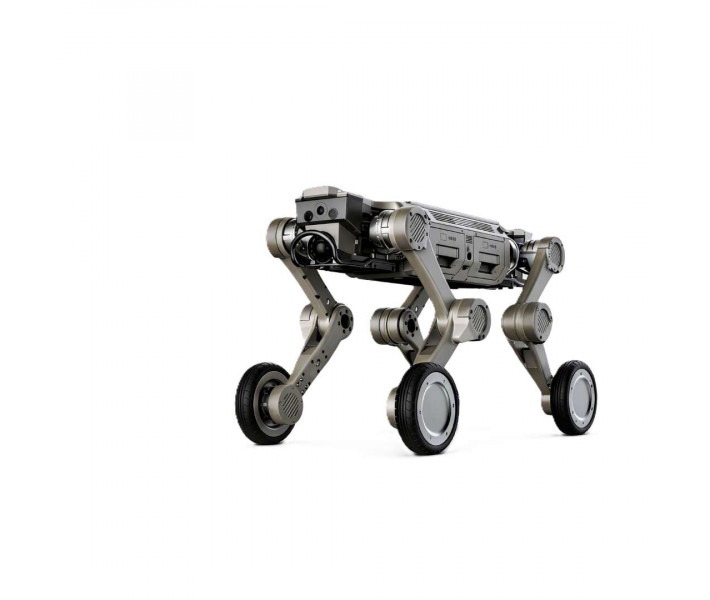
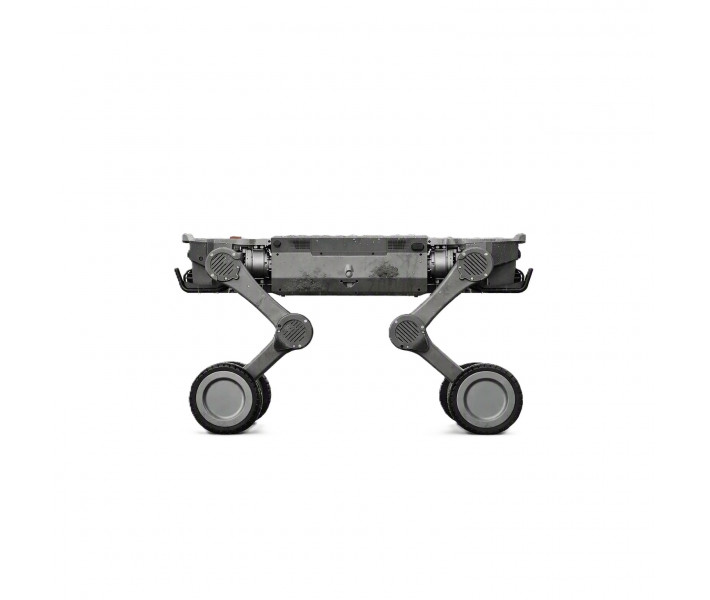
AgiBot D1 Max is a wheel-legged robot for carrying loads over difficult terrain. Downtime caused by bad weather and battery changes disrupts continuous operation on site. The enclosure is protected against dust and moisture and withstands rain at outdoor sites. Two hot-swappable batteries keep stoppages during operation to a minimum.
Key features and benefits
- Protection rating: IP67 — Protection against rain and dust allows the robot to be deployed outdoors in any weather.
- Rated payload: 25 kg — The platform carries industrial equipment, and the power and control ports allow it to be integrated into the workflow.
- Battery life: ≥ 5 h (unloaded), ≥ 3.5 h (fully loaded) — A longer cycle between charges reduces the number of manual interventions.
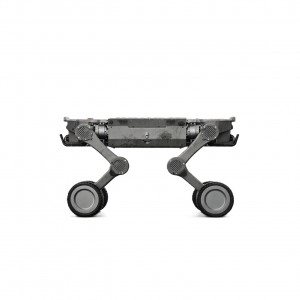
- Wheel-legged drive: the AgiBot D1 Max combines wheels and legs, so it responds quickly and covers a wider area. This improves task efficiency.
- Obstacle clearance: a maximum climbing angle of 45° and an obstacle-clearing height of 80 cm allow it to work on difficult terrain. This increases the likelihood of completing the task.
- Open integration: the SDK and URDF files support secondary development, while the power and control ports support industrial integration.
Reliability of the AgiBot D1 Max in industrial conditions
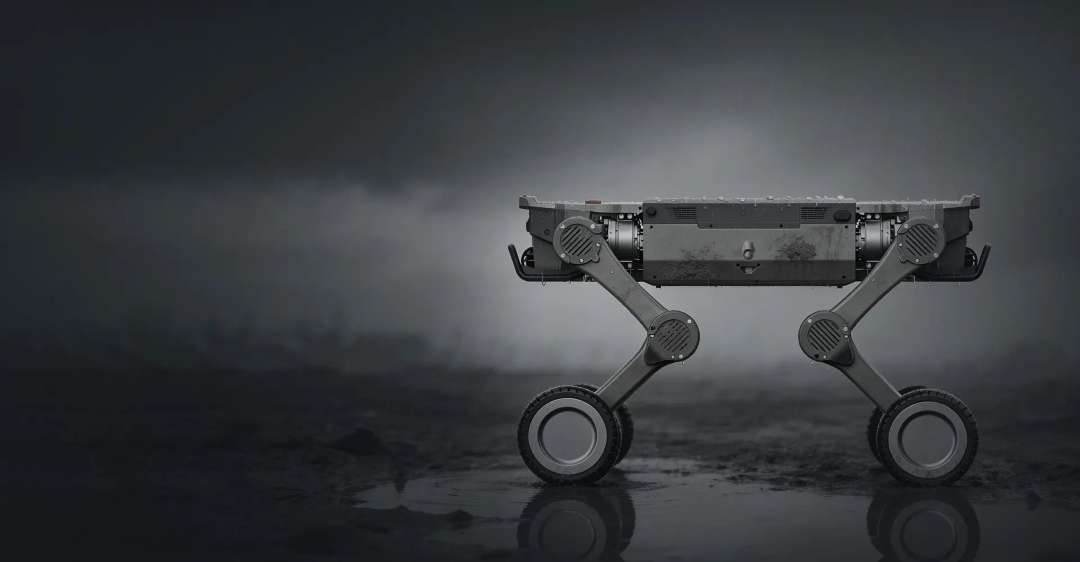
The body of the AgiBot D1 Max is made of aluminium alloy and high-strength engineering plastic. With its batteries, the robot weighs 41 kg. The operating temperature range is from -20 °C to 55 °C, which supports all-weather deployment.
The design is intended for long-term operation at outdoor and industrial sites. This reduces downtime and maintenance costs. In the picture, the robot is working on wet, muddy ground, illustrating all-weather operation.
Endurance and range
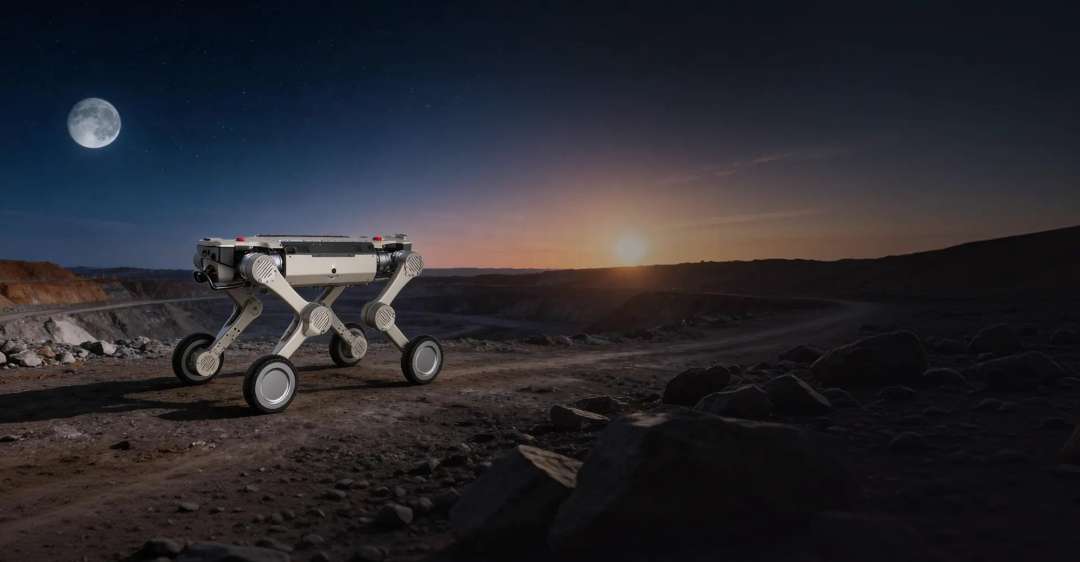
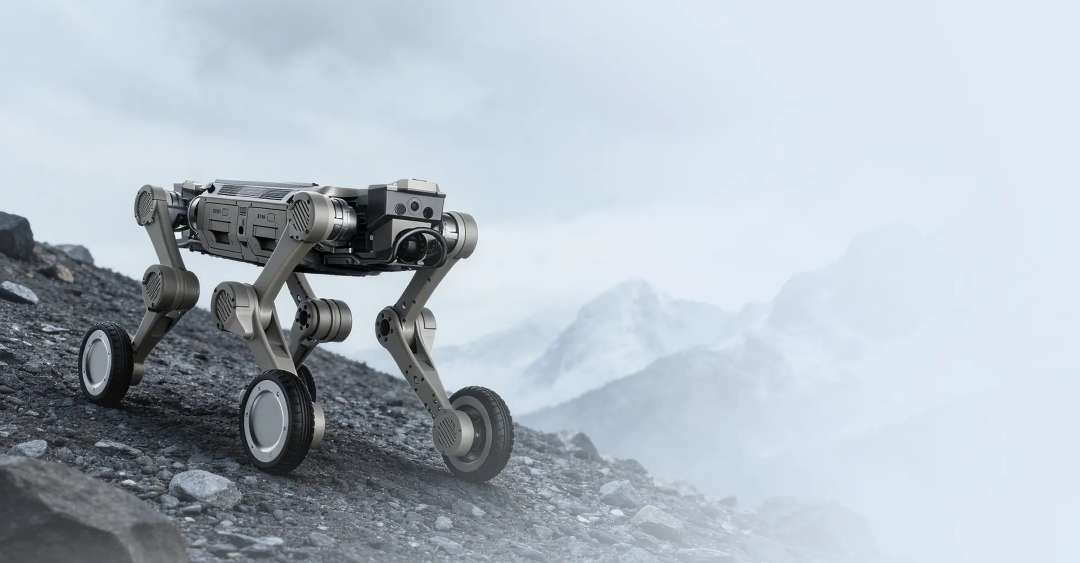
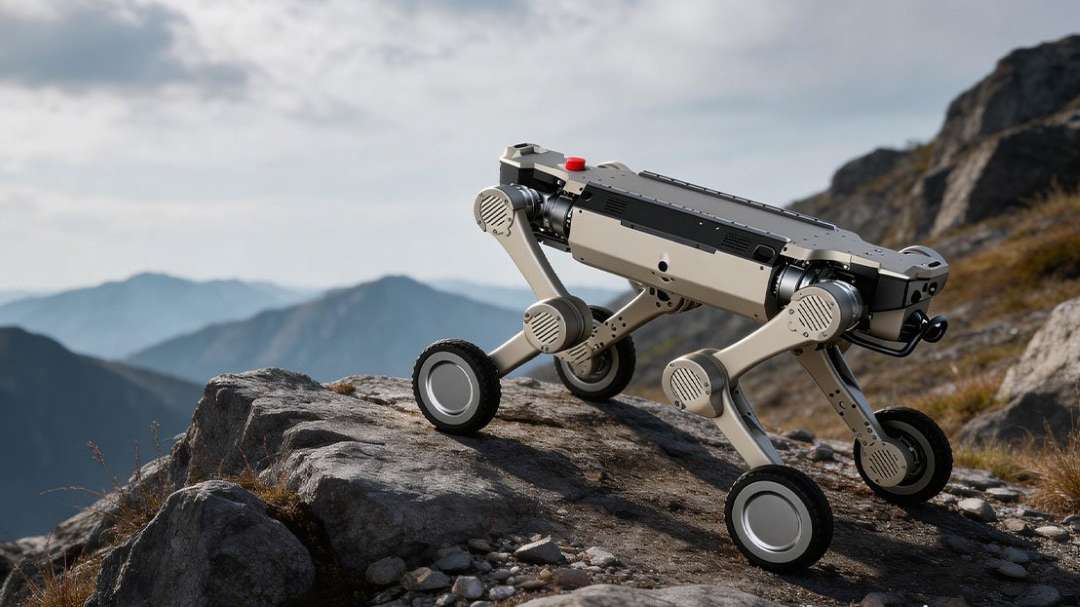
Unloaded, the range is at least 29 km. With a full load it decreases, but remains no less than 18 km. The difference shows the effect of payload mass, so routes should be planned using the lower value. On open terrain, the range determines the mission radius. In the picture, the robot stands on rocky terrain at dusk.
Payload and equipment integration
The maximum joint torque reaches 150 N·m. This figure characterises the power capabilities of the actuators. The kinematics comprise 12+4 dof (degrees of freedom). The range of motion of the hip and shank is from -160° to 160°, and of the body joint from -30° to 40°. In the picture, the robot operates on rough desert terrain, where a load-carrying platform needs good cross-country ability.
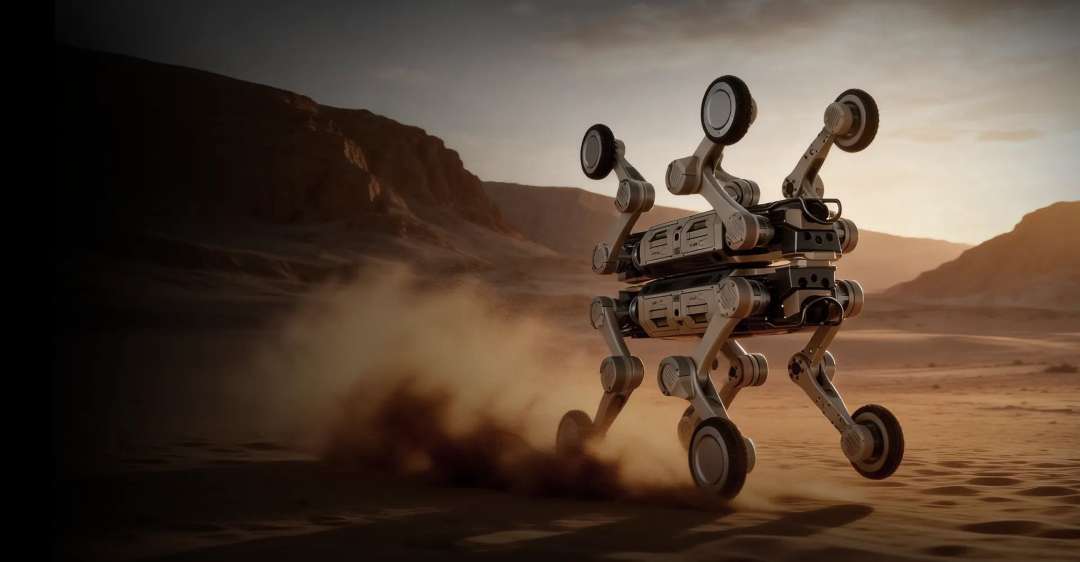
The platform has a wide range of interfaces for connecting payload equipment. They support secondary development and deep industrial integration.
- Power: 5 V, 12 V, 24 V, 48 V; maximum output power 480 W
- Wired ports: 2 Gigabit Ethernet ports, 2 × USB 3.0, 1 × RS232, 1 × RS485, 2 × SBUS, 1 × PPS
- Wireless connectivity: Wi-Fi, Bluetooth 5.0
An SDK (software development kit) is provided for secondary development. The robot model includes 3D CAD and URDF files for simulation. URDF is a format for describing a robot's kinematic model.
Mobility on difficult terrain
The wheel-legged mechanism ensures fast response and wide area coverage. The maximum travel speed is 8 m/s.
Mobility is best assessed in motion.
Obstacles and narrow passages
The maximum obstacle-clearing height is 80 cm, or 50 cm when loaded. The minimum passage width is 50 cm, and zero-turn rotation on the spot is also supported. The crawling height is 34 cm and can be adjusted while moving forwards and backwards.
Slopes and steps
The continuous step-climbing height is 25 cm. In the picture, the robot is traversing a steep embankment outdoors, illustrating its ability to climb slopes with a large angle.
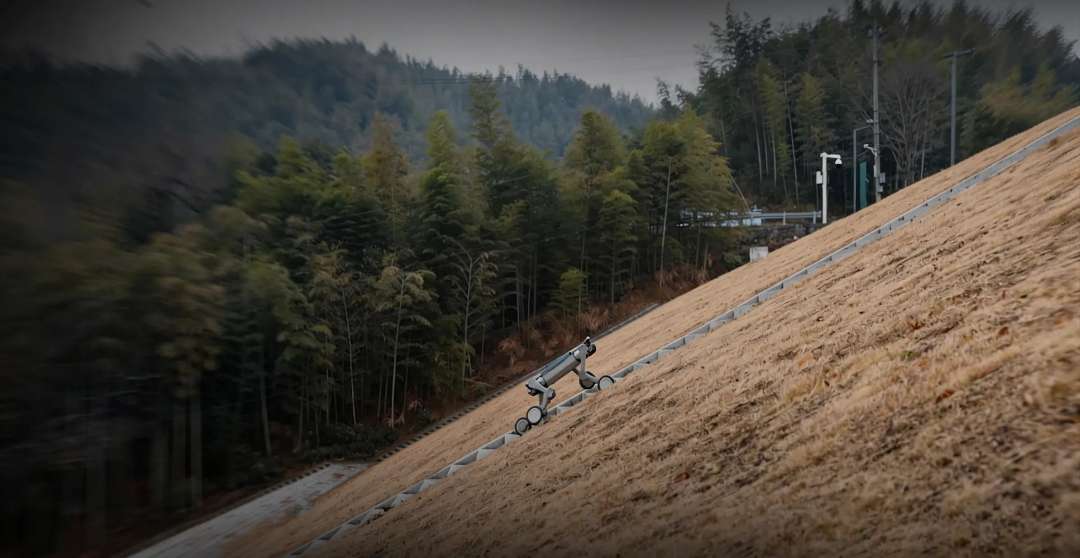
The maximum climbing angle is 45°. Another picture shows movement along a steep mountain slope.
Large-scale deployment and maintenance
Power is supplied by two hot-swappable batteries (54 V, 10 Ah × 2). Swapping takes place without fully shutting down the system. This minimises downtime and reduces the operational maintenance burden. In the picture, the robot stands on the floor of a factory workshop.
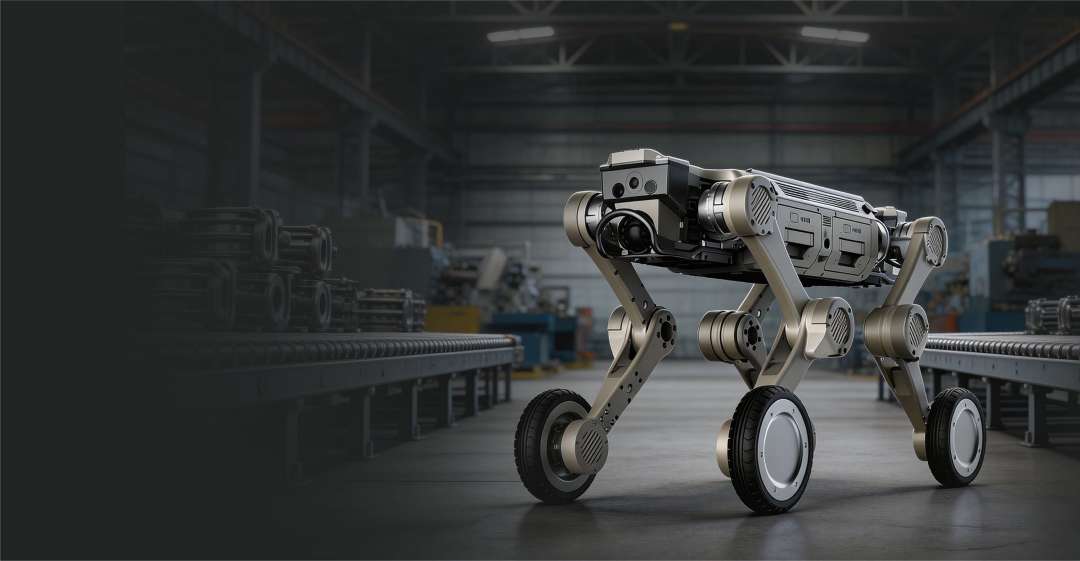
Intelligent mode switching combines wheeled and legged movement. In wheeled mode, movement is stable and efficient, and the operating time is longer. In legged mode, adaptability to terrain is higher, which is important for multi-scenario operation.
Sensing and onboard computing
One 96-channel lidar is located at the front and another at the rear. The coverage angle is 360° × 90°, and the coverage diameter is 120 m.
One industrial-grade 8 MP FPV camera is installed at the front and one at the rear. The diagonal field of view (DFOV) is 122°. The horizontal (HFOV) is 111° and the vertical (VFOV) is 70°. Four lighting elements are positioned at the sides of the cameras.
Ultrasonic sensors on the left and right detect obstacles within 5 m. The sensor suite includes an automotive-grade IMU. An IMU is an inertial measurement unit. The GNSS RTK module provides satellite positioning with real-time correction.
Computing is provided by the NVIDIA Orin NX 16 GB: 100–157 TOPS (trillions of operations per second). Real-time video transmission is supported, and control is performed from a remote controller with a built-in display.
Applications
The AgiBot D1 Max is designed for scenarios that require cross-country ability and a protected enclosure.
- Task execution: legged mode negotiates slopes and obstacles. The power and control interfaces make it possible to mount industrial equipment suited to a specific task.
- Logistics and transport: a rated payload of 25 kg and a wheeled mode for stable, efficient movement make it possible to carry cargo. Hot-swappable batteries minimise downtime. In the picture, several robots are moving along a warehouse aisle between pallet racks.

- Search and rescue: a climbing angle of 45° and the ability to clear obstacles 80 cm high help it move across difficult terrain. Ultrasonic sensors detect obstacles within 5 m, and video is transmitted in real time. In the picture, the robot is moving through flooded urban ruins during a simulated disaster response.

- Large-scale site deployment: the enclosure is protected against dust and moisture, and the operating temperature is from -20 °C to 55 °C. Hot-swappable batteries reduce the maintenance burden during large-scale deployment.
Compatible accessories
An optional autonomous charging station is available for the AgiBot D1 Max. The adapter and charging dock are included as standard. A remote controller with a built-in display is also a standard item. The charging time is less than 2 h.
What's in the box?
- AgiBot D1 Max robot
- Adapter
- Charging dock
- Remote controller with a built-in display
Technical specifications
General information
| Parameter | Value |
| Material | Aluminium alloy + high-strength engineering plastic |
| Dimensions in standing position (L×W×H) | 930 × 480 × 585 mm |
| Dimensions in lying position (L×W×H) | 930 × 630 × 200 mm |
| Total weight (including battery) | 41 kg |
| Degrees of freedom (DoF) | 12+4 dof |
| Operating temperature | -20 °C – 55 °C |
| Enclosure protection rating | IP67 |
| Battery | 54 V, 10 Ah × 2, two batteries, hot-swap support |
| Charging time | <2 h |
| Battery life | 5 h (unloaded), 3.5 h (fully loaded) |
| Range | 29 km (unloaded), 18 km (fully loaded) |
| Total computing power | 100–157 TOPS / NVIDIA Orin NX 16 GB |
Performance parameters
| Parameter | Value |
| Maximum speed | 8 m/s |
| Rated payload | 25 kg |
| Continuous step-climbing height | 25 cm |
| Maximum climbing angle | 45° |
| Obstacle-clearing height when jumping | 80 cm |
| Maximum obstacle-clearing height | 80 cm |
| Obstacle-clearing height when loaded | 50 cm |
| Minimum passage width | 50 cm |
| Minimum turning width | Zero-turn rotation on the spot is supported; crawling height adjustment is supported while moving forwards and backwards |
| Crawling height | 34 cm |
Joint parameters
| Parameter | Value |
| Maximum joint torque | 150 N·m |
| Joint range of motion (body) | from -30° to 40° |
| Joint range of motion (hip) | from -160° to 160° |
| Joint range of motion (shank) | from -160° to 160° |
Sensor units
| Parameter | Value |
| Lidar | One 96-channel lidar at the front and one at the rear, coverage angle 360° × 90°, coverage diameter 120 m |
| Camera field of view (FoV) | One FPV camera at the front and one at the rear, industrial-grade 8 MP, field of view: DFOV 122°, HFOV 111°, VFOV 70° |
| Lighting | Lighting × 4 (one on each side of the FPV cameras) |
| IMU | Automotive-grade IMU × 1 |
| RTK module | GNSS RTK × 1 |
| Ultrasonic sensor | One ultrasonic sensor on the left and one on the right, obstacle detection supported within 5 m |
Function list
| Parameter | Value |
| Standard movements | Walking, gliding, crawling and other poses; omnidirectional movement (forwards/backwards/sideways), turning on the spot and manoeuvring are supported; adjustment of the knee joint configuration is supported |
| Real-time video transmission | Supported |
| Secondary development | Supported; an SDK is provided; the robot model includes 3D CAD and URDF files for simulation |
| Connectivity | Wi-Fi, Bluetooth 5.0 supported |
| Output power interfaces | 5 V, 12 V, 24 V, 48 V; maximum output power 480 W |
| Expansion interfaces | 2 Gigabit Ethernet ports, 2 × USB 3.0, 1 × RS232, 1 × RS485, 2 × SBUS, 1 × PPS |
Accessories
| Parameter | Value |
| Adapter | Standard |
| Charging dock | Standard |
| Remote controller | Remote controller with a built-in display |
| Autonomous charging station | Optional |
Why buy the AgiBot D1 Max from EXPERT3D?
EXPERT3D has been supplying professional 3D equipment since 2012. For the AgiBot D1 Max, our specialists provide advice before purchase. They help you choose the configuration and accessories, including the optional autonomous charging station. We deliver throughout Spain and the EU countries. After purchase, we provide service support. Order spare parts and consumables on our website so that your robot is never left idle. Describe your task, and we will propose a suitable solution.