

- Stock: In stock
- Product code: 920372000001458130
- Weight Brutto: 200.00kg

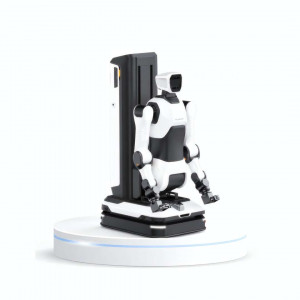
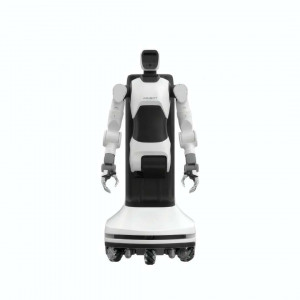
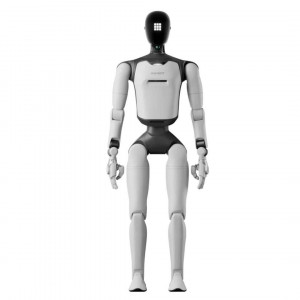
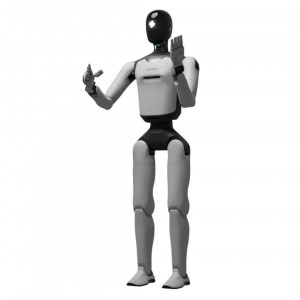
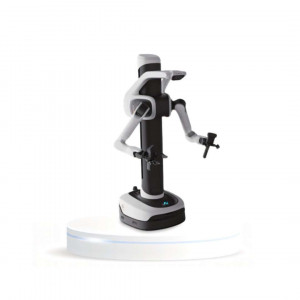
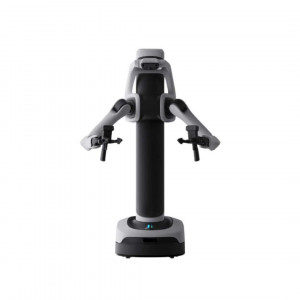
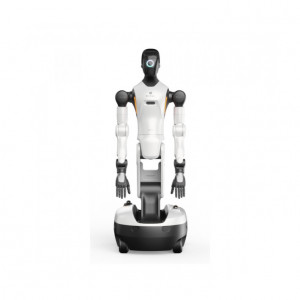
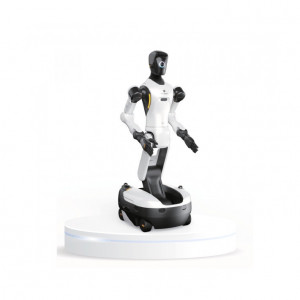
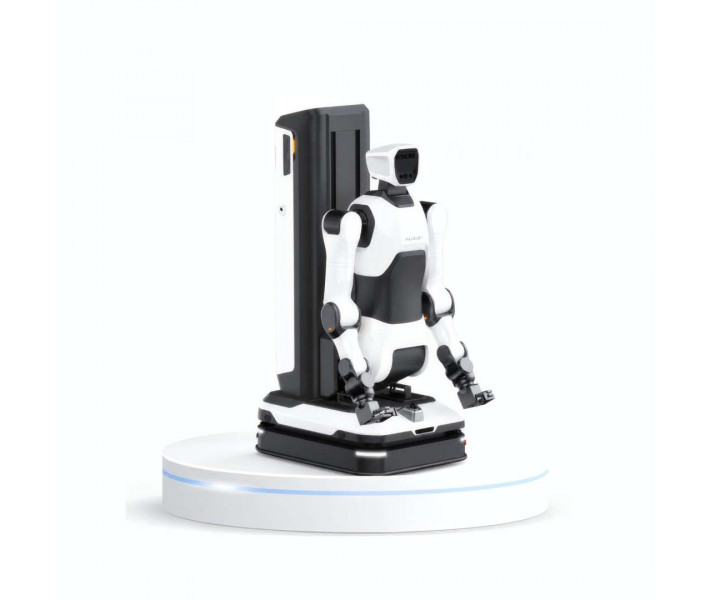
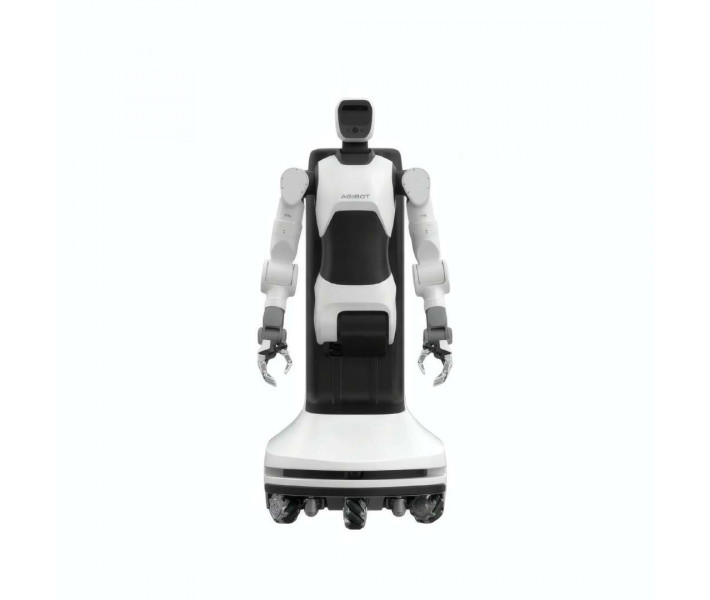
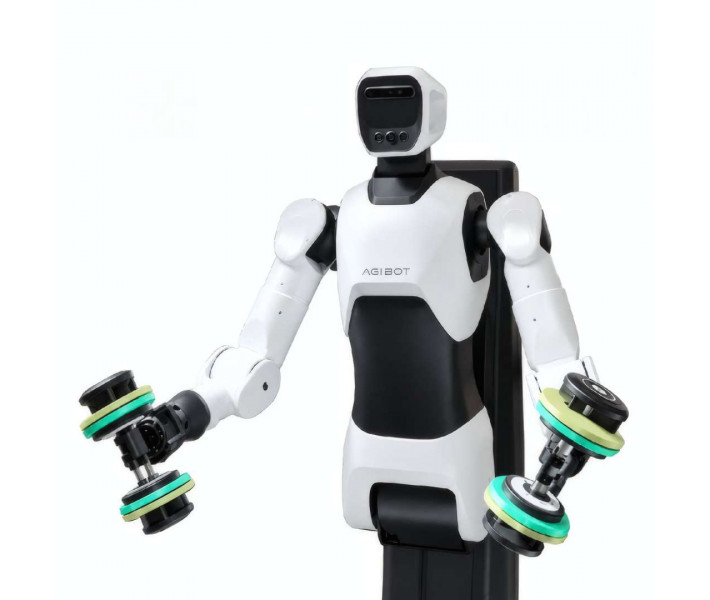
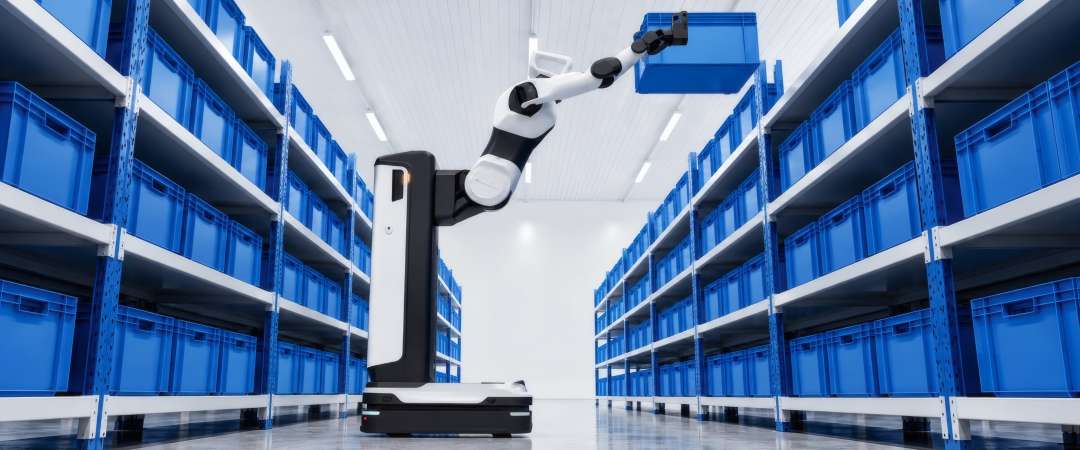
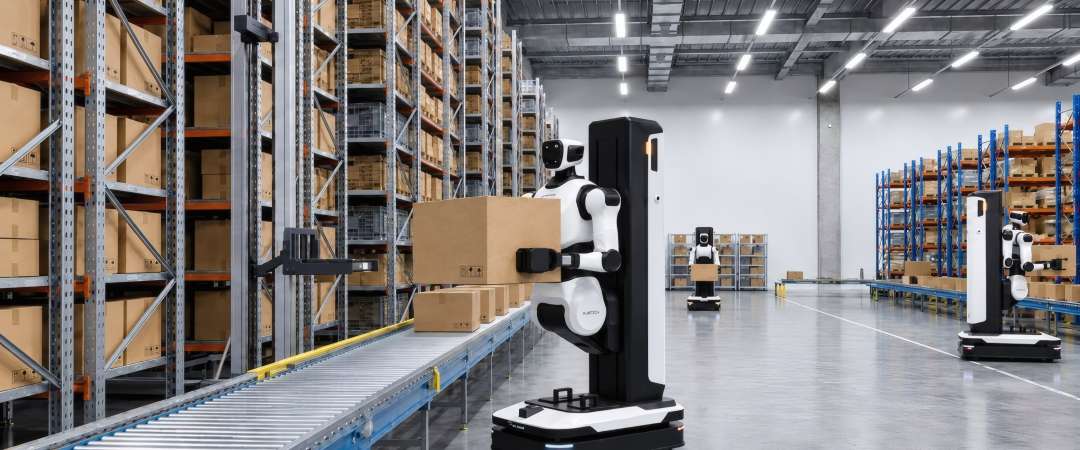
AgiBot G2 Max — a bimanual mobile robotic platform for warehouse logistics and industrial environments, equipped with high-precision arms and an omnidirectional chassis. This system automates palletising, depalletising and the transport of heavy parts between different operating zones. Its wide vertical range makes it possible to handle containers at floor level and reach the top positions on industrial shelving.
Key performance and operational advantages
- Combined rated payload: 38 kg — Allows heavy boxes and containers to be handled continuously with both arms at rated operation.
- Peak load capacity: 50 kg — Provides a margin of momentary force for demanding, short-duration movements.
- Vertical working range: 0.1–2.54 m — Provides direct access from floor level to raised storage shelves.
- Computing performance: up to 2,070 TFLOPS FP4 — Processes neural networks and VLA models locally without relying on external infrastructure.
- Operating autonomy: up to 8 hours — Ensures full shifts through autonomous recharging and quick battery replacement.
- Torso tilt unit: extends reach depth into multi-row containers without having to move the base.
- Force-controlled arms: ensure measured physical contact and sub-millimetre placement when stacking delicate goods.
Kinematic capability and control of the AgiBot G2 Max
The robotic platform features an articulated structure with 21 degrees of freedom, not counting the end-effector mechanisms. Each robotic arm has 7 independent degrees of freedom, which makes it possible to approach objects from multiple spatial orientations and adjust the elbow position to get around obstacles in aisles and shelving.
Bimanual guidance incorporates active force control in both limbs, allowing the robot to detect mechanical contact and adapt the pressure during the approach. This tactile response prevents accidental impacts and ensures sub-millimetre positional accuracy when placing boxes.
Load capacity and bimanual dynamics
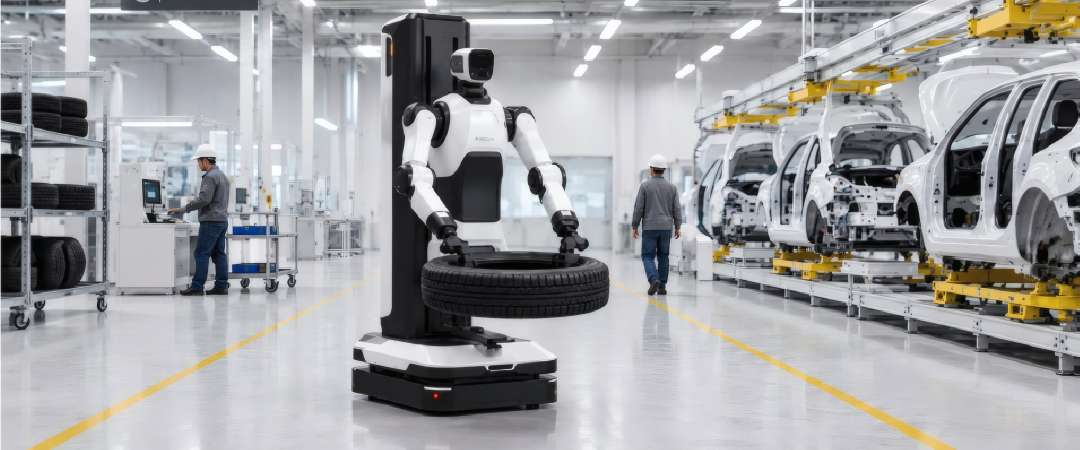
Each arm operates individually with a rated load of 18 kg, reaching a combined rating of 38 kg with both limbs. In transient high-effort situations, the kinematics support peaks of up to 50 kg with two arms. The feasibility of a grip depends on physical factors such as the geometry of the object, its centre of gravity, the type of gripper installed and the acceleration required along the trajectory.
The mechanical design optimises stability by means of a high-torque joint at the waist. This mechanism tilts the torso to project the manipulators towards deep pallets or elevated storage levels, reducing unnecessary manoeuvres of the undercarriage.
Omnidirectional navigation and physical safety
The mobile base travels at a maximum speed of 1.5 m/s using electric servomotors coupled to harmonic and planetary gearboxes. The chassis supports forward and reverse travel, omnidirectional lateral movement and rotation about its own central axis, making it easier to enter narrow aisles.
The outer perimeter features protective edges with contact absorption and force detection. The spatial perception system provides continuous 360° coverage with no blind spots, coordinating collision avoidance with machinery, storage structures and personnel in transit.
Computing platform and energy autonomy
Central processing is handled by the NVIDIA Jetson Thor T5000 and Rhino R1 modules, delivering a combined performance of up to 2,070 TFLOPS FP4 plus around 500 additional TOPS. This power handles navigation, machine vision and VLA and LLM algorithms directly on the robot, achieving a data latency of under 10 ms.
The integrated battery delivers up to 8 hours of continuous operation, depending on the weight handled and the travel cadence. The unit supports autonomous charging cycles and quick battery swapping to sustain uninterrupted working schedules around the clock, 24 hours a day.
Programming and deployment of operating routines are managed through the Genie Studio 2.0 environment, which is compatible with Wi-Fi, Bluetooth, 4G and 5G wireless networks.
The audiovisual record shows the dynamic behaviour of the manipulators and the stability of the chassis during continuous warehouse manoeuvres:
Application areas
The combination of extended vertical reach and a mobile chassis makes it possible to tackle highly demanding logistics tasks in automated plants:
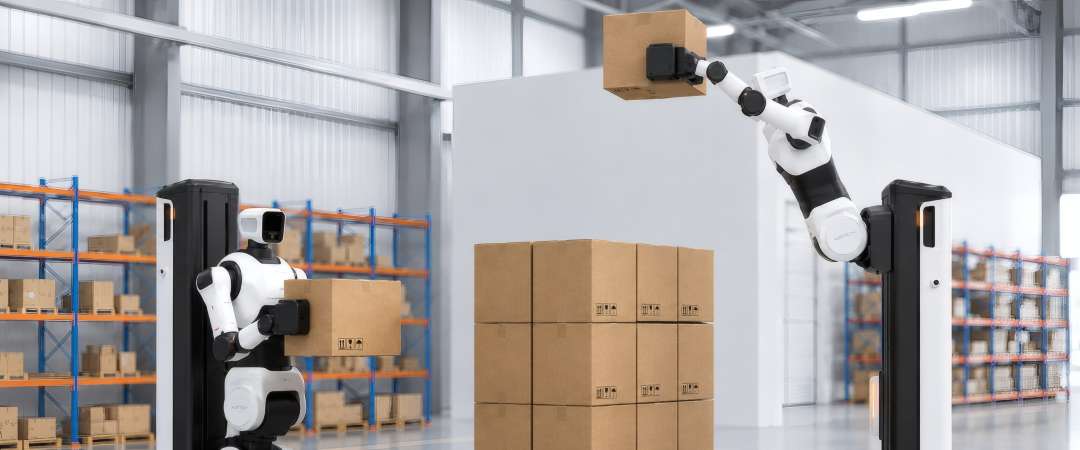
- Industrial palletising: sequential placement of boxes, trays and packages onto shipping pallets according to programmed stacking patterns.
- Automated depalletising: methodical unloading of goods from pallets to sorting stations or production lines.
- Shelving management: removal and insertion of containers at multiple heights within conventional and compact warehouses.
- Intermodal transfer: transport of components and finished products between assembly lines, workbenches and conveyor belts.
- Access to deep containers: handling in containers arranged in several rows by means of active torso tilting.
- Internal manufacturing logistics: scheduled supply of raw materials and tooling to machining cells and inspection stations.
Compatibility and physical accessories
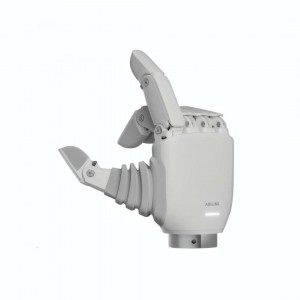
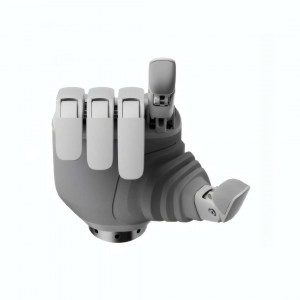
- End effectors: compatible with two-finger grippers and gripping tools designed for industrial bimanual handling.
- Power systems: interface for autonomous charging stations and modules for manual or robotic battery replacement.
- Logistics containers: sized to operate with standard pallets, corrugated cardboard boxes and common industrial bins.
Technical specifications
Kinematics and payload
| Parameter | Value |
| Degrees of freedom | 21 |
| Degrees of freedom per arm | 7 |
| Number of robotic arms | 2 |
| Arm control | force control |
| Gripper type | two-finger grippers |
| Rated load of one arm | 18 kg |
| Rated load of two arms | 38 kg |
| Peak load of two arms | 50 kg |
| Vertical working range | 0.1–2.54 m |
Mobility and structure
| Parameter | Value |
| Robot height | 1,790 mm |
| Net weight | 185 kg |
| Maximum travel speed | 1.5 m/s |
| Chassis movement modes | forward and reverse, omnidirectional lateral movement, rotation about its own axis |
| Drive type | electric servos |
| Gear type | harmonic and planetary |
| Construction material | aluminium alloy structure, polymer casing |
| Ingress protection rating | IP42 |
Computing and connectivity
| Parameter | Value |
| Spatial perception system | 360° surround vision with no blind spots |
| Computing platform | NVIDIA Jetson Thor T5000, Rhino R1 |
| Computing performance | up to 2,070 TFLOPS FP4; Rhino R1 around 500 TOPS |
| Model processing | VLA and LLM locally, on the robot itself |
| Sensor data processing latency | less than 10 ms |
| Communication | 4G, 5G, Bluetooth, Wi-Fi |
| Autonomous operating time | up to 8 hours |
| Software ecosystem | Genie Studio 2.0 |
Integration and usage guidelines
- Load mass check: verify the actual mass of each package against the limits of 18 kg per arm and 38 kg rated for bimanual operation.
- Peak load regime: reserve the 50 kg threshold for short cycles and assess the arm posture to avoid mechanical overstress.
- Aisle configuration: analyse track widths and take advantage of omnidirectional movement to travel between compact shelving.
- Prior cycle validation: carry out gripping tests with the specific containers and boxes before activating shifts in series production.
- Recharge scheduling: define automatic charging or battery swap protocols according to the time demands of the industrial shift.
Why buy the AgiBot G2 Max?
This robotic solution optimises operations in modern warehouses, logistics centres and advanced manufacturing facilities. We offer comprehensive technical advice to validate gripper compatibility, review working reach and adjust rated loads to your palletising schemes. We provide professional support with initial setup, operational assistance and an official warranty to ensure a safe, cost-effective deployment that is fully adapted to your processes.