

- Stock: In stock
- Product code: 920372000001458607
- Weight Brutto: 98.00kg

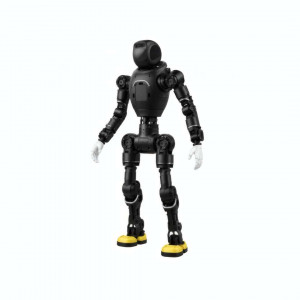
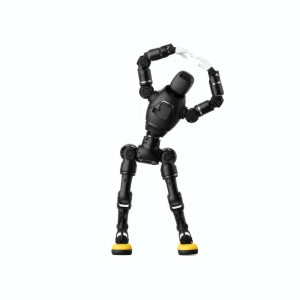
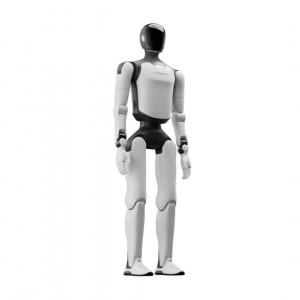
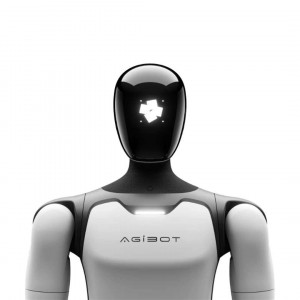
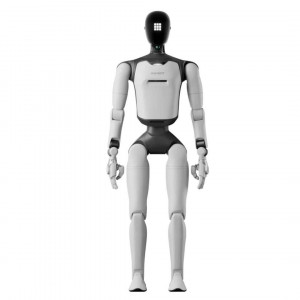
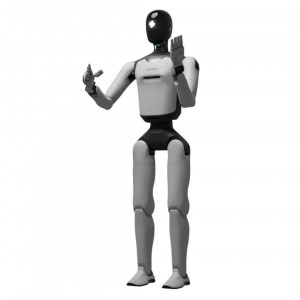
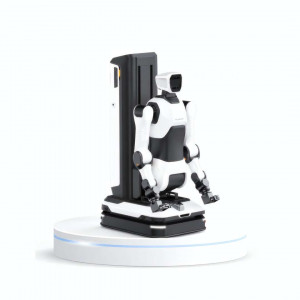
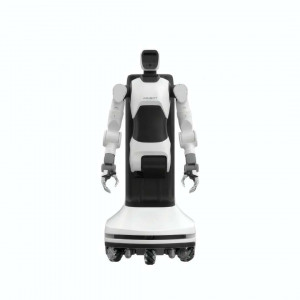
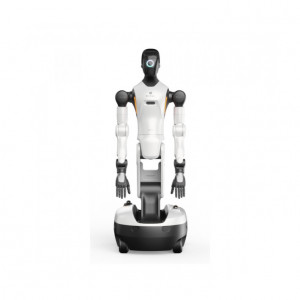
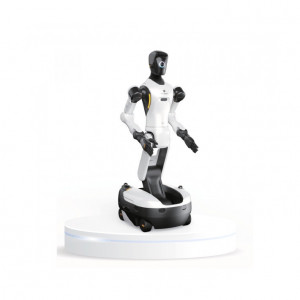
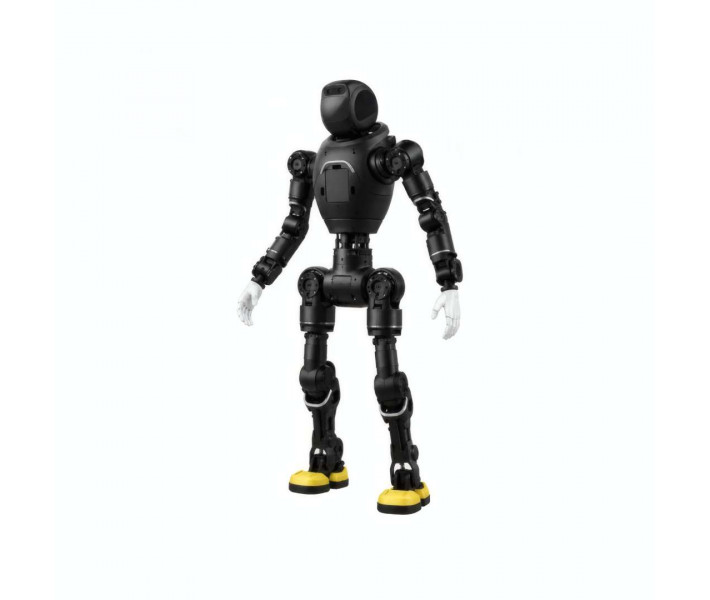
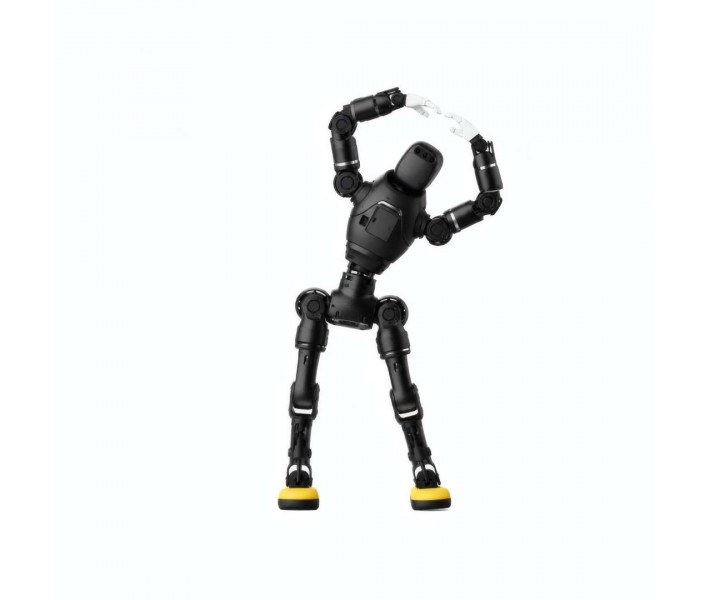
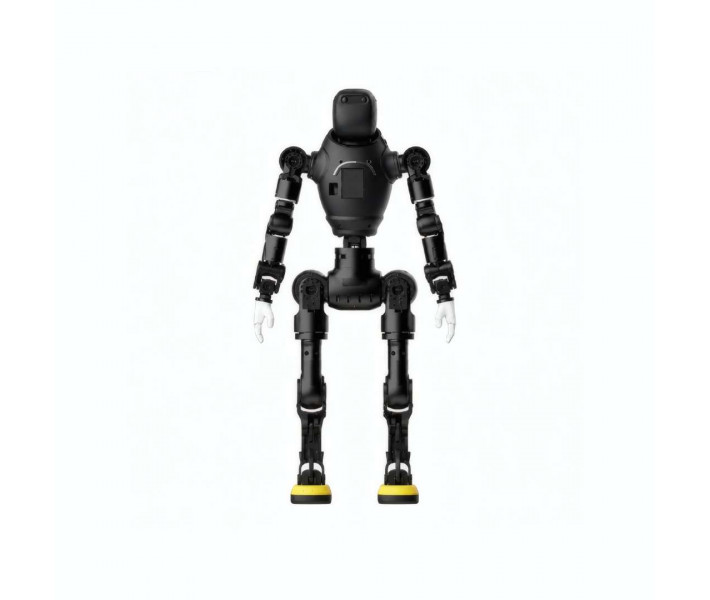
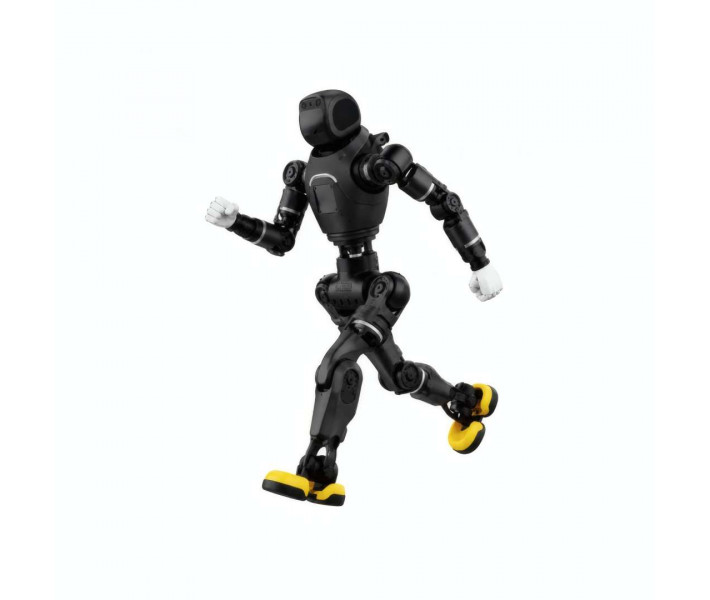
The AgiBot X2 EDU transforms robotics teaching and advanced research by offering a complete humanoid platform with 29 degrees of freedom and open control interfaces. Its modular chassis lets you assemble components from scratch, adjust actuators and validate postural control algorithms directly on the hardware. It is designed for engineering faculties and R&D laboratories that need to integrate specific sensors and custom computing hardware without running into closed environments.
Key technical features and educational value
- 29 genuine degrees of freedom: faithfully reproduces human biomechanics to research bipedal walking, reactive balance and whole-body coordination.
- Payload of up to 3 kg per arm: handles real objects and tools in complex grasping exercises without overloading the joints.
- Dimensions of 1310 × 460 × 210 mm: a well-proportioned format that fits on workbenches and in standard teaching laboratory spaces.
- 48 V, 10 Ah battery: ensures continuous practical sessions with fast recharge cycles of just 1.5 hours to make the most of teaching time.
- Accessible modular construction: dismantle links and analyse reducers to teach mechanical design and applied mechatronics in a tangible way.
- Open low-level control: program your own torque routines and trajectories directly on the motor controllers.
- Computing and sensor expansion: connect secondary single-board computers and sensor arrays via standard industrial ports.
Mechanical architecture and kinematics of the AgiBot X2 EDU
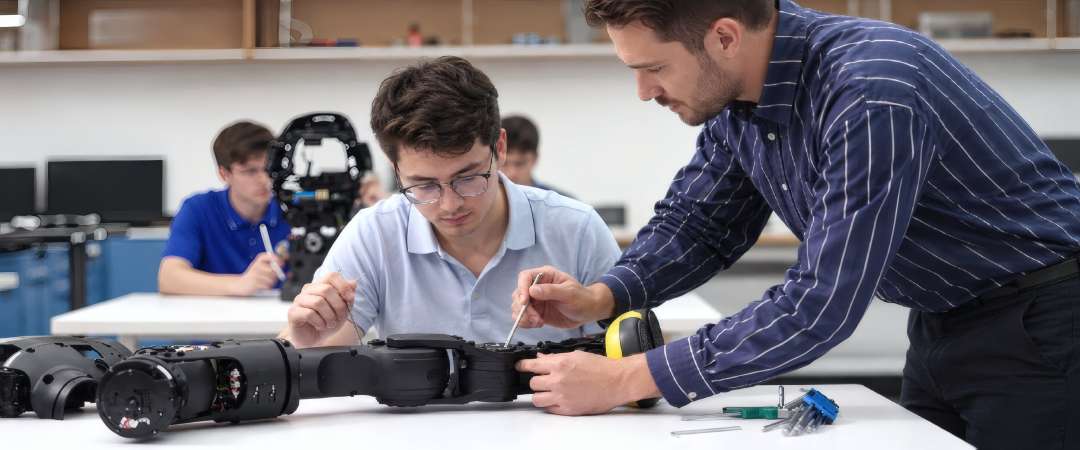
The robot's structure emulates human anatomy with tight tolerances, facilitating in-depth study of bipedal robotics. Its 29 degrees of freedom allow you to implement dynamic locomotion schemes, disturbance compensation and real-time postural stability. Each leg integrates six axes of movement distributed between a triaxial hip, a knee actuator with a high-resolution encoder, a rigid carbon fibre shin and a biaxial ankle assembly mounted on non-slip bases.
Direct access to the mechanical assemblies allows your students to examine gear trains, analyse harmonic reducers and diagnose servo motor faults with ordinary workshop instruments.
Upper body manipulation
Each arm has seven degrees of freedom and a useful reach of 558 mm, which provides remarkable spatial dexterity in positioning tasks. The structure supports an end payload of up to 3 kg, allowing demonstration hands or adaptive grippers to be fitted depending on the exercise. In addition, the three-axis articulated waist increases the effective workspace, facilitating natural turns and bends during object manipulation operations.
This kinematic configuration helps you test trajectory planning algorithms against real inertia constraints and torque limits.
Processing and perception system
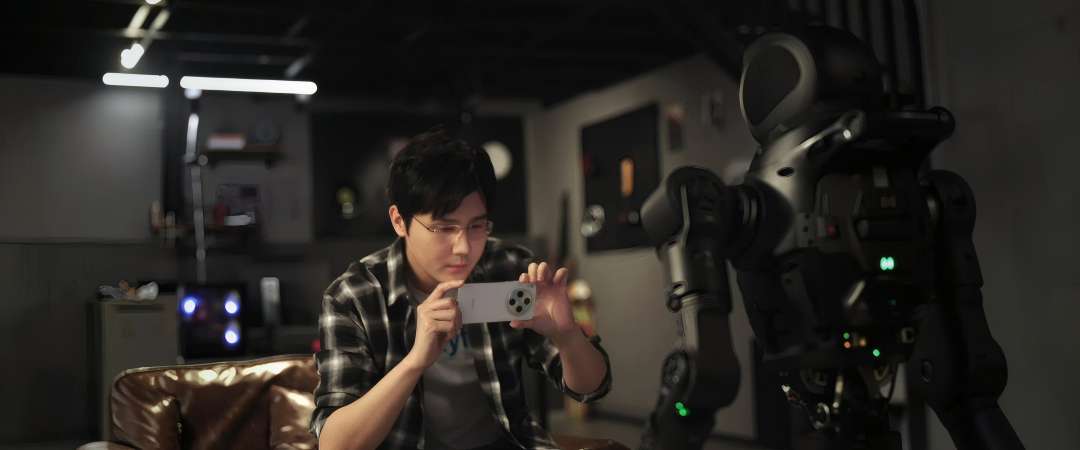
The standard sensor suite includes an integrated IMU unit and several multipurpose input and output ports. On this basis you can add front and rear RGB cameras, depth sensors and LiDAR modules to capture spatial information about the environment. Central processing relies on an RK3588 board, responsible for real-time synchronisation and for managing the chassis's internal communications.
If your project requires running VLA (Vision-Language-Action) models or complex neural networks for reinforcement learning control, the platform has the space and power supply to house more powerful external processors.
Software environment and custom development
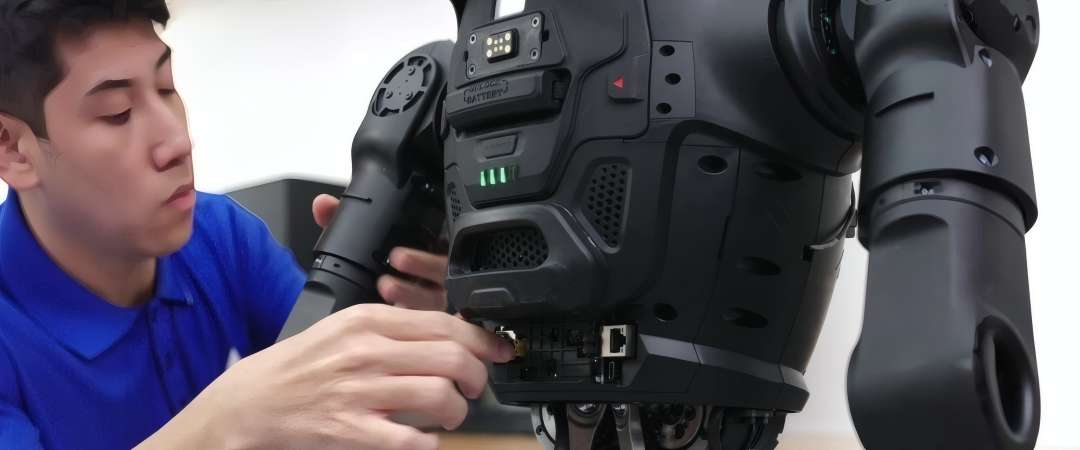
The platform interacts natively with modern software architectures through ROS 2 and MQTT protocols. You can communicate with the robot via Ethernet, Wi-Fi, 5G networks or BLE, activating debug modes to test actuators individually. The manufacturer provides a complete SDK and URDF models compatible with the most widely used physics simulators, allowing students to verify code digitally before transferring it to the physical robot.
The following video shows the system's response during bipedal walking exercises, terrain adaptation and part manipulation in test environments.
Demonstration: live analysis of joint kinematics, locomotion and arm response
Classroom integration guidelines
Before starting each work session, it is advisable to check the mechanical fastening of the links, the condition of the sensors and the limits of the end effectors. It is best to organise the syllabus into progressive blocks: physical assembly, offset calibration, kinematic control and sensor integration. When you connect your own computing boards or sensors, always check the electrical demand and bus bandwidth described in the technical documentation.
Establishing these work routines prevents overloading the electronics and teaches students a methodical technical maintenance protocol.
Fields of application
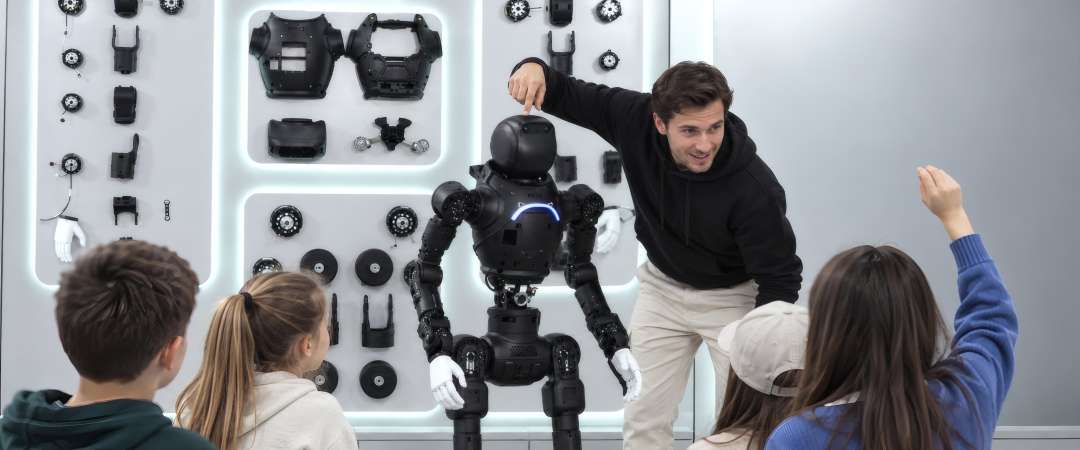
- Engineering degrees and master's programmes: delivery of practical sessions focused on inverse kinematics, drive control and balance dynamics.
- R&D centres: development and validation of in-house gait generators, reinforcement learning algorithms and adaptive grasping.
- Technical vocational training: comprehensive training in servo motor diagnosis, CAN/Ethernet industrial buses and mechanical maintenance.
- Robotics competitions: implementation of autonomous localisation and manipulation routines in scenarios with timed challenges.
- Robotic grasping research: testing of impedance control and gripping strategies using arms with 7 degrees of freedom.
- Multisensory perception systems: integration of RGB-D cameras, tactile sensors and LiDAR scanners for SLAM algorithms.
Compatibility and accessories
- End effectors: basic demonstration hand supplied as standard and optional OmniPicker adaptive gripper.
- Processing units: Rockchip RK3588 main module with mounts and interfaces for external processors.
- Sensor suite: integrated IMU unit and native compatibility with depth cameras and industrial LiDAR scanners.
Technical specifications
Mechanics and dimensions
| Parameter | Value |
| Net dimensions | 1310 × 460 × 210 mm |
| Total weight | 35 kg |
| Total degrees of freedom | 29 |
| Degrees of freedom per arm | 7 |
| Degrees of freedom in waist | 3 |
| Degrees of freedom per leg | 6 |
| Maximum arm reach | 558 mm |
| Permissible load capacity | Up to 3 kg |
Hardware and connectivity
| Parameter | Value |
| Base end effector | Standard demonstration hand |
| Optional gripping tool | OmniPicker |
| Processing module | RK3588 |
| Integrated sensors | IMU |
| Input/output ports | Multi-sensor interface |
| Computing architecture | Expandable via additional modules |
| Peripheral hardware | Open to external modifications |
| Motion control | Low-level access via open interfaces |
Power and battery
| Parameter | Value |
| Battery voltage | 48 V |
| Battery capacity | 10 Ah |
| Estimated recharge time | Up to 1.5 hours |
Teaching and development environment
| Parameter | Value |
| Scope of application | Teaching, technical research and specialisation |
| Assembly and debugging | Full compatibility |
| Educational materials | Included |
| Simulation models | Available (URDF) |
| Laboratory practicals | Natively supported |
Why buy the AgiBot X2 EDU from EXPERT3D?
At EXPERT3D we supply advanced robotics equipment to universities, training centres and research laboratories throughout Spain. Our technical team analyses your curriculum or R&D project to recommend the actuator and sensor configuration you really need. We deliver the hardware with a direct warranty, specialist technical support and original spare parts so that your classes and projects never come to a halt.