

- Stock: In stock
- Product code: 920372000001458628
- Weight Brutto: 85.00

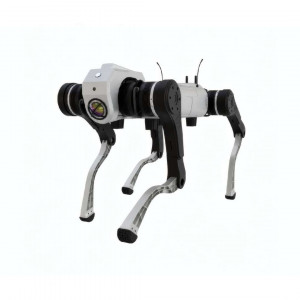
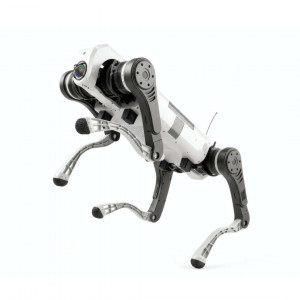
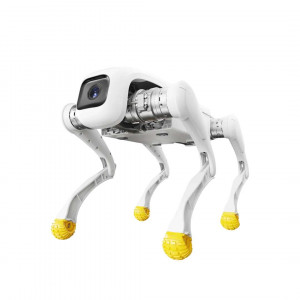
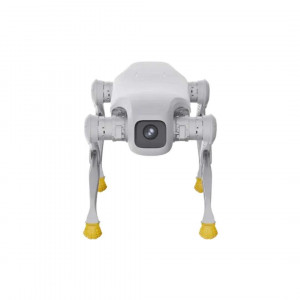
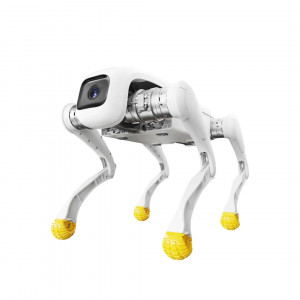
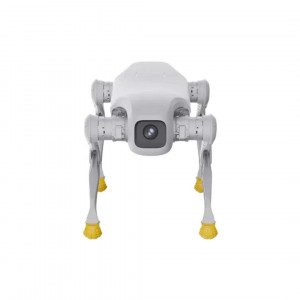
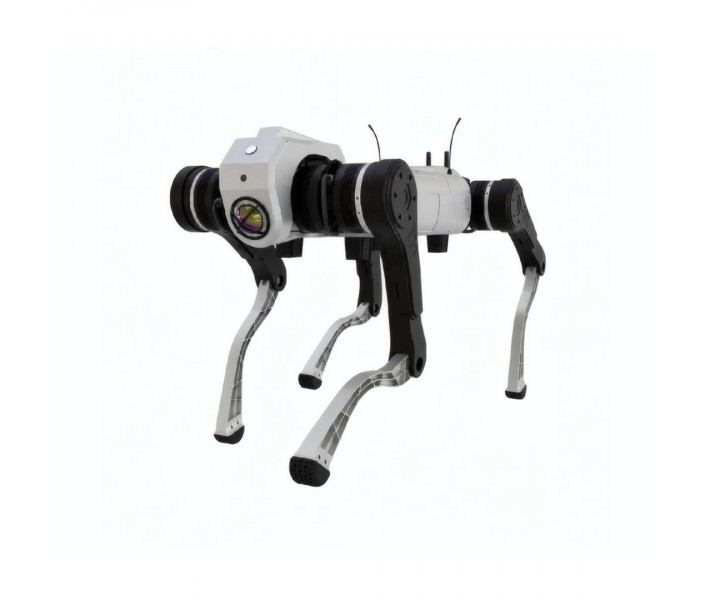
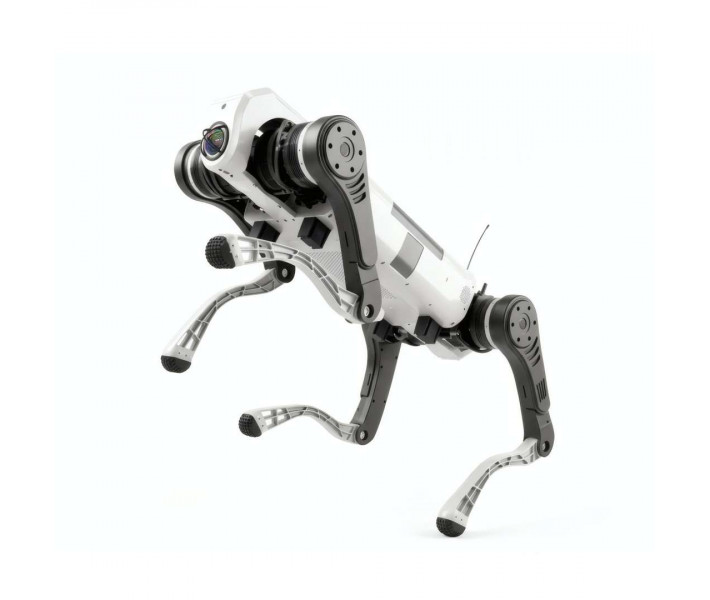
AgiBot D1 MaxPro is a quadruped industrial robot for moving cargo up stairs and over uneven ground. These are exactly the places where carrying a heavy load remains a manual task. This model carries such a load on its own, on four legs with 12 degrees of freedom. The industrial-grade protected body operates in rain and in water.
Key features and benefits
- Rated payload: 50 kg — The load is sustained continuously, so the margin is sized for installing heavy equipment and transporting cargo.
- Endurance with no load: 5.5 h — With a 20 kg load, operation lasts from 2 h, so trips are planned according to cargo weight.
- Protection rating: IP67 — The body operates in rain and in water up to 20 cm deep at temperatures from -20 °C to 55 °C.
- Stair climbing: continuous climbing of steps up to 30 cm high, as well as open industrial stairs, allows the robot to move between levels without stopping.
- Quick battery swap: with the AgiBot D1 MaxPro, replacing the battery does not require waiting 4.5 h for charging from 10% to 90%.
- Self-recovery after a fall: a proven self-righting mechanism returns the robot to work without manual intervention.
How the AgiBot D1 MaxPro carries heavy loads
The AgiBot D1 MaxPro sustains a continuous payload of up to 50 kg. This suits scenarios such as installing heavy equipment and transporting cargo. Another scenario is handling materials.
The model's video review is devoted to load capacity and reliable task performance. It complements the data on the power joints and endurance given below.
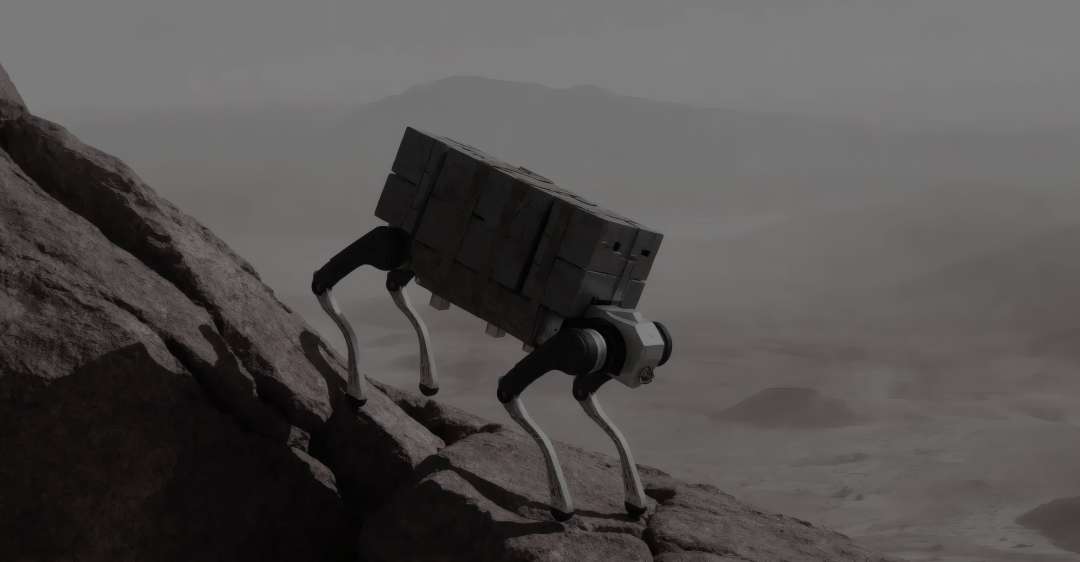
The power joints deliver a maximum torque of 300 N·m (the rotational force that the joint transmits to the leg). A software limit sets the working level at 180 N·m, while the limit value remains higher. An example of movement with a load — climbing a steep slope — is shown in the picture below.
Endurance and charging
The 2081 Wh battery operates with a high energy conversion efficiency. Endurance depends on the cargo mass: the greater the load, the shorter the operating cycle.
- Range: 10 km with no load — a guide for route planning.
- Charging: 4.5 h to charge from 10% to 90%. The adapter and the battery charging connector are included as standard.
- Quick swap: the battery can be swapped quickly, so the pause between shifts does not depend on charging time.
- Autonomous charging station: available as an option; direct connection to the battery is also supported for charging.
Mobility on stairs and difficult terrain
The robot combines high manoeuvrability with adaptation to different types of surface. Standard movements include standing and lying positions. Damping and force-based unloading are also available.
Stairs and obstacles
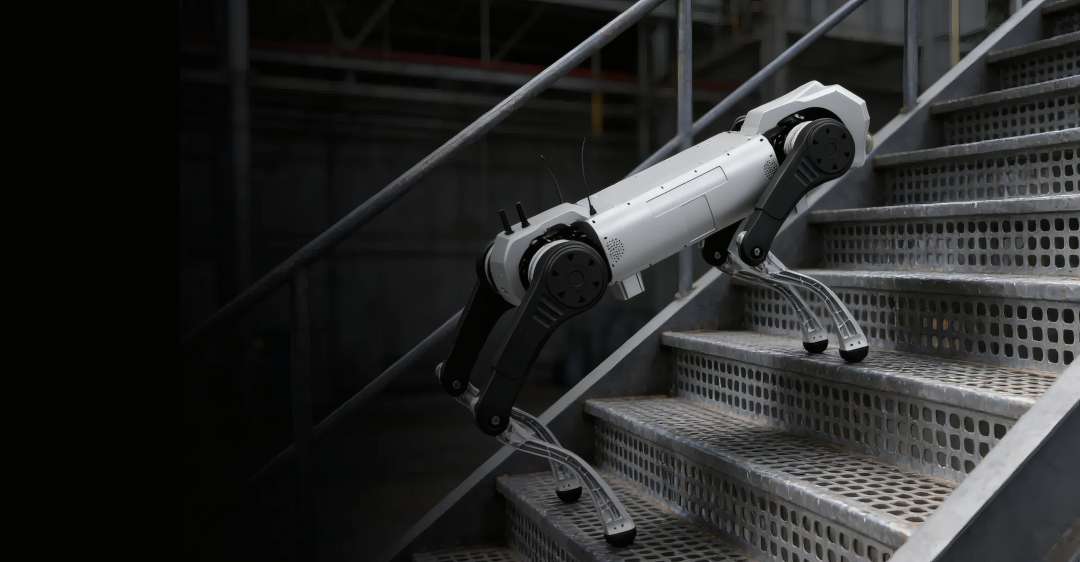
Stair climbing and obstacle crossing are part of the standard movement set. Besides continuous climbing, the robot negotiates industrial stairs with open risers (no solid wall between the steps). After a fall, it restores its position on its own thanks to a proven mechanism. An example of such a route is the perforated metal stairs shown below.
Slopes and speed
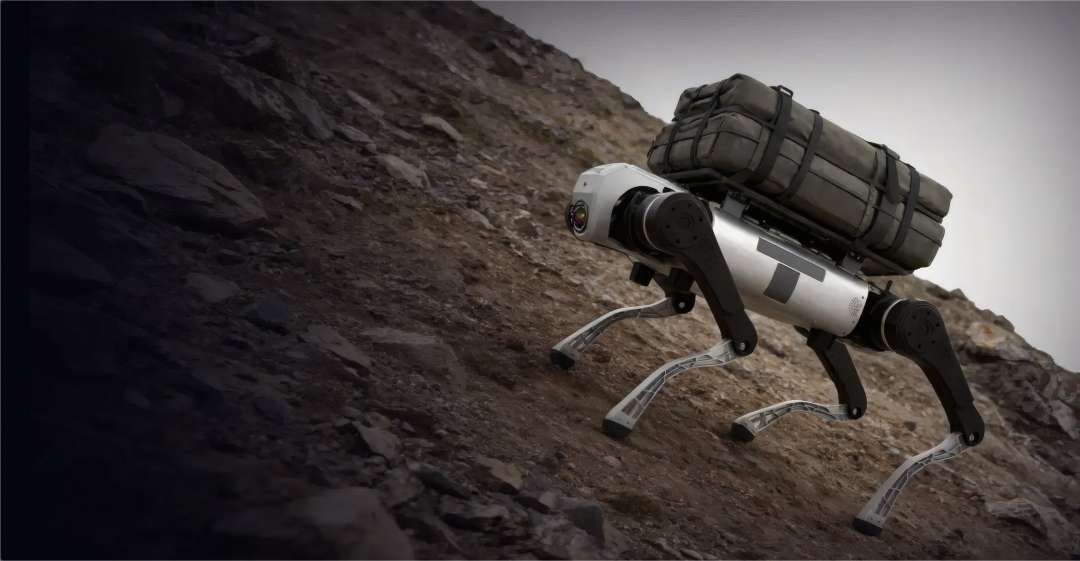
Continuous walking speed is 0–1.2 m/s, and maximum speed is 3 m/s. The maximum climbing angle is 45°, so steep terrain falls within the operating range. An example of such terrain is the rocky slope shown below.
Body, joints and protection
Construction and kinematics
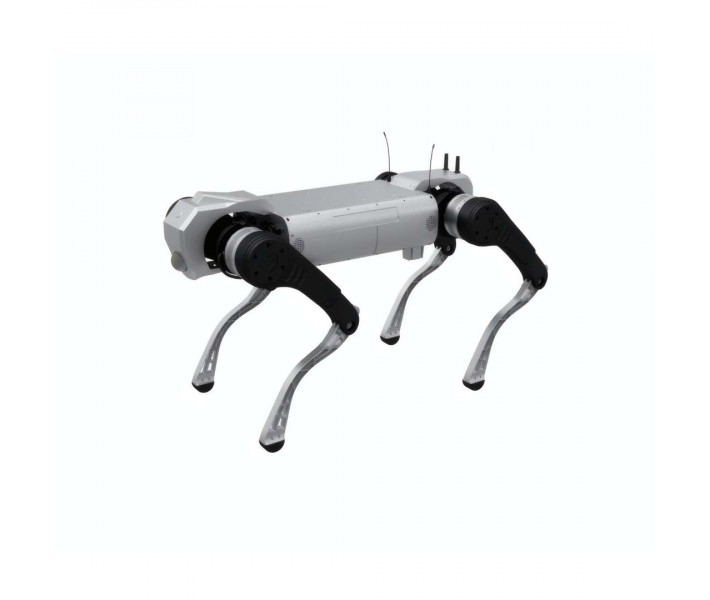
The body is made of aluminium alloy and high-strength engineering plastic. The total weight, including the battery, is 68 kg. In the standing position, the dimensions are 1230 × 530 × 730 mm. In the lying position, they are 1313 × 530 × 300 mm.
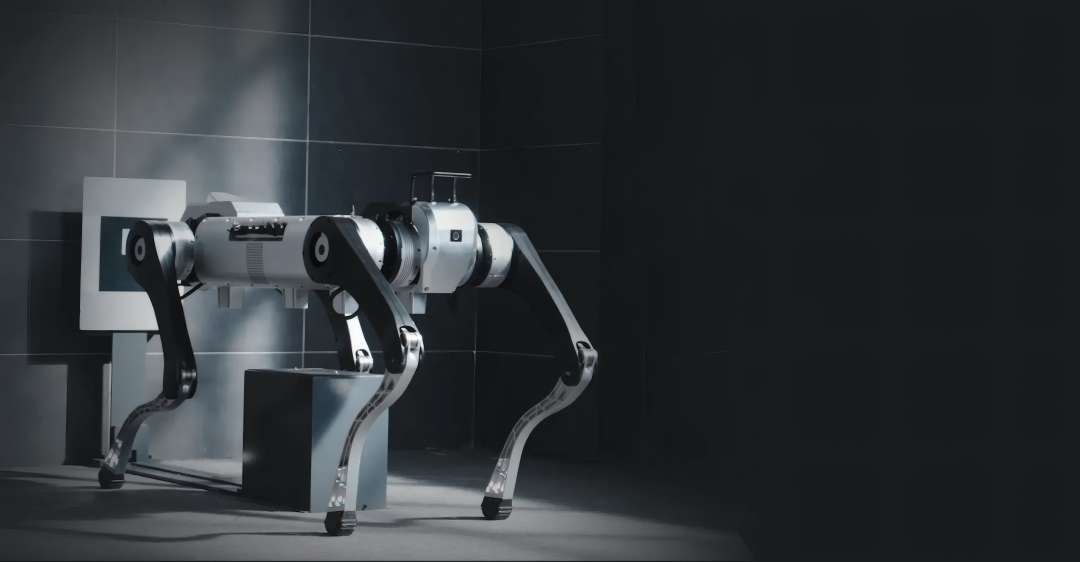
The kinematics comprise 12 degrees of freedom, three per leg. The range of motion of the body joint is from -45° to 45°. The thigh moves from -200° to 20°, and the lower leg from 30° to 160°. A general view of the body and legs indoors is shown in the picture below.
Environmental protection
The IP67 protection rating is of industrial grade. The robot operates at temperatures from -20 °C to 55 °C and in water up to 20 cm deep. Rain and wind do not disturb the stability of its operation.
Sensors and compute module
The compute module contains a GPU delivering 117 TOPS (trillions of operations per second) and an ARM/X86 processor. It processes data from the sensors listed below.
- Lidar: one front-mounted 96-channel lidar (a laser scanner of the surrounding space) with a 360° × 90° coverage angle. The detection zone diameter is up to 120 m, and the accuracy is 1.5 cm.
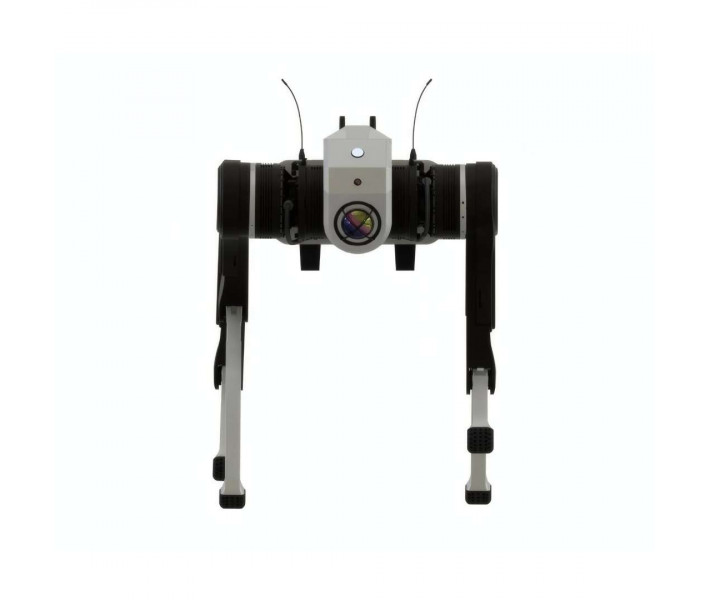
- Cameras: one industrial-grade 2 MP wide-angle camera at the front and one at the rear. Field of view: diagonal DFOV 150°, horizontal HFOV 130°, vertical VFOV 73°. Frame rate — 30 fps.
- IMU: one automotive-grade inertial measurement unit that records the attitude of the body.
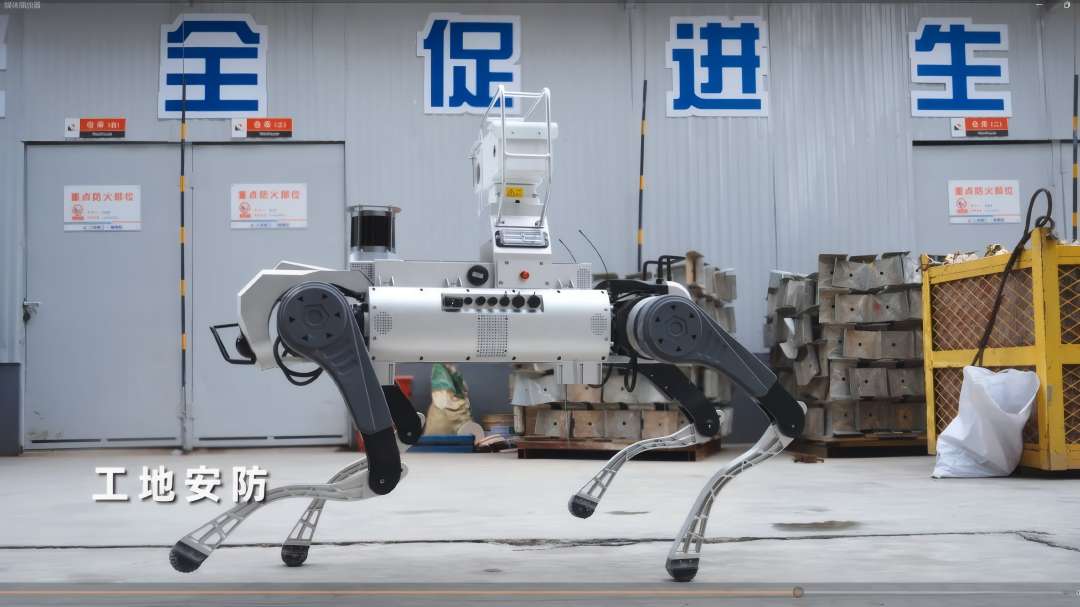
The sensor suite covers the surroundings from several directions. A robot with a sensor unit mounted on top is shown in the picture below.
Control, software and interfaces
Control and connectivity
The remote controller has an integrated display and a manual emergency stop mode. The controller's maximum range is 500 m. Real-time video transmission is supported. Connectivity is provided by Wi-Fi and Bluetooth 5.2, and a 4G module is available as an option.
Expansion and development
The AgiBot D1 MaxPro allows secondary development and the connection of additional equipment. An SDK, communication ports and output power are provided for this purpose.
- Software development: the current SDK supports the TCP and ROS communication protocols. SDK packages are provided for X86 and ARM architectures.
- Communication ports: three Gigabit Ethernet ports, two USB 3.0 ports, one Fast Ethernet port (100 Mbit/s) and a serial port.
- Output power: 12 V, 24 V and 48 V; the maximum output power is 720 W.
Applications
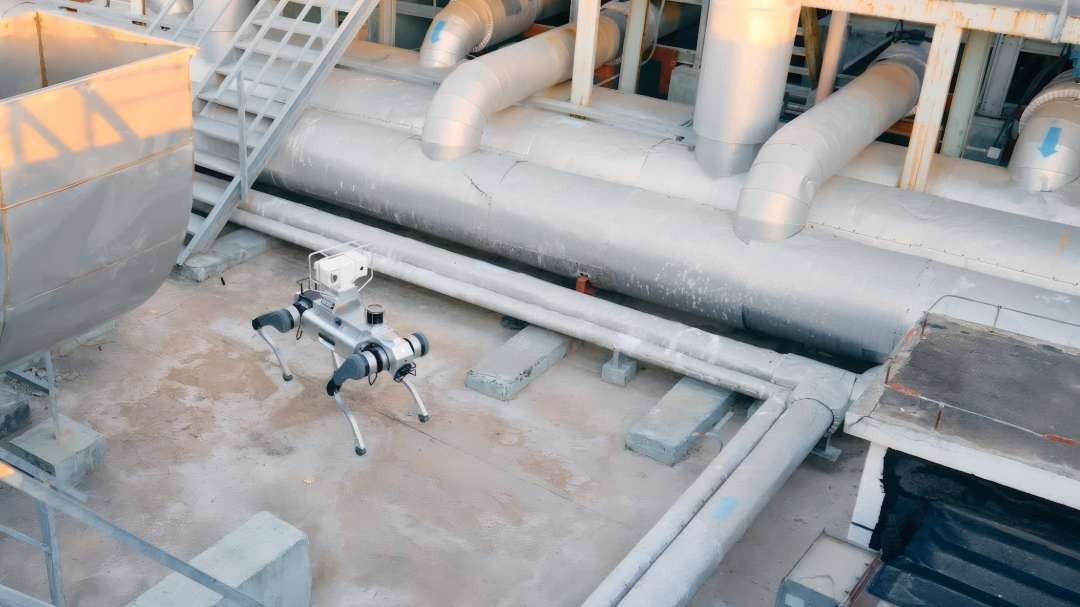
The AgiBot D1 MaxPro combines body protection and video transmission — parameters that matter for emergency and rescue tasks. In the picture below, a robot with a camera stands on a concrete surface next to industrial pipes.
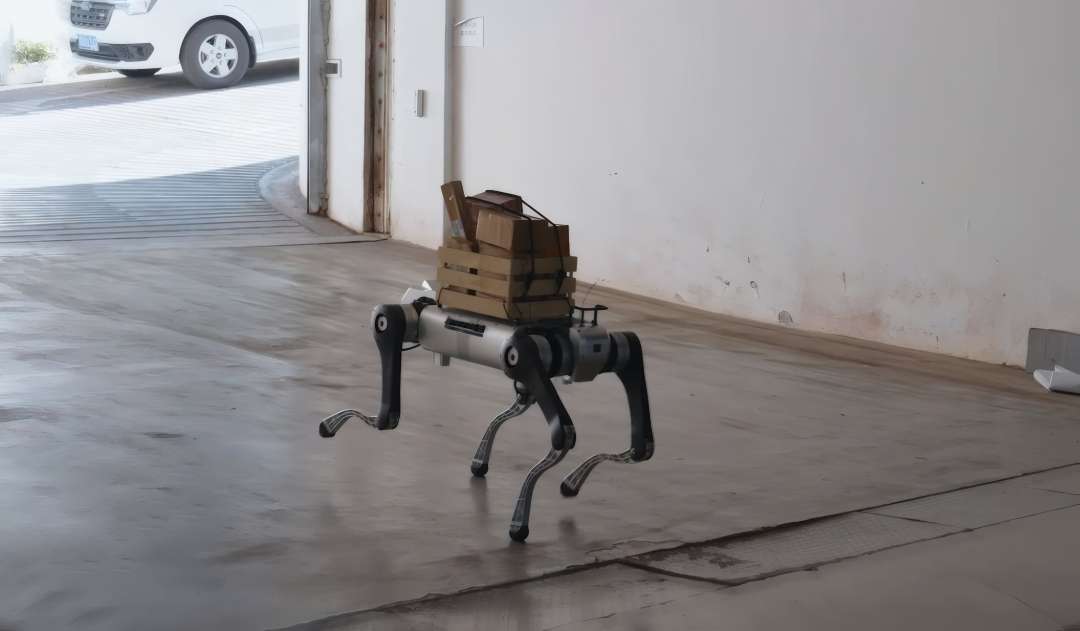
Warehouse logistics requires a stable gait with secured cargo. An example is moving parcels across a warehouse floor, shown below.
- Heavy-load operations: a continuous load of up to 50 kg covers the mounting of heavy equipment, while four legs with 12 degrees of freedom hold it steady during movement.
- Logistics and transport: the robot carries cargo through a warehouse and up stairs: its legs negotiate steps up to 30 cm, so the route is not limited to a flat floor.
- Emergency and rescue operations: the body operates in rain and in water up to 20 cm deep. Real-time video transmission and a controller with a range of up to 500 m support remote control.
- Industrial stairs and inter-floor routes: the robot negotiates stairs with open risers and gets back up on its own after a fall.
- Application development: the current SDK with TCP and ROS protocols and output power of up to 720 W allow the integration of custom software and additional equipment.
What's in the box?
- AgiBot D1 MaxPro quadruped robot with battery
- Adapter
- Battery charging connector
- Remote controller with an integrated display
Technical specifications
Basic information
| Parameter | Value |
| Material | Aluminium alloy + high-strength engineering plastic |
| Dimensions, standing position (L×W×H) | 1230 × 530 × 730 mm |
| Dimensions, lying position (L×W×H) | 1313 × 530 × 300 mm |
| Total weight (including battery) | 68 kg |
| Degrees of freedom | 12 degrees of freedom in total, 3 degrees of freedom per leg |
| Operating temperature | -20 °C to 55 °C |
| Protection rating | IP67 |
| Compute module | GPU 117 TOPS, CPU ARM/X86 |
| Battery | Rated capacity 45 Ah, voltage 48 V ± 2 V |
| Charging time | 4.5 h (charging from 10% to 90%) |
| Operating time | 5.5 h (no load); from 2 h with a 20 kg load |
| Range | 10 km (no load) |
Performance characteristics
| Parameter | Value |
| Continuous walking speed | 0–1.2 m/s |
| Maximum speed | 3 m/s |
| Rated payload | 50 kg |
| Stair height during continuous climbing | 30 cm |
| Maximum climbing angle | 45° |
Joint parameters
| Parameter | Value |
| Maximum joint torque | 300 N·m (limited by software to 180 N·m) |
| Joint range of motion (body) | -45° to 45° |
| Joint range of motion (thigh) | -200° to 20° |
| Joint range of motion (lower leg) | 30° to 160° |
Sensor units
| Parameter | Value |
| Lidar | One front-mounted 96-channel lidar with a 360° × 90° coverage angle, a detection zone diameter of up to 120 m and an accuracy of 1.5 cm |
| Wide-angle camera | One wide-angle camera each at the front and rear, industrial-grade 2 MP, field of view: DFOV 150°, HFOV 130°, VFOV 73°, frame rate 30 fps |
| IMU | 1 × automotive-grade IMU |
Feature list
| Parameter | Value |
| Standard movements | Standing position, lying position, damping, force-based unloading; stair climbing, obstacle crossing |
| Real-time video transmission | Supported |
| Secondary development | The current SDK supports the TCP and ROS communication protocols; SDK packages are provided for X86 and ARM architectures |
| Connectivity | Wi-Fi and Bluetooth 5.2 support; optional 4G module |
| Expansion interfaces | Communication interfaces: 3 Gigabit Ethernet ports, 2 USB 3.0 ports, 1 Fast Ethernet port (100 Mbit/s) and a serial port; power output interfaces: 12 V, 24 V, 48 V, maximum output power 720 W; direct connection to the battery for charging is supported |
Accessories
| Parameter | Value |
| Adapter | Standard |
| Battery charging connector | Standard |
| Remote controller | Remote controller with an integrated display, equipped with a manual emergency stop mode, maximum range 500 m |
| Autonomous charging station | Optional |
Why buy the AgiBot D1 MaxPro from EXPERT3D?
EXPERT3D has supplied professional 3D equipment since 2012. Our specialists provide pre-purchase consultations and help you choose an AgiBot D1 MaxPro configuration for your tasks. The consultation covers load, operating conditions and interfaces. We deliver throughout Spain and the EU countries. After purchase, we provide service support. Order spare parts and consumables on the website: we will promptly deliver everything so that your equipment does not stand idle.