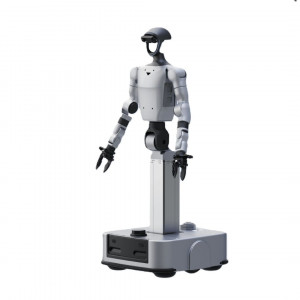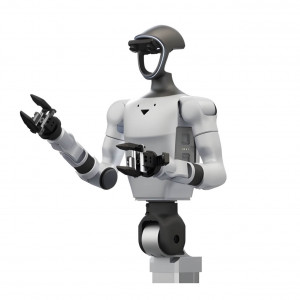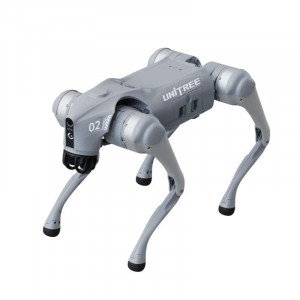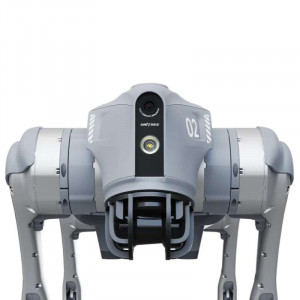


- Stock: In Stock
- Product code: 00-00013727
- Weight Brutto: 35.00kg

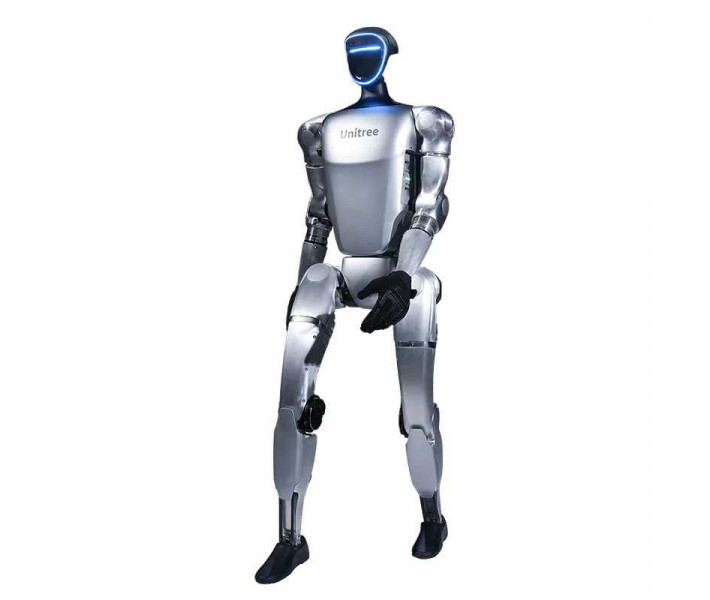
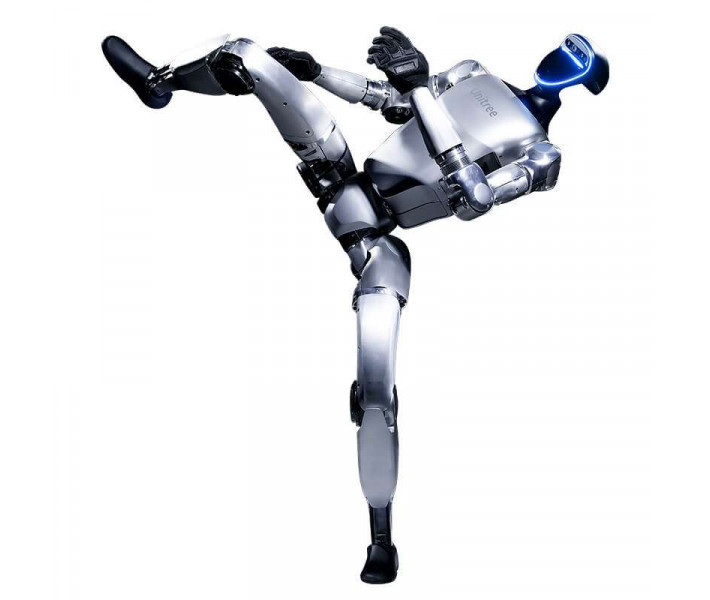
The Unitree G1 Edu Standard-U1 is a compact humanoid robot engineered for advanced artificial intelligence research and educational robotics, featuring 23 degrees of freedom, a maximum knee joint torque of 90 N·m, and an NVIDIA Jetson Orin module delivering 100 TOPS of AI computing power. Weighing approximately 35 kg with a foldable footprint of 690×450×300 mm, it provides a direct path from simulation-based policy design to real-world hardware validation.
| Key specifications | |
|---|---|
| Total degrees of freedom | 23 |
| Max knee joint torque | 90 N·m |
| Embedded AI compute | NVIDIA Jetson Orin 100 TOPS |
| Battery runtime | Approximately 2 h |
Capabilities of the Unitree G1 Edu Standard-U1
Unrestricted range of motion
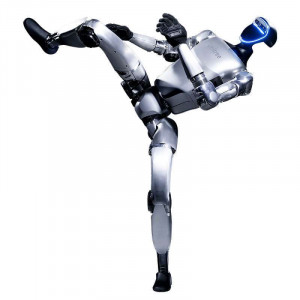
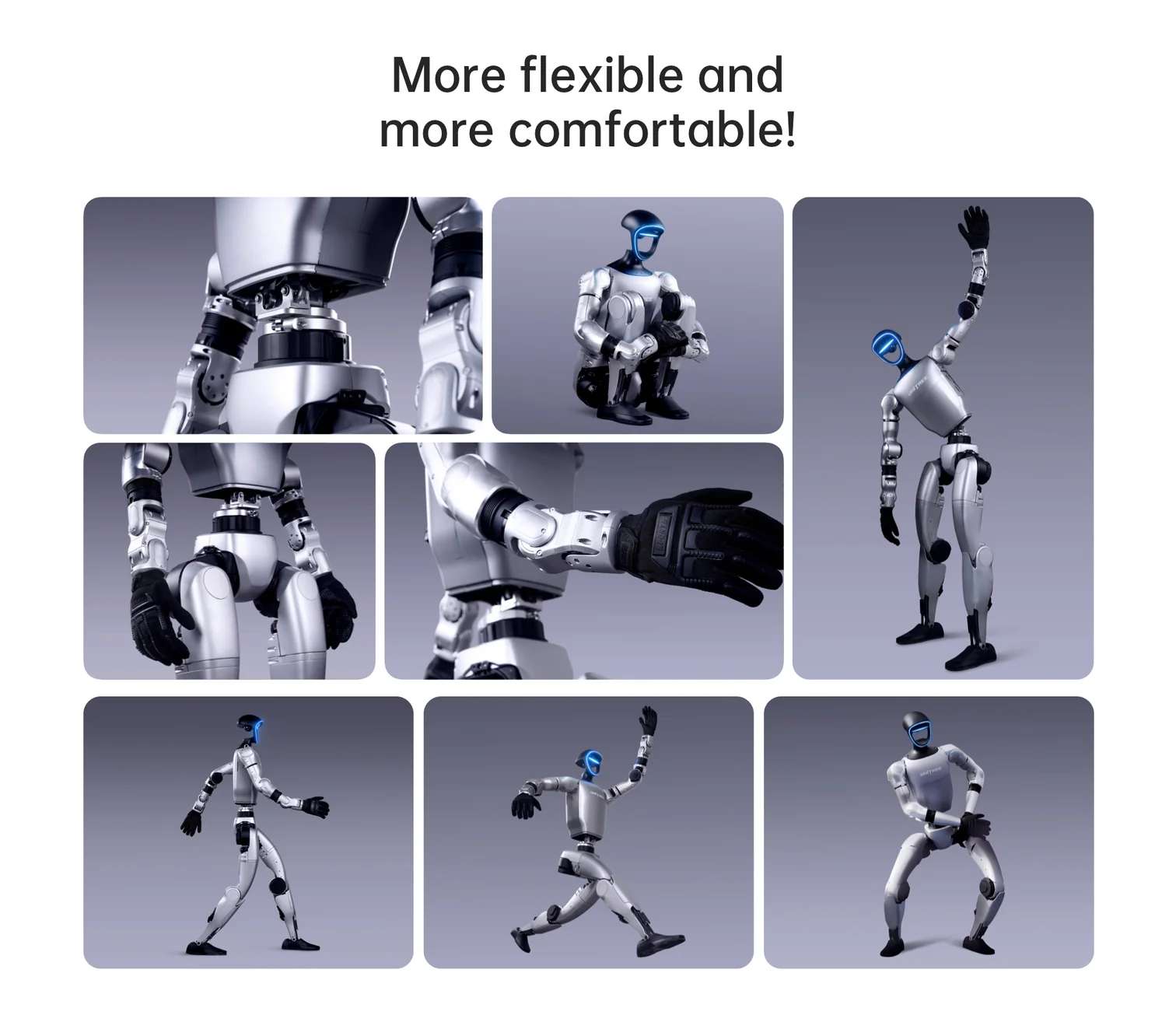
With 6 degrees of freedom per leg, 5 per arm, and 1 at the waist, the G1 Edu executes movement sequences that exceed conventional human kinematic limits. The knee joint sustains up to 90 N·m of torque via a high-speed, low-inertia internal-rotor PMSM motor, enabling rapid fall recovery, locomotion across uneven terrain, and dynamic manoeuvres that serve as a test bench for reinforcement learning control policies. Industrial-grade cross-roller bearings at every joint sustain mechanical precision across intensive operating cycles.
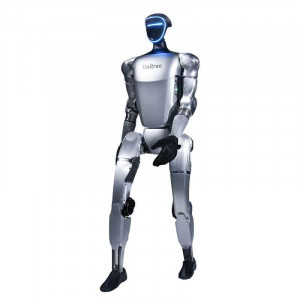
The image below shows the robot in its upright stance, highlighting the distribution of all 23 degrees of freedom across the full kinematic chain.
Edge AI processing
The computational core pairs a high-performance 8-core CPU for real-time motion control with the NVIDIA Jetson Orin module at 100 TOPS for deep learning inference. This hybrid architecture allows simultaneous execution of locomotion control and perception models, including those built on UnifoLM — Unitree's unified robot foundation model, compatible with both imitation learning and reinforcement learning workflows.
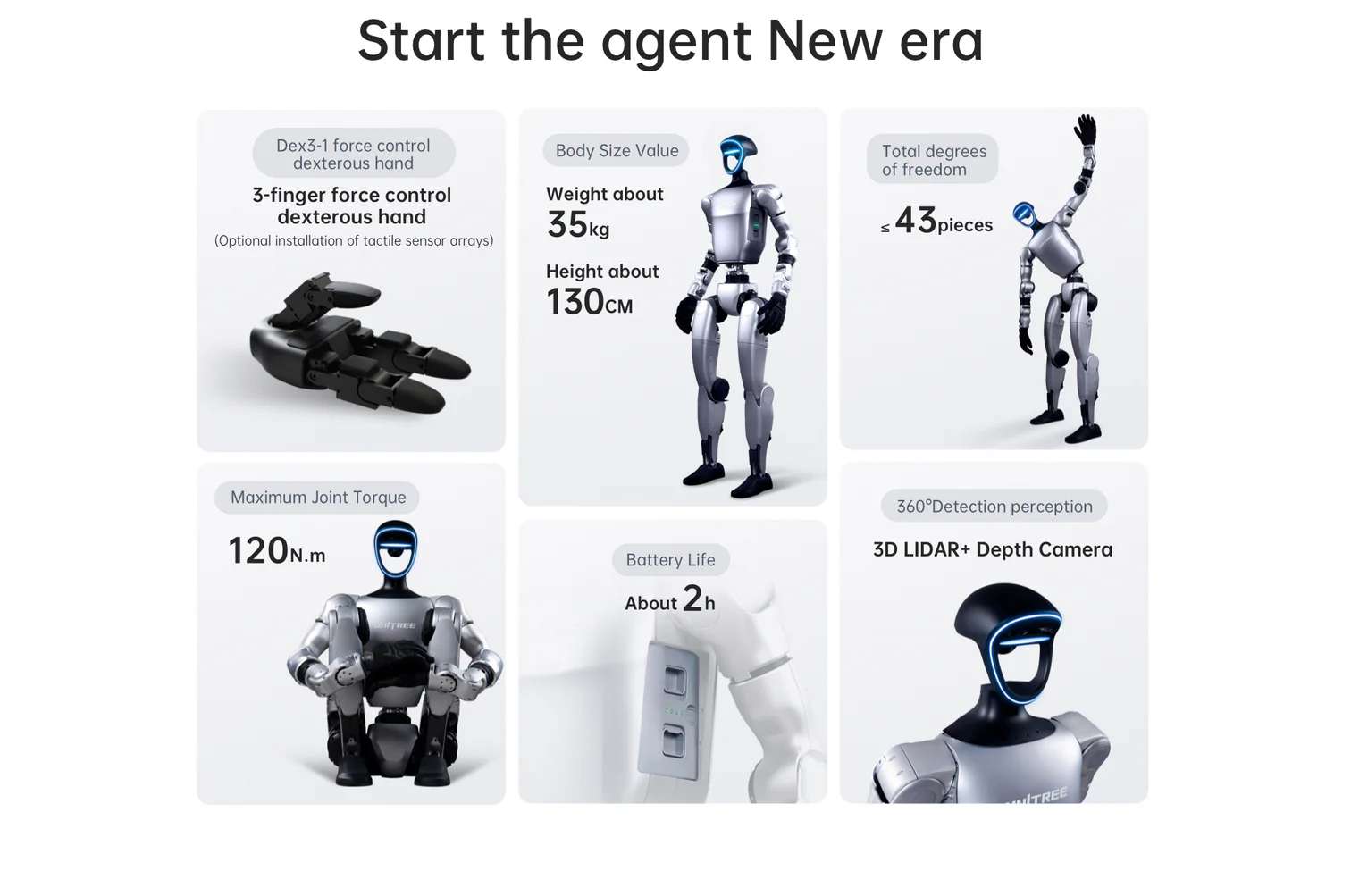
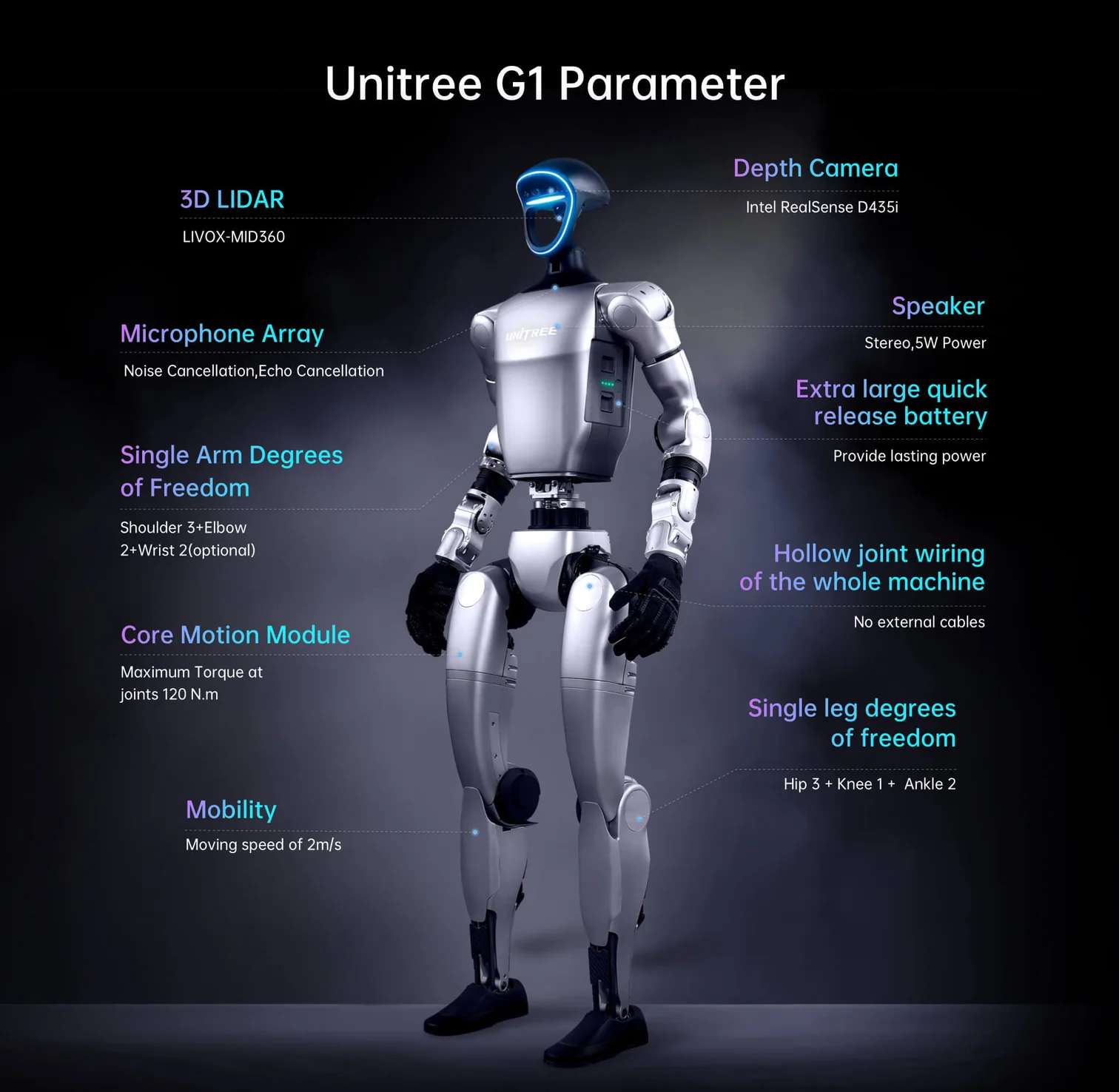
The sensor suite integrates a depth camera and a 3D LiDAR, delivering high-fidelity spatial perception for autonomous navigation and object interaction. A 4-microphone array and a 5 W speaker enable voice-based human-robot interaction. WiFi 6 and Bluetooth 5.2 connectivity ensures low-latency data transmission for research pipelines.
The image below illustrates the sensor integration and embedded compute logic of the G1 Edu Standard-U1, with the depth camera and LiDAR module clearly visible.
Portable and robust construction
The integrated folding mechanism compresses the robot's height from 1320 mm to 690 mm, enabling transport in a standard vehicle and storage in confined lab spaces. A high-strength aluminium alloy skeleton combined with engineering plastics holds the overall weight with battery to approximately 35 kg. All wiring runs internally through hollow joint routing, eliminating exposed cables that could catch during dynamic trials. The local air cooling system manages thermal output during extended training sessions without requiring external cooling infrastructure.
Technical specifications of the Unitree G1 Edu Standard-U1
Physical dimensions and weight
| Dimensions standing (H×W×D) | 1320×450×200 mm |
|---|---|
| Dimensions folded (H×W×D) | 690×450×300 mm |
| Weight (with battery) | Approximately 35 kg |
Degrees of freedom
| Total degrees of freedom | 23 |
|---|---|
| DoF per leg | 6 |
| Waist DoF | 1 |
| DoF per arm | 5 |
| DoF per hand | — (none) |
Mechanical performance and joints
The technical diagram below provides a structural overview of the G1 Edu Standard-U1, detailing the joint configuration and motion range data for the hip, knee, and waist axes.
| Joint output bearing | Industrial-grade cross-roller bearings (high precision, high load capacity) |
|---|---|
| Joint motor | High-speed, low-inertia internal-rotor PMSM |
| Max knee joint torque | 90 N·m |
| Max arm payload | Approximately 2 kg |
| Calf + thigh length | 0.6 m |
| Arm span | Approximately 0.45 m |
| Waist joint range | Z±155° |
| Knee joint range | 0~165° |
| Hip joint range | P±154°, R-30~+170°, Y±158° |
Electronics, computing and sensors
| Full-joint hollow electrical routing | Yes |
|---|---|
| Joint encoder | Dual encoder |
| Cooling system | Local air cooling |
| Basic computing power | 8-core high-performance CPU |
| High-power computing module | NVIDIA Jetson Orin 100 TOPS |
| Detection sensors | Depth camera + 3D LiDAR |
| Audio — microphone | 4-microphone array |
| Audio — speaker | 5 W |
| Wireless connectivity | WiFi 6, Bluetooth 5.2 |
Power
| Battery type | 13-cell lithium battery (13S) |
|---|---|
| Battery capacity | 9000 mAh (quick release) |
| Charger | 54 V 5 A |
| Battery runtime | Approximately 2 h |
Support and warranty
| Manual remote control | Yes |
|---|---|
| Smart OTA update | Yes |
| Secondary development | Yes |
| Protective support stand | Yes |
| Warranty | 12 months |
| Technical support | Yes (comprehensive development manuals and ecosystem support) |
What's in the box
- Unitree G1 Edu Standard-U1 humanoid robot
- 13S lithium battery — 9000 mAh with quick-release mechanism
- 54 V 5 A charger
- Manual remote control
- Protective support stand
- Development manuals and complete technical documentation
Why choose EXPERT3D?
EXPERT3D has been advising researchers, engineers, and educational institutions on advanced technology since 2012. We go well beyond the transaction: our team delivers personalised technical guidance to ensure every organisation selects the robotic platform that best matches its research objectives. Expert support is available before, during, and after purchase — ensuring a smooth integration and continued assistance throughout the entire operational life of the equipment.