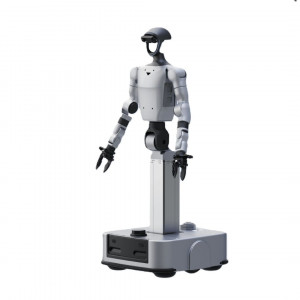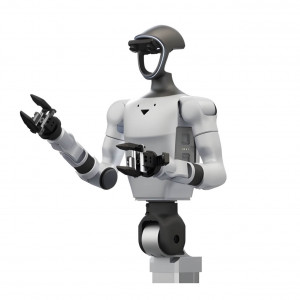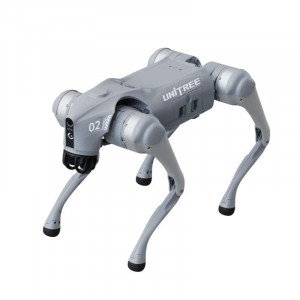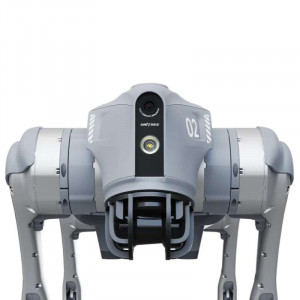


- Stock: In Stock
- Product code: RB-G1-U7-EDU
- Weight Brutto: 65.00kg

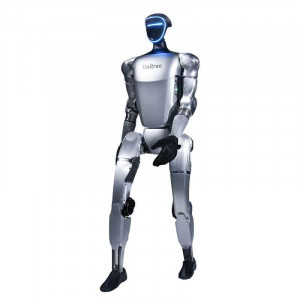
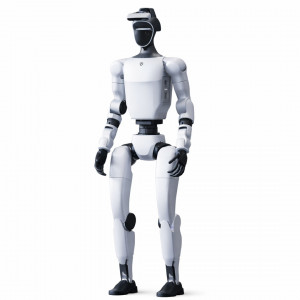
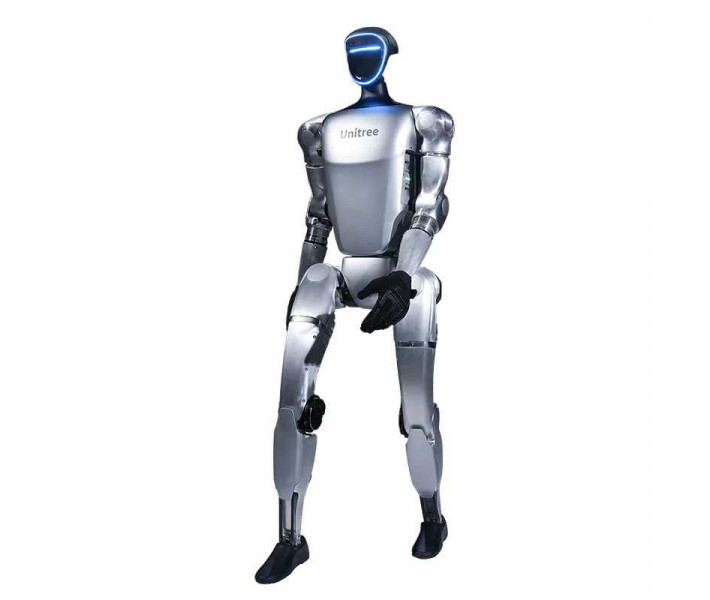
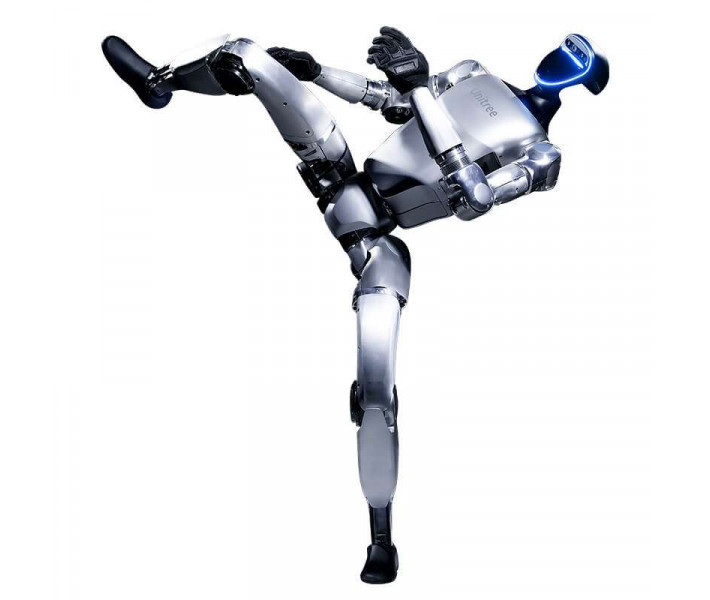
The UNITREE G1-U7 EDU is a full-size humanoid robot designed for academic research, industrial automation, and advanced AI development, standing 1,270 mm tall and weighing approximately 35 kg. Forty-one degrees of articulated freedom — anchored by Revo 2 Basic five-finger dexterous hands, driven by low-inertia PMSM joint motors, and backed by an NVIDIA Jetson Orin compute module — combine with a LIVOX-MID360 360° 3D LiDAR and Intel RealSense D435i depth camera to form a research-grade bipedal platform built for precise real-world manipulation and autonomous navigation tasks.
The overview below illustrates the G1-U7 EDU's core performance pillars at a glance — from its anthropomorphic hand architecture to peak joint torque, body dimensions, and 360° sensing capabilities.
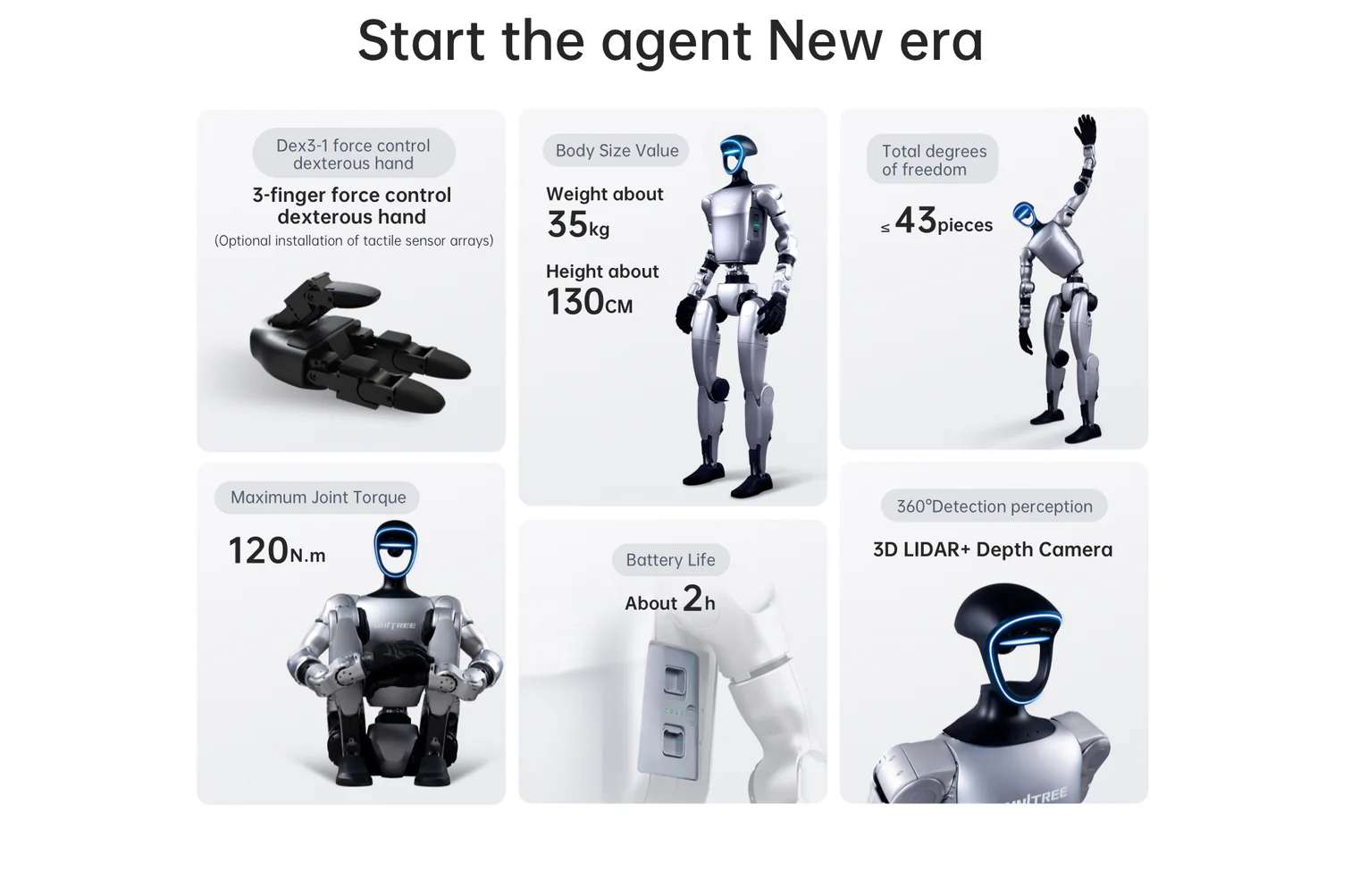
| Total Degrees of Freedom | 41 |
|---|---|
| Maximum Knee Joint Torque | 90 N·m |
| High-Performance Computing Module | NVIDIA Jetson Orin |
| Battery Life | ~2 h |
Key Features of the UNITREE G1-U7 EDU
41-Axis Articulation with Revo 2 Basic Five-Finger Hands
With a total of 41 degrees of freedom distributed across its legs, waist, arms, and hands, the G1-U7 EDU surpasses the kinematic reach of standard G1 configurations. Each leg delivers 6 DOF — Hip 3 + Knee 1 + Ankle 2 — enabling natural bipedal gait patterns, stair negotiation, crouching, and dynamic balance recovery. The single arm contributes 5 DOF (Shoulder 3 + Elbow 2), with optional wrist extensions adding 2 further axes for fine-positioning tasks. The waist provides 1 rotational axis at ±155° for trunk twist.
The defining hardware of this U7 variant is the pair of Revo 2 Basic five-finger dexterous hands — the same class of end-effector used in advanced manipulation research. These high-dexterity hands allow the robot to interact with tools, instruments, and everyday objects within the same spatial envelope as a human operator, without requiring task-specific tooling or fixture changes.
- 41 total degrees of articulated freedom, including dual Revo 2 Basic five-finger hands
- Low-inertia high-speed internal rotor PMSM motors for rapid, accurate torque delivery
- Industrial-grade crossed roller bearings in every joint for high precision under sustained load
- Full hollow joint electrical routing across the entire body — no external cable bundles
- Dual encoder feedback per joint for precise position and velocity control loops
- Force-position hybrid control enabling compliant, contact-aware bimanual manipulation
- Locomotion speed of 2 m/s — matching a brisk human walking pace
Joint Range of Motion Beyond the Human Envelope
The G1-U7 EDU's kinematic ranges are tuned for tasks that demand postures well outside the comfortable human operating window. The knee joint flexes from fully extended at 0° to a deep 165° bend — sufficient for floor-level retrieval tasks. The hip achieves ±154° in pitch, -30° to +170° in roll, and ±158° in yaw. These ranges permit crouching into confined spaces, side-stepping, and executing assembly operations at floor level where conventional fixed-arm industrial robots cannot reach.
Intelligence, Perception, and Computing
360° Environmental Awareness: LIVOX-MID360 and Intel RealSense D435i
Environmental perception on the G1-U7 EDU is handled by two complementary sensor systems operating in parallel. The LIVOX-MID360 3D LiDAR provides full 360° horizontal spatial coverage with no dead zones — critical for safe navigation in unstructured environments, dynamic obstacle avoidance, and SLAM-based mapping during autonomous operation.
Working in tandem, the Intel RealSense D435i depth camera supplies high-resolution per-pixel depth data across the robot's forward visual field. Together, these two modalities feed the onboard compute pipeline with redundant spatial information: the LiDAR handles macro-scale environmental geometry while the depth camera resolves the close-range object detail needed for grasp planning and fine manipulation. The 4-microphone array — with both noise cancellation and echo cancellation — additionally enables voice command integration and acoustic localisation in real operational settings.
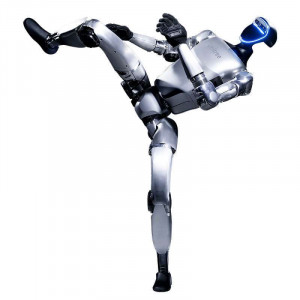
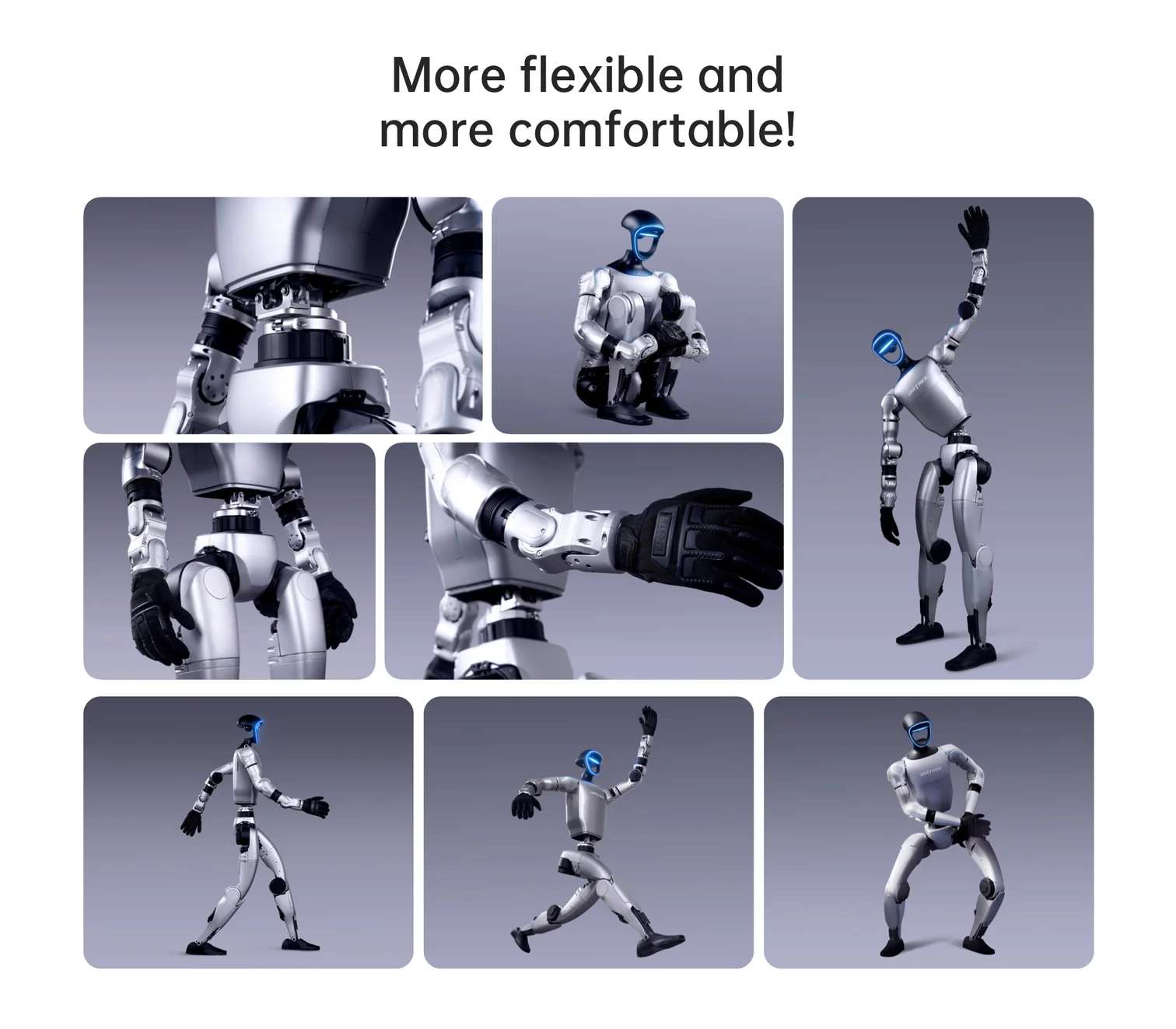
The image below captures the full range of dynamic postures the G1-U7 EDU can sustain — from a low crouch and a forward run to lateral balance stances — demonstrating the mechanical compliance made possible by its 41-axis architecture.
NVIDIA Jetson Orin: Research-Grade Onboard AI Computing
The EDU variant of the G1-U7 ships with the NVIDIA Jetson Orin high-performance computing module as standard equipment — the same compute platform deployed in autonomous vehicles, edge AI inference systems, and cutting-edge manipulation research laboratories worldwide. This module sustains the computational workloads that matter most in academic settings: real-time neural network inference for imitation learning policies, reinforcement learning rollout at full locomotion speed, and simultaneous sensor fusion from the LiDAR and depth camera data streams.
The secondary development framework is fully open on the EDU variant. Research teams can deploy custom locomotion policies, whole-body manipulation planners, and perception pipelines directly to the hardware, with a clean architectural separation between the 8-core high-performance CPU (real-time motion control) and the Jetson Orin module (AI inference). OTA firmware updates keep the base platform current without interrupting ongoing research programs.
Applications
The UNITREE G1-U7 EDU addresses environments where robotic capability must closely match or exceed human dexterity. Its bimanual Revo 2 Basic hands, open development platform, and SLAM-capable sensor suite make it deployable across a broad spectrum of professional domains.
- AI and robotics research: locomotion algorithms, whole-body control, and bimanual manipulation
- Imitation learning and reinforcement learning studies using the open secondary development API
- Industrial automation pilots: palletizing, assembly line support, welding assistance, and visual inspection
- Human-robot interaction research requiring a full anthropomorphic form factor
- University and engineering school robotics programmes needing a comprehensive research platform
- Ergonomics and human motion simulation for workspace and product design validation
The annotated technical diagram below identifies all major sensor positions, joint architecture elements, computing module location, hollow wiring topology, and performance parameters of the G1-U7 EDU in a single reference view.
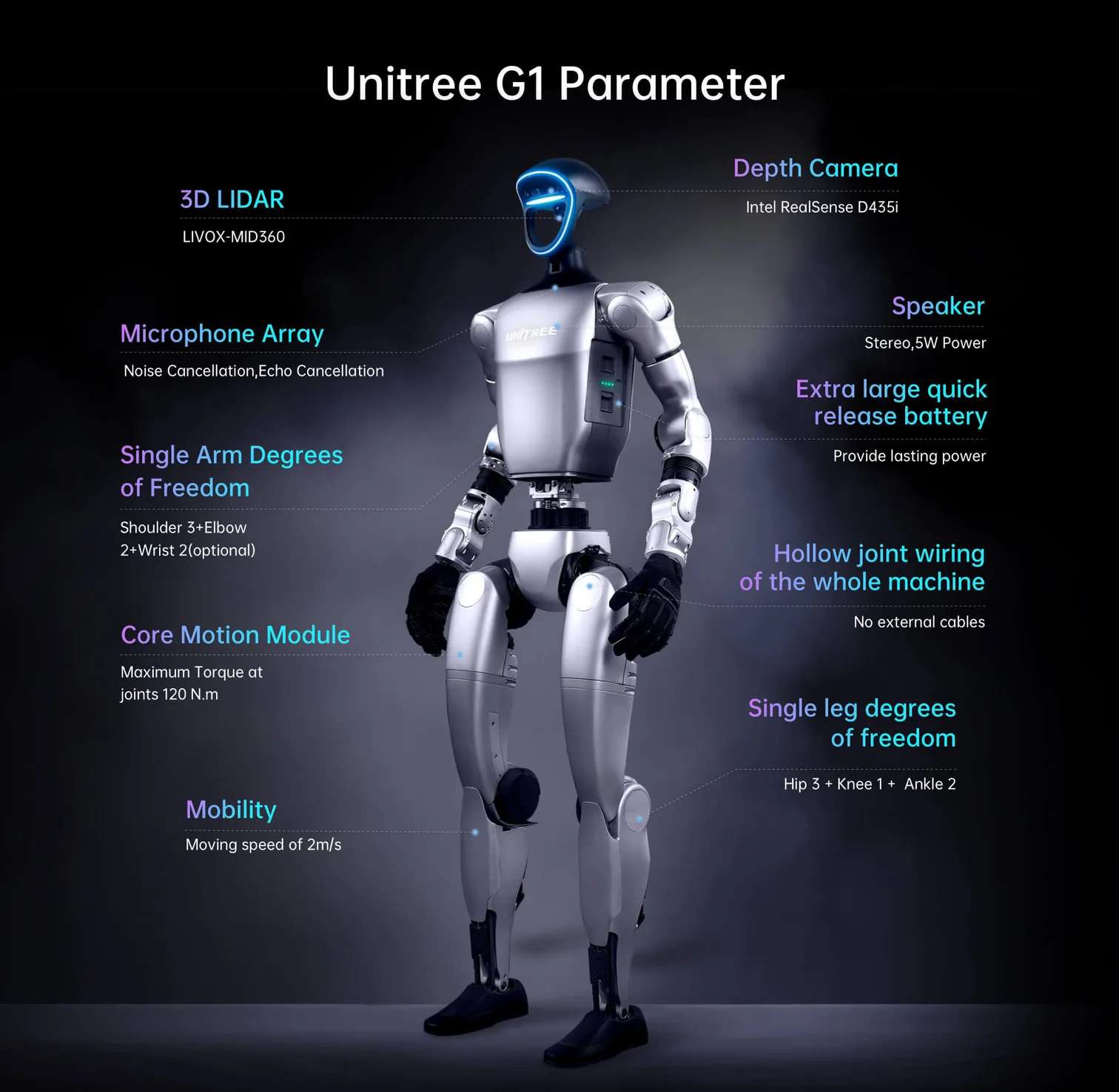
Technical Specifications of the UNITREE G1-U7 EDU
Physical Dimensions
| Height × Width × Depth (standing) | 1270 × 450 × 200 mm |
|---|---|
| Height × Width × Depth (folded) | 690 × 450 × 300 mm |
| Weight (with battery) | ~35 kg |
| Leg length (calf + thigh) | 0.6 m |
| Arm span | ~0.45 m |
| Locomotion speed | 2 m/s |
Kinematics & Degrees of Freedom
| Total degrees of freedom | 41 |
|---|---|
| Single leg DOF | 6 (Hip 3 + Knee 1 + Ankle 2) |
| Waist DOF | 1 |
| Single arm DOF | 5 (Shoulder 3 + Elbow 2) |
| Single hand | Revo 2 Basic (5-finger dexterous hand) |
| Maximum knee joint torque | 90 N·m |
| Arm maximum payload | 2 kg |
Joint Range of Motion
| Waist joint — Z axis | ±155° |
|---|---|
| Knee joint | 0° ~ 165° |
| Hip joint — Pitch | ±154° |
| Hip joint — Roll | -30° ~ +170° |
| Hip joint — Yaw | ±158° |
Joint Technology
| Joint output bearing | Industrial grade crossed roller bearings (high precision, high load capacity) |
|---|---|
| Joint motor | Low inertia high-speed internal rotor PMSM (permanent magnet synchronous motor) |
| Full joint hollow electrical routing | Yes |
| Joint encoder | Dual encoder |
| Cooling system | Local air cooling |
Computing & Power
| Basic computing unit | 8-core high-performance CPU |
|---|---|
| High-performance computing module | NVIDIA Jetson Orin |
| Power supply | 13-string lithium battery |
| Battery capacity | 9,000 mAh (quick-release) |
| Charger | 54 V, 5 A |
| Battery life | ~2 h |
Sensing & Perception
| 3D LiDAR | LIVOX-MID360 |
|---|---|
| Depth camera | Intel RealSense D435i |
| Microphone array | 4-mic array (noise cancellation, echo cancellation) |
| Speaker | 5 W stereo |
Connectivity & Software
| Wireless connectivity | WiFi 6, Bluetooth 5.2 |
|---|---|
| OTA firmware updates | Supported |
| Secondary development (open API) | Yes |
Service & Warranty
| Warranty period | 2 years |
|---|
What's in the Box
- 1× UNITREE G1-U7 EDU humanoid robot body with Revo 2 Basic five-finger hands (pre-installed)
- 1× Smart battery, 9,000 mAh (quick-release format)
- 1× Charger, 54 V / 5 A
- 1× Portable manual remote controller
Why choose EXPERT3D?
EXPERT3D has been Valencia's specialist in advanced robotics and technology platforms since 2012. Our team provides direct manufacturer access, pre-sales technical consultation, and post-sales integration support for the UNITREE G1-U7 EDU — ensuring that your research programme or automation project has qualified guidance from initial acquisition through full deployment. Due to high global demand, units are dispatched in strict order of purchase; contact our team early to discuss configuration options, academic pricing, and scheduling for your order.