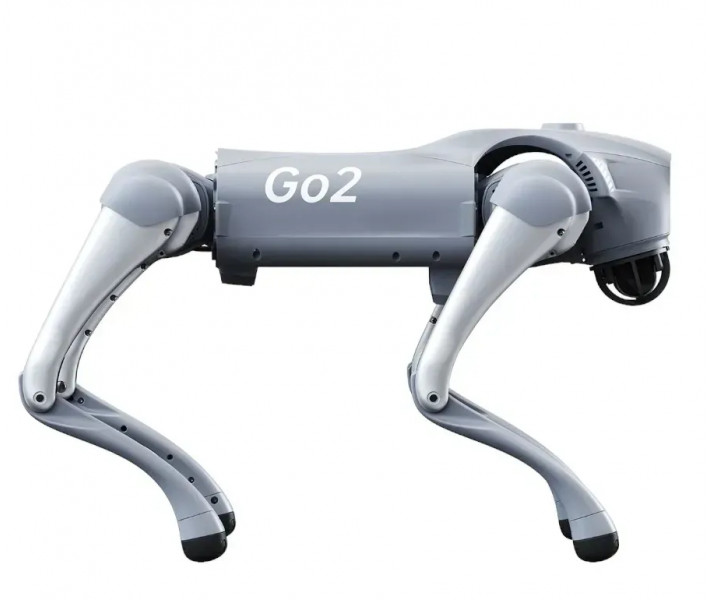


- Stock: In Stock
- Product code: GO2EDU100-01
- Weight Brutto: 35.00kg

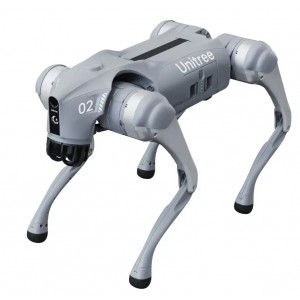
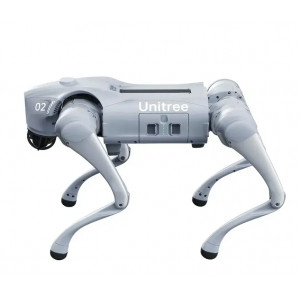
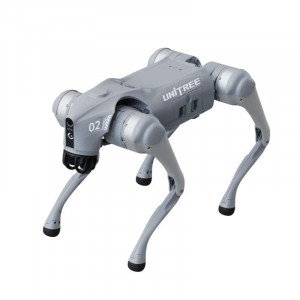
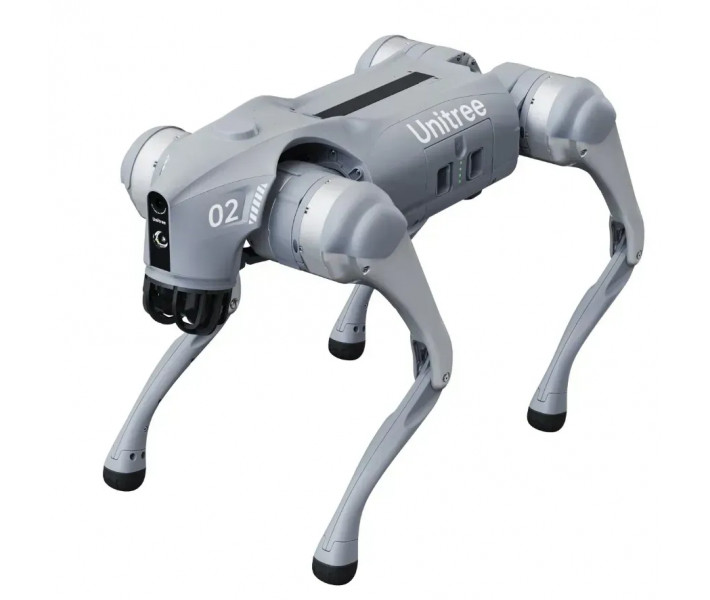
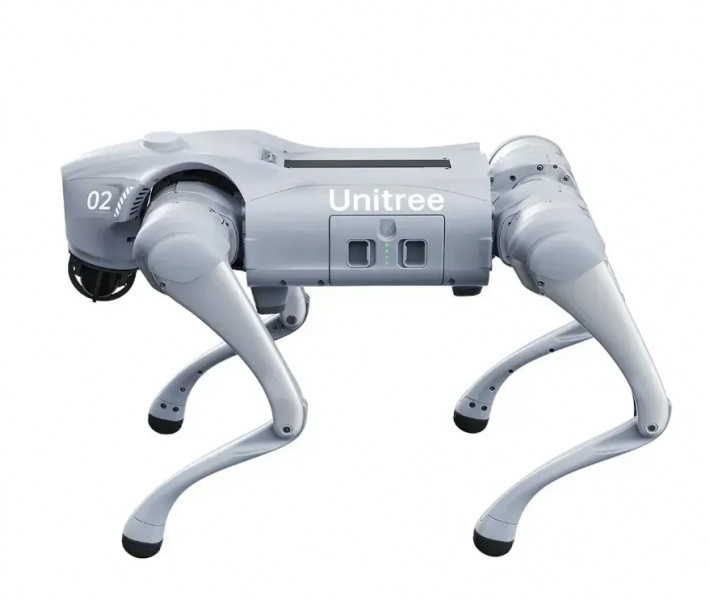
The Unitree Go2 EDU U2 is a fully programmable, open-source quadruped robot engineered for research, education, and applied AI development. Equipped with a 100 TOPS NVIDIA Jetson Orin computing module, Unitree's own 4D LiDAR L2 with 360°×96° hemispherical coverage, Intel RealSense D435i depth camera, and 12 aluminium-alloy joint motors delivering up to 45 N.m of peak torque — it reaches speeds of 5 m/s and carries payloads up to 12 kg, all on a long-endurance 15,000 mAh battery lasting 2–4 hours.
| Computing Power | 100 TOPS (NVIDIA Jetson Orin) |
|---|---|
| Max. Speed | ~5 m/s |
| Peak Joint Torque | ~45 N.m |
| Battery Life | ~2–4 h (15,000 mAh) |
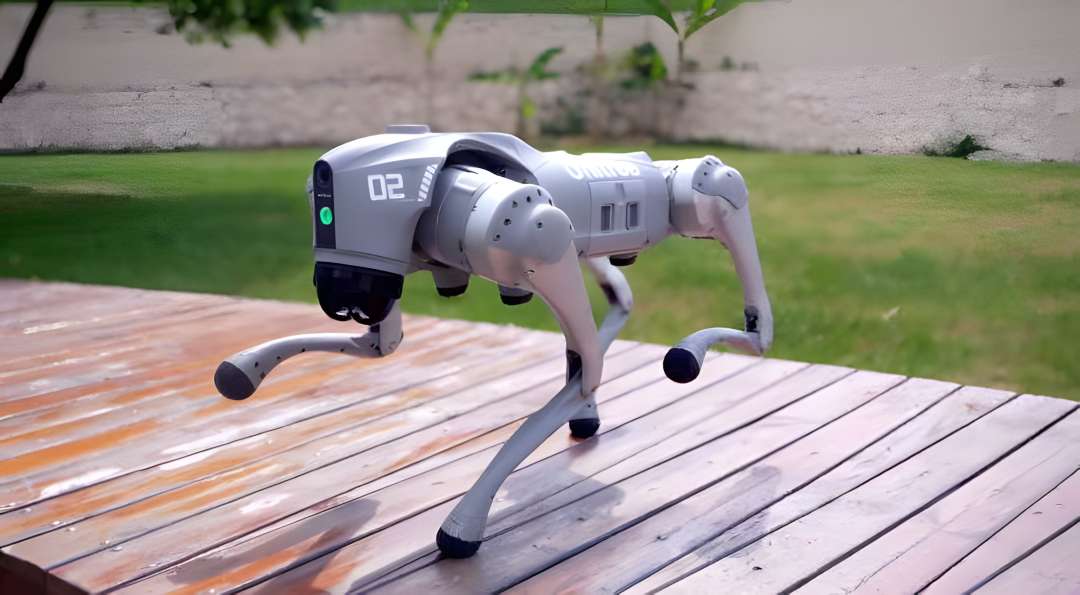
The Go2 EDU performing dynamic movement sequences outdoors — its aluminium-alloy frame and heat-pipe-cooled joints handle all-terrain locomotion without any compromise in stability.
Why the Go2 EDU Stands Apart from Other Research Robots
Most quadruped platforms force a difficult choice: raw performance or developer openness. The Go2 EDU eliminates that compromise. Full secondary development support, ROS-compatible architecture, and a 100 TOPS onboard AI processor put the same hardware used at research institutions directly in your lab — or your field site.
100 TOPS AI Compute: Real Processing at the Edge
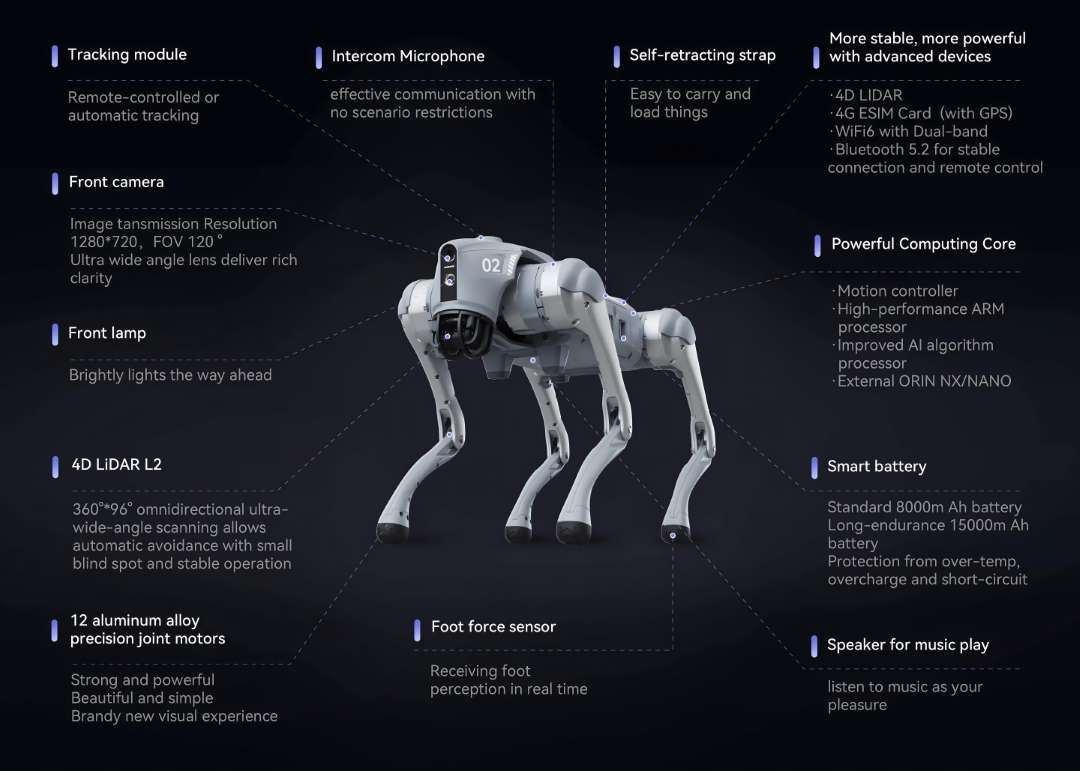
The NVIDIA Jetson Orin module inside the Go2 EDU delivers 100 TOPS of AI computing power. That figure translates directly into practical capability: real-time semantic scene understanding, autonomous path planning, and live inference of complex neural networks — all running onboard without cloud dependency. The 8-core high-performance CPU enables advanced mode, dedicated AI mode, and 3D LiDAR mapping simultaneously.
The hardware specifications infographic below illustrates how each sensor system connects to the Go2's intelligent perception stack.
4D LiDAR L2: 360° Spatial Awareness with a 0.05 m Blind-Spot Floor
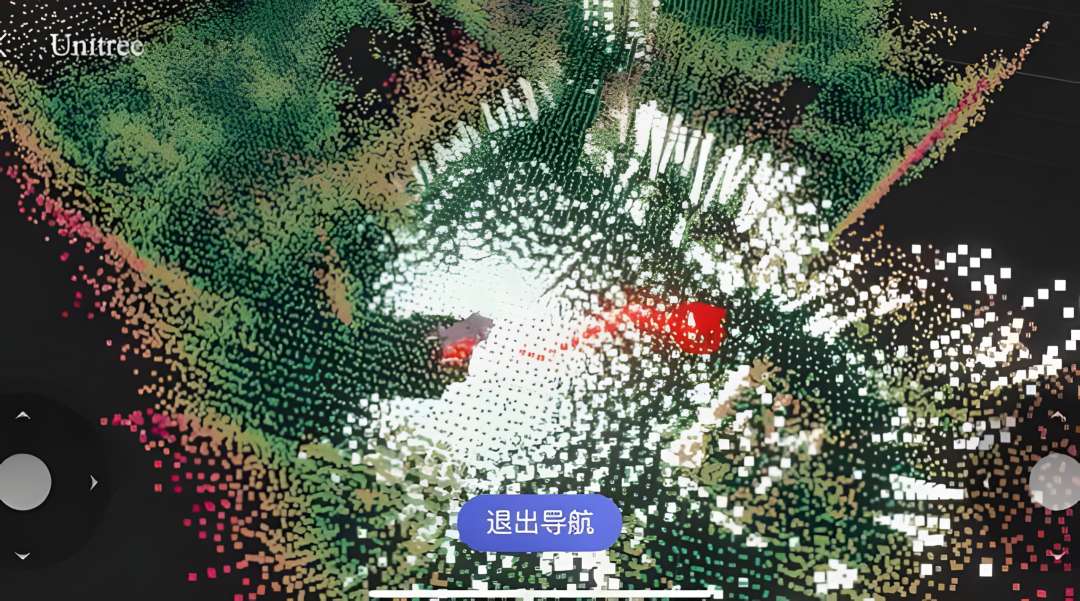
Unitree's self-developed 4D LiDAR L2 covers a full 360°×96° hemispherical field of view. The minimum detection distance is as low as 0.05 m, meaning the robot can sense obstacles at near-contact range — critical for safe operation in cluttered indoor environments or during human-robot interaction experiments. Combined with the dedicated app, you can build dense 3D point-cloud maps of entire floors or outdoor areas and then assign autonomous navigation paths.
The Unitree app's 3D mapping interface renders the LiDAR point cloud in real time, enabling path specification for fully autonomous navigation.
ISS 2.0 Intelligent Side-Follow — Not Just GPS Tracking
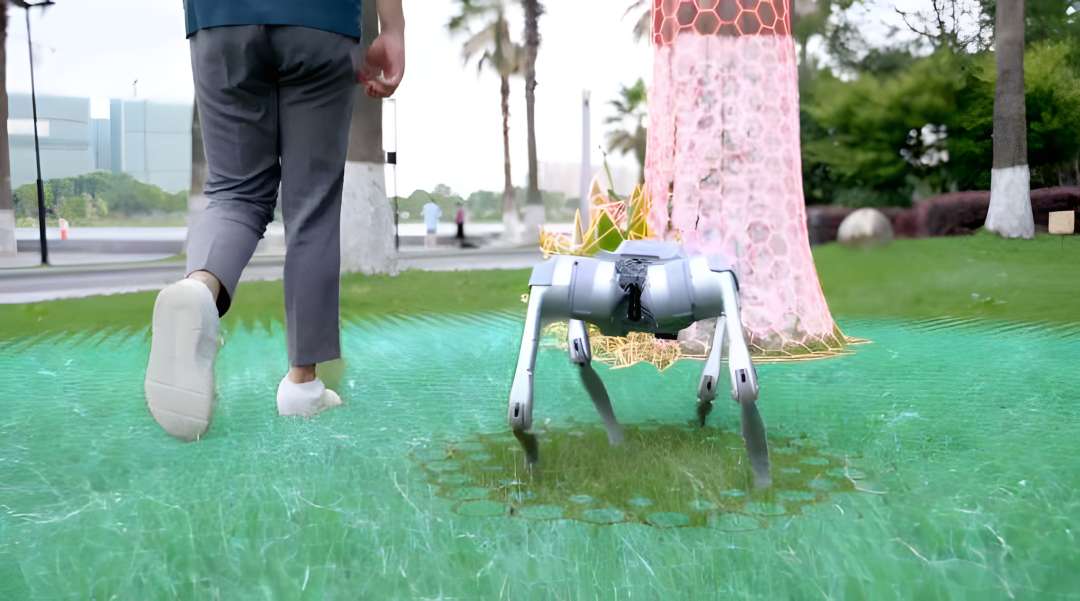
The ISS 2.0 (Intelligent Side-follow System) uses wireless vector positioning technology with a 50% improvement in positioning accuracy over the first generation and a remote control distance of over 30 m in open environments. The optimised obstacle avoidance strategy allows the robot to shadow a moving subject through complex terrain — staircases, gravel paths, grass — without manual intervention.
The image below captures ISS 2.0 in operation: Go2 EDU autonomously following a person in an outdoor setting while its LiDAR actively maps and avoids obstacles.
Joint Architecture: 45 N.m Torque with Internal Heat-Pipe Cooling
Each of the 12 aluminium-alloy joint motors uses an internal trace connecting technique that routes wiring through the joint rather than around it — eliminating external cables that could snag or wear. Heat-pipe coolers in every joint dissipate motor heat passively, extending operating time under heavy load. The result: a 45 N.m peak torque that remains available across the full joint range of motion (body: −48°~48°, thigh: −200°~90°, shank: −156°~−48°).
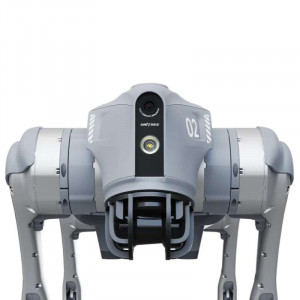
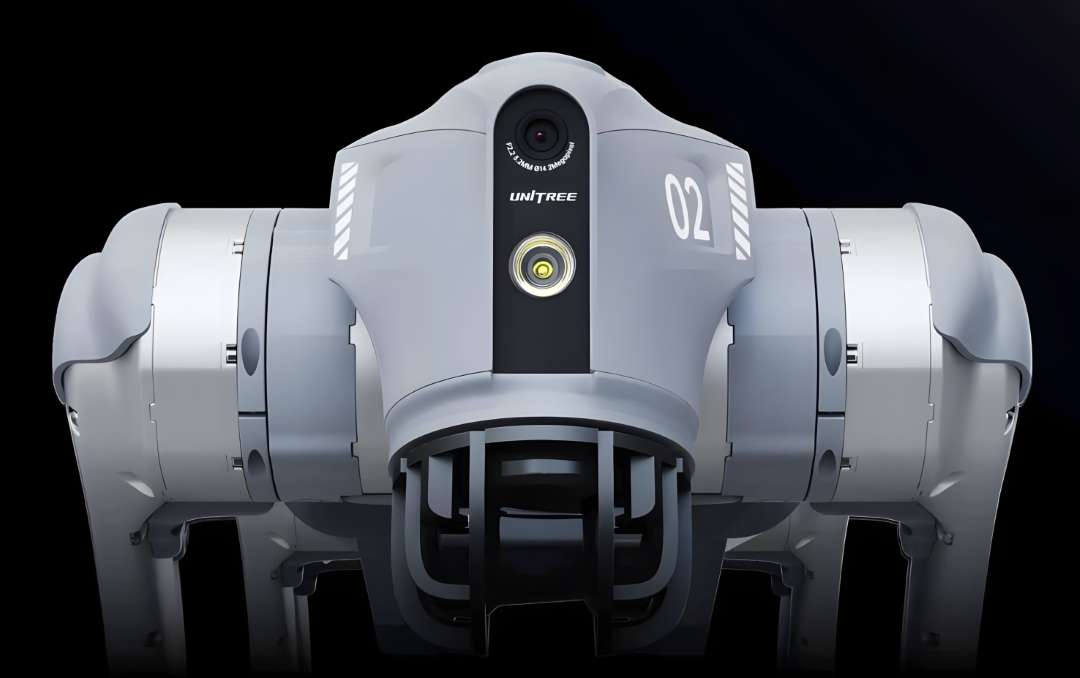
The close-up front view reveals the Go2 EDU's front camera, front lamp, and the 4D LiDAR housing — the core of its perception system.
Foot-End Force Sensors: Exclusive to the EDU Edition
Unlike the AIR, PRO, and X variants, the Go2 EDU includes foot-end force sensors — a hardware-level addition that is absent from all lower-tier models. These sensors feed ground contact data directly into the locomotion controller, enabling load distribution research, gait analysis experiments, and adaptive terrain compensation that pure LiDAR-based navigation cannot achieve alone.
Full Open-Source Secondary Development Support
The Go2 EDU ships with full secondary development capability. Researchers can access low-level motion interfaces, deploy custom ROS nodes, and build application-specific payloads. Supported development stack includes graphical programming via the app, SDK access for Python and C++, and compatibility with the charging pile for unmanned long-duration deployment scenarios. The NVIDIA Jetson Orin module accepts additional peripherals via standard I/O interfaces.
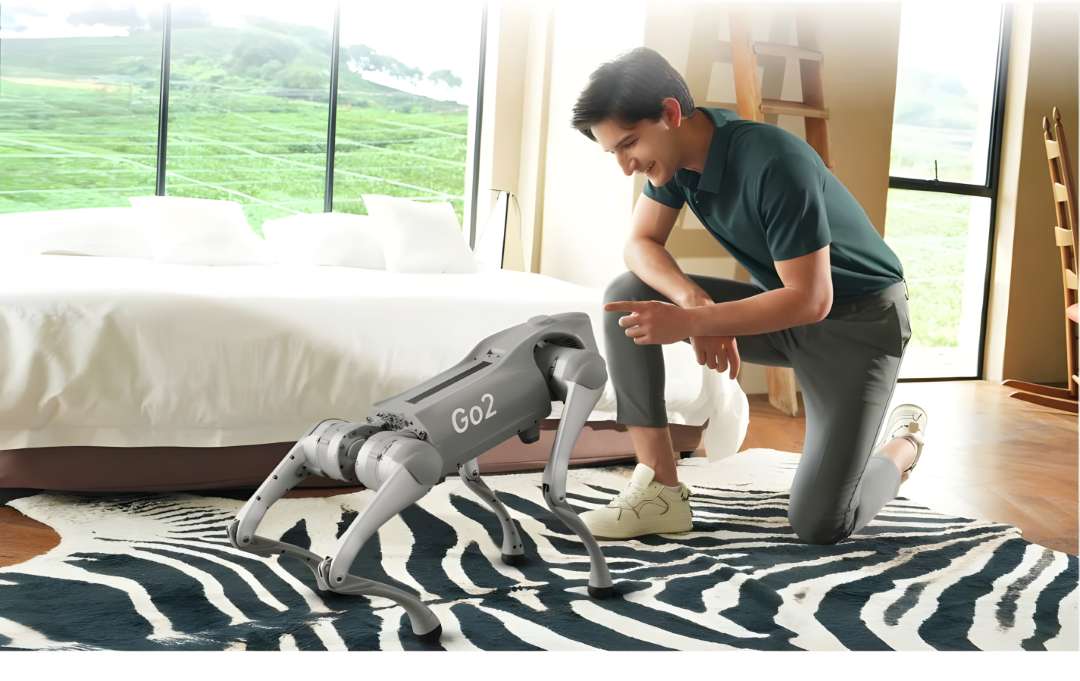
A man interacting naturally with the Go2 EDU indoors — the robot's voice interaction module responds to commands in milliseconds, and its speaker and microphone enable real-time intercom without any scenario restrictions.
Wireless Stack: Wi-Fi 6, 4G/eSIM, Bluetooth 5.2
Connectivity covers three independent channels. Wi-Fi 6 dual-band 802.11ax handles high-bandwidth data streaming and HD map transmission. The built-in 4G/eSIM module with GPS provides persistent connectivity in outdoor field environments where Wi-Fi is unavailable. Bluetooth 5.2/4.2/2.1 backward compatibility ensures reliable pairing with a wide range of peripherals. OTA updates keep the firmware current automatically — with user authorisation — via cloud-based upgrade service.
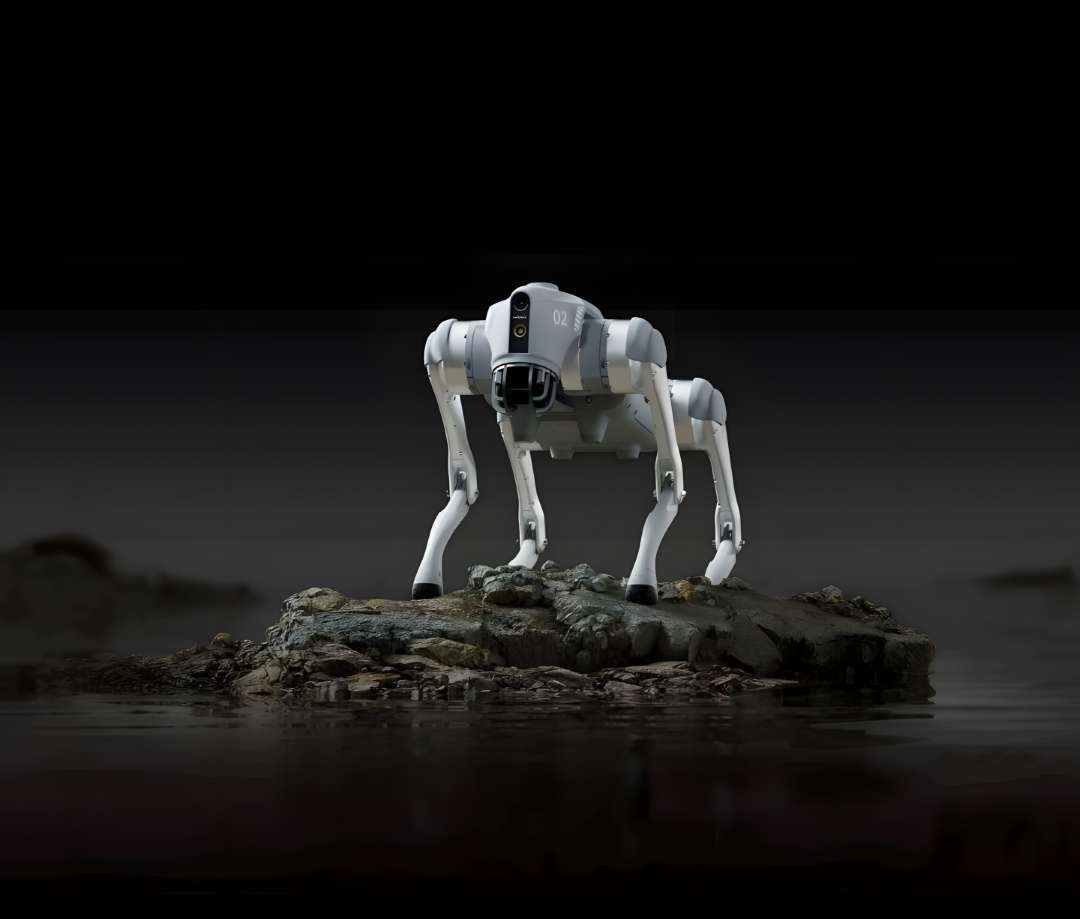
The Go2 EDU is equally at home in controlled indoor labs and demanding outdoor field conditions — its IP-rated aluminium-alloy and engineering-plastic body climbs surfaces up to 40° and negotiates drop heights of 16 cm without loss of footing.
Technical Specifications of the Unitree Go2 EDU U2 (100 TOPS)
Mechanical Specifications
| Dimension (standing) | 70 cm × 31 cm × 40 cm |
|---|---|
| Dimension (crouching) | 76 cm × 31 cm × 20 cm |
| Weight (with battery) | ~15 kg |
| Material | Aluminium alloy + High strength engineering plastic |
Electronics
| Operating voltage | 28 V ~ 33.6 V |
|---|---|
| Max. working power | ~3000 W |
Performance
| Payload | ≈8 kg (MAX ~12 kg) |
|---|---|
| Speed | 0 ~ 3.7 m/s (MAX ~5 m/s) |
| Max. climb / drop height | ~16 cm |
| Max. climb angle | 40° |
| Basic computing power | 8-core high-performance CPU |
Knee Joint Parameters
| Max. joint torque | ~45 N.m |
|---|---|
| Aluminium knee joint motors | 12 set |
| Range of motion | Body: −48°~48° / Thigh: −200°~90° / Shank: −156°~−48° |
| Intra-joint circuit (knee) | Yes |
| Joint heat pipe cooler | Yes |
Sensors & Perception
| 4D LiDAR | Unitree L2 — 360°×96° ultra-wide angle, min. detection 0.05 m |
|---|---|
| Wireless vector positioning module | Yes (ISS 2.0, range >30 m) |
| HD wide-angle camera | Yes — 1280×720 px, FOV 120° |
| Depth camera | Intel RealSense D435i |
| Foot-end force sensor | Yes |
Connectivity
| Wi-Fi | Wi-Fi 6 dual-band 802.11ax |
|---|---|
| Bluetooth | Bluetooth 5.2 / 4.2 / 2.1 |
| 4G module | Yes — built-in eSIM with GPS |
Intelligent Features
| ISS 2.0 Intelligent side-follow | Yes |
|---|---|
| Voice function | Yes — offline voice interaction, commands, intercom, music play |
| Intelligent OTA updates | Yes |
| Graphical programming | Yes |
| Intelligent obstacle avoidance | Yes |
| Charging pile compatibility | Yes |
| Secondary development | Yes — full SDK, ROS-compatible |
Accessories & Battery
| Manual controller | Standard (included) |
|---|---|
| High-computing power module | NVIDIA Jetson Orin — optional (40–100 TOPS) |
| Smart battery | Long endurance — 15,000 mAh |
| Battery life | ~2–4 h |
| Charger | Fast charge — 33.6 V / 9 A |
| Warranty period | 12 months |
What's in the Box
- Unitree Go2 EDU U2 quadruped robot (with long-endurance 15,000 mAh battery installed)
- Manual hand controller
- Fast charger (33.6 V / 9 A)
- Intel RealSense D435i depth camera
- Quick-start guide and documentation
What is the difference between the Go2 EDU and the Go2 X?
The Go2 EDU adds several hardware capabilities exclusive to this variant: foot-end force sensors for ground-contact perception, a higher payload ceiling of 12 kg (vs. 12 kg shared with X but absent on PRO), full unrestricted secondary development access, an Intel RealSense D435i depth camera, a long-endurance 15,000 mAh battery with fast charging at 33.6 V / 9 A, and support for the optional NVIDIA Jetson Orin module (40–100 TOPS). The Go2 X offers only partial SDK access; the EDU version provides the complete development stack.
Does the Go2 EDU support ROS?
Yes. The Go2 EDU's full secondary development support includes ROS-compatible interfaces. Developers can deploy custom ROS nodes, access low-level motion control APIs, and integrate third-party sensors via standard I/O on the NVIDIA Jetson Orin module.
Can the Go2 EDU operate autonomously without a remote operator?
Yes, in multiple modes. With the app and 4D LiDAR L2, you can define point-cloud maps and autonomous navigation paths. ISS 2.0 enables automatic person-following over 30 m without manual control. Charging pile compatibility also allows the robot to return to a dock autonomously for unmanned long-duration deployment.
Which countries does the 4G function support?
The non-Chinese mainland version of the Go2 EDU supports 4G connectivity in 43 European countries and some Asian regions. Please consult the official Unitree documentation for the current country list before purchasing for use outside Spain or continental Europe.
Why choose EXPERT3D?
EXPERT3D has specialised in advanced robotics and 3D technology since 2012, serving researchers, universities, and engineering teams across Spain and Europe. We provide pre-sales technical consultation, hands-on product knowledge, and post-sales support in Spanish and English. Every Unitree Go2 EDU U2 we ship comes with verified factory configuration, official documentation, and the full 12-month manufacturer warranty. Contact our team to discuss your specific research or development requirements before ordering.